Key Points:
- Huang, Trump discuss chip exports
- Huang warns on AI overregulation
- U.S. weighs selective Nvidia sales
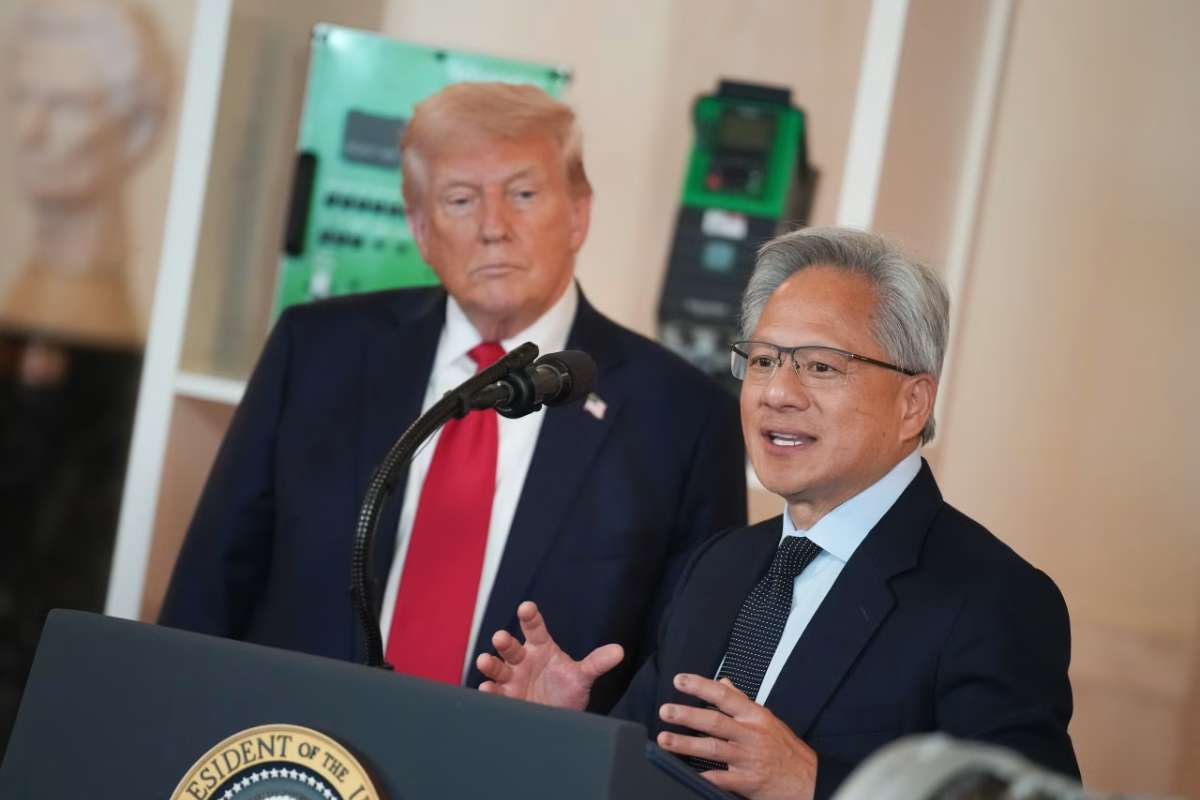
Nvidia CEO Jensen Huang met U.S. President Donald Trump in Washington this week, marking one of the most closely watched conversations in the global tech industry. Their discussion centered on America’s export controls on advanced AI chips, a topic that has grown increasingly consequential as the U.S. reassesses its technology strategy toward China.
Following the meeting, the administration indicated that Huang and Trump had a “clear understanding” of each other’s positions, especially concerning the permitted sale of Nvidia’s H200 chips abroad. These chips are one generation behind Nvidia’s most advanced processors, but remain critical for AI development worldwide. The White House is reportedly reviewing whether limited exports of these processors could be allowed without undermining national-security objectives.
The discussions come at a time when U.S. lawmakers and industry leaders are wrestling with the challenge of balancing innovation, national interest, and global market competition. Huang’s visit to Washington underscores Nvidia’s intent to shape these policies as directly as possible.
Jensen Huang Warns Against Overregulation
During separate meetings on Capitol Hill, Huang offered a blunt warning: domestic and export regulations that are too restrictive could jeopardize America’s leadership in AI. He voiced concern over emerging proposals that would require chipmakers to prioritize U.S. buyers before licensing their products to overseas customers, a framework some lawmakers argue is necessary for national security.
Jensen Huang argued that such requirements risk fragmenting the market and slowing technological progress, especially as global competitors invest aggressively in AI hardware. He also raised alarms about state-by-state regulatory patchworks within the U.S., saying inconsistent rules would complicate development efforts and challenge competitiveness.
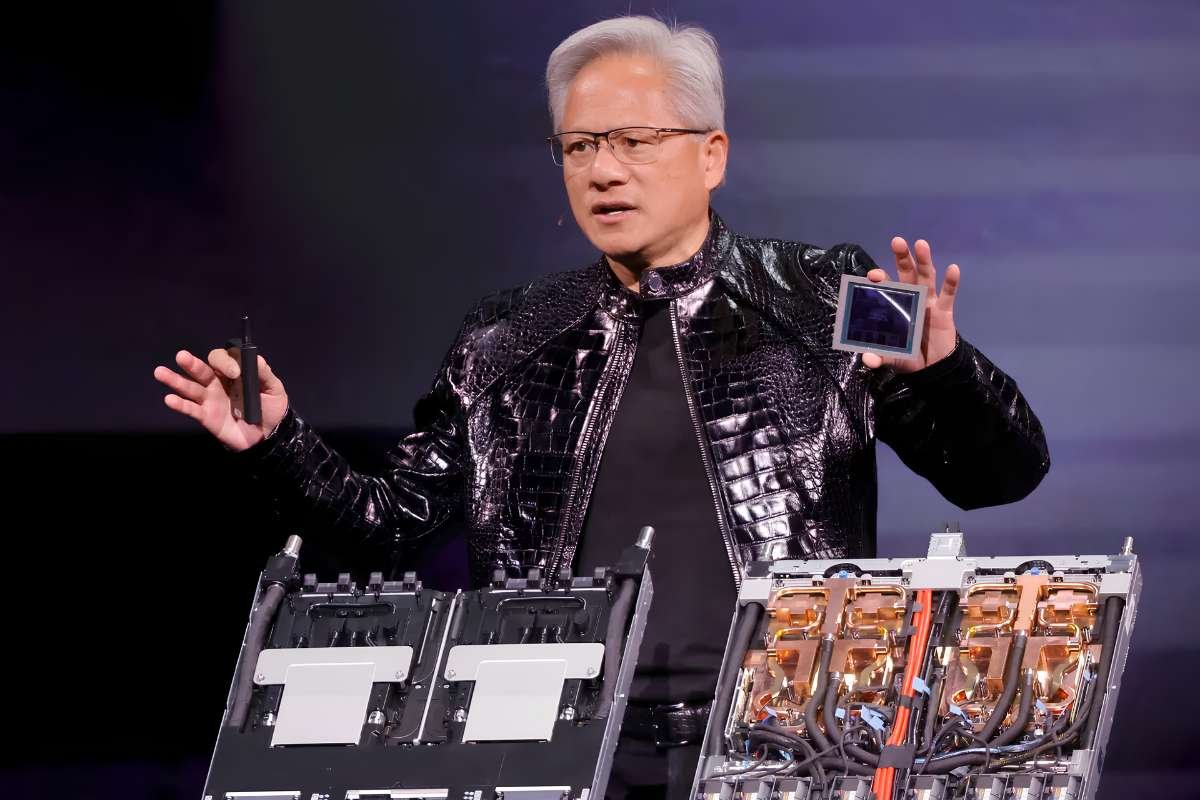
Speaking at a policy forum later in the day, the Nvidia chief dismissed growing fears that large-scale GPU smuggling could bypass export controls. He noted that enterprise-grade AI systems are massive, expensive, and energy-intensive, hardly conducive to covert transport. With multi-million-dollar price tags, multi-ton weight, and enormous power requirements, Huang argued that trafficking such systems simply “doesn’t reflect real-world logistics.”
Industry Stakes and What Comes Next
The meeting between Donald Trump and Jensen Huang highlights a larger turning point for the AI industry. As the U.S. ramps up efforts to retain technological superiority, companies like Nvidia face pressure to comply with evolving export rules while still meeting intense global demand. The administration’s potential consideration of selective chip exports reflects an attempt to strike a middle ground, protecting U.S. interests without fully freezing commercial opportunities.
Jensen Huang’s message to policymakers was clear: excessive regulation could slow innovation, damage U.S. competitiveness, and ultimately weaken America’s position in the global AI race. For Nvidia, whose chips power AI advancements across governments, research institutions, and corporations, regulatory uncertainty represents both an operational and strategic risk.
Whether Washington adjusts its rules in response to Huang’s warnings remains to be seen. But the high-profile meeting signals that the debate over AI chip controls is entering a more nuanced phase, with industry voices now directly shaping the next chapter of U.S. technology policy.