Have you ever experienced a “heavy” and fatigued feeling following a week of excessive eating, where your vitality drops and bloating becomes your constant companion? It’s not just about what you eat; it’s about those who inhabit your body. Your entire body experiences friction when the balance of the trillions of microbes in your gut changes. Probiotics drinks pitch in to help. They are more than just trending drinks. They are powerful tools that help rebuild your internal ecosystem.
Probiotics, according to the Cleveland Clinic, are live, helpful bacteria and yeasts that support your digestion and strengthen your immune system by serving as “good” soldiers. Are you prepared to sip your way to improved health? To assist you in finding your ideal daily dosage. We’ve put together a full list of the top 30 probiotics drinks. They range from classic worldwide favorites to the newest, hottest concoctions.
What Are Probiotics Drinks?
At their core, probiotics are “good” bacteria and yeasts. They are live microorganisms. When consumed in adequate amounts, they provide significant health benefits. Think of them as tiny, invisible allies. They are settled in your digestive tract. They help to improve nutrient absorption and keep harmful bacteria in check. While you can find it in supplements. These probiotics drinks offer a more bioavailable and enjoyable way. These beverages help to nourish your microbiome.
According to the Cleveland Clinic, these beverages are effective. The liquid format often allows for a diverse range of bacterial strains to survive the journey through the stomach. By incorporating fermented liquids into your diet, you are participating in a centuries-old tradition supported by mainstream medical insight. A consistent intake of fermented foods and drinks helps maintain a diverse and resilient microbiome. This is the cornerstone of a strong immune system and a clear mind.
How Probiotics Drinks Work in Your Gut?
When you sip a probiotic drink, you are sending a targeted “reinforcement squad” to your digestive system. These live cultures must survive the acidic environment of the stomach to reach the intestines. That is where they begin to colonize. Once settled, they help balance your gut bacteria by crowding out harmful pathogens. Along with supporting bowel regularity and strengthening the intestinal barrier. According to the Cleveland Clinic, this process doesn’t just aid digestion. It also actively contributes to immune health by interacting with the lymphoid tissue in your gut.
However, the science is specific. The effectiveness of these drinks depends on three factors: strain, dose, and viability. Not all bacteria perform the same task. For example, a strain that aids bloating may not support immunity. For real results, the cultures must remain alive (viable) until they reach their destination.
Key Benefits of Drinking Probiotics:
Regularly consuming probiotic drinks can majorly transform your internal health. Here are the primary benefits backed by nutritional science:
- Improved Digestion & Regularity: Probiotics facilitate the breakdown of complex fibers. They also help regulate transit time, effectively reducing constipation.
- Enhanced Immune Support: Since roughly 70% of the immune system resides in the gut. And these drinks help stimulate the production of natural antibodies and protective immune cells.
- Reduced Bloating & Gas: By balancing the gut flora, “good” bacteria prevent the overgrowth of gas-producing microbes. This leads to a flatter, more comfortable stomach.
- Mood & Microbiome Link: Through the gut-brain axis, a healthy microbiome can influence neurotransmitter production. This can potentially improve your mood and stress resilience.
How to Choose the Right Probiotics Drinks?
To ensure your drink actually delivers on its promises. Follow these expert-backed shopping tips:
- Check the Label: Look for the phrase “Live and Active Cultures” and a CFU count of at least 1 billion to ensure the bacteria are viable.
- Mind the Sugar: Avoid “probiotic sodas” with high added sugars. Excessive sugar can disrupt the very microbiome balance you’re trying to build.
- Prioritize Purity: Choose naturally fermented, unpasteurized options. Like raw Kombucha or kefir over heavily processed, shelf-stable versions.
- Match Your Diet: Opt for dairy-free or vegan tonics. Like water kefir or beet kvass. If you have sensitivities.
Here are the Top 30 Probiotics Drinks to boost Your Gut Health:
We have divided the best probiotics drinks into three categories to make it easier for you to navigate the world of functional beverages. These probiotics drinks offer a variety of advantageous bacterial strains to support your microbiome. Whether you prefer a store-bought shot or a do-it-yourself project.
Section A: Traditional & Homemade Favorites
These time-tested probiotics drinks are often the most potent because they are typically unpasteurized and rich in live cultures.
| No. | Probiotics Drink | Gut Health Benefit (%) |
| 1 | Lassi (Yogurt Drink) | 75% |
| 2 | Chaas (Buttermilk) | 78% |
| 3 | Kanji (Fermented Veg Drink) | 85% |
| 4 | Fermented Rice Water | 70% |
| 5 | Ginger Fizz (Homemade Brew) | 80% |
| 6 | Pickle Brine Shot | 65% |
| 7 | Kombucha (Fermented Tea) | 88% |
| 8 | Water Kefir | 82% |
| 9 | Milk Kefir | 90% |
| 10 | Apple Cider Vinegar Drink (With Mother) | 60% |
1. Lassi (Yogurt Drink):
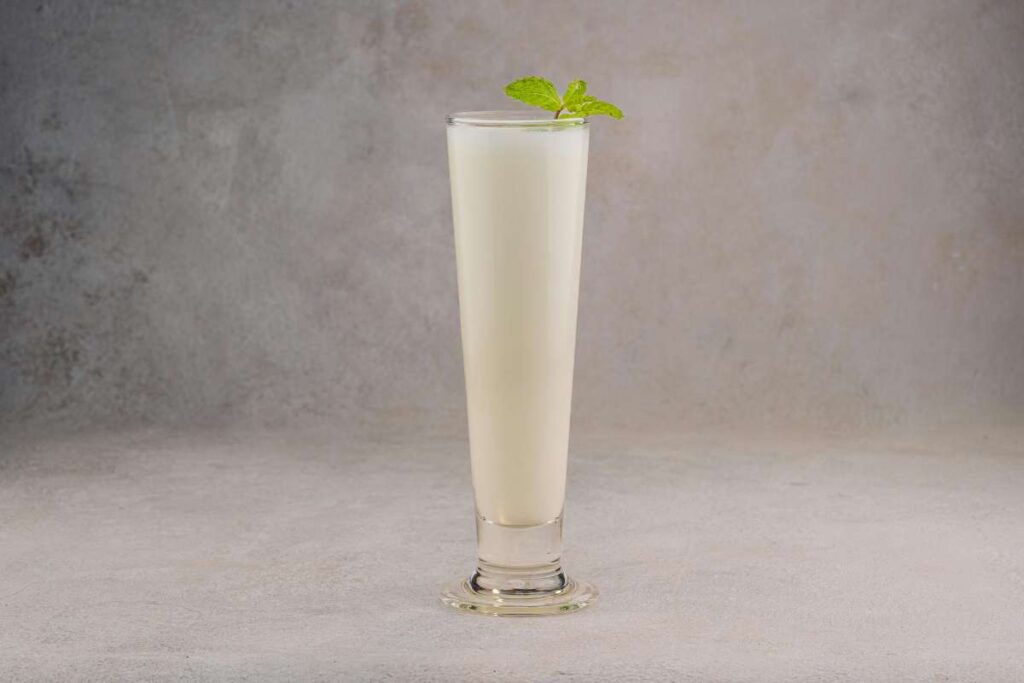
This classic Indian beverage is made by blending yogurt with water and spices. It is one of the most accessible probiotics drinks for aiding digestion after a heavy meal.
Ingredients: Fresh curd, water, salt or sugar, roasted cumin
How to make & Gut health benefit:
To make lassi, blend fresh curd with clean water until smooth and creamy. Add a pinch of salt for digestion or sugar for taste. You can also add roasted cumin for flavor. Drink it fresh, especially after meals. Lassi contains natural probiotics that help balance good gut bacteria. It cools the stomach, improves digestion, and reduces heaviness after eating. Regular intake supports smoother bowel movement and better nutrient absorption.
2. Chaas (Buttermilk):
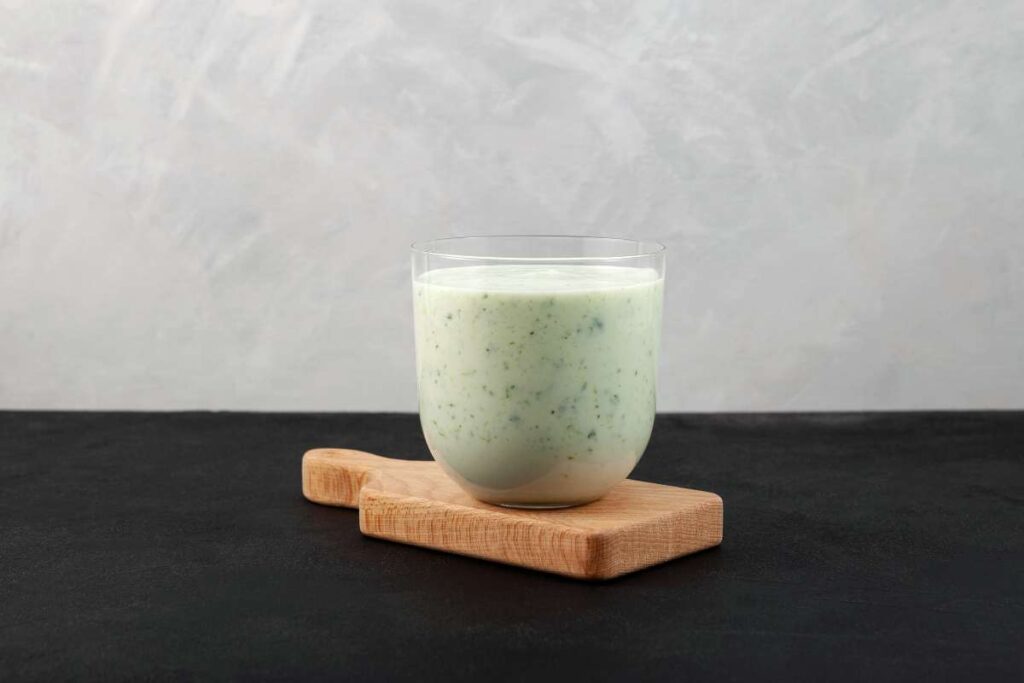
Unlike commercial buttermilk, traditional Chaas is the liquid left after churning butter. It is a cooling, gut-soothing drink celebrated for its lactic acid bacteria.
Ingredients: Churned curd, water, ginger, curry leaves, salt
How to make & Gut health benefit:
Chaas is made by whisking curd with water after removing butter. Add salt, crushed ginger, curry leaves, and roasted cumin. Drink it chilled or at room temperature. Chaas is light and easy to digest. It helps reduce acidity, gas, and bloating. The natural lactic acid bacteria improve gut balance and support digestion. It also keeps the stomach cool and helps break down heavy foods, making it ideal for daily use.
3. Kanji (Fermented Veg Drink):
A winter staple in North India made from black carrots and mustard seeds. This deep purple tonic is one of the most antioxidant-rich probiotics drinks you can make at home.
Ingredients: Black carrots, mustard seeds, salt, water
How to make & Gut health benefit:
Kanji is prepared by soaking sliced black carrots with mustard seeds, salt, and water in a glass jar. Keep it in sunlight for three to four days until it ferments naturally. Stir daily. This drink is rich in probiotics and antioxidants. It supports digestion, improves gut bacteria diversity, and strengthens immunity. Kanji also helps reduce constipation and supports liver health, making it a powerful seasonal gut cleanser.
4. Fermented Rice Water:
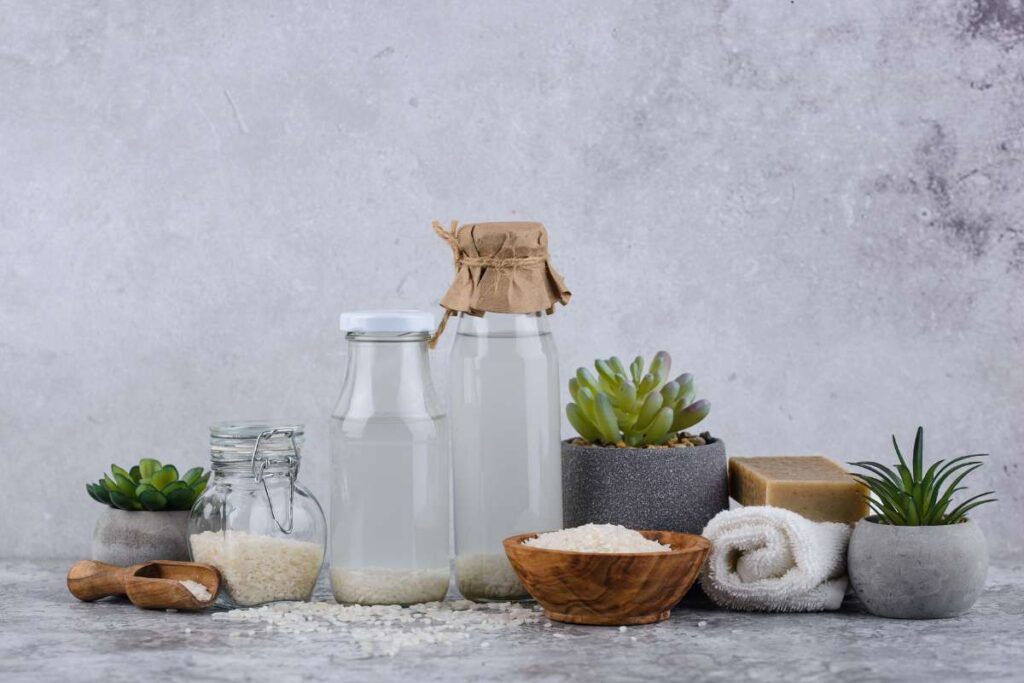
A simple, ancient remedy made by soaking cooked rice overnight. The resulting liquid is hydrating and packed with B-vitamins and gut-friendly flora.
Ingredients: Cooked rice, water
How to make & Gut health benefit:
Fermented rice water is made by soaking cooked rice in water overnight at room temperature. In the morning, strain and drink the water. This simple drink contains natural probiotics and B vitamins. It helps improve digestion, restores gut bacteria, and provides gentle energy. Fermented rice water is easy on the stomach and helps people recover from weakness, loose motion, or poor appetite while keeping the gut hydrated and balanced.
5. Ginger Fizz Homemade Brew:
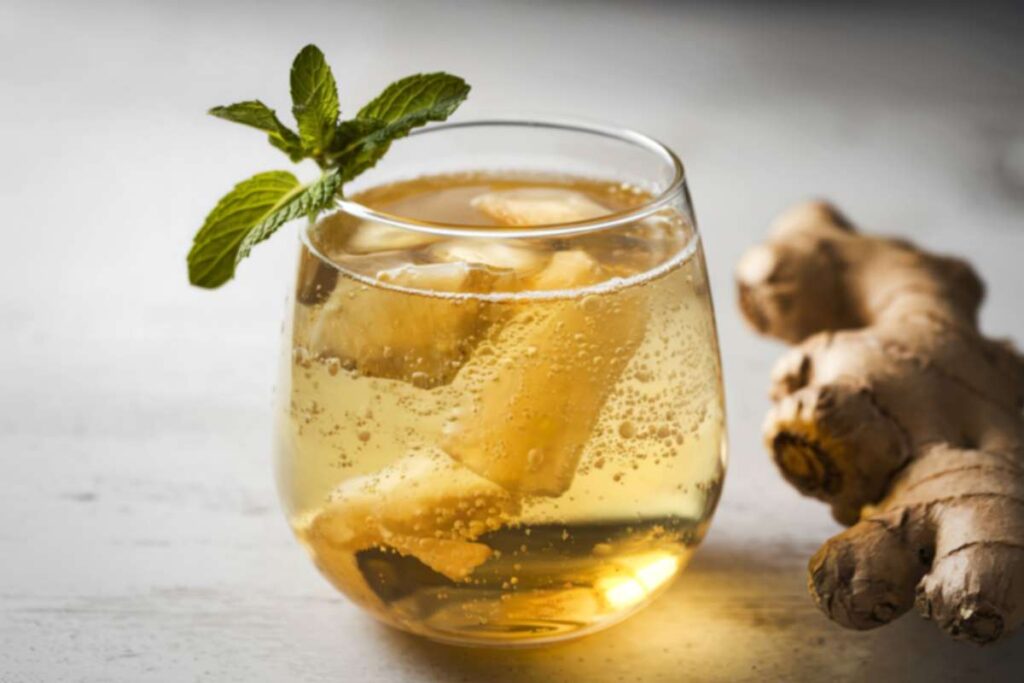
By creating a “ginger bug,” you can produce spicy, bubbly probiotics drinks that act as a natural digestive aid.
Ingredients: Ginger, sugar, water
How to make & Gut health benefit:
Ginger fizz is made by fermenting grated ginger with sugar and water for a few days until bubbles form. This creates a natural probiotic drink. Ginger fizz supports digestion by reducing gas, bloating, and nausea. It stimulates digestive juices and improves gut movement. The live bacteria help balance gut flora, while ginger naturally soothes the stomach. It also helps improve appetite and supports overall digestive comfort.
6. Pickle Brine Shot:

Don’t pour it away! A small shot of naturally fermented (vinegar-free) pickle juice provides an intense blast of electrolytes and probiotics.
Ingredients: Naturally fermented pickle juice
How to make & Gut health benefit:
Pickle brine is taken from naturally fermented pickles made without vinegar. Drink a small amount, usually two to three tablespoons. This brine contains live probiotics and natural salts. It helps restore gut bacteria, improves digestion, and supports hydration. Pickle brine is especially helpful after heavy meals or sweating. It also supports stomach acid balance and helps reduce cramps and bloating when consumed in small amounts.
7. Kombucha (Fermented Tea):
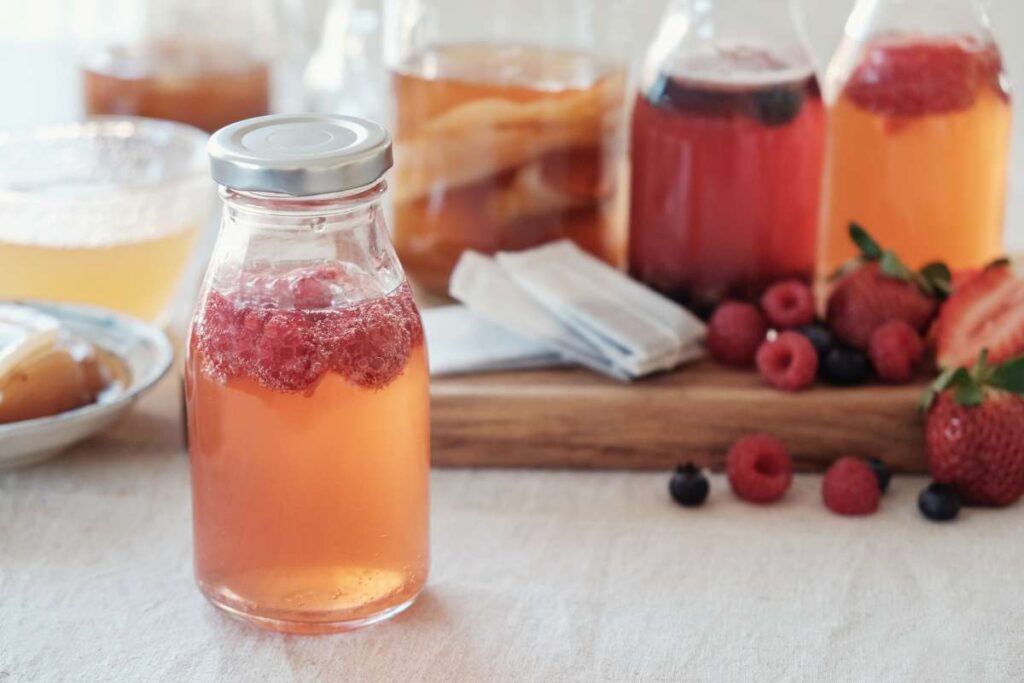
A global favorite made from tea, sugar, and a SCOBY. It stands out among probiotics drinks for its unique acetic acid and gluconic acid content.
Ingredients: Tea, sugar, SCOBY, water
How to make & Gut health benefit:
Kombucha is made by fermenting sweetened tea using a SCOBY for about seven to ten days. During fermentation, good bacteria and organic acids develop. Kombucha supports gut health by increasing beneficial bacteria and improving digestion. It helps reduce bloating, supports detox processes, and improves gut balance. Regular moderate intake may support better digestion, energy levels, and overall gut comfort due to its probiotic richness.
8. Water Kefir:
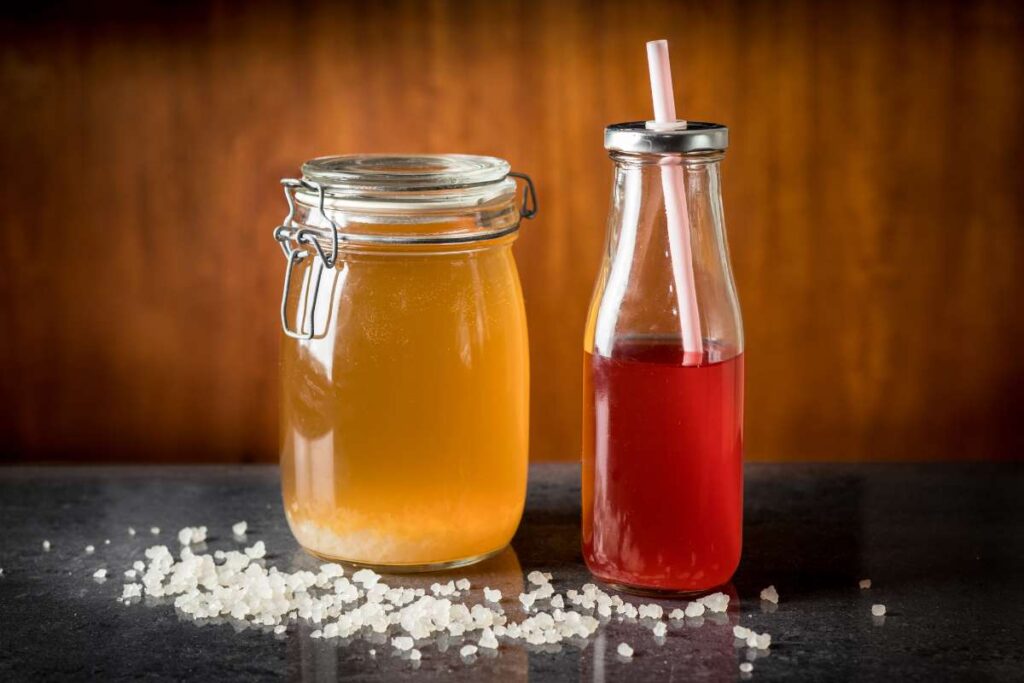
Made with “grains” that ferment sugar water, this is a dairy-free, fizzy alternative to soda.
Ingredients: Water kefir grains, sugar, water
How to make & Gut health benefit:
Water kefir is made by fermenting sugar water with water kefir grains for one to two days. The grains feed on sugar and create probiotics. This drink is dairy-free and light. Water kefir improves gut bacteria balance, supports digestion, and reduces bloating. It is gentle on the stomach and suitable for people with lactose intolerance. The natural fizz also supports gut movement and hydration.
9. Milk Kefir:
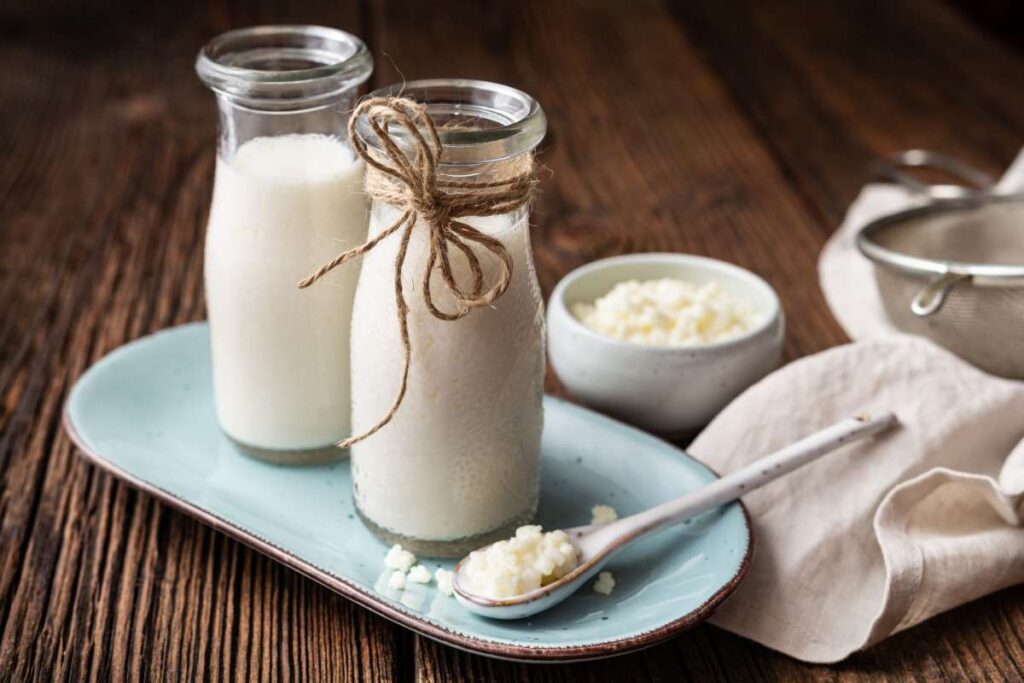
A nutrient-dense powerhouse that contains up to 30 different strains of bacteria and yeast, making it more diverse than standard yogurt.
Ingredients: Milk, kefir grains
How to make & Gut health benefit:
Milk kefir is prepared by adding kefir grains to milk and fermenting it for 24 hours. The result is a thick, probiotic-rich drink. Milk kefir contains many strains of good bacteria that support gut diversity. It improves digestion, strengthens immunity, and helps reduce gut inflammation. It also supports better nutrient absorption and may help people with mild lactose sensitivity due to natural fermentation.
10. Apple Cider Vinegar Drink (with “The Mother”):
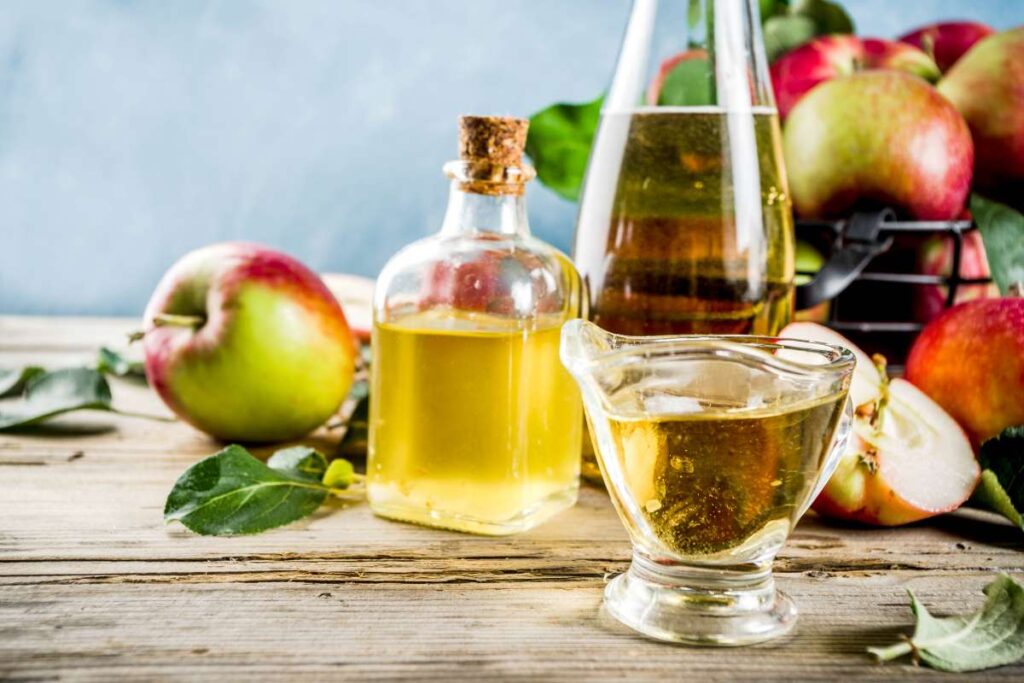
While acidic, when diluted, ACV containing “the mother” offers raw enzymes and acetic acid bacteria to support gut pH.
Ingredients: ACV (with mother), water, honey
How to make & Gut health benefit:
This drink is made by mixing raw apple cider vinegar with water and a little honey. The “mother” contains beneficial bacteria. When diluted properly, it supports digestion by improving stomach acid balance. It helps reduce bloating and supports gut bacteria growth. Drinking it before meals may help improve digestion and appetite control. It also supports overall gut cleanliness when taken in small, safe amounts.
Section B: Global & Trendy Tonics
Expanding your palate with these international probiotics drinks can introduce new microbial strains to your system.
| No. | Probiotics Drink | Gut Health Benefit (%) |
| 11 | Beet Kvass | 85% |
| 12 | Jun Tea | 87% |
| 13 | Ginger Bug Soda | 80% |
| 14 | Switchel | 65% |
| 15 | Kvass (Bread-Based) | 75% |
| 16 | Rejuvelac | 83% |
| 17 | Tepache | 78% |
| 18 | Fermented Coconut Water | 85% |
| 19 | Probiotic Lemonade | 75% |
| 20 | Fermented Herbal Tonics | 80% |
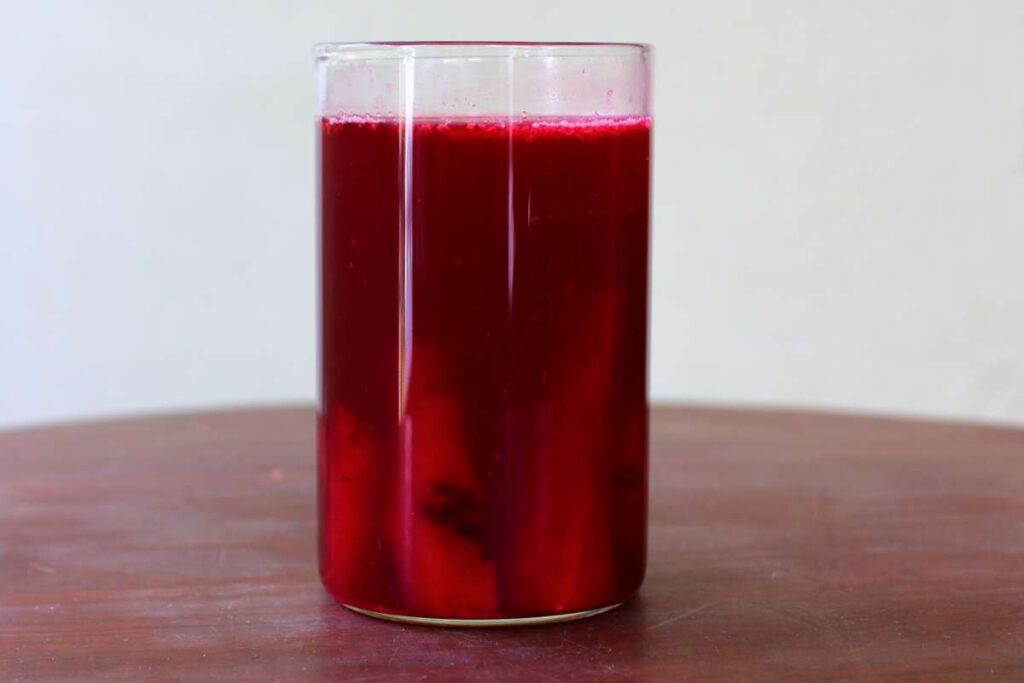
11. Beet Kvass:
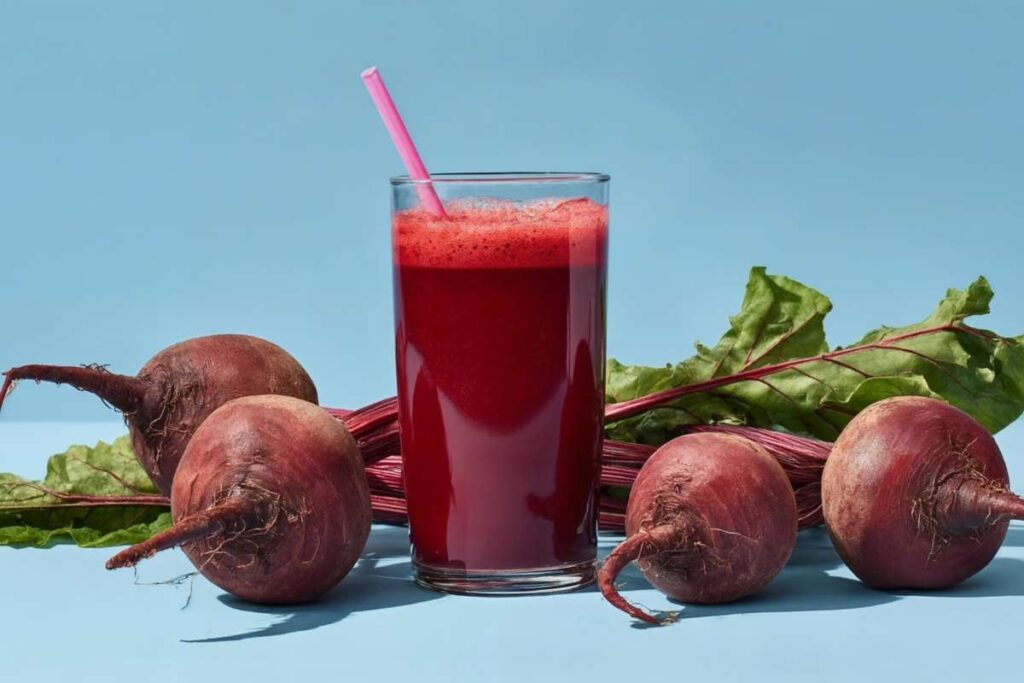
This earthy, salty Eastern European tonic is revered for liver support and blood purification.
Ingredients: Beets, salt, water
How to make & Gut health benefit:
Beet kvass is made by fermenting chopped beets in salted water for several days. This drink supports gut health by increasing beneficial bacteria and improving digestion. It also helps cleanse the liver and supports bowel movement. Beet kvass is rich in antioxidants and supports blood health. Regular intake may help reduce constipation and improve gut strength, especially during digestion-related fatigue.
12. Jun Tea:
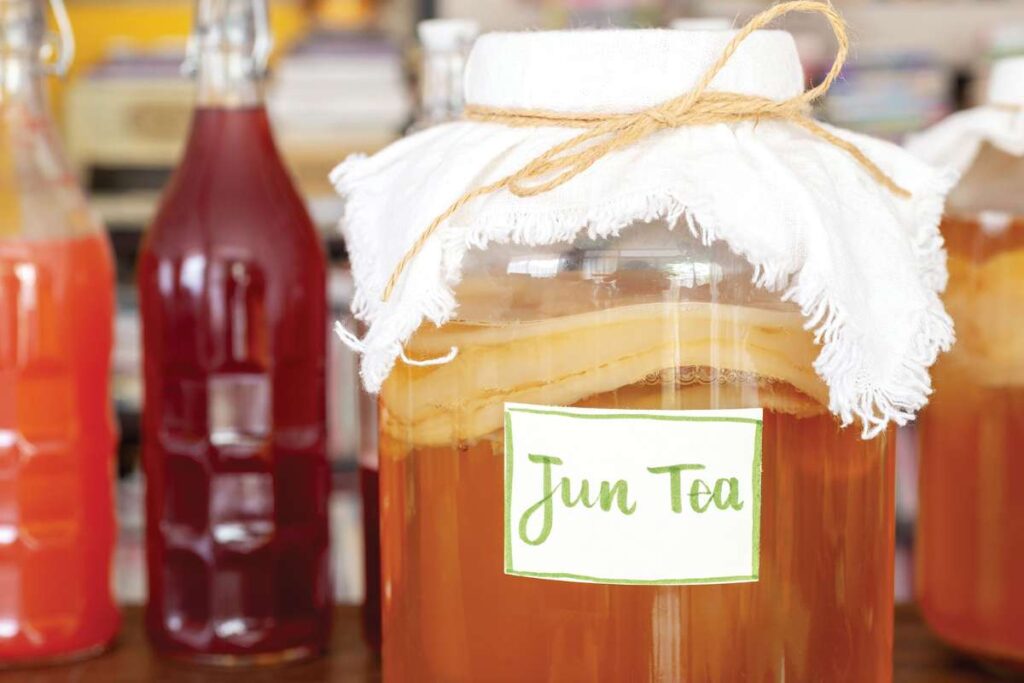
Known as the “Champagne of Kombuchas,” it uses green tea and honey instead of black tea and cane sugar.
Ingredients: Green tea, honey, SCOBY
How to make & Gut health benefit:
Jun tea is made by fermenting green tea with honey using a Jun SCOBY. It ferments faster than kombucha and tastes lighter. Jun tea supports gut health by introducing beneficial bacteria while being gentle on digestion. It helps reduce bloating and supports better digestion without strong acidity. It also supports immune health and gut balance, making it suitable for people sensitive to strong fermented drinks.
13. Ginger Bug Soda:
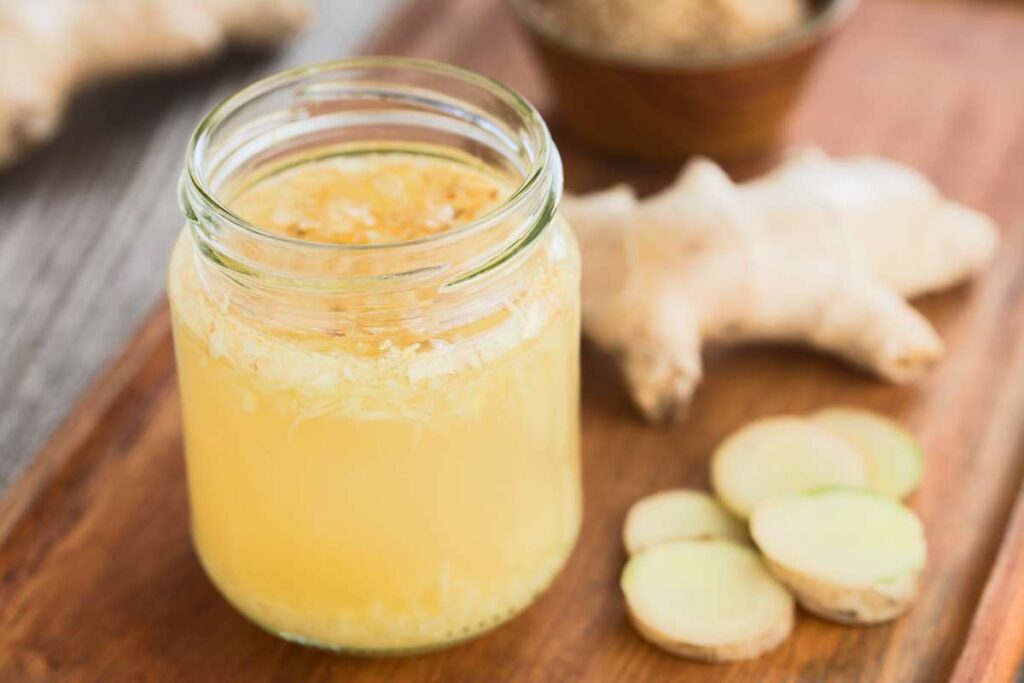
A wild-fermented beverage that turns fruit juice or herbal tea into naturally carbonated probiotics drinks.
Ingredients: Ginger bug, fruit juice
How to make & Gut health benefit:
Ginger bug soda is made by fermenting ginger, sugar, and water, then adding fruit juice for flavor. This creates a naturally carbonated probiotic drink. It improves digestion, supports gut bacteria growth, and reduces gas. Ginger helps calm the stomach while fermentation adds beneficial microbes. This drink is a healthier alternative to soda and supports digestion in a refreshing and natural way.
14. Switchel:

Often called “Haymaker’s Punch,” this mix of apple cider vinegar, ginger, and maple syrup provides a refreshing probiotic kick.
Ingredients: ACV, ginger, maple syrup, water
How to make & Gut health benefit:
Switchel is made by mixing apple cider vinegar, ginger, water, and a natural sweetener. This drink supports digestion by improving gut acid balance and hydration. It helps reduce bloating and supports gut movement. Switchel also provides mild probiotic support when raw vinegar is used. It refreshes the body, supports digestion, and helps maintain gut comfort during hot weather or physical activity.
15. Kvass (Bread-based):
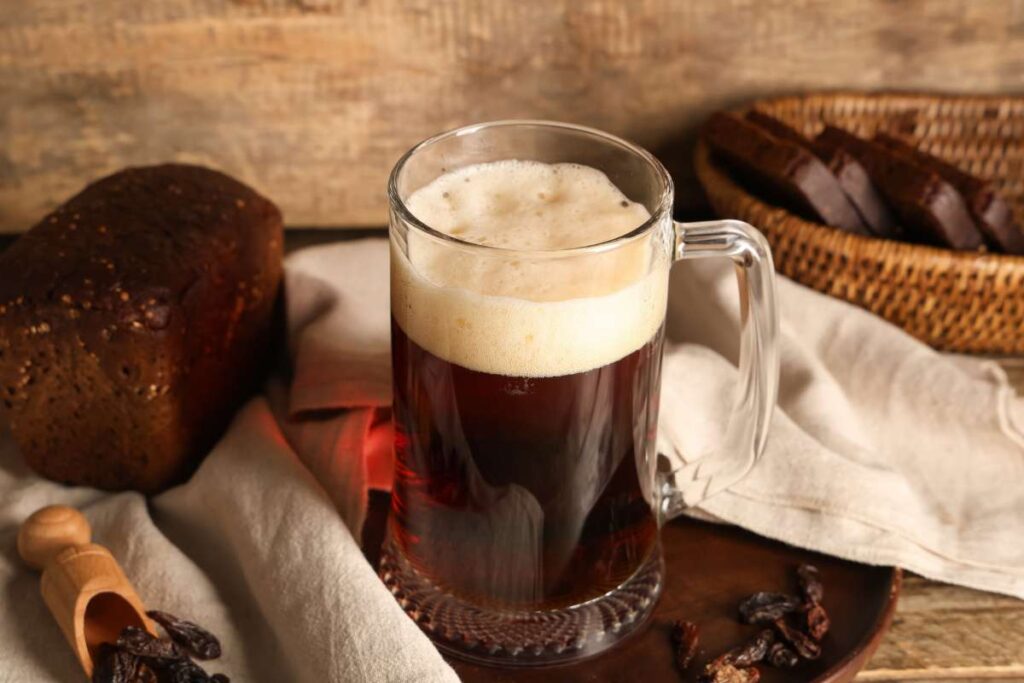
A traditional Slavic drink made by fermenting rye bread, resulting in a low-alcohol, malty flavor profile.
Ingredients: Rye bread, water, sugar
How to make & Gut health benefit:
Bread kvass is made by fermenting rye bread in water with a little sugar. It produces a mild, tangy drink. Kvass supports gut health by introducing natural probiotics and improving digestion. It is easy on the stomach and supports gut balance. Kvass also helps improve appetite and digestion after illness or weakness, making it a gentle probiotic option.
16. Rejuvelac:
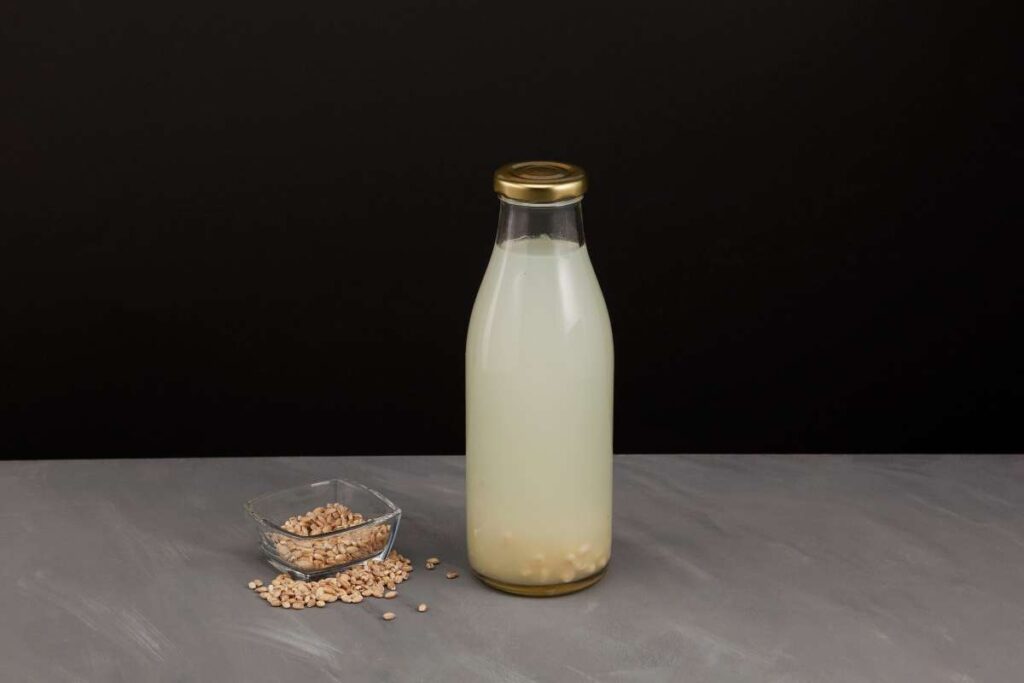
A tart liquid made from fermented sprouted grains (like wheat or quinoa), popularized by the raw food movement.
Ingredients: Sprouted grains, water
How to make & Gut health benefit:
Rejuvelac is made by fermenting sprouted grains in water for one to two days. The liquid becomes cloudy and probiotic-rich. Rejuvelac supports digestion by adding enzymes and beneficial bacteria to the gut. It helps improve gut movement, reduces bloating, and supports nutrient absorption. This drink is light, plant-based, and suitable for people looking for gentle gut support.
17. Tepache:

A Mexican street-food staple made from fermented pineapple rinds, piloncillo, and cinnamon.
Ingredients: Pineapple peels, jaggery, cinnamon
How to make & Gut health benefit:
Tepache is made by fermenting pineapple peels with jaggery and spices for a few days. This creates a lightly fizzy drink. Tepache supports gut health by improving digestion and increasing beneficial bacteria. Pineapple enzymes help break down food, while fermentation improves gut balance. It helps reduce heaviness and supports smoother digestion when taken in moderate amounts.
18. Fermented Coconut Water:
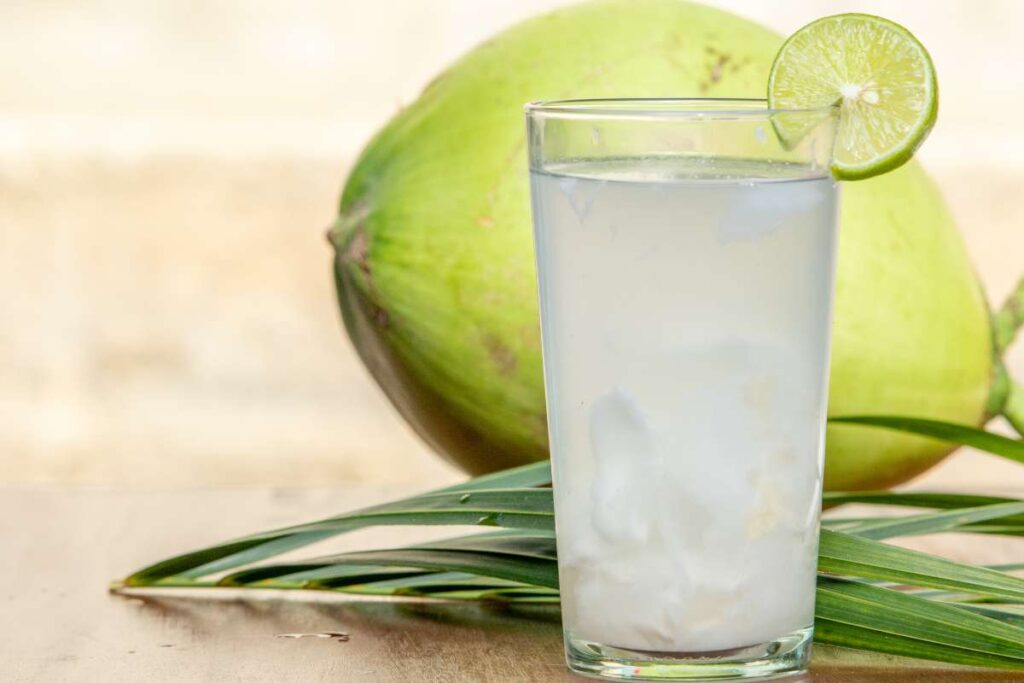
By adding kefir grains to coconut water, you create one of the most hydrating and electrolyte-rich probiotics drinks available.
Ingredients: Coconut water, kefir grains
How to make & Gut health benefit:
Fermented coconut water is made by adding kefir grains to coconut water and fermenting for 24 hours. This drink supports gut health by combining probiotics with natural electrolytes. It improves digestion, supports hydration, and helps maintain gut balance. It is light, refreshing, and suitable for people who avoid dairy. It also supports recovery after dehydration or digestive discomfort.
19. Probiotic Lemonade:
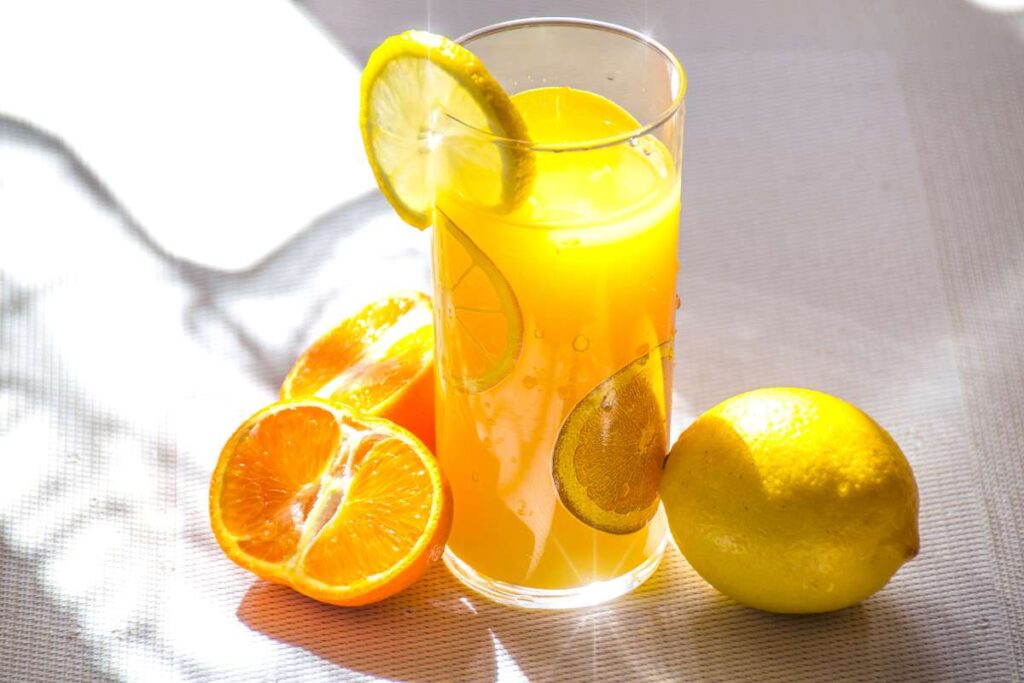
A lacto-fermented twist on a summer classic that uses whey or ginger bug to consume the sugar.
Ingredients: Lemon juice, sugar, whey, or ginger bug
How to make & Gut health benefit:
Probiotic lemonade is made by fermenting lemon juice, water, sugar, and a starter like whey or ginger bug. Fermentation reduces sugar and adds beneficial bacteria. This drink supports digestion by improving gut bacteria balance and reducing bloating. Lemon helps stimulate digestion, while probiotics support gut health. It is refreshing and easier to digest than regular sweet lemonade.
20. Fermented Herbal Tonics:
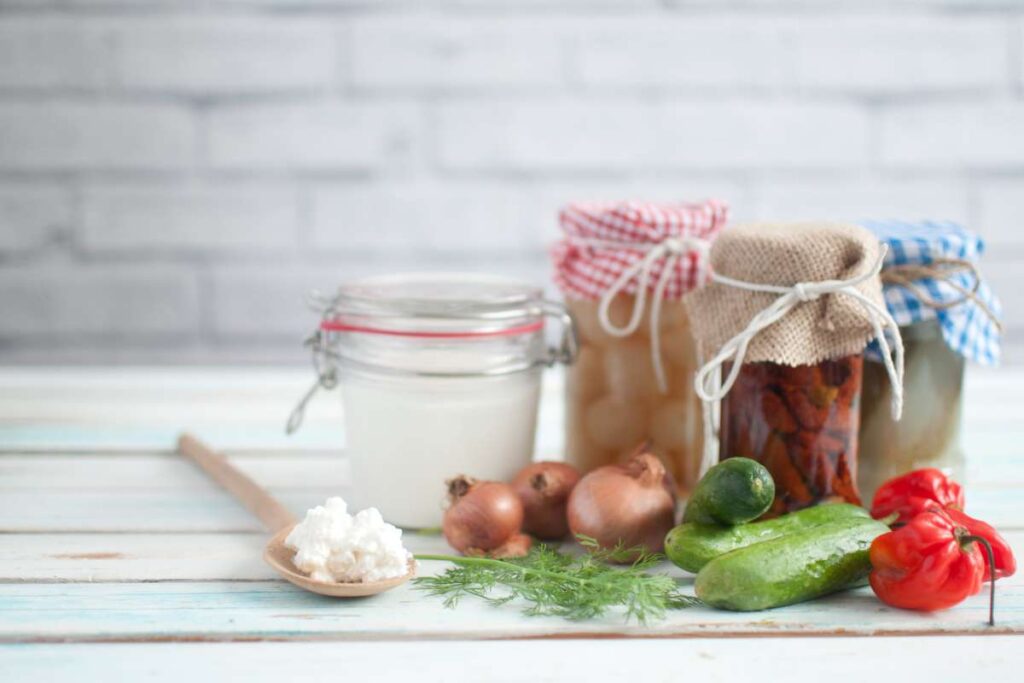
These involve infusing herbs like Tulsi (Holy Basil) or Mint into fermenting liquids for added adaptogenic benefits.
Ingredients: Tulsi or mint, water, sugar
How to make & Gut health benefit:
Fermented herbal tonics are made by fermenting herbal teas like tulsi or mint with sugar and a starter culture. These drinks support gut health by combining probiotics with herbal benefits. They help reduce stress-related digestive issues and support gut balance. Herbs calm the digestive system while probiotics improve gut bacteria, making this drink helpful for both digestion and relaxation.
Section C: Commercial & Ready-to-Drink Options
If you are short on time, these retail probiotics drinks provide standardized CFU counts for consistent dosing.
| No. | Probiotics Drinks | Gut Health Benefit (%) |
| 21 | Retail Kefir Drinks | 85% |
| 22 | Commercial Kombucha | 80% |
| 23 | Probiotic Yogurt Drinks | 78% |
| 24 | Fermented Cider Beverages | 72% |
| 25 | Yakult-Style Drinks | 70% |
| 26 | Probiotic Soda Alternatives | 65% |
| 27 | Cultured Vegetable Juices | 82% |
| 28 | Synbiotic Drinks | 88% |
| 29 | Dairy-Free Probiotics Drinks | 80% |
| 30 | Specialty Functional Beverages | 75% |
21. Kefir Drinks (Retail):

Widely available in grocery stores, these are perfect for those who want the protein of dairy with the benefits of fermentation.
Ingredients: Fermented milk, cultures
How to make & Gut health benefit:
Retail kefir drinks are pre-fermented and ready to drink. They contain multiple probiotic strains that support digestion and gut balance. These drinks help improve digestion, reduce bloating, and support immune health. They are convenient for daily use and provide consistent probiotic intake, especially for people who do not ferment at home.
22. Kombucha Brands:

From ginger to hibiscus, commercial kombuchas are the most popular “on-the-go” probiotics drinks.
Ingredients: Fermented tea, cultures
How to make & Gut health benefit:
Commercial kombucha is bottled after controlled fermentation. It supports gut health by providing beneficial bacteria and organic acids. It helps improve digestion, reduce bloating, and support gut balance. Commercial versions are convenient but should be consumed in moderation due to acidity and sugar content.
23. Probiotic Yogurt Drinks:

Smooth, drinkable yogurts often fortified with extra L. casei or Bifidobacterium.
Ingredients: Yogurt, added strains
How to make & Gut health benefit:
These drinks are made from fermented milk with added probiotic strains. They support digestion by improving gut bacteria balance. Probiotic yogurt drinks help reduce digestive discomfort, support bowel regularity, and improve nutrient absorption. They are easy to drink and suitable for daily gut support.
24. Fermented Cider Beverages:

Non-alcoholic sparkling ciders that have been fermented specifically to retain live cultures.
Ingredients: Apple juice, cultures
How to make & Gut health benefit:
Fermented cider drinks are made by fermenting apple juice while keeping live cultures. They support digestion by adding mild probiotics and improving gut balance. These drinks are light and refreshing, helping digestion without heavy dairy. They also support gut comfort and hydration.
25. Yakult-Style Drinks:

Small, concentrated shots containing billions of a specific, highly-studied probiotic strain.
Ingredients: Water, sugar, Lactobacillus strain
How to make & Gut health benefit:
Yakult-style drinks contain a specific probiotic strain in liquid form. They support gut health by improving digestion and strengthening gut bacteria. Regular intake may help reduce constipation and improve bowel regularity. These drinks are easy to consume and suitable for people starting probiotic intake.
26. Probiotic Soda Alternatives:

Modern brands are now creating low-sugar sodas infused with plant fibers and probiotics.
Ingredients: Carbonated water, fiber, probiotics
How to make & Gut health benefit:
Probiotic sodas are made by adding probiotics and plant fibers to carbonated water. They support gut health by improving digestion and feeding good bacteria. These drinks are lower in sugar than regular soda and help reduce bloating while supporting gut balance.
27. Cultured Vegetable Juices:
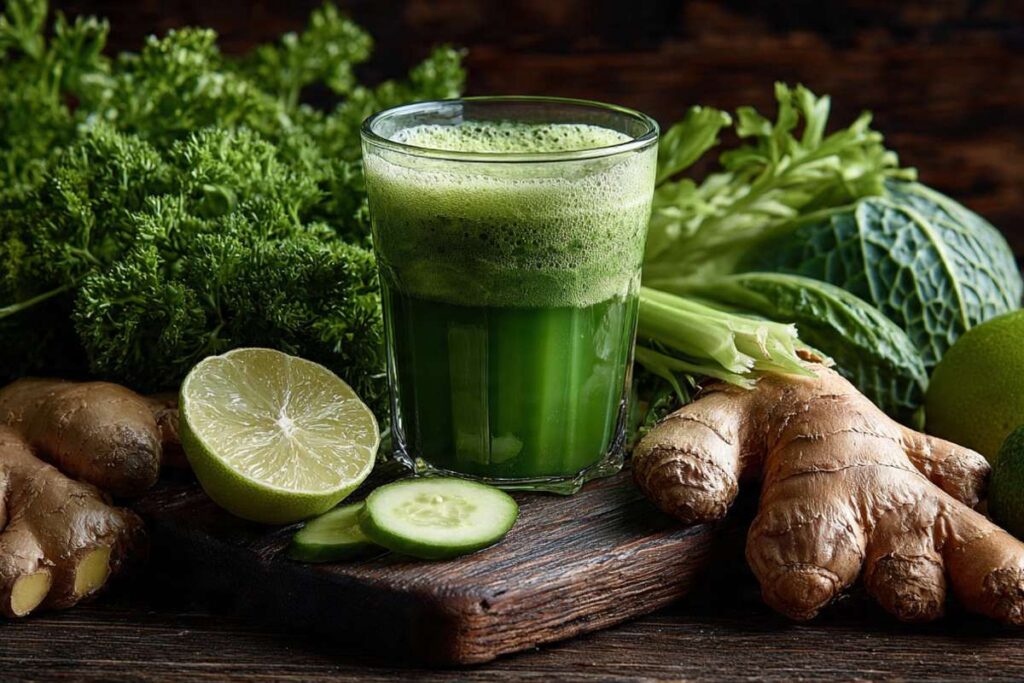
Cold-pressed juices that have been fermented to lower the sugar content and increase bacterial density.
Ingredients: Fermented vegetable juice
How to make & Gut health benefit:
Cultured vegetable juices are fermented versions of fresh vegetable juice. Fermentation increases probiotics and reduces sugar. These juices support gut health by improving digestion and increasing beneficial bacteria. They also support nutrient absorption and gut strength.
28. Synbiotic Drinks:

A sophisticated category of probiotics drinks that contain both probiotics and prebiotics (the “food” for the bacteria).
Ingredients: Probiotics + prebiotic fiber
How to make & Gut health benefit:
Synbiotic drinks combine probiotics with prebiotic fiber. This combination supports gut health by feeding good bacteria and improving digestion. These drinks help maintain gut balance, reduce bloating, and support long-term digestive health more effectively than probiotics alone.
29. Dairy-Free Probiotics Drinks:
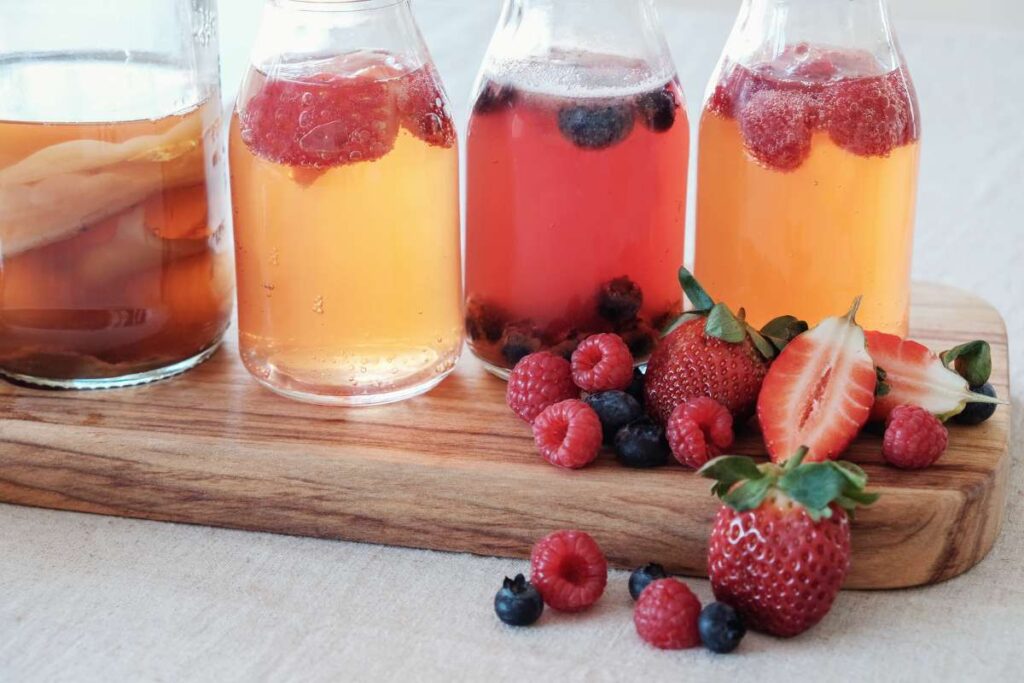
Fermented oat, almond, or cashew milks are designed for the vegan and lactose-intolerant community.
Ingredients: Oat, almond, or cashew milk cultures
How to make & Gut health benefit:
These drinks are made from fermented plant-based milk, like oat or almond. They support gut health without dairy. Probiotics improve digestion, reduce bloating, and support gut bacteria diversity. These drinks are ideal for vegans and lactose-intolerant individuals.
30. Specialty Functional Beverages:

Emerging shots that combine probiotics drinks with nootropics or collagen for multi-functional health benefits.
Ingredients: Probiotics, collagen, herbs
How to make & Gut health benefit:
These beverages combine probiotics with ingredients like collagen or herbs. They support gut health while also targeting skin, joints, or focus. Probiotics improve digestion and gut balance, while added ingredients support overall wellness. These drinks are designed for people seeking multi-purpose health support.
DIY Tips for Fermenting Your Own Drinks
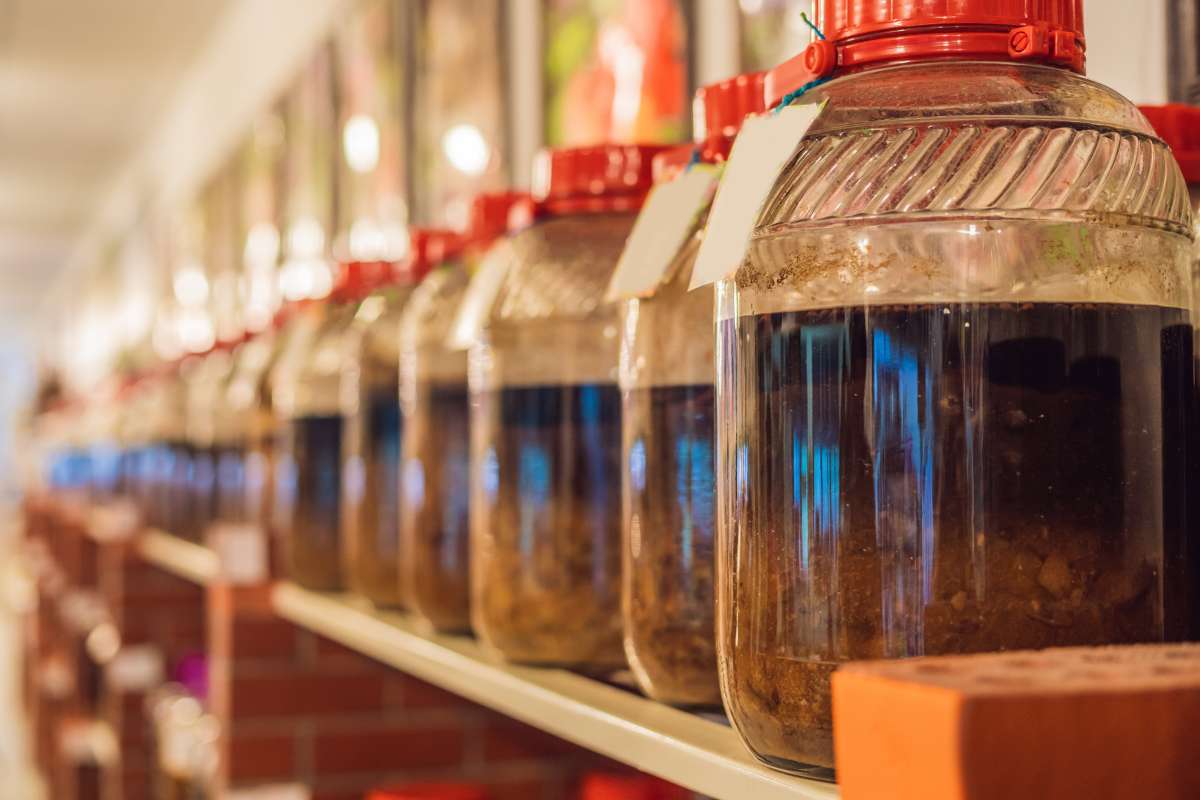
Home-brewing your own probiotics drinks is rewarding but requires precision. First, prioritize hygiene: always use sterilized glass jars to prevent harmful mold or cross-contamination. You will need a starter culture, such as a SCOBY for kombucha or live grains for milk and water kefir.
Keep your jars in a room-temperature spot away from direct sunlight; most ferments take 3 to 7 days, depending on the climate. Once the base is tart, experiment with flavoring: add fresh ginger, berries, or mint during a “second fermentation” for natural carbonation and an extra nutrient boost.
You may also like
- Detox Drinks for Glowing Skin: Sip Your Way to Radiance
- Juice Recipes for Glowing Skin: Sip Your Way to Radiance
- Best Protein Shakes for Health That Support Muscle, Metabolism, and Daily Wellness
Conclusion:
Your gut serves as the command center for your general health in addition to being a digestive organ. You can actively restore balance, improve digestion, and boost immunity from within by selecting the appropriate probiotics drinks. Consistency is more important than perfection, regardless of your preference for convenient, ready-to-drink options or tried-and-true homemade ferments. To diversify your microbiome, start small, pay attention to your body, and switch up your probiotics drinks. Sometimes all it takes to have a healthier gut is a daily drink that nourishes you from the inside out.
FAQ:
1. Are probiotic drinks safe to consume every day?
Yes, the probiotics drinks are generally safe for daily consumption for most healthy people. Regular intake helps maintain a balanced gut microbiome, supports digestion, and strengthens immunity. However, people with weakened immune systems or serious medical conditions should consult a healthcare professional before daily use.
2. What is the best time of day to drink probiotics?
Probiotics drinks are best consumed on an empty stomach or before meals. Especially in the morning. This allows more live cultures to survive stomach acid and reach the intestines effectively. Some people also benefit from drinking them before bedtime for overnight gut repair.
3. Are probiotics drinks suitable for people with lactose intolerance?
Absolutely. Many probiotic drinks are naturally lactose-free. Such as water kefir, kombucha, kanji, beet kvass, and fermented coconut water. Even dairy-based options like kefir often contain very low lactose due to fermentation.