Key Points:
- Ford posted a $4.8 billion loss in its EV division, driven by slowing demand, higher costs, and reduced incentives.
- The company is pivoting toward affordable EVs and hybrids, including a redesigned F-150 Lightning and a new low-cost platform.
- Industry-wide, automakers are recalibrating electrification plans as consumers prioritize affordability and practicality over ambitious EV targets.
Ford Motor Company is rethinking its electric vehicle (EV) strategy after its dedicated EV division reported a staggering $4.8 billion loss in 2025. The setback marks one of the company’s most significant financial hits in recent years and highlights the growing gap between ambitious electrification targets and actual consumer demand.
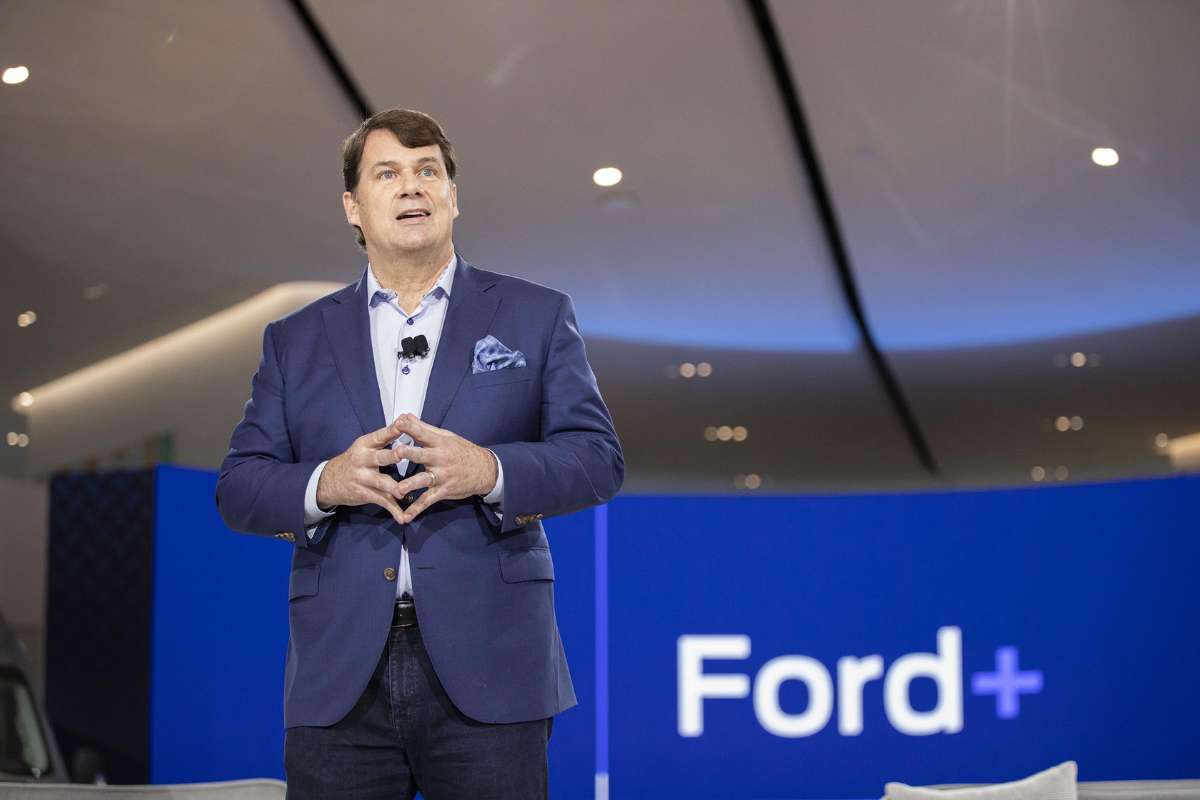
During the company’s earnings call, Ford CEO Jim Farley acknowledged the shift in market sentiment, stating that “the customer has spoken.” His remark reflected a broader realization within the company: while early enthusiasm for electric vehicles was strong, mainstream adoption has not accelerated at the pace automakers once anticipated.
Sales of key electric models, including the Mustang Mach-E and the all-electric F-150 Lightning, declined year over year. Analysts attribute part of the slowdown to the expiration of certain federal EV incentives and persistent concerns among buyers over pricing, charging infrastructure, and range limitations. The losses were compounded by external pressures, including tariff-related costs and supply chain disruptions, contributing to Ford’s largest quarterly net loss since the Great Recession.
Strategic Pivot Toward Affordability and Hybrids
In response, Ford is shifting gears. Rather than prioritizing premium electric vehicles built around legacy nameplates, the company plans to focus on developing more affordable, high-volume EVs alongside an expanded hybrid lineup.
A significant move includes discontinuing the current generation of the all-electric F-150 Lightning in its original form. Ford intends to introduce a revised version that better addresses customer expectations around towing capacity, battery efficiency, and overall value. The company believes this recalibration will better align its offerings with real-world usage patterns.
Central to the new approach is the development of a scalable, lower-cost EV platform. This “universal” architecture is expected to support a new generation of electric trucks and SUVs designed for mass adoption rather than niche appeal. The first model, reportedly a midsize pickup targeted at a price point near $30,000, is anticipated later this decade.
Despite the shift, Ford’s leadership has cautioned that losses in its EV division are likely to continue through the next two years. The company projects substantial restructuring and investment costs as it retools operations. However, executives have outlined a long-term goal of reaching breakeven in the EV business by the end of the decade.
A Broader Industry Slowdown
Ford CEO Jim Farley’s reset reflects a wider recalibration underway across the automotive sector. Legacy manufacturers that once raced to electrify their fleets are now balancing EV investments with renewed emphasis on hybrids and internal combustion models. Slower-than-expected EV adoption, high production costs, and intensified competition have prompted many automakers to reassess timelines and capital allocation.
Consumers, meanwhile, appear increasingly value-conscious. While interest in sustainability remains strong, affordability and practicality are shaping purchasing decisions more decisively than early industry forecasts predicted.
For Ford, the coming years will be pivotal. The company must manage ongoing EV losses while proving that its revised strategy can deliver profitability without compromising innovation. By listening closely to market feedback and prioritizing cost-effective electrification, Ford CEO Jim Farley aims to position the company for long-term competitiveness in a rapidly evolving mobility landscape.
The message from leadership is clear: ambition alone is not enough. In the transition to electric mobility, success will ultimately be determined not by vision, but by consumer demand.
Visit Visionary CIOs Magazine for the latest information.