Key Points:
- Sam Altman rejected claims that AI consumes excessive water and energy, calling many figures misleading.
- His comparison of AI training to human development sparked debate among tech leaders and critics.
- Industry voices continue to stress sustainability concerns, urging transparency and responsible infrastructure growth.
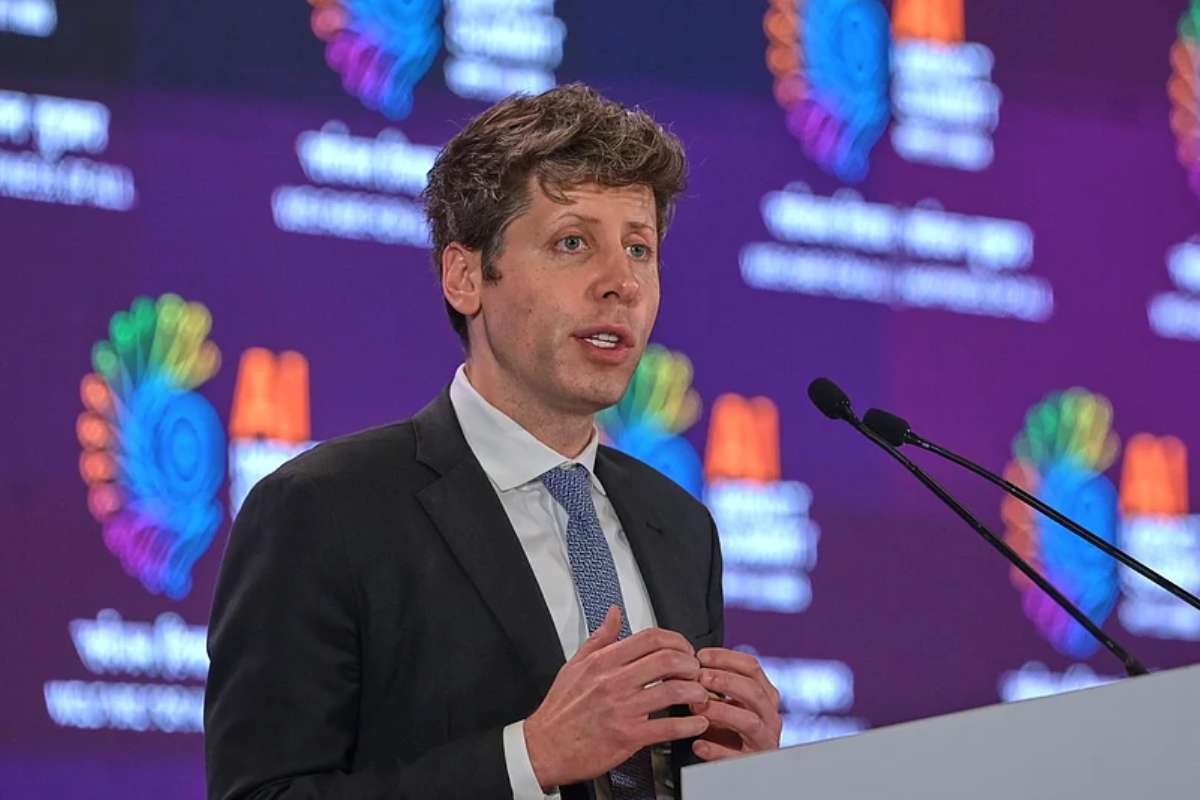
Sam Altman, CEO of OpenAI, has forcefully rejected growing concerns about artificial intelligence systems consuming excessive water and electricity. Speaking at a major global technology summit, Altman described widely circulated figures about AI’s environmental footprint as misleading and, in some cases, outright inaccurate.
In recent months, social media posts and research discussions have amplified claims that a single AI prompt can consume significant amounts of water due to data center cooling requirements. Addressing the issue directly, Altman argued that many of these numbers are based on outdated infrastructure models and fail to account for improvements in modern data center efficiency. He emphasized that newer facilities increasingly rely on advanced cooling systems designed to minimize water dependency.
Sam Altman acknowledged that AI systems require substantial computational power, particularly during model training phases. However, he stressed that per-query energy usage is relatively small. According to figures shared during the discussion, a typical AI interaction consumes a fraction of a watt-hour of electricity comparable to running a household appliance for a short duration. The broader environmental impact, he suggested, stems more from cumulative global demand than from individual user queries.
Comparing AI Training to Human Development Sparks Debate
One of the most debated moments of Sam Altman’s remarks came when he compared AI model training to the long-term energy investment involved in human development. He argued that educating and sustaining a human over decades requires significant resources, from food production to schooling and infrastructure. In that context, he suggested, AI systems may be more energy-efficient than commonly portrayed when evaluated on output per unit of energy consumed.
The comparison quickly sparked discussion across the tech and business communities. Critics argued that equating human growth with algorithmic training risks oversimplifying complex social and biological processes. Supporters, however, viewed the analogy as an attempt to reframe the conversation around efficiency metrics rather than a literal comparison between people and machines.
Sam Altman maintained that public discourse around AI sustainability should be grounded in measurable data rather than viral headlines. He reiterated that while energy usage is a legitimate concern, exaggerated claims can distort policy discussions and public perception.
Industry Leaders Weigh In as Sustainability Concerns Persist
The remarks prompted responses from other technology leaders. Sridhar Vembu, founder of Zoho Corporation, publicly criticized the framing of the comparison, warning against narratives that appear to position artificial intelligence as a replacement rather than a tool for humanity. He emphasized that technological development should prioritize human welfare and environmental responsibility.
Beyond executive commentary, environmental advocates continue to scrutinize the rapid expansion of AI-driven data centers. Concerns center on pressure placed on regional power grids, carbon emissions tied to electricity generation, and localized water use in areas already facing resource constraints.
Sam Altman, for his part, reiterated support for scaling AI infrastructure alongside cleaner energy solutions, including solar, wind, and next-generation nuclear power. He argued that innovation in energy production must advance in parallel with advances in computing.
As artificial intelligence becomes more deeply embedded in global economies, the debate over its environmental footprint is unlikely to fade. While industry leaders defend efficiency gains and technological progress, calls for greater transparency and sustainable infrastructure planning continue to grow, signaling that the conversation around AI’s true resource impact is far from settled.