Key Points:
- Fincke revealed he was the astronaut behind the medical incident that led to the historic first early termination of a Crew mission in the ISS’s 25-year history.
- Crew-11 safely returned to Earth on January 15, 2026, temporarily reducing the ISS crew to three until Crew-12 could restore full staffing.
- Now recovering at NASA’s Johnson Space Center, Fincke highlighted the real health risks of spaceflight and the robust medical protocols protecting astronauts.
NASA astronaut Mike Fincke, a seasoned space veteran, has revealed that he was the crew member whose health issue aboard the International Space Station (ISS) led to the early conclusion of his mission. The incident occurred on January 7, 2026, during his Expedition 74 assignment while he was preparing for a scheduled spacewalk. Fincke described it as a medical event that required immediate attention from his fellow astronauts and NASA flight surgeons, though he did not provide specific details about the condition. He emphasized that the prompt response of his colleagues helped stabilize his situation and prevent further complications.
This disclosure comes after months of speculation, as NASA initially reported a medical situation on the station but did not identify the astronaut involved, respecting privacy protocols. Fincke’s revelation brings clarity to the early return of Crew‑11 and offers insight into the real challenges of maintaining health in space, even for highly experienced astronauts.
Historic Early Return of Crew‑11
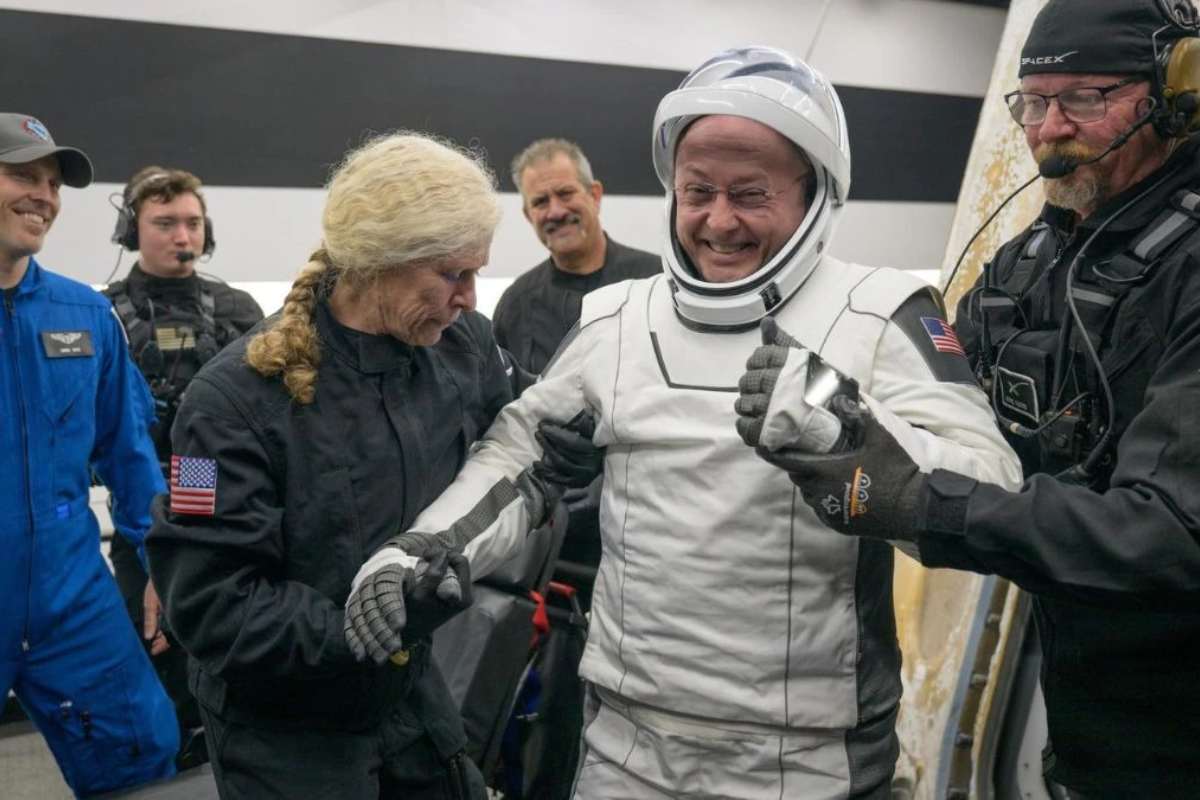
The decision to return Crew‑11 to Earth ahead of schedule marked a historic first for the ISS. It was the first mission in the station’s 25-year history to be cut short due to a medical issue. The crew, including Fincke along with astronauts Zena Cardman, Kimiya Yui, and Russian cosmonaut Oleg Platonov, safely undocked on January 14, 2026, and splashed down off the coast of San Diego the following day.
The early departure temporarily reduced the station’s crew from seven to three, leaving NASA astronaut Chris Williams and Russian cosmonauts Sergey Kud-Sverchkov and Sergey Mikayev to manage daily operations. This unexpected staffing adjustment required the remaining crew to reprioritize experiments and maintenance tasks, highlighting the delicate balance of crew resources on long-duration missions.
NASA quickly accelerated plans for the replacement Crew‑12 mission, ensuring that the station’s full complement could be restored and critical scientific research could continue without major disruption. While the shortened mission impacted some scheduled activities, Fincke’s safe return underscored the agency’s commitment to prioritizing crew health above all else, even in space.
Recovery and Reflections on Spaceflight Risks
Since returning to Earth, Mike Fincke has been undergoing standard post-flight rehabilitation at NASA’s Johnson Space Center in Houston. He reports that he is recovering well and expressed gratitude toward his crewmates, NASA medical personnel, and the SpaceX recovery teams for their rapid and professional support.
A retired US Air Force colonel and astronaut since 1996, Fincke has spent 549 days in space across multiple missions, making him one of the most experienced American astronauts in orbit. Reflecting on the experience, he acknowledged that spaceflight is a privilege but not without risks. Even for highly trained crews, unforeseen medical issues can arise, demonstrating the inherent challenges of living and working in microgravity for extended periods.
Mike Fincke’s candid disclosure also highlights NASA’s balance between operational transparency and crew privacy. By sharing his story, he hopes to raise awareness of the health challenges astronauts may face and reassure the public about the thorough medical protocols in place aboard the ISS. His experience underscores the complexity of human spaceflight and the vigilance required to safeguard crew wellbeing in one of the most hostile environments imaginable.