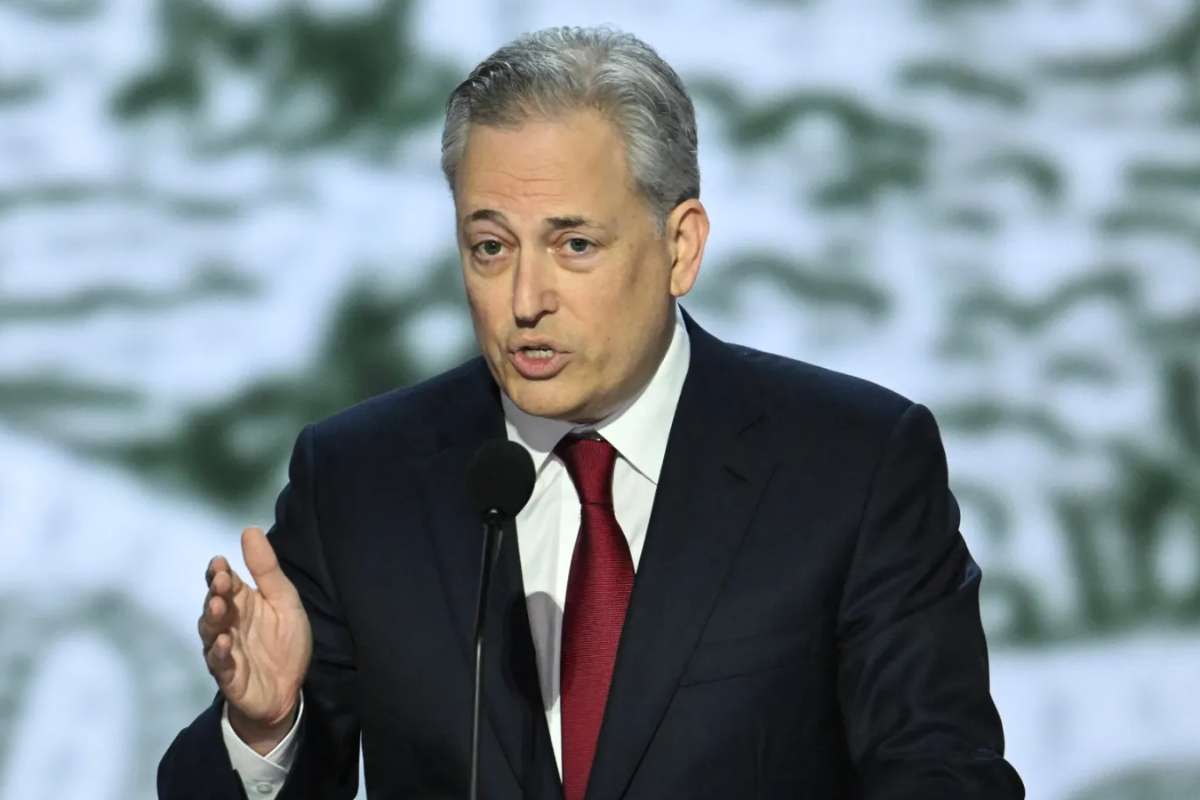
David Sacks has officially stepped down from his role as the White House’s top advisor on artificial intelligence and cryptocurrency, concluding his tenure under the special government employee classification. The designation, which limits the number of days an individual can serve in a federal advisory capacity within a year, prompted what appears to be a technical exit rather than a decisive break from policymaking.
Despite relinquishing the formal title of AI and crypto czar, David Sacks is not distancing himself from the administration’s technology agenda. Instead, his departure signals a structural adjustment that allows him to continue contributing without the constraints tied to his previous position. His ongoing involvement reflects the administration’s continued reliance on his expertise at a time when AI and digital assets are central to economic and geopolitical strategy.
Throughout his tenure, Sacks positioned himself as a key intermediary between Silicon Valley and Washington. His deep roots in the tech ecosystem and proximity to decision-makers enabled him to influence high-level conversations around innovation, regulation, and global competitiveness. Even without an official title, his presence in advisory circles ensures that his voice will remain relevant.
An Ambitious Agenda That Sparked Debate
David Sacks’s time in office was marked by a strong push to reshape how the United States approaches artificial intelligence. He advocated for a centralized national framework, arguing that inconsistent state-level regulations could slow innovation and weaken the country’s standing against global competitors.
This approach, however, proved divisive. State leaders and political stakeholders raised concerns about federal overreach, emphasizing the importance of local control in governing emerging technologies. The resulting tensions highlighted a broader challenge in U.S. tech policy: balancing innovation with governance while maintaining political consensus.
In addition to AI, David Sacks played a visible role in shaping cryptocurrency policy. He supported a more open environment for digital assets, encouraging regulatory clarity while promoting growth within the sector. His broader vision centered on positioning the United States as a global leader in both artificial intelligence and blockchain-driven innovation.
At the same time, his outspoken nature occasionally drew scrutiny. Public commentary on sensitive geopolitical matters, including calls for de-escalation in international conflicts, blurred the traditional boundaries of a policy advisor’s role. While some viewed this as a sign of independent thinking, others saw it as a source of friction within political and administrative circles.
Critics argued that his assertive policy style made consensus-building more difficult, while supporters credited him with injecting urgency and direction into complex policy discussions. Regardless of perspective, his tenure left a clear imprint on the administration’s technology priorities.
A New Role With Broader Reach
Following his formal exit, David Sacks is expected to continue influencing policy through a leadership role on the President’s Council of Advisors on Science and Technology. This transition allows him to remain embedded in strategic discussions while expanding his scope beyond artificial intelligence and cryptocurrency.
Unlike his previous position, this advisory role is not subject to the same time limitations, giving him the flexibility to engage more consistently in long-term planning. It also places him within a broader network of experts from academia and industry, further amplifying his ability to shape national innovation strategies.
Notably, the administration has not announced a direct successor to the AI czar role. This absence suggests that Sacks’ influence may persist informally, even as the official structure evolves. It also reflects a broader trend in policymaking, where influence is increasingly exercised through advisory networks rather than formal titles.
His transition comes at a pivotal moment, as debates over AI regulation, digital currency frameworks, and global tech competition continue to intensify. While his official role has ended, David Sacks’ continued presence underscores a key reality: in today’s policy landscape, influence is not defined solely by titles, but by access, expertise, and the ability to shape conversations behind the scenes.
In that sense, his departure may mark the end of a designation but not the end of his impact.