Key Takeaways:
- Jamie Dimon warned that investors are underestimating global geopolitical and fiscal risks.
- The CEO stated he would personally avoid broader stocks and long-term Treasurys.
- Dimon cautioned that massive AI spending might not pay off on schedule.
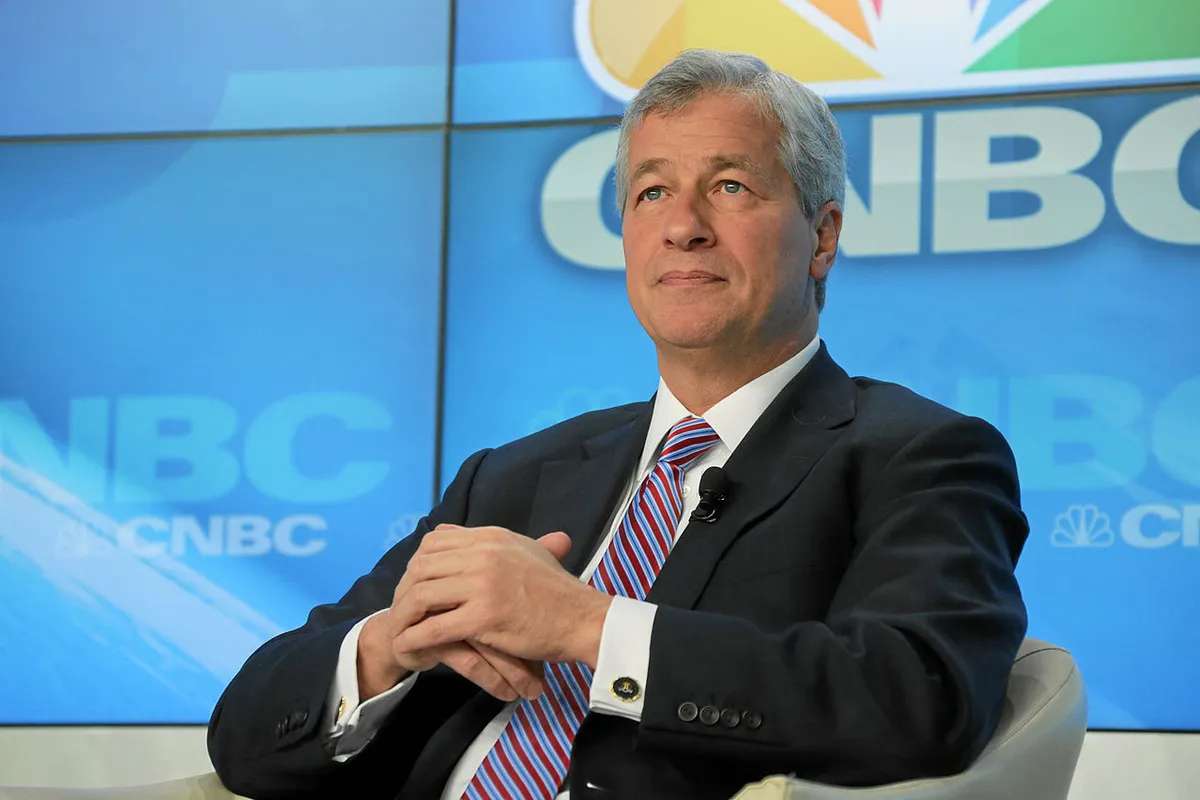
JPMorgan Chase CEO Jamie Dimon says investors are underestimating geopolitical and fiscal risks, warning that he would not buy U.S. stocks or long-dated Treasurys at current prices despite resilient markets and easing inflation.
Dimon Warns Geopolitical Risks Could Trigger Market Shock
JPMorgan Chase CEO Jamie Dimon said investors are failing to fully account for growing global risks that could disrupt financial markets, according to an interview released Monday on The Master Investor Podcast with Wilfred Frost.
Dimon pointed to conflicts in Ukraine and the Middle East, rising tensions between the United States and China, and increasing military spending alongside expanding government deficits as major concerns.
“I do think those risks are probably bigger than other people think,” Dimon said.
While acknowledging that markets may already reflect some uncertainty, Dimon said the true impact of future events remains difficult to predict.
“It’s possible something’s baked in, but what’s not baked in is what actually happens,” he said.
Dimon, who has repeatedly cautioned about economic risks in recent years, said the global economy has become more resilient because countries rely less on energy imports than in previous decades. However, he warned that resilience does not eliminate the possibility of a sudden downturn.
“You may need more straws on the camel’s back to cause that tipping point,” he said.
CEO Says Current Stock and Bond Prices Offer Little Appeal
Dimon also expressed caution toward both equity markets and long-dated U.S. Treasury bonds, saying current valuations leave little room for attractive returns.
Asked whether he would purchase long-term Treasuries, Dimon replied, “Personally, no.”
He said that even if inflation returns to the Federal Reserve’s 2% target, the yield on the 10-year Treasury should likely remain between 4% and 4.5%, suggesting limited upside for bond prices.
Dimon was similarly skeptical about the broader stock market.
While he said he would consider buying an individual company with strong long-term prospects, he added that he would not invest in the overall market at current valuation levels.
His comments contrast with investor optimism that has pushed the S&P 500 up nearly 10% this year. Markets have remained strong as consumer spending has held steady, inflation has eased, and enthusiasm surrounding artificial intelligence has fueled technology stocks.
Dimon Sees AI Potential but Warns Against Unrealistic Expectations
Dimon also addressed the rapid growth in artificial intelligence investment, comparing today’s spending to the early expansion of the internet.
“The amount of money being spent is huge. Will it in total pay off? Probably, just like the internet did,” he said.
However, he cautioned that investors should not expect immediate success or assume today’s market leaders will dominate the industry over the long term.
Dimon noted that early internet companies such as Yahoo and Netscape eventually lost their leadership positions, while later entrants including Google and Facebook emerged as dominant players.
“Will it pay off the way you expect and the timetable you expect? Definitely not,” he said.
His remarks come days after JPMorgan Chase and several major U.S. banks reported strong quarterly earnings driven by higher trading and investment banking revenue, reinforcing confidence that the U.S. economy has remained resilient despite geopolitical uncertainty.
Still, Jamie Dimon said persistent federal budget deficits could eventually force higher borrowing costs as investors demand greater compensation to finance government debt, creating additional pressure on financial markets.