Key takeaways:
- Nvidia chief executive Jensen Huang advised purchasing stocks during market dips.
- Artificial intelligence market shares experienced a significant sharp downturn in May.
- Nvidia stock prices have steadily outperformed the broader stock market index.
In June, Nvidia CEO Jensen Huang urged investors in Seoul to buy discounted artificial intelligence shares during a major market downturn, framing temporary paper losses as a great strategic buying opportunity.
Jensen Huang advises buying discounted tech shares
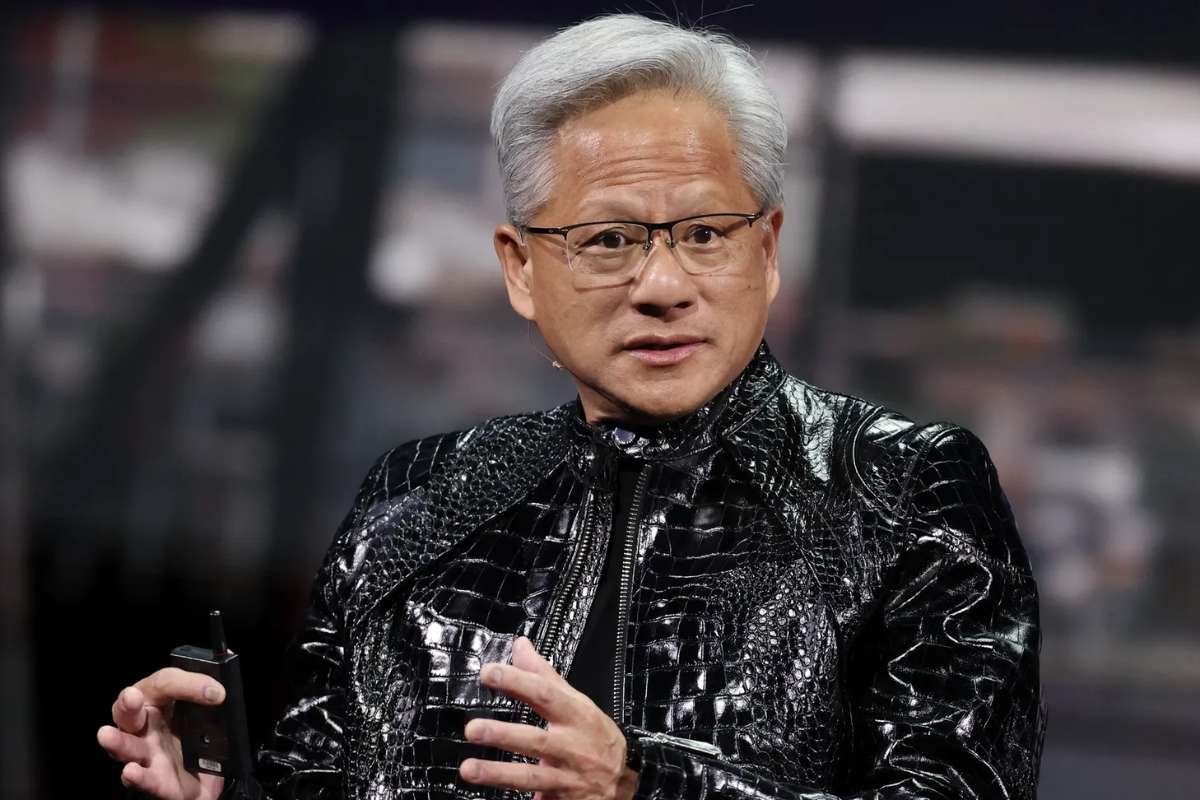
During business meetings in Seoul, Nvidia Chief Executive Jensen Huang addressed sudden market changes directly with financial reporters. He traveled to South Korea to finalize an important partnership with memory chipmaker SK Hynix to design next-generation artificial intelligence memory chips, a move central to Nvidia’s broader AI strategy. Between these official events, Huang explained that the market correction offered a rare buying opportunity rather than a reason for panic.
He encouraged investors to view temporary paper losses as a positive event instead of an economic crisis. He noted that everyday people should feel excited to purchase valuable technology assets at lower prices.
“We’re at the beginning of it, and whatever happened to the stock market, you should be very happy because now you can buy at a discount. Everybody should be very excited,” Huang told reporters during his public statements. His remarks helped calm jittery retail investors across global financial markets who feared a deeper technological slowdown.
Evaluating recent artificial intelligence market drops
In May, artificial intelligence stocks began to slide because institutional investors worried that market prices had climbed far beyond reality. On May 14, Nvidia stock surpassed two hundred thirty-five dollars per share, which pushed the company’s market value to five point seven trillion dollars.
Soon after this record peak, major technology shares took a heavy beating across global financial markets. Nvidia shares dropped 15 percent over the following weeks as market sentiment shifted toward caution. At the same time, shares of popular hyperscalers Amazon and Alphabet each plunged 11 percent. Many market participants grew nervous that the rapid artificial intelligence boom had grown much too fast for sustainable economic fundamentals.
Tracking long-term technology stock performance
Two months after these public remarks, financial data shows how this guidance has worked out for market participants. Investors who put their money into Nvidia stock on June 8 saw positive returns. Nvidia shares advanced by 5.1 percent, beating the S&P 500 index increase of 4.3 percent.
A broader basket of equal parts Nvidia, Microsoft, Amazon, and Alphabet performed even better during that same period. Microsoft stock rose 18.5 percent, and Amazon shares increased by 11.1 percent, while Alphabet dipped 0.5 percent. That diversified four-stock group produced overall returns of 8.5 percent, doubling the gain of the benchmark index.
Furthermore, market analysts emphasise that Huang was not addressing a short two-month boom but looking years into the future, according to Reports. Massive spending on artificial intelligence represents only the tip of the iceberg, with solid long-term gains predicted for companies over years rather than months.