When we step into any system where people say, “This is how things have always been.” Most people accept it and move on. A few complain. But very rarely, someone decides to change it.
That rare mindset defines Kiran Bedi.
Her story is not just about becoming India’s first woman IPS officer. It is about challenging comfort zones, questioning old systems, and proving that courage can reshape institutions. Throughout her career, Kiran Bedi showed that leadership does not come from a badge or a title. It comes from actions that protect fairness, discipline, and responsibility.
Today, India is moving toward a bold vision for the future. Conversations about governance, innovation, and national progress are becoming stronger. Platforms like the Bharat 2.0 Conclave bring these conversations to life by gathering leaders, thinkers, and changemakers who want to push the country forward.
At such a moment, voices with real experience matter the most. Leaders who have faced pressure, taken risks, and delivered results bring valuable perspective. That is why the presence of Kiran Bedi at the Bharat 2.0 Conclave carries special meaning.
Her journey reflects the qualities that modern leadership demands: clear thinking, moral strength, discipline, and fearless action. These qualities are not limited to public service. They apply to business leaders, young professionals, entrepreneurs, and students preparing for the future.
Before hearing her insights at the Bharat 2.0 Conclave, it is worth pausing to understand the leadership lessons hidden in her journey. These lessons remain powerful, practical, and deeply relevant for anyone who wants to lead with purpose in a rapidly changing world.
Top 7 Leadership Lessons Inspired by the Journey of Kiran Bedi
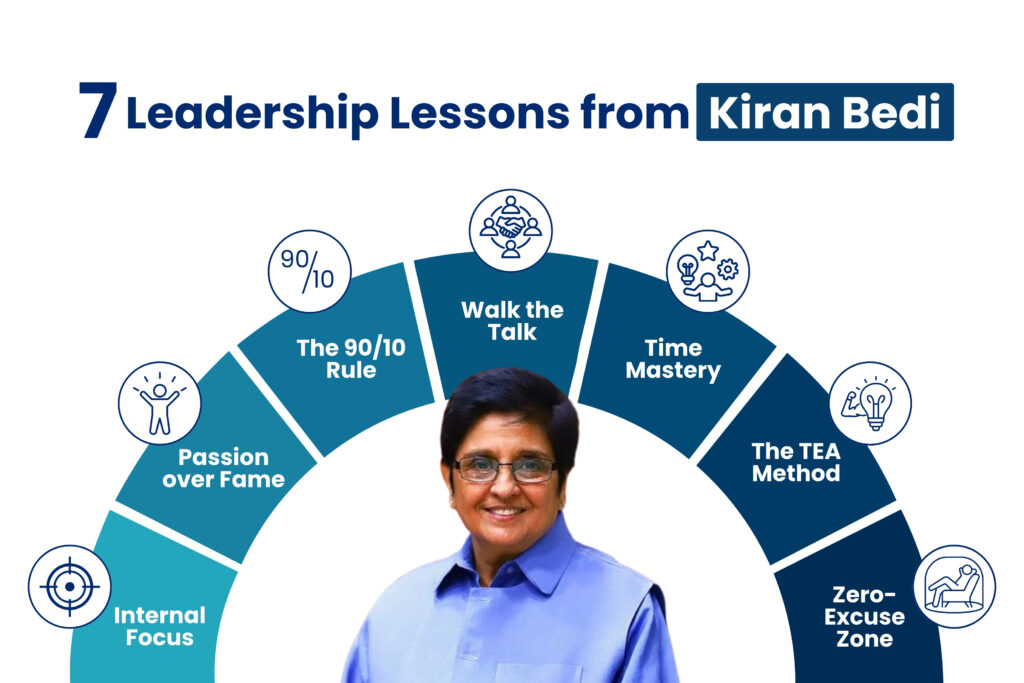
1. Build an Internal Standard for Excellence
Most people measure success through applause.
Promotions. Awards. Praise from bosses.
But Kiran Bedi built her career with a different mindset.
She believes that the strongest leaders evaluate themselves before others do.
An internal standard creates powerful discipline. It removes dependency on external validation.
This mindset appears clearly in conversations around Bharat 2.0 Conclave, where leadership discussions focus on accountability.
Leaders who rely on applause lose direction when applause disappears. Leaders who rely on personal standards stay consistent.
➟ How to implement this mindset?
- Create personal benchmarks: Define quality standards for your work even when nobody asks for them.
- Practice weekly reflection: Spend ten minutes every Friday reviewing your work honestly.
- Track personal growth: Compare your progress with your past performance.
Internal accountability remains one of the strongest leadership ideas associated with Kiran Bedi.
2. Love the Work More Than the Reward
Recognition feels good. Everyone enjoys appreciation.
But great leaders focus on the work itself.
Throughout her career, Kiran Bedi worked with deep commitment to service rather than fame. Her decisions often attracted attention, but the goal remained the same: doing the job right.
Sustainable leadership grows from passion for the mission, not passion for recognition.
When leaders enjoy the work itself, motivation stays stable. Pressure becomes easier to handle.
➟ Practical ways to apply this lesson
- Focus on impact: Ask who benefits from your work.
- Build craft mastery: Spend time improving the quality of your skills.
- Separate effort from applause: Do your best work even when nobody notices.
3. Take Ownership of Your Decisions
Life always brings uncertainty.
Traffic delays. Economic shifts. Unexpected challenges.
Yet Kiran Bedi often reminds people that the majority of life outcomes come from personal decisions. Ownership transforms mindset.
People who blame circumstances feel powerless. People who accept responsibility gain control over their path.
➟ How to practice ownership?
- Use the 90/10 rule: Write down what you cannot control. Focus on what you can change.
- Avoid blame for one full day: Do not blame traffic, weather, or others.
- Maintain a decision journal: Record the reasons behind major decisions.
4. Integrity Must Be Visible
Integrity often sounds like a simple word. But true integrity demands courage.
One of the most famous moments in Bedi’s career involved enforcing a parking rule. Her team towed a vehicle belonging to the Prime Minister’s office because it violated traffic rules.
The action sent a powerful message. Rules apply equally to everyone.
Integrity becomes meaningful only when actions support words.
➟ Steps leaders can follow.
- Lead through example: Follow the rules you expect others to follow.
- Respect commitments: Small promises build large trust.
- Stay fair during pressure: Fairness matters most when powerful people test the rules.
Integrity-driven leadership remains a key value shared by Bedi.
5. Discipline Creates Freedom
Many people view discipline as a restriction. But Kiran Bedi treats discipline as a powerful tool for freedom.
Her early years as a national-level tennis player taught her the importance of time and preparation.
Later administrative roles demanded precise time management and decision-making.
These experiences shape the leadership ideas she often shares at Bharat 2.0 Conclave.
Leaders who manage time effectively create space for bigger goals.
➟ Simple habits for stronger discipline
- Start meetings early: Arrive five minutes before the scheduled time.
- Plan daily priorities: Assign specific tasks to specific hours.
- Limit distractions: Reduce activities that waste time.
6. Trust Builds Strong Teams
Leadership does not mean standing above the team. It means standing with the team.
During her administrative roles, Kiran Bedi encouraged collaboration and participation. She uses a simple tool called TEA: Trust, Empowerment, and Accountability. First, you must trust your team. Then, you give them the power to act.
This philosophy appears in many leadership discussions connected with Bharat 2.0 Conclave. Trust increases confidence. Empowerment increases creativity. Accountability ensures results.
➟ Team building practices
- Encourage ideas: Ask team members how they would solve problems.
- Delegate responsibility: Give people ownership of tasks.
- Review progress together: Celebrate success and analyse mistakes.
7. Rise Above Circumstances
Every career faces obstacles.
Limited resources. Difficult environments. System failures.
But Kiran Bedi often promotes a mindset she calls constructive dissatisfaction. This means never accepting average results when improvement is possible. Such thinking aligns closely with leadership discussions at Bharat 2.0 Conclave.
Leaders must look for solutions rather than excuses.
➟ Ways to practice this mindset
- Focus on solutions: Spend less time complaining and more time improving systems.
- Upgrade skills regularly: Continuous learning increases resilience.
- Improve existing processes: Small improvements create big results over time.
This mindset of constant improvement reflects the leadership philosophy shared by Bedi.
The Historic Journey of Kiran Bedi
The leadership story of Kiran Bedi began in 1972.
That year, she became the first woman officer in the Indian Police Service.
The achievement changed the perception of women in policing. It opened doors for future generations. Her career included several groundbreaking reforms.
Her most famous reform, the “3C model”, happened at Tihar Jail in Delhi. Instead of focusing only on punishment, Bedi introduced rehabilitation programs. Inmates gained access to education, meditation, and skill development.
These initiatives transformed prison culture and attracted global attention. Her work also extended beyond India.
She served as a Police Advisor for the United Nations in peacekeeping missions. Later, she became the Lieutenant Governor of Puducherry.
Throughout these roles, Kiran Bedi continued to promote transparency, discipline, and citizen participation.
These values remain central to discussions at Bharat 2.0 Conclave.
What Kiran Bedi Is Doing Today?
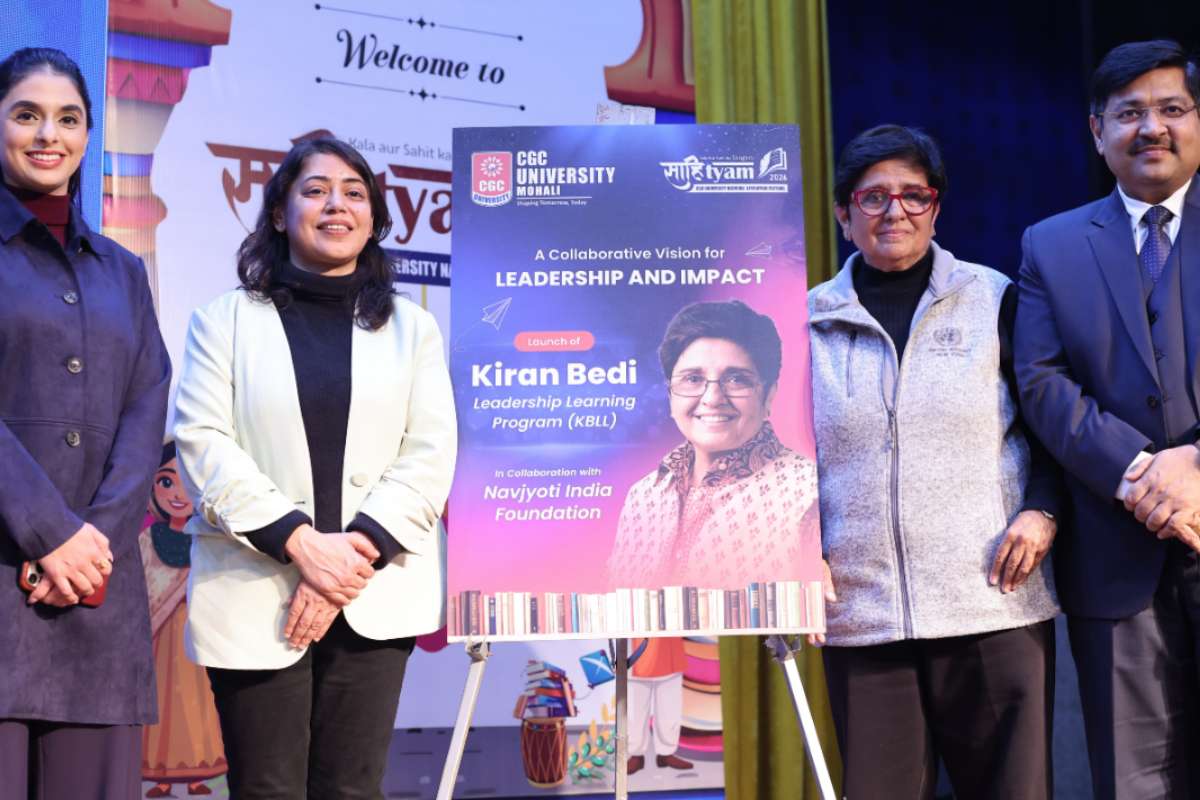
Today, Kiran Bedi focuses on mentoring young leaders and strengthening social reform initiatives.
She runs programs that teach leadership through real-life simulations. These programs help students practice decision-making during complex situations.
Her two major organisations continue social work across India.
Navjyoti India Foundation
India Vision Foundation
These initiatives support children, families, and communities affected by crime, poverty, and lack of education.
Environmental awareness has also become one of her major focus areas. She has advocated for stronger systems for monitoring air quality and improving environmental governance. These initiatives reflect the same leadership values she brings to discussions at Bharat 2.0 Conclave.
Conclusion
Leadership rarely begins with power. It begins with character.
The journey of Kiran Bedi proves that courage, discipline, and integrity can transform institutions and inspire millions.
Her presence at Bharat 2.0 Conclave reminds us that strong nations grow through strong values. For young professionals, entrepreneurs, and students, the lessons remain clear.
Lead with honesty. Take responsibility. Respect time. Improve systems.
When leaders follow these principles, progress becomes possible. And that is the spirit that Bedi continues to promote for the future of India.
FAQs
Q) What major reform did Kiran Bedi introduce at Tihar Jail?
Kiran Bedi transformed Tihar Jail from a place of punishment into a centre for reform. She introduced yoga, meditation, education, and skill programs to help inmates rebuild their lives.
Q) Does Bedi still work with the public today?
Yes. Kiran Bedi supports the vision of Viksit Bharat 2026 and shares leadership and discipline lessons through her YouTube channel, Demonstrative Learning.
Q) What does the “TEA” leadership mantra mean?
TEA stands for Trust, Empowerment, and Accountability. It means trusting your team, giving them the power to act, and ensuring everyone takes responsibility for results.