Key Points:
- OpenAI launches GPT‑5.2 as its most advanced professional AI
- Three variants—Instant, Thinking, Pro—target speed, analysis, and precision
- Stronger reasoning and reliability set the stage for enterprise adoption
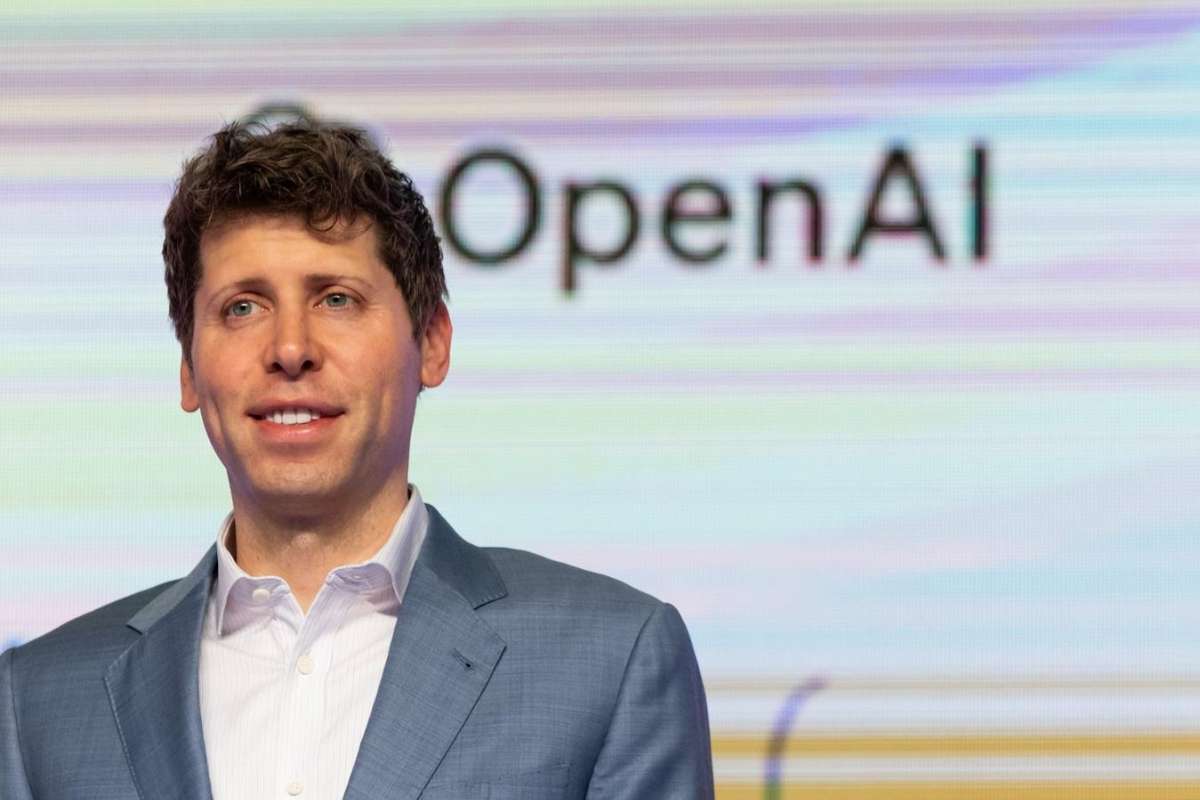
OpenAI has announced the release of GPT-5.2, describing it as the company’s most advanced and capable AI model designed specifically for professional and enterprise applications. The company’s CEO, Sam Altman, signaled high expectations for the new system, suggesting that GPT-5.2 represents a major leap toward AI tools that can match and in some cases exceed human-level performance in specialized tasks.
The model arrives in three variants: Instant, Thinking, and Pro, allowing users to choose between faster responses or deeper, more technical reasoning. While Instant focuses on high-speed interactions, the Thinking version is geared toward structured analysis, and the Pro variant delivers the highest precision for scientific, engineering, and enterprise-grade workflows.
The launch also reflects growing competitiveness within the AI sector, pushing OpenAI to accelerate advancements that elevate both capability and reliability in high-stakes professional environments.
Stronger Reasoning, Lower Error Rates, and Improved Context Handling
GPT-5.2 introduces significant improvements in reasoning accuracy and overall reliability. The model can process complex instructions, analyze large documents, and perform advanced multi-step reasoning with more consistency than previous versions. This marks a significant shift toward AI tools capable of supporting intricate, real-world decision-making.
Enhancements in long-context handling allow GPT-5.2 to maintain coherence across extensive legal documents, financial datasets, research material, and technical analysis. Users report fewer factual errors and a notable reduction in hallucinations, long considered one of the biggest challenges in large language models.
Performance benchmarks reveal that the Thinking and Pro variants perform exceptionally well in tasks traditionally handled by trained professionals, including accounting, data modeling, legal assessments, and scientific analysis. These improvements underpin Sam Altman’s confidence that GPT-5.2 can play a transformative role in professional workflows.
With rollout underway across paid ChatGPT plans and the developer API, OpenAI is ensuring a gradual, stable deployment to maintain system performance at scale.
Market Dynamics and Industry Implications
The debut of GPT-5.2 comes at a pivotal moment in the global AI competition, as multiple companies race to release increasingly sophisticated models. OpenAI’s focus on professional-grade capability reflects its broader strategy to maintain leadership in the next phase of AI adoption, one where reliability, accuracy, and workflow integration matter as much as raw model size.
Industry analysts believe GPT-5.2’s improved performance could accelerate enterprise adoption of AI across sectors such as finance, research, consulting, cybersecurity, and design. The tiered structure also offers flexibility for organizations to balance speed, cost, and analytical depth depending on operational needs.
OpenAI’s latest release signals a future where AI systems become deeply embedded in organizational decision-making, automating complex tasks, supporting high-stakes analysis, and driving productivity at scale. With GPT-5.2, Sam Altman positions the company at the front of this shift, expecting the model to reshape how businesses and professionals use AI in everyday operations.
Visit Visionary CIOs for the latest information.