The creator economy has exploded over the past few years, growing into a $250+ billion industry in 2025, and analysts predict it will cross $480 billion by 2027. With millions of individuals building careers online, the demand for powerful, flexible, and profitable platforms for content creators has never been higher. Whether someone is producing videos, newsletters, design content, short-form reels, podcasts, or community-led courses, every creator today needs a digital home that amplifies reach, boosts engagement, and opens long-term monetization opportunities.
As the competition rises, creators are no longer limiting themselves to a single platform. Instead, they are strategically choosing spaces that offer visibility, niche audience discovery, community-building features, and reliable earning models. From video-first ecosystems like YouTube and TikTok to community-driven networks like Mighty Networks and subscription tools like Substack, the best platforms for content creators directly influence how far a creator’s brand can grow.
This blog dives deep into the most effective platforms available today, what makes them successful, what types of creators they serve best, and how to choose the right mix to achieve consistent growth. Whether you’re a beginner or a seasoned creator, this guide will help you navigate the evolving digital landscape with clarity and confidence.
What Makes a Great Platform for Content Creators?
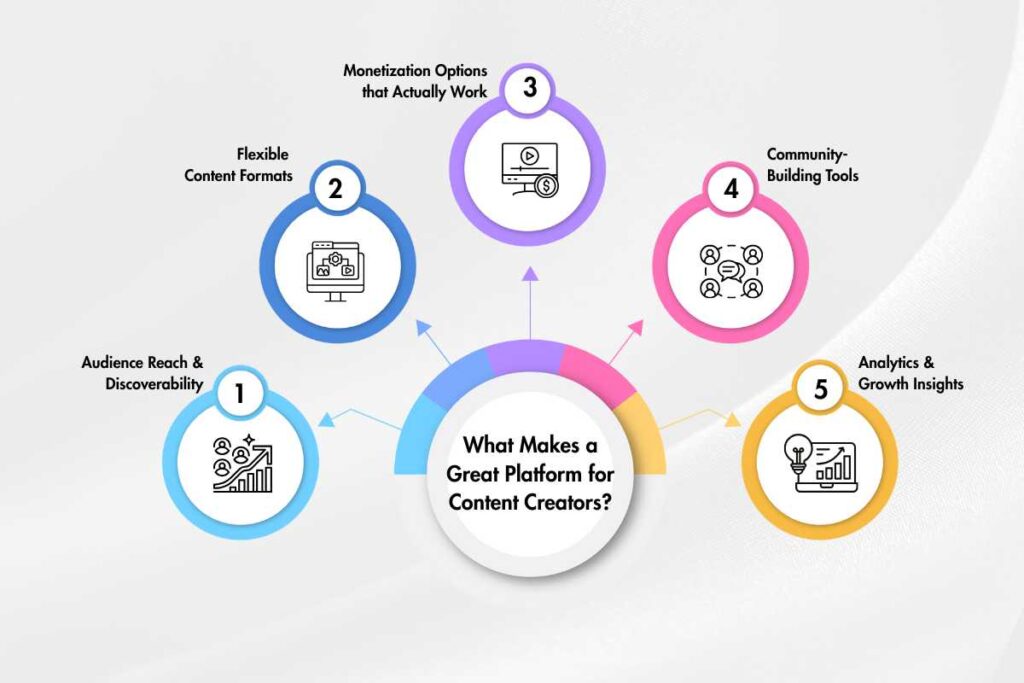
With hundreds of digital tools available today, not all platforms for content creators offer the same level of growth, visibility, or earning potential. Choosing the right one requires understanding what separates an average platform from a truly effective one. The most successful creators often choose platforms that offer four core strengths: audience reach, content flexibility, monetization opportunities, and long-term creator support.
1. Audience Reach & Discoverability
A strong platform helps creators get discovered organically. For example, TikTok’s algorithm pushes new creators into trending streams, and YouTube still accounts for over 2.7 billion active monthly users, making it one of the most powerful discovery engines. High discoverability means creators spend less time fighting the algorithm and more time engaging with their ideal audience.
2. Flexible Content Formats
The best platforms for content creators allow multiple forms of content, videos, photos, newsletters, livestreams, and community posts. Creators are shifting toward multi-format workflows, and platforms like Instagram, YouTube, and Mighty Networks support diverse storytelling styles, making it easier to expand content strategy without switching apps.
3. Monetization Options that Actually Work
In today’s creator economy, monetization isn’t a bonus; it’s expected. The strongest platforms offer:
- Ad revenue sharing
- Paid memberships
- Brand partnerships
- Subscription-based content
- Tips, gifts, and in-app monetization
Creators increasingly prefer platforms that are transparent and offer direct financial returns for their work.
4. Community-Building Tools
Modern creators don’t just want followers; they want communities. Platforms for Content creators like Mighty Networks and Patreon are leading this shift by offering private groups, paid communities, courses, and events. These tools help creators build deeper relationships and recurring income instead of relying solely on algorithms.
5. Analytics & Growth Insights
Data matters. Whether it’s YouTube’s advanced analytics dashboard or Instagram’s insights for engagement and reach, performance data helps creators understand what works, what doesn’t, and how to optimize content for future growth. Strong analytics tools often separate hobbyists from full-time creators.
Top 10 Platforms for Content Creators (Ranked by 2025 Monthly Active Users)
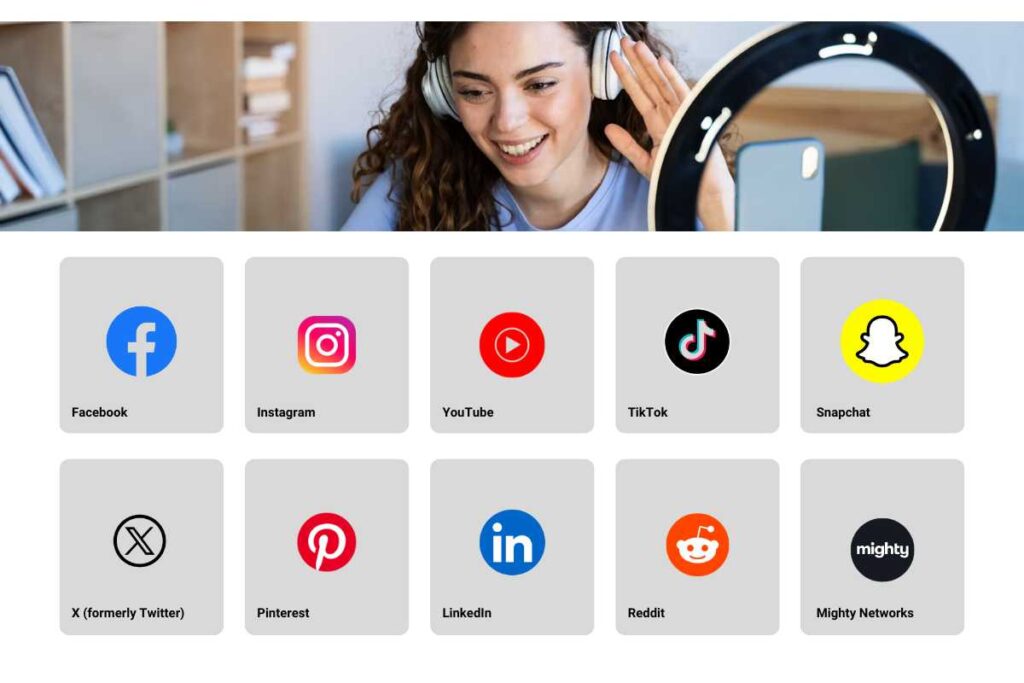
The creator economy now hosts over 303 million creators globally (SignalFire), and choosing the right platform often determines who grows, who monetizes well, and who builds a lasting digital brand. Below is a refined list of the best platforms, enriched with performance insights, audience behavior, and creator-friendly features.
1. Facebook
| Monthly Active Users (2025) | 3.07 Billion |
| Best For | Educators, community builders, lifestyle creators, fitness coaches, and family-oriented content creators. |
| Monetization Strength | In-stream ads, paid groups, Stars, brand partnerships, subscriptions, and affiliate promotions. |
Although often underestimated, Facebook still stands as one of the largest content hubs, especially for long-form engagement, community building, and niche-focused groups. Reels on Facebook are now one of the leading drivers of video discovery, especially among audiences aged 28–45. As one of the most versatile platforms for content creators, the platform’s group-based communities continue to thrive, giving creators a way to engage deeply and consistently with fans beyond the algorithm. Monetization tools like Stars, in-stream ads, and paid groups offer a steady income model for creators focusing on teaching, lifestyle content, and live events.
Why Facebook Still Matters?
- Facebook has 3+ billion monthly active users, the largest social media user base.
- Over 1.8 billion people use Facebook Groups every month, making it the best platform for community-driven creators.
- Facebook Watch generates over 1 billion views daily, supporting video-first creators.
2. Instagram
| Monthly Active Users (2025) | 3 Billion |
| Best For | Lifestyle, travel, beauty, fitness, fashion, brand-building creators. |
| Monetization Strength | Brand deals, affiliate tagging, and collaborations. |
As one of the most influential platforms for content creators, Instagram blends creativity, lifestyle storytelling, and community engagement better than nearly any other app. Reels remain the fastest-growing format in 2025, contributing to a 32% rise in time spent on video content. The platform’s shopping features, brand collaborations, and creator marketplace make it a lucrative space for influencers, fashion creators, beauty experts, fitness coaches, and more. Instagram also continues to roll out tools that prioritize creators, including subscriptions, broadcast channels, and advanced analytics, making it a visually rich hub for expression and income-generation.
Why Creators Love It:
- Reels get 30% more engagement than regular posts.
- 90% of users follow at least one creator or brand.
- Instagram’s Creator Marketplace helps brands find creators faster.
3. YouTube
| Monthly Active Users (2025) | 2.53 Billion |
| Best For | Tech reviews, finance creators, educators, vloggers, storytellers. |
| Monetization Strength | Ads, memberships, Super Thanks, affiliate links, brand deals. |
YouTube remains the undisputed global powerhouse for video creators. With short-form, long-form, livestreaming, and community posts all thriving on the platform, YouTube gives creators unmatched visibility and long-term discoverability. Its algorithm favors consistent, high-quality content, making it possible for a single video to change a creator’s career overnight. The YouTube Partner Program, now expanded to include Shorts monetization and fan funding tools like Super Thanks and Channel Memberships, continues to be one of the most rewarding ecosystems for creators seeking stable income. For many, YouTube is not just a platform; it’s the ultimate launchpad for digital entrepreneurship.
Why It Stands Out:
- YouTube Shorts now receives 70+ billion views per day, boosting discoverability.
- Long-form content builds deep trust, making it ideal for educational niches.
- Search-friendly — 70% of users go to YouTube to learn something new.
4. TikTok
| Monthly Active Users (2025) | 1.04 Billion |
| Best For | Comedy, fashion, beauty, challenges, and education in bite-sized formats. |
| Monetization Strength | Creator Rewards, TikTok Shop commissions, LIVE gifting. |
TikTok’s cultural impact is unmatched. It transformed short-form video into a global language, making content creation accessible, fast, and fun. Its algorithm is famously designed to give visibility to new creators, meaning anyone, regardless of following size, can go viral. In 2025, TikTok expanded deeper into search-based content, educational videos, and localized creator hubs. The app also introduced improved creator monetization programs, including the Creativity Program and in-video shopping integrations, helping creators convert trends into tangible income streams.
Key Data Insights:
- TikTok’s largest audience in the United States (135M+ users)
- The largest demographic on TikTok is users aged 18 to 35 (14.1%).
- TikTok is the fastest social network to hit 1 billion active users.
5. Snapchat
| Monthly Active Users (2025) | 900 Million |
| Best For | Lifestyle creators, beauty influencers, comedians, storytellers, and Gen Z-focused brands. |
| Monetization Strength | Snapchat Spotlight earnings, brand deals, Snap ads revenue share, and sponsored AR Lenses. |
Snapchat thrives on authenticity and real-time content. The app continues to be popular among younger audiences, offering features like Spotlight for viral video creation and AR Lenses for immersive storytelling. Brands increasingly partner with Snapchat creators for short, impactful campaigns. The platform’s revenue-sharing programs, Creator Collab Studio, and analytics tools give creators opportunities to grow visibility and earn a steady income through portrait-style, casual, and spontaneous content formats.
Key Data Insights:
- Daily Active Users (DAU) in Q3 2025 stood at ≈ 477 million.
- The short‑form video feed feature Spotlight saw over 550 million MAUs on average in Q2 2025, and Spotlight now accounts for 40%+ of total content time spent on Snapchat.
- In 2024, Snapchat users created over one trillion “selfie Snaps” across the global user base — indicating very high user engagement and frequent content creation.
6. X (formerly Twitter)
| Monthly Active Users (2025) | 650 Million |
| Best For | Writers, journalists, business creators, tech influencers, financial analysts, meme creators, and commentators. |
| Monetization Strength | Ad revenue sharing, subscriptions, tips, brand deals, and exclusive posts for paid subscribers. |
X remains the fastest-paced platform for real-time conversations, thought leadership, and viral discussions. In 2025, the platform expanded premium creator subscription tools and rolled out upgraded ad-sharing opportunities. It’s especially powerful for journalists, commentators, founders, and niche creators who thrive on dialogue. With Spaces for audio content, long-form posts, and creator analytics, X has become a versatile hub for creators who want influence and instant reach.
Key Data Points
- Over 600 million active users.
- X posts can now include long-form text, videos up to 3 hours, and newsletters (via X Notes).
- X’s algorithm prioritizes content from verified creators, boosting visibility.
7. Pinterest
| Monthly Active Users (2025) | 570 Million |
| Best For | DIY creators, designers, fashion, beauty, home décor, and digital products. |
| Monetization Strength | Affiliate pins, product tagging, sponsored content. |
Pinterest stands out because of its evergreen traffic potential. Content on Pinterest can rank and stay discoverable for months, sometimes years, making it a goldmine for creators in home decor, DIY, wellness, food, fashion, photography, and personal development. Its search-driven format acts like a visual Google, helping creators grow consistent website traffic, email subscribers, and product sales. With Idea Pins, shopping integrations, and creator ad revenue programs, Pinterest continues to be a stable, low-pressure platform for long-term growth for platforms for content creators.
Key Insights:
- Over 578 million monthly users.
- Pins remain visible for 6+ months, much longer than Instagram or TikTok content.
- Drives some of the highest referral traffic to blogs and e-commerce sites.
8. LinkedIn
| Monthly Active Users (2025) | 134.5 Million |
| Best For | Entrepreneurs, corporate creators, thought leaders. |
| Monetization Strength | Consulting, coaching clients, speaking gigs, sponsored posts. |
LinkedIn has evolved far beyond a professional profile hub; it’s now one of the most rewarding platforms for thought leaders, educators, consultants, coaches, and brands. Native video uploads, newsletters, and long-form posts drive high organic visibility, and LinkedIn’s algorithm prioritizes meaningful engagement over fleeting trends. In 2025, LinkedIn newsletters crossed 170 million monthly readers, making it one of the fastest-growing content formats globally. For creators targeting business audiences, no other platform offers such authority-driven reach.
Why It Works:
- Creator posts receive 2–5x more reach due to LinkedIn’s pro-content algorithm.
- Its newsletter feature is used by over 25 million professionals.
- A top platform for personal branding, consulting, and business leads.
9. Reddit
| Monthly Active Users (2025) | 116 Million |
| Best For | Tech creators, educators, product reviewers, storytellers, analysts, gaming creators, and niche experts. |
| Monetization Strength | Affiliate links, sponsored AMAs, brand partnerships, community promotions, and external traffic to monetized platforms. |
A highly community-driven ecosystem, Reddit is one of the most underrated platforms. Built around conversations rather than performance metrics, it offers a powerful space to grow thought leadership, share expertise, and build authority in a niche. Subreddits create opportunities for creators to become trusted voices in their industries—whether tech, finance, art, science, or entertainment. With Reddit’s Creator Program and rewards system, it has also evolved into a meaningful income source, making it one of the most valuable platforms for content creators who want to deepen engagement through authentic community interaction.
Key Data Insights:
- Reddit had approximately 850 million users who use it once a month.
- More than 100,000 active subreddits covering every niche imaginable.
- Posts on high-engagement subreddits can reach millions organically—no algorithmic limitations.
10. Mighty Networks
| Monthly Active Users | Not Public |
|---|---|
| Best For | Coaches, educators, fitness instructors, and business mentors. |
| Monetization Strength | Paid communities, courses, events. |
Although smaller in scale, Mighty Networks is one of the most powerful community-led platforms for content creators. Instead of chasing algorithm-driven growth, creators use Mighty Networks to build owned communities where they earn through memberships, courses, events, and private groups. It’s ideal for educators, coaches, wellness experts, and niche creators who want predictable, recurring revenue and deeper audience relationships. In 2025, Mighty Networks introduced enhanced course tools, advanced analytics dashboards, and AI-assisted community moderation, making it a premium choice for creators seeking long-term brand-building.
What Makes It Unique:
- High-quality communities with over 65% average engagement rate (much higher than social media).
- Helps creators build paid courses, workshops, and membership portals.
- Perfect for creators earning recurring income without platform dependency.
How to Choose the Right Platform(s) for You?
With so many powerful platforms available today, the real challenge isn’t joining them; it’s choosing the right ones. A smart selection can accelerate your growth, while the wrong choice can lead to wasted effort and inconsistent results. The key is to align your content style, audience behavior, and long-term goals with what each platform offers.
Below is a simple, practical framework to help creators decide where to build and grow.
1. Match Your Content Type to the Platform’s Strengths
Every platform favors certain content formats, and leaning into those strengths improves visibility, engagement, and growth.

➛ Video Creators
Platforms like YouTube and TikTok are designed for video-first storytelling. With YouTube pulling in over 2.5 billion monthly users and TikTok reaching 1.5+ billion, video creators benefit from massive global reach and strong discovery systems.
➛ Writers & Thought Leaders
Substack, LinkedIn, and Medium support long-form writing, newsletters, and analytical content. They reward depth, expertise, and consistent engagement from a knowledge-seeking audience.
➛ Visual Creators (Design, Lifestyle, Aesthetics)
Instagram and Pinterest help designers, photographers, and lifestyle creators shine. These spaces prioritize visual aesthetics, inspiration, product discovery, and brand collaborations.
➛ Community Builders & Coaches
Mighty Networks, Facebook Groups, and Patreon allow creators to build high-engagement communities. For educators, coaches, and niche experts, these platforms offer private spaces, premium memberships, and deeper creator–audience interaction.
Choosing the platform that naturally enhances your style ensures your content feels native, not forced.
2. Understand Your Audience — Go Where They Spend Time
You might create great content, but growth happens only when your audience actually sees it. Different audience segments behave differently online:
- Gen Z spends most of their time on TikTok, Snapchat, and Instagram Reels.
- Millennials actively use YouTube, Instagram, LinkedIn, and Facebook.
- Professionals seek value on LinkedIn, YouTube, and Twitter/X.
- Niche hobbyists and deep discussion communities thrive on Reddit.
Before choosing your platforms, ask:
- Where does your target audience hang out daily?
- What type of content do they consume the most?
- Which platforms influence their decisions?
Matching your platform choice to audience behavior increases your chances of organic traction without extra effort.
3. Consider Your Monetization Goals
Not all platforms support monetization equally. Your earning strategy should guide your platform selection:
- Ad-Based Revenue (YouTube, TikTok Creator Fund, Facebook Watch): Ideal for creators aiming for passive income through views and watch time.
- Subscriptions & Memberships (Patreon, Substack, Mighty Networks): Best for creators with loyal communities, exclusive content, or premium offerings.
- Courses & Education (Mighty Networks, Kajabi, Facebook Groups): Perfect for coaches, educators, consultants, and experts.
- Brand Collaborations & Affiliate Marketing (Instagram, YouTube, TikTok, Pinterest): Works best for lifestyle, fashion, beauty, travel, tech, and review creators.
- Livestream + Real-Time Interaction (YouTube Live, Twitch, TikTok Live): Great for creators who thrive in interactive environments and real-time engagement.
When your monetization model aligns with the platform’s strengths, scaling your income becomes far easier.
4. Balance Workload & Consistency
One of the biggest mistakes creators make is being everywhere. But the creators who grow fastest aren’t on the most platforms; they are the most consistent on a few.
A simple rule of thumb:
Focus on 1–3 platforms for sustainable growth.
Why?
- You stay consistent without burning out.
- You can create higher-quality content that performs well.
- You maintain a predictable posting schedule.
- You build an audience that recognizes your unique presence.
Once your top platforms are performing well, you can gradually expand into new ones, not the other way around.
Top 4 Monetization Pathways That Scale Your Creator Brand
The most successful creators are not the ones who post the most; they’re the ones who build systems. Systems that combine reach, trust, and revenue. Below is a sharper, more credible look at how creators scale using the right platforms for content creators, supported with real examples and industry trends.
1. Build an Ecosystem — Not Just a Following
Top creators today don’t depend on one platform. They build multi-platform ecosystems where each channel has a clear role. Creators who diversify across 2–3 platform types see 2.5–3x higher long-term revenue stability (based on creator economy research reports).
Example: Ali Abdaal (Productivity Creator)
Ali Abdaal used YouTube for reach, a newsletter for long-form trust building, and a paid community platform (Mighty Networks–style setup) to sell courses and memberships.
- He grew from 0 to 5M+ subscribers.
- Built a multi-million-dollar creator business using diversified platforms
- His revenue streams include courses, newsletters, and membership-based communities.
This is a perfect example of how combining reach (YouTube) with loyalty platforms (private communities) accelerates growth and monetization.
2. Prioritize Ownership Over Algorithms
Algorithms change overnight, and when they do, creators relying on one platform lose reach instantly. Platforms for content creators that allow database ownership give creators full control, reducing risk and improving long-term monetization.
Example: Many TikTok Creators in 2024–2025
When TikTok adjusted its recommendation algorithm in mid-2024:
- Many creators saw 30–50% drops in views.
- Creators with newsletters or community platforms retained up to 90% of their audience engagement.
Creators using platforms like Substack, Mighty Networks, and Patreon didn’t lose their audience because they owned their followers, emails, and membership base.
3. Use Data to Identify High-Value Content
Data-driven creators outperform creative-driven creators, not because their content is better, but because they know what works and why. Creators who analyze content performance weekly generate 40–60% more consistent engagement than those who post blindly.
Example: MrBeast (YouTube)
MrBeast is famous for using analytics obsessively:
- He studies audience retention curves.
- Monitors drop-off points
- Test titles and thumbnails
- Uses A/B experiments for nearly every upload
This data-backed approach helped him reach worldwide dominance, making his channel one of the highest-earning on YouTube.
4. Shift From Passive Posting to Active Engagement
Community-building has become one of the biggest sources of long-term creator income. Engaged communities convert 3–7x more into paid subscribers or course buyers compared to passive audiences.
Example: Drew Binsky (Travel Creator)
Drew built a strong global community by:
- Hosting live Q&As
- Running interactive challenges
- Creating exclusive behind-the-scenes travel updates
- Engaging in email and community groups
This helped him generate a stable income from travel guides, courses, and partnerships despite social platform fluctuations. The creators who win in 2025–2026 are those who treat their growth like a business, not a posting habit. With the right platforms for content creators, real-life examples show that creators can build a discoverable brand, a loyal community, and multiple revenue streams.
Conclusion:
The creator economy is expanding rapidly, and choosing the right platforms is now a strategic decision, not a guess. With the industry projected to cross $480 billion by 2027, creators who invest in the right mix of reach, engagement, and monetization platforms build stronger, more sustainable digital brands.
Successful creators today don’t rely on a single channel. They combine:
- Reach platforms like YouTube, TikTok, and Instagram.
- Authority platforms like LinkedIn, X, Reddit
- Community platforms like Mighty Networks, Substack, Patreon
This blend helps them grow faster, earn consistently, and maintain control over their audience.
In a competitive landscape, the creators who win are the ones who stay focused, use data to guide decisions, and choose platforms for content creators that support long-term stability, not just viral moments.