Key Points:
- Gold and silver prices surged as escalating Middle East tensions drove investors toward safe-haven assets.
- Equity, oil, and currency markets reacted with volatility, reflecting heightened geopolitical risk.
- Analysts warn that future bullion trends hinge on whether the conflict escalates or de-escalates.
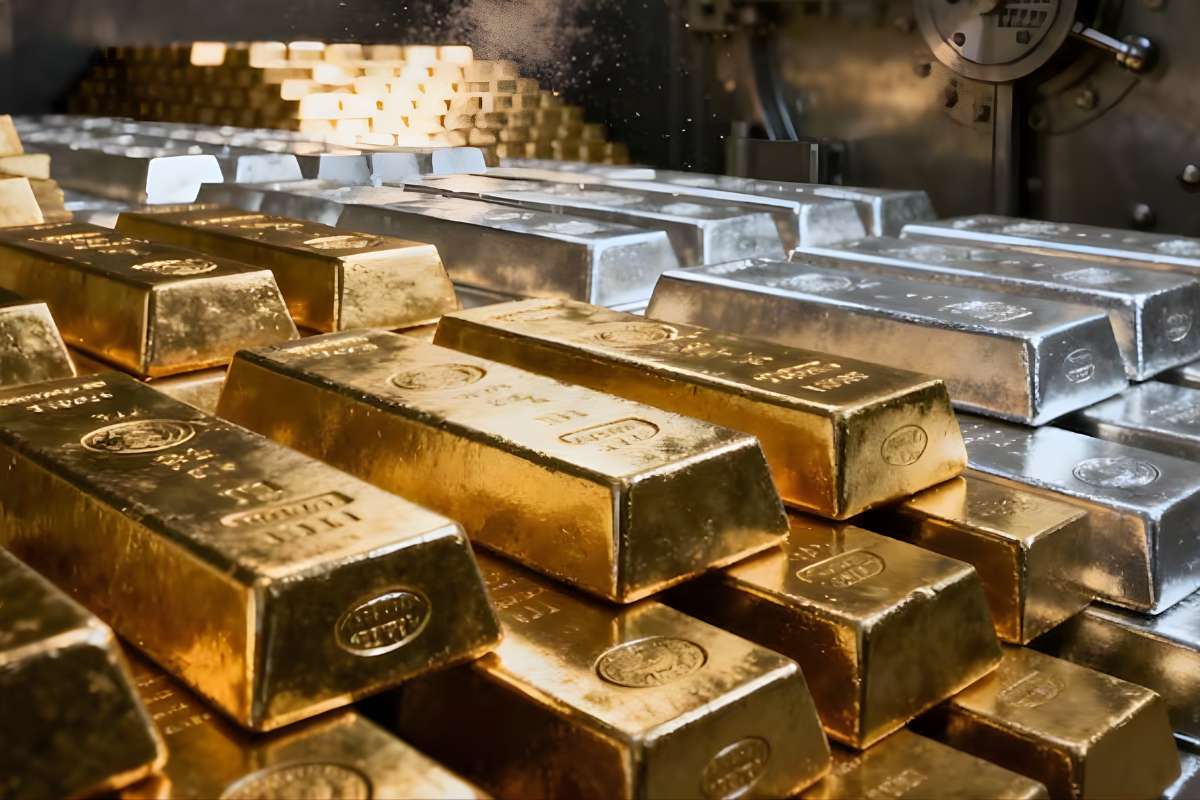
Gold and silver prices rallied strongly at the start of the week as escalating tensions in the Middle East triggered a wave of safe-haven buying across global markets. Investors rushed toward bullion after coordinated military strikes by the United States and Israel on Iranian targets intensified fears of a broader regional conflict.
In international markets, spot gold climbed to multi-week highs, crossing the $5,300 per ounce mark during early trade. Silver followed a similar trajectory, posting robust gains as traders repositioned portfolios in response to rising geopolitical risk. Futures contracts on major exchanges reflected heavy buying interest, with both metals witnessing significant upward momentum within a short span of time.
Domestic markets mirrored the global trend. On the Multi-Commodity Exchange (MCX), gold and silver futures jumped sharply, with prices rising nearly 4% in early trading sessions. The spike marked one of the strongest single-day advances in recent months. Bullion dealers in major cities reported heightened inquiries from investors seeking to hedge against potential volatility in equities and currencies.
Market participants noted that gold’s recent rally builds on an already firm foundation. Over the past several months, central bank purchases, persistent inflation concerns, and expectations of monetary easing in key economies have supported bullion prices. The latest geopolitical developments have further amplified that momentum, reinforcing gold’s traditional role as a defensive asset during periods of uncertainty.
Geopolitical Shockwaves Ripple Through Financial Markets
The immediate catalyst for the surge was the intensification of military action in the Middle East. Reports of strikes on Iranian territory raised concerns about possible retaliation and a prolonged conflict in a region critical to global energy supplies. The uncertainty surrounding the scope and duration of hostilities prompted investors to reassess risk exposure across asset classes.
Equity markets reacted cautiously. Major stock indices in Asia and Europe opened lower, while U.S. futures indicated a subdued start. The risk-off sentiment extended beyond stocks, influencing commodities, currencies, and bond yields. Traders sought to reduce exposure to volatile assets, redirecting capital into instruments perceived as safer stores of value.
Oil markets also experienced sharp volatility. Crude prices surged amid fears of potential disruptions to supply routes, particularly around the Strait of Hormuz, a strategic chokepoint for global oil shipments. Higher oil prices raised concerns about renewed inflationary pressures, which could complicate policy decisions for central banks already balancing growth and price stability.
Currency markets reflected the shift in sentiment. Traditional safe-haven currencies strengthened, while emerging market currencies faced pressure. Analysts observed that heightened geopolitical tensions often lead to short-term capital flows toward assets backed by strong liquidity and historical resilience, a dynamic clearly visible in the renewed appetite for bullion.
Outlook: Uncertainty to Dictate Market Direction
While precious metals have benefited from the immediate flight to safety, analysts caution that market direction will largely depend on how the geopolitical situation unfolds. A rapid de-escalation could ease risk premiums and moderate bullion prices. However, any signs of prolonged confrontation or broader regional involvement may sustain elevated demand for gold and silver.
Experts also point to the interplay between geopolitical risks and macroeconomic fundamentals. If higher oil prices translate into persistent inflation, central banks may delay rate cuts, potentially influencing currency strength and bond markets. In such a scenario, gold’s performance will hinge on a complex mix of safe-haven demand, interest rate expectations, and global liquidity conditions.
For now, investors remain watchful. The surge in gold and silver underscores the sensitivity of financial markets to geopolitical shocks and highlights the enduring role of precious metals as a refuge in times of crisis.
Visit Visionary CIOs Magazine for the recent information.