Key Points:
- Altman resigned from Helion’s board to prevent conflicts of interest with a potential OpenAI partnership.
- OpenAI plans to buy a share of Helion’s future electricity to power its AI infrastructure.
- Tech companies are turning to fusion energy as a clean, sustainable power solution.
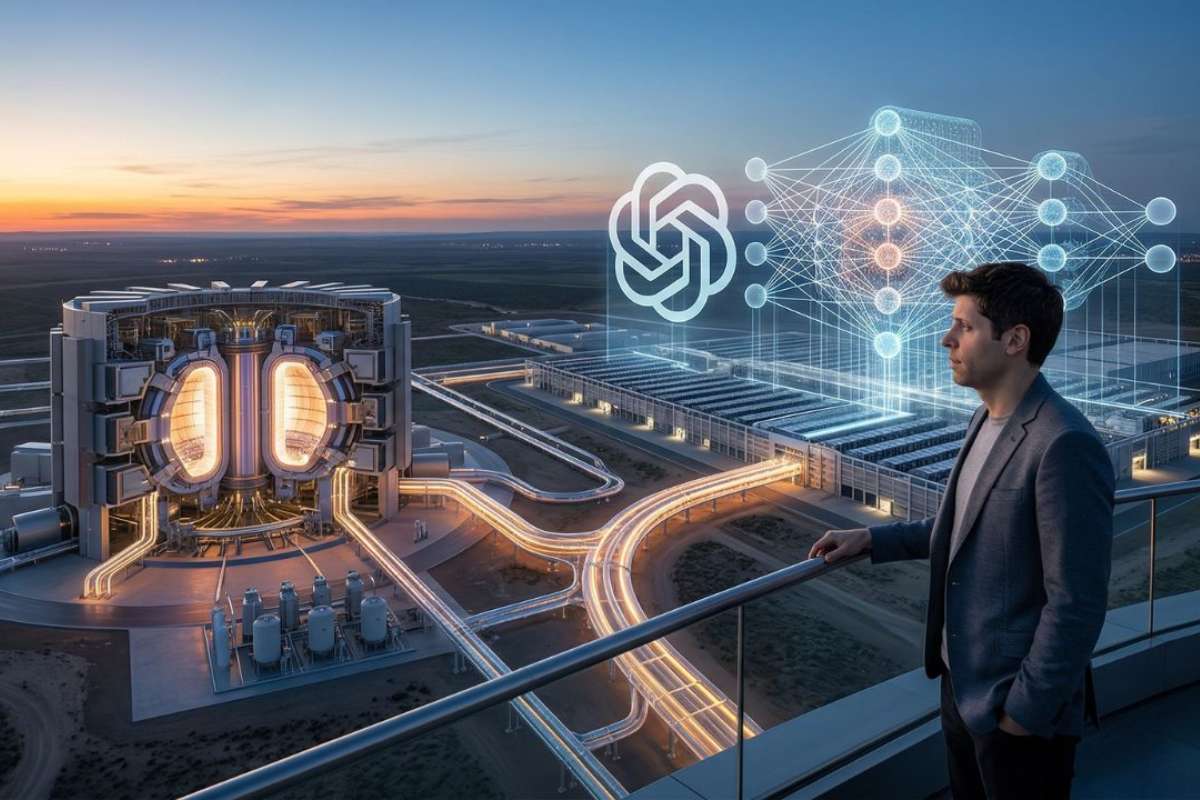
Sam Altman has stepped down as chairman of Helion Energy, signaling a strategic shift as his artificial intelligence company explores a potential partnership with the energy firm. The move comes amid growing discussions between the two organizations around a large-scale power agreement that could shape the future of AI infrastructure.
Sam Altman has long been one of Helion’s earliest investors and most influential supporters, playing a key role in backing its ambitious vision of commercial fusion energy. Despite stepping away from the board, he is expected to retain his financial stake in the company. His exit is widely seen as a governance decision designed to avoid conflicts of interest as both companies move closer to a formal relationship.
Helion’s leadership acknowledged Altman’s contributions over the years, emphasizing that his early involvement helped accelerate the company’s growth. However, as the lines between investor, advisor, and potential customer began to blur, a clear separation became necessary. The decision reflects a broader trend in the tech industry, where evolving partnerships are forcing leaders to reassess their roles to maintain transparency and trust.
OpenAI Looks to Secure Future Energy Supply
At the core of this development is OpenAI’s rapidly increasing demand for energy. As artificial intelligence systems grow more complex, the infrastructure required to support them, particularly large-scale data centers, has become significantly more power-intensive. This surge in demand is pushing AI companies to rethink how they source energy for long-term sustainability.
OpenAI is now exploring a potential agreement to purchase a substantial share of Helion’s future electricity output. While still under discussion, the deal could involve a phased supply arrangement, allowing OpenAI to secure a reliable stream of clean energy as Helion scales its production capacity over time.
Helion Energy is developing a novel fusion approach that directly converts plasma into electricity, eliminating the need for traditional turbine-based systems. This method, if successfully commercialized, could dramatically improve efficiency and reduce the complexity associated with conventional power generation. The company is currently working toward building its first operational fusion plant, with ambitions to deliver electricity within the next decade.
Although fusion energy has long been viewed as a distant goal, advancements in technology and increased investment have accelerated its timeline. Helion Energy is among a new wave of startups attempting to transition fusion from experimental science to a viable commercial solution.
Fusion Energy Gains Momentum in Tech Industry
The potential collaboration highlights a broader shift across the technology sector, where companies are increasingly turning to advanced energy solutions to support the growth of AI. As computational demands rise, securing sustainable and scalable power has become a critical priority.
Fusion energy, often described as the process that powers the sun, offers the promise of nearly limitless, carbon-free electricity. Unlike traditional nuclear energy, it produces minimal long-term waste and carries fewer environmental risks. This has made it an attractive option for companies seeking to balance technological expansion with climate goals.
However, significant challenges remain. Fusion systems must consistently generate more energy than they consume, an achievement that has proven difficult to scale. Despite this, growing confidence from investors and major corporations is accelerating progress in the field.
Sam Altman’s decision to step down from Helion’s board underscores a pivotal moment where artificial intelligence and next-generation energy are beginning to intersect. As AI continues to expand its influence across industries, its dependence on reliable power sources is becoming increasingly evident.
If negotiations between OpenAI and Helion Energy materialize into a formal agreement, it could mark a turning point not just for the companies involved, but for the broader relationship between technology and energy. The convergence of AI and fusion power may ultimately define how future digital ecosystems are built and sustained.