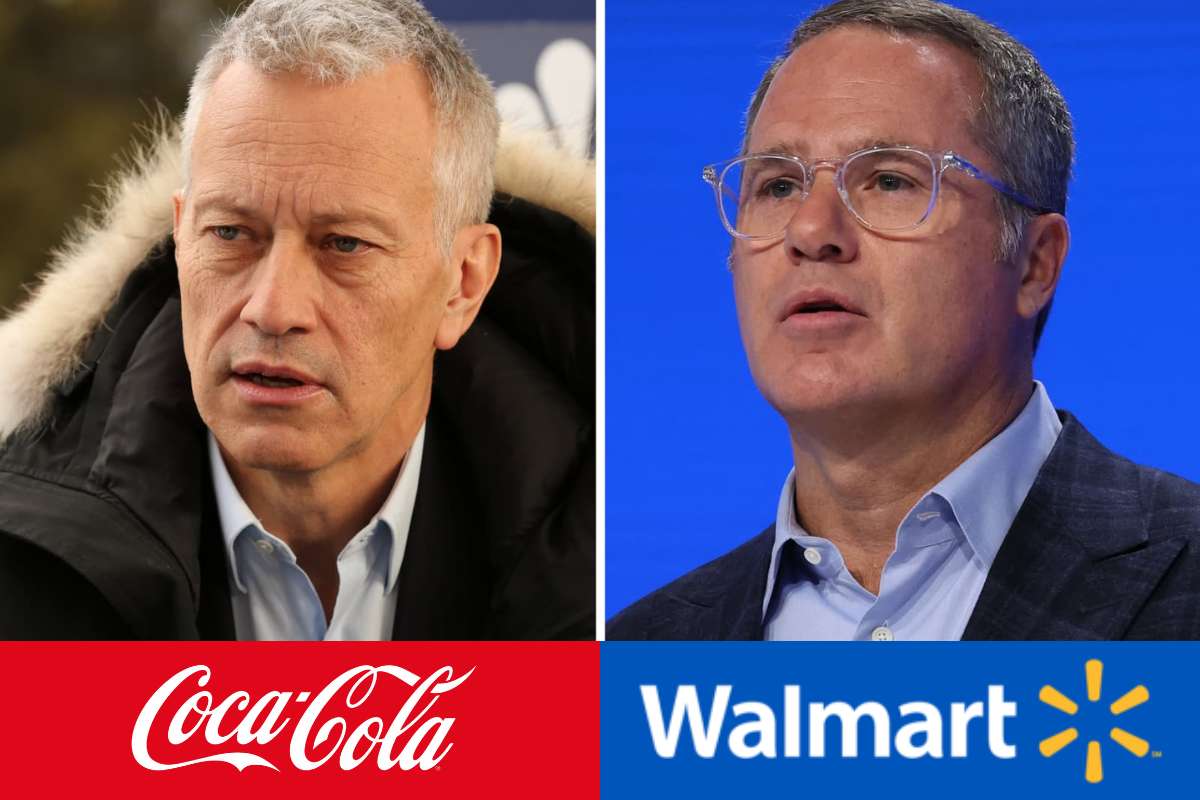
A significant leadership transition is unfolding at two of the world’s largest consumer-facing corporations, as artificial intelligence increasingly influences not only business operations but also executive decision-making at the highest level. The chief executive of James Quincey at The Coca-Cola Company and Doug McMillon at Walmart have both indicated that the rapid acceleration of AI-driven transformation played a key role in their decisions to step aside.
Their exits come at a time when artificial intelligence is fundamentally reshaping industries worldwide. From predictive analytics and automated supply chains to hyper-personalized customer experiences, companies are being forced to rethink long-established business models. What once represented gradual digital evolution has now become a rapid, continuous transformation driven by advanced AI systems.
James Quincey, who has led Coca-Cola since 2017, emphasized that the company is entering a new era defined by the scale and speed of AI innovation. While earlier phases of digital transformation helped modernize operations and strengthen global reach, he noted that the current wave of AI presents a far more disruptive shift. According to his view, navigating this new environment requires leadership capable of continuous reinvention and long-term technological adaptability.
Similarly, McMillon highlighted the complexity of AI integration in retail, particularly as the industry moves toward intelligent automation, data-driven decision-making, and AI-powered shopping experiences. He suggested that Walmart’s next phase of growth will unfold over several years, requiring sustained execution and a leadership transition aligned with long-term strategic continuity.
Planned Leadership Transition Reflects Strategic Foresight
Despite the prominence of these departures, both transitions are being viewed as carefully planned and strategically timed rather than reactive decisions. At Coca-Cola, leadership succession is expected to remain internal, ensuring continuity while allowing space for accelerated innovation in AI adoption and digital strategy.
Under James Quincey’s leadership, Coca-Cola strengthened its global footprint, diversified its product offerings, and modernized its operational systems. The company delivered steady financial performance and maintained its position as one of the world’s most recognizable consumer brands. However, even within this stability, Quincey acknowledged that AI represents a structural shift capable of redefining how the entire organization operates.
At Walmart, McMillon’s tenure is widely associated with the company’s rapid digital expansion and strengthened e-commerce capabilities. He led significant investments in logistics, technology, and online retail infrastructure, enabling Walmart to compete more aggressively in the digital commerce landscape. Yet, as AI begins to transform retail through automation, personalization, and predictive systems, McMillon recognized that the next stage of transformation requires leadership continuity aligned with long-term execution.
Both executives have framed their decisions as forward-looking and strategic, aimed at ensuring that their organizations are positioned for sustained success in an AI-driven future rather than reacting to short-term pressures.
AI Redefines Corporate Leadership for the Next Decade
The leadership changes at Coca-Cola and Walmart highlight a broader shift taking place across global industries: artificial intelligence is redefining what it means to lead a corporation. AI is no longer just a tool for efficiency; it is becoming a core driver of strategic direction, business design, and organizational structure.
Traditionally, chief executives have been evaluated based on financial performance, market growth, and operational efficiency. However, the rise of AI is introducing new expectations. Modern leadership increasingly requires technological fluency, adaptability to rapid innovation cycles, and the ability to integrate AI systems into long-term corporate strategy.
As a result, boards of directors are beginning to reassess how leadership is defined and selected. Companies are placing greater emphasis on executives who can manage large-scale digital transformation and navigate the complexities of AI-driven ecosystems.
Industry observers suggest that these exits may represent the beginning of a wider trend in which leadership transitions are influenced by technological milestones rather than conventional retirement cycles or performance-related triggers. As AI adoption accelerates globally, executive roles are expected to evolve in parallel, shifting toward continuous transformation leadership.
For legacy corporations like Coca-Cola and Walmart, the challenge is no longer limited to adopting AI tools. It involves reimagining entire business models, redefining customer engagement strategies, and building organizations capable of constant technological adaptation.
Ultimately, the departures of James Quincey and McMillon underscore a defining reality of the modern corporate world: artificial intelligence is not only transforming industries, but it is also reshaping the very nature of leadership itself.
Visit Visionary CIOs Magazine for the latest information.