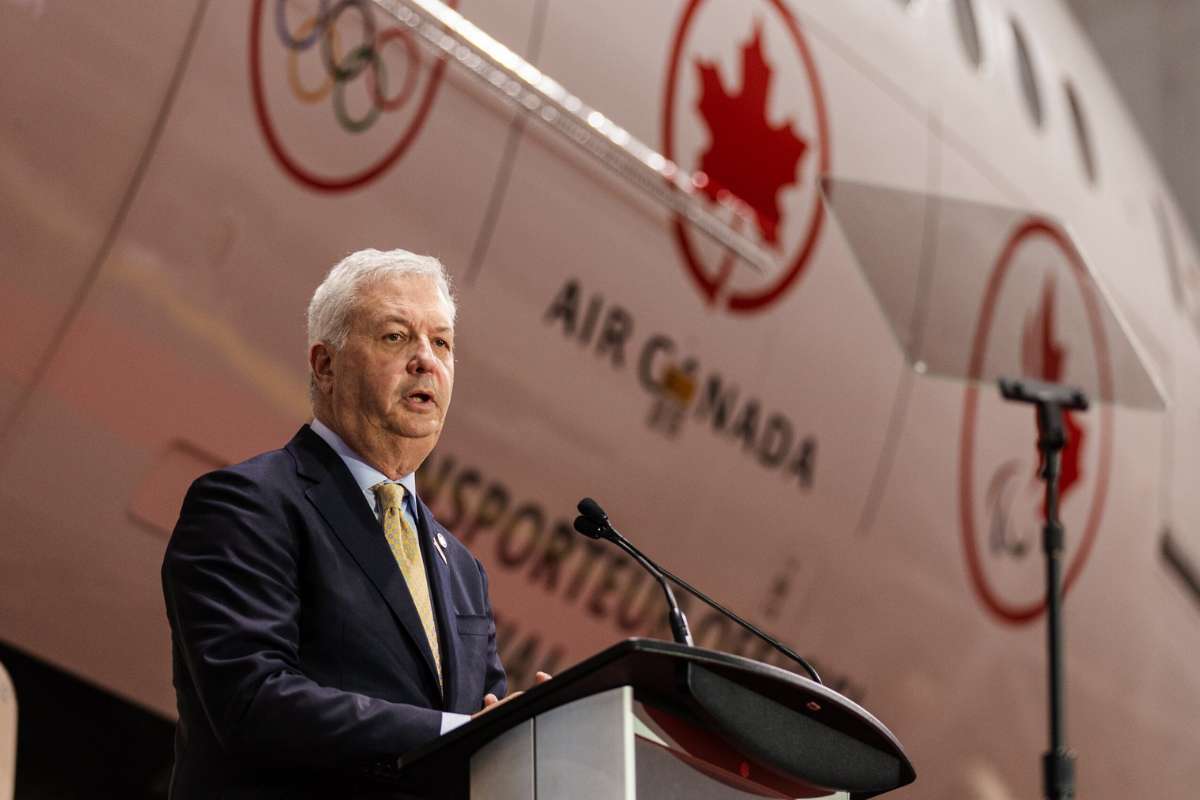
Air Canada’s chief executive, Michael Rousseau, has announced his decision to step down later this year, bringing an abrupt end to his leadership amid growing backlash over a controversial condolence message. The airline confirmed that Rousseau will remain in his position until the third quarter of 2026 to ensure a smooth transition, but the timing of his departure has drawn clear connections to recent public and political criticism.
The controversy began after a fatal runway collision at New York’s LaGuardia Airport earlier in March, which resulted in the deaths of two pilots and injuries to several others. In response, Rousseau issued a video message expressing sympathy for the victims and their families. However, the message quickly became the center of criticism due to its limited use of French, one of Canada’s official languages.
What was intended as a gesture of condolence soon turned into a national debate over leadership responsibility, communication, and cultural sensitivity. While Air Canada has described Michael Rousseau’s exit as a planned retirement, the sequence of events has led many observers to view the decision as closely tied to the fallout from the incident.
Language Sensitivity Sparks Widespread Backlash
The reaction to Rousseau’s message was particularly strong in Quebec, where language is deeply tied to identity and public life. Critics argued that as the head of a major national airline headquartered in Montreal, Rousseau had a responsibility to communicate equally in both English and French, especially in a moment of national mourning.
Political leaders across Quebec voiced their concerns, with lawmakers uniting in rare consensus to call for his resignation. The criticism was not limited to political circles; public sentiment echoed similar frustration, with many viewing the message as lacking cultural awareness and respect. The fact that one of the deceased pilots was from Quebec further intensified the response.
The situation also revived longstanding concerns about Michael Rousseau’s relationship with the French language. Since becoming CEO in 2021, he has faced scrutiny for not being fluent in French despite living in Montreal for years. Previous remarks suggesting that learning French was not essential had already sparked debate, and the recent incident brought those concerns back into sharp focus.
In the days following the backlash, complaints were filed with regulatory authorities, and national leaders weighed in, emphasizing the importance of bilingual communication in Canadian institutions. The issue quickly evolved beyond a single message, highlighting broader expectations placed on corporate leaders in a bilingual country.
Rousseau later issued an apology, acknowledging that his language limitations had unintentionally shifted attention away from the victims of the crash. He expressed regret over the situation and recognized the need for more thoughtful communication in moments of crisis.
Leadership Change Signals Shift in Corporate Priorities
Despite the controversy surrounding his departure, Michael Rousseau’s tenure at Air Canada included several notable achievements. Taking over during a challenging period for the aviation industry, he played a key role in guiding the airline through the recovery phase following the global pandemic. Under his leadership, the company expanded its network, improved its financial stability, and adapted to changing travel demands.
However, the recent episode has underscored the growing importance of cultural awareness and effective communication in leadership roles. Analysts suggest that this moment could influence how large organizations approach executive appointments, particularly in countries with strong linguistic and cultural dynamics.
Air Canada has indicated that bilingualism will likely be a significant factor in selecting its next CEO, reflecting a broader shift toward aligning leadership with national values and expectations. The company has already initiated the search for a successor, aiming to rebuild public trust and reinforce its commitment to inclusivity.
While the airline continues its operations without disruption, the leadership transition comes at a critical time. Investor sentiment has shown signs of sensitivity to reputational challenges, though the structured transition plan is expected to provide stability in the months ahead.
Ultimately, the episode serves as a reminder that in today’s interconnected and culturally aware world, corporate leadership extends beyond financial performance. Communication, empathy, and cultural understanding have become equally essential, and missteps in these areas can carry consequences just as significant as any business decision.