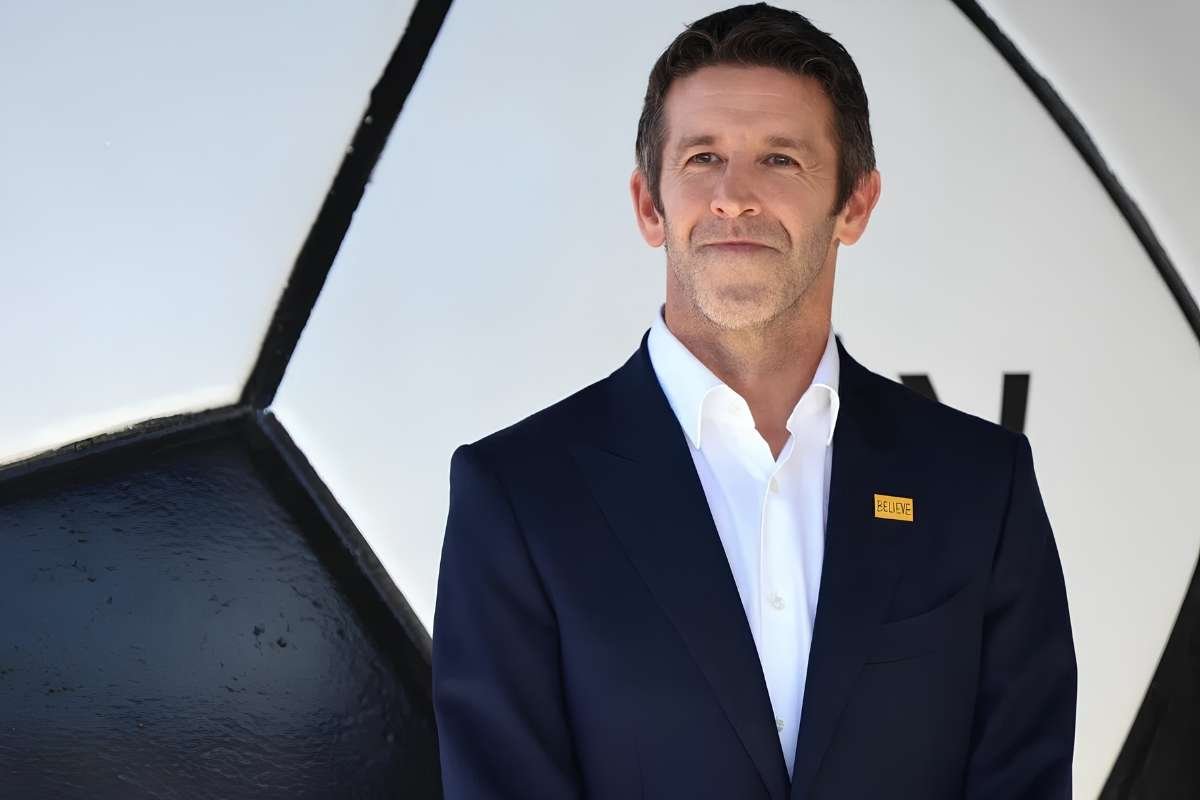
Key Points:
- Kempczinski’s hesitant McNugget bite went viral, overshadowing McDonald’s intended corporate message.
- His rehearsed presence and calling food “products” have become a recurring online meme.
- Informal executive appearances risk being reframed into viral moments in today’s short-form video culture.
McDonald’s CEO Chris Kempczinski has once again found himself at the center of widespread online discussion after a recent Wall Street Journal interview clip showing him eating a Chicken McNugget went viral across social media platforms.
The segment was originally intended to present a relaxed and informal conversation in which the CEO discussed McDonald’s broader business direction, product innovation strategy, and evolving consumer engagement efforts. However, instead of the discussion itself, viewers largely focused on a brief moment in which Chris Kempczinski takes a cautious bite of the McNugget while continuing to speak on camera.
The clip quickly gained traction online, with users highlighting his restrained and somewhat hesitant eating style. Many social media viewers compared the moment to a previous viral incident involving McDonald’s “Big Arch” burger, where similar attention was drawn to his minimal bite and his repeated reference to menu items as “products.”
As the new clip spread, it rapidly accumulated shares, comments, and parody edits across multiple platforms, reinforcing a growing pattern in which the CEO’s casual food-tasting appearances become viral talking points rather than the corporate messaging they are intended to support.
Social Media Reactions Highlight Perception Gap and Meme Culture
Public response to the McNugget clip has been divided between humor, criticism, and analytical commentary on corporate communication. While many users treated the moment as light entertainment, others questioned whether the repeated format of informal product tasting videos is effective for a global brand leader.
A significant portion of online reactions focused on the perceived awkwardness of the CEO’s on-camera presence. Some users argued that the interaction appeared overly rehearsed, suggesting that attempts to appear relatable may instead come across as unnatural or staged in short-form video environments.
Others drew attention to the recurring use of corporate language in casual settings, particularly his earlier phrasing that referred to menu items as “products,” which has since become a meme reference point in online discussions. The latest McNugget video has intensified that narrative, with users framing it as part of a continuing pattern rather than an isolated moment.
The rapid spread of memes, reaction clips, and commentary threads underscores how modern audiences engage with executive appearances. In today’s digital ecosystem, brief visual moments are often detached from their original context and reinterpreted through humor, criticism, or satire within minutes of publication.
Even neutral viewers noted that the clip demonstrates how easily leadership communication can shift from intended messaging to unintended viral entertainment. This has added to an ongoing debate about whether corporate leaders should participate in informal media appearances that leave room for unpredictable public interpretation.
Corporate Communication Strategy and Leadership Visibility Challenges
The incident highlights a broader challenge for McDonald’s as it continues to evolve its leadership communication strategy in a highly reactive media landscape.
Over recent years, the company has increasingly encouraged executive visibility as part of a broader effort to humanize leadership and strengthen consumer trust. This approach aligns with McDonald’s wider strategic transformation, which includes digital expansion, app-based ordering growth, delivery partnerships, and brand modernization initiatives aimed at maintaining global relevance in a highly competitive fast-food industry.
Chris Kempczinski, who has served as CEO since 2019, has overseen several key phases of this transformation, including efforts to streamline operations and strengthen customer engagement through digital channels. Leadership visibility has been positioned as part of this broader narrative, bringing executives closer to consumers and reinforcing transparency in decision-making.
However, the recurring viral attention surrounding informal appearances raises questions about how such strategies translate in practice. In a media environment dominated by short-form video platforms, even minor gestures, expressions, or pauses can become amplified into global talking points, often overshadowing the intended business message.
The McNugget clip demonstrates how quickly executive communication can be reframed once it enters the social media cycle. Rather than reinforcing brand messaging, these moments can become standalone cultural references that circulate independently of their corporate context.
McDonald’s CEO Chris Kempczinski continues to navigate digital transformation and global brand positioning. The latest episode serves as a reminder of the heightened scrutiny facing corporate leaders. In today’s environment, leadership visibility is no longer just about presence; it is also about precision in how every public moment may be interpreted, edited, and reshaped online.