Key Takeaways:
- Microsoft CTO Kevin Scott defended the $13B partnership, disputing claims that the nonprofit mission was sacrificed.
- Altman testified Musk sought 90% equity and total control before abandoning the firm.
- Musk seeks $150B in damages, the removal of Altman/Brockman, and a reversal of the for-profit pivot.
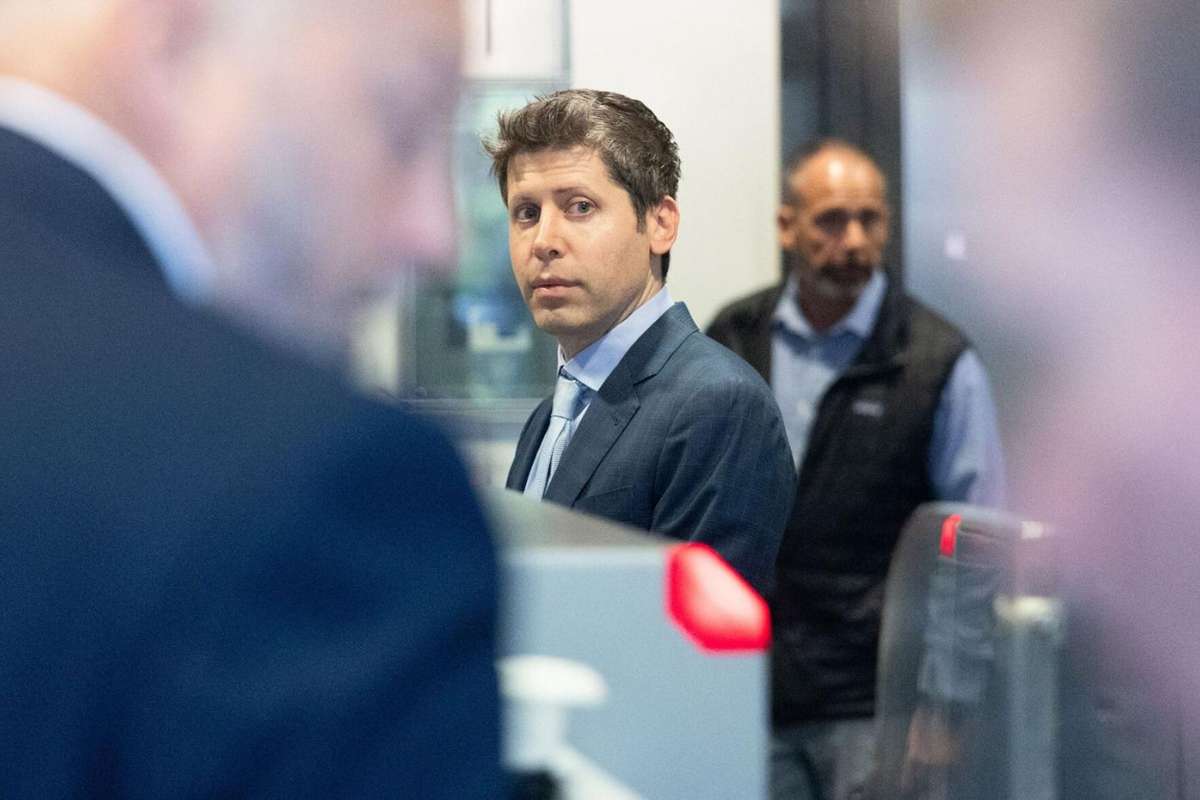
OpenAI CEO Sam Altman testified Tuesday that Elon Musk abandoned the company during critical funding talks, rejecting claims that OpenAI leaders misused the nonprofit’s mission for commercial gain.
Altman Says Musk Abandoned OpenAI During Funding Crisis
Altman spent about four hours on the witness stand in federal court in Oakland, California, defending OpenAI’s transition toward a for-profit structure and denying allegations that he and company leaders “stole a charity.”
Elon Musk sued OpenAI, Altman, and company President Greg Brockman in 2024, alleging they violated the startup’s original nonprofit mission by pursuing commercial expansion. Musk also argued that his estimated $38 million contribution to OpenAI was diverted to unauthorized business activities.
Altman testified that no formal promises were made to Musk regarding OpenAI’s long-term corporate structure.
“We were kind of left for dead,” Altman said, describing the period after Musk left OpenAI’s board in 2018.
The trial has focused heavily on internal negotiations among OpenAI co-founders between 2017 and 2018 as the company sought billions of dollars for computing power and artificial intelligence research.
Disputes Over Control and Corporate Direction Intensify
According to testimony, OpenAI leaders explored several funding models, including for-profit structures, as costs increased. Negotiations ultimately failed, and Musk resigned from the board in February 2018.
Sam Altman told jurors that Musk’s departure created uncertainty among employees about OpenAI’s future financing. He also said some staff members feared Musk might seek “vengeance” after leaving the company.
“I don’t think Mr. Musk understood how to run a good research lab,” Altman testified.
Jurors also heard about a December 2018 email in which Musk expressed doubts about OpenAI’s ability to compete with Google’s DeepMind division without billions of dollars in annual funding.
“My probability assessment of OpenAI being relevant to DeepMind/Google without a dramatic change in execution and resources is 0%,” Musk wrote in the email presented during testimony.
Sam Altman said the message remained “burned into my memory.”
The court also heard testimony about Musk’s proposal to merge OpenAI with Tesla to provide additional capital. Altman said he rejected the idea because he believed it would undermine OpenAI’s nonprofit mission.
“Tesla is a car company, and it does not have the mission of OpenAI,” Altman testified.
Musk has argued that OpenAI’s for-profit subsidiary eventually overshadowed its nonprofit parent organization. The subsidiary is now valued at more than $850 billion by private investors.
Musk’s Lawyer Questions Altman’s Credibility
During cross-examination, Elon Musk’s attorney, Steven Molo, repeatedly challenged Altman’s credibility and judgment.
Molo asked Sam Altman whether he considered himself “completely trustworthy.”
“I believe so,” Altman responded before later adding, “Yes.”
The attorney also referenced criticism from former OpenAI employees, including Dario Amodei, who allegedly accused Altman of misrepresenting investment discussions.
“Dario has accused me of many things,” Altman testified.
Molo further questioned Altman about his temporary removal as OpenAI CEO in 2023. At the time, OpenAI’s board stated Altman had not been “consistently candid” in communications with directors.
Altman testified he was “completely caught off guard” by the decision and feared the company he helped build would collapse during the leadership crisis.
“I had poured the last years of my life into this,” Altman said. “I was watching it about to be destroyed.”
Closing arguments are scheduled for Thursday. The nine-member jury serves in an advisory role, with the final ruling to be decided by Judge Yvonne Gonzalez Rogers.
Visit Visionary CIOs Magazine for the latest information.