For more than a century, gasoline cars ruled the roads while electric vehicles remained a small part of the market. Many people saw them as costly, slow, and difficult to own. Tesla did not create the first electric car, yet it changed public opinion through products people genuinely wanted.
That shift helped make EVs Mainstream, changing how consumers, competitors, and the auto industry viewed electric mobility.
Why electric cars struggled for so long
Electric vehicles appeared long before Tesla entered the market, yet they remained a difficult choice for most buyers. Battery technology offered limited range, charging took far longer than filling a gas tank, and high prices kept many people away. Performance also failed to excite drivers, leaving electric cars with a reputation for sacrifice instead of convenience.
“People wanted cleaner transportation.”
Public charging stations were rare, making longer trips stressful and unpredictable. Large automakers showed little urgency because gasoline vehicles continued to generate strong sales. Governments encouraged cleaner transportation through incentives and environmental policies, but consumer interest stayed weak because everyday concerns remained unsolved. The idea of making EVs Mainstream seemed distant as practical barriers outweighed environmental benefits.
“Few wanted electric cars.”
The crisis was bigger than one company or one product. The market needed a completely different approach that could change how people viewed electric vehicles before demand could finally grow.
Tesla sold an idea before it sold a car
Tesla’s biggest contribution was changing how people felt about electric vehicles. Instead of asking buyers to accept compromises, the company presented an electric car that people genuinely wanted to own. That shift brought EVs Mainstream much closer than many expected.
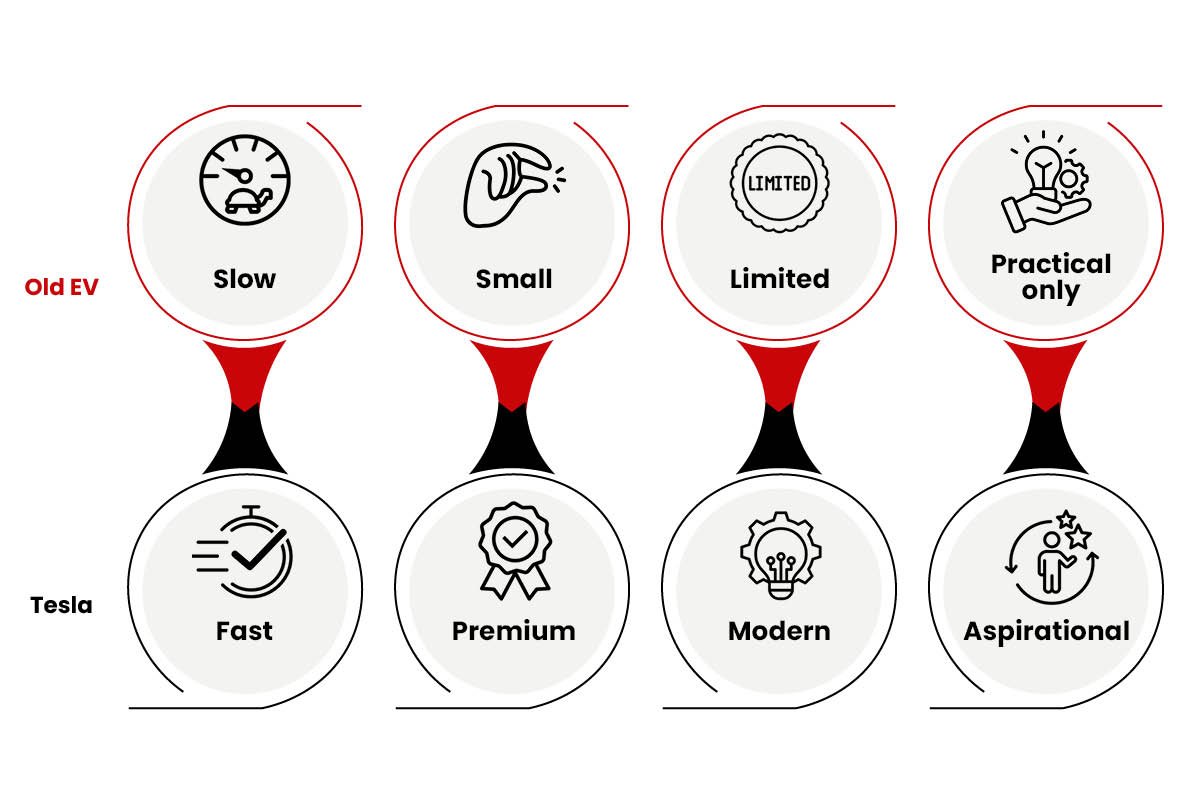
| Old EV | Tesla |
| Slow | Fast |
| Small | Premium |
| Limited | Modern |
| Practical only | Aspirational |
The Roadster challenged the belief that electric cars lacked excitement. Quick acceleration became a major attraction, proving that performance could stand beside efficiency. Premium styling gave the brand a polished identity that stood apart from earlier electric models. Buyers no longer viewed an electric vehicle as a backup option. They saw it as something worth admiring.
Elon Musk kept Tesla in public conversations through ambitious announcements, product launches, and bold goals. That constant visibility helped innovation become closely linked with the brand. Each new announcement attracted attention beyond the automotive industry, making Tesla a topic of discussion across technology, business, and popular culture.
“Tesla changed expectations before changing the market.”
How Tesla removed the biggest barriers to adoption
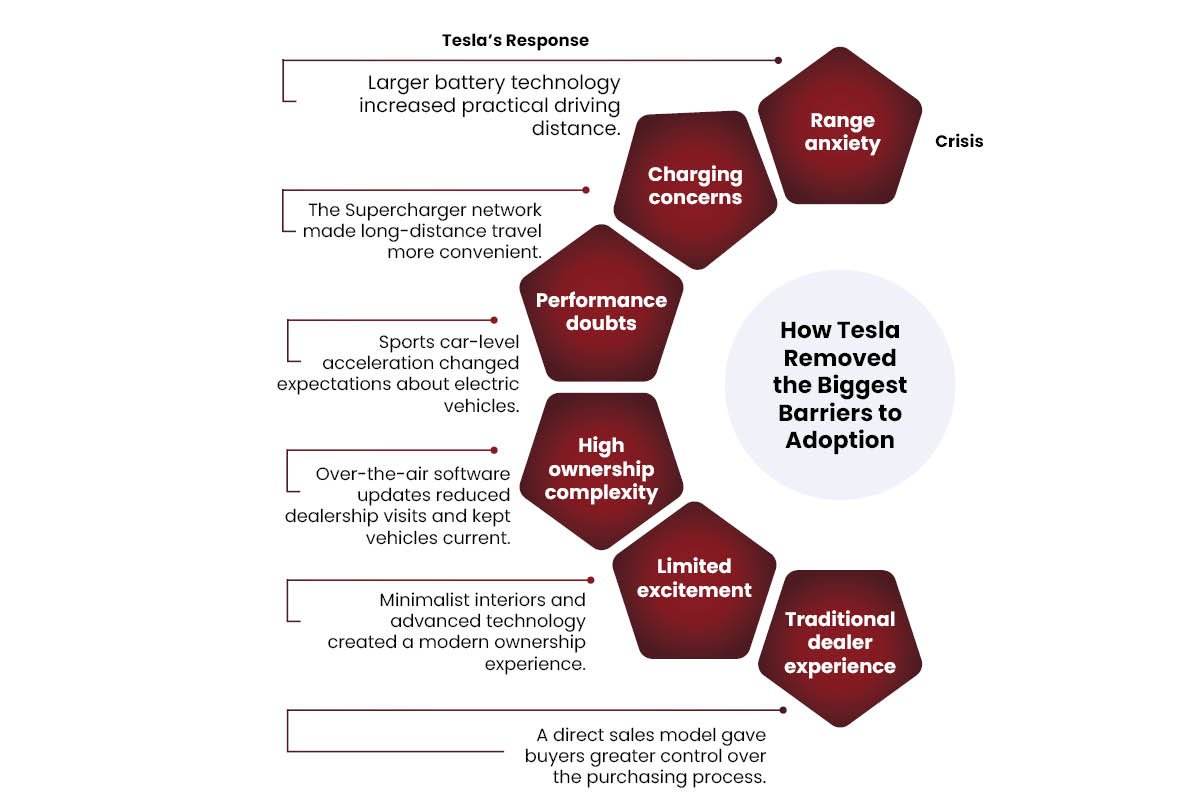
Tesla treated customer pain points as business opportunities instead of accepting them as unavoidable. Each decision answered a common reason buyers rejected electric vehicles, making EVs Mainstream a more realistic goal.
| Crisis | Tesla’s Response |
| Range anxiety | Larger battery technology increased practical driving distance. |
| Charging concerns | The Supercharger network made long-distance travel more convenient. |
| Performance doubts | Sports car-level acceleration changed expectations about electric vehicles. |
| High ownership complexity | Over-the-air software updates reduced dealership visits and kept vehicles current. |
| Limited excitement | Minimalist interiors and advanced technology created a modern ownership experience. |
| Traditional dealer experience | A direct sales model gave buyers greater control over the purchasing process. |
Each improvement addressed a real concern instead of adding features that customers rarely valued. Buyers gained confidence because the ownership experience became simpler and more predictable. The company focused on removing friction wherever possible, helping electric vehicles feel practical for everyday use rather than a niche experiment.
“Every solved problem removed another barrier to adoption.”
Tesla showed that solving customer objections could create stronger demand than relying on marketing alone.
The moment the market started following Tesla
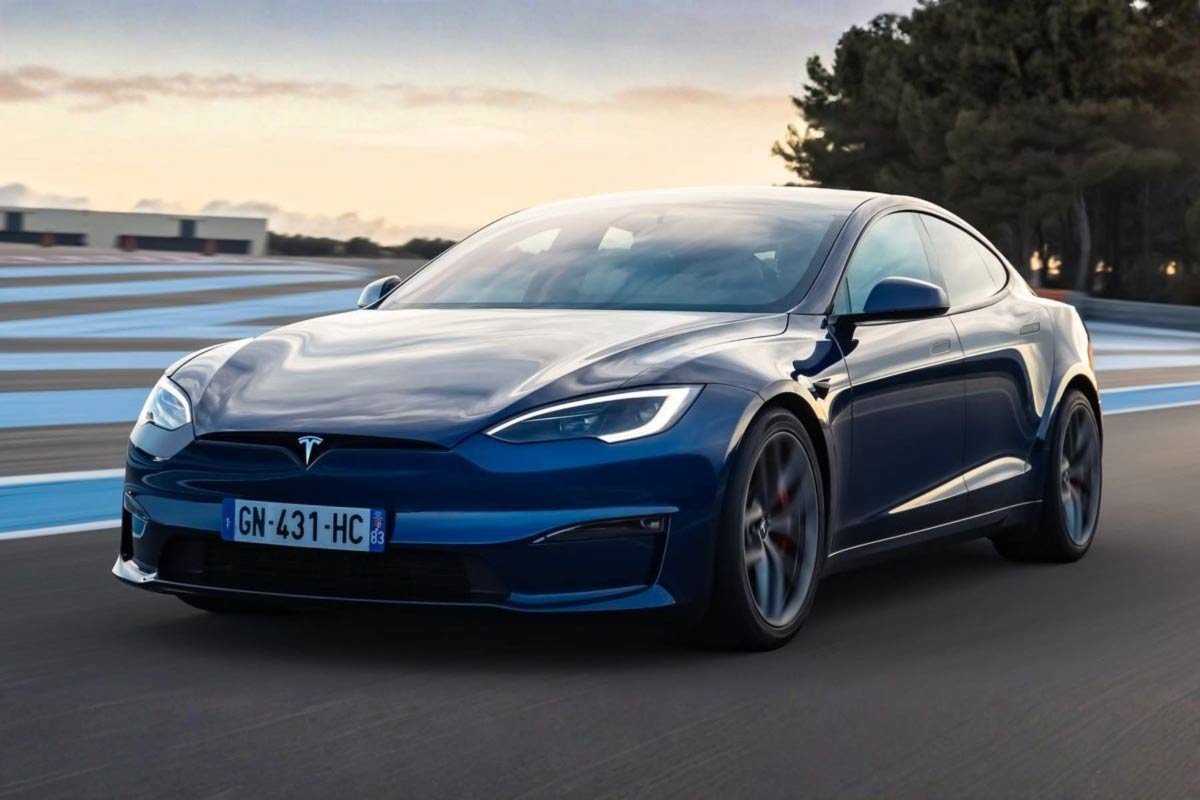
The Model S gave buyers confidence that an electric vehicle could match the quality and performance of premium gasoline cars. Later, the Model 3 reached a much larger audience, bringing EVs Mainstream closer by making electric vehicles a realistic choice for everyday drivers.
One success created many changes
- Consumers: Expected better technology, longer range, and stronger performance.
- Automakers: Increased investment in electric vehicle development and introduced more EV models.
- Investors: Placed greater attention on electric mobility, battery companies, and charging businesses.
- Governments: Expanded purchase incentives and supported wider charging infrastructure.
“Tesla sold cars.”
“The industry sold a new future.”
Battery technology improved as competition increased, making electric vehicles more practical for everyday use. Charging stations became easier to find, reducing concerns about long journeys. The market no longer viewed electric vehicles as a small experiment. Instead, they became a serious direction for the future of transportation.
The real victory was consumer trust
The biggest challenge was never competition. It was uncertainty. Many consumers liked the idea of electric vehicles, yet they questioned whether the technology would fit their daily lives. Tesla reduced that uncertainty, helping make EVs Mainstream through consistent improvements instead of promises alone.
Why trust grew
- Better technology increased confidence.
- Strong branding created a premium image.
- A visible charging network made ownership feel practical.
- Continuous software updates kept vehicles current.
- An active community shared positive ownership experiences.
- High customer satisfaction encouraged more buyers.
Each factor gave people another reason to believe electric vehicles were a dependable choice. As confidence increased, hesitation declined. Tesla proved that trust grows when businesses solve real customer concerns with consistent action. In the end, trust became the company’s strongest competitive advantage and one of its most valuable assets.
Final thoughts
Tesla’s biggest achievement was solving a crisis that had limited electric vehicles for decades. Instead of asking consumers to change their expectations, the company removed the reasons for doubt through practical solutions and a stronger ownership experience. As confidence increased, EVs Mainstream became a realistic outcome rather than a distant goal.
The story shows that successful crisis management begins with understanding customer concerns and solving them consistently. Businesses that reduce uncertainty earn trust, and trust often becomes the foundation for long-term market leadership.