Key Points:
- Jensen Huang says AI enhances software, not replaces it.
- Market fears about AI disrupting software are short-term volatility.
- AI will shift jobs, boosting productivity and creating new opportunities.
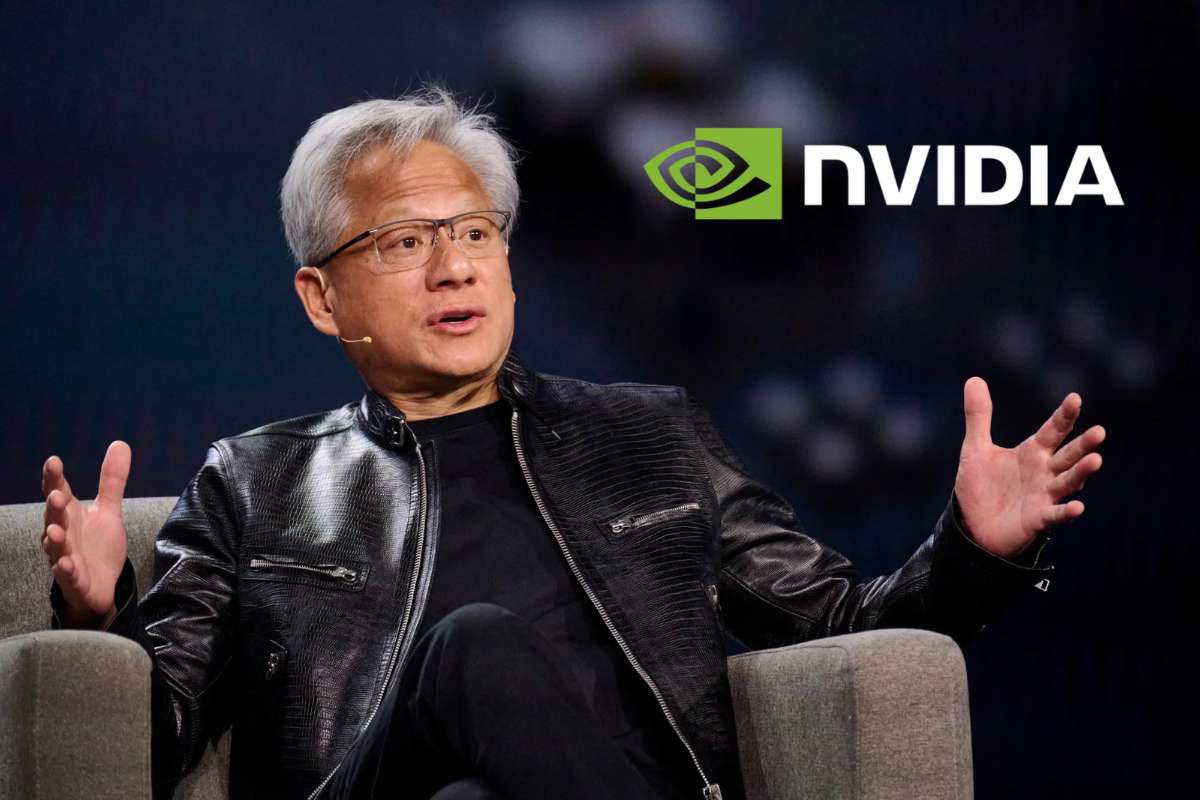
NVIDIA Chief Executive Officer Jensen Huang has pushed back against growing fears that artificial intelligence will replace traditional software systems and render large parts of the tech industry obsolete. Speaking at a recent technology conference in San Francisco, Huang described the idea that AI could replace software as fundamentally flawed, arguing that AI itself is built on top of software, not separate from it.
According to Huang, AI systems depend on programming frameworks, developer tools, and existing software infrastructure to operate at scale. He said the belief that AI signals the decline of the software industry misunderstands how the technology actually functions. Rather than replacing software, AI enhances it by making applications more powerful, adaptive, and efficient.
His comments arrive at a time when investor sentiment around software companies has turned cautious, with concerns that rapid advances in AI tools could reduce demand for conventional software products. Huang’s remarks directly challenge that assumption, reframing AI as an extension of software capabilities rather than a competing force.
Market Volatility Highlights Investor Anxiety
Jensen Huang’s statements come amid sharp volatility in global technology markets, particularly within the software and IT services sector. In recent sessions, major software stocks across multiple regions have seen steep declines, reflecting fears that AI-driven automation could disrupt existing business models.
In India and other Asian markets, large IT services firms experienced notable sell-offs as investors reassessed the long-term impact of generative AI on enterprise services, outsourcing, and application development. Similar trends were observed in the United States and Europe, where software valuations have come under pressure.
Despite the market reaction, Huang’s comments offered reassurance to investors concerned about a potential “software apocalypse.” He emphasized that AI tools still require human developers, engineers, and software architects to design, deploy, and manage them. Rather than eliminating software companies, AI is expected to increase demand for new tools, platforms, and services tailored to AI-driven workloads.
Industry analysts have echoed this view, suggesting that the current market correction reflects short-term uncertainty rather than a fundamental breakdown of the software economy.
AI’s Impact on Jobs and the Future of Work
Beyond software markets, Jensen Huang also addressed broader concerns about AI’s impact on employment. He acknowledged that AI will automate certain tasks but rejected the idea that it will fully replace most jobs. Instead, he said AI will change how work is performed, increasing productivity and creating new opportunities across industries.
Jensen Huang has previously noted that AI may handle a portion of repetitive or time-consuming tasks within many roles, allowing workers to focus on higher-value responsibilities. He added that individuals who learn to work alongside AI tools are likely to become more competitive in the job market, not less.
He also highlighted that AI adoption could drive job growth in unexpected areas, including skilled trades, manufacturing, and infrastructure development, as demand rises for data centers, energy systems, and advanced computing hardware.
As AI continues to reshape the global economy, Jensen Huang’s message remains clear: artificial intelligence is a powerful tool, not a replacement for human creativity, software development, or the workforce itself. The future, he suggests, will be defined by collaboration between humans, software, and intelligent machines—not by one replacing the other.