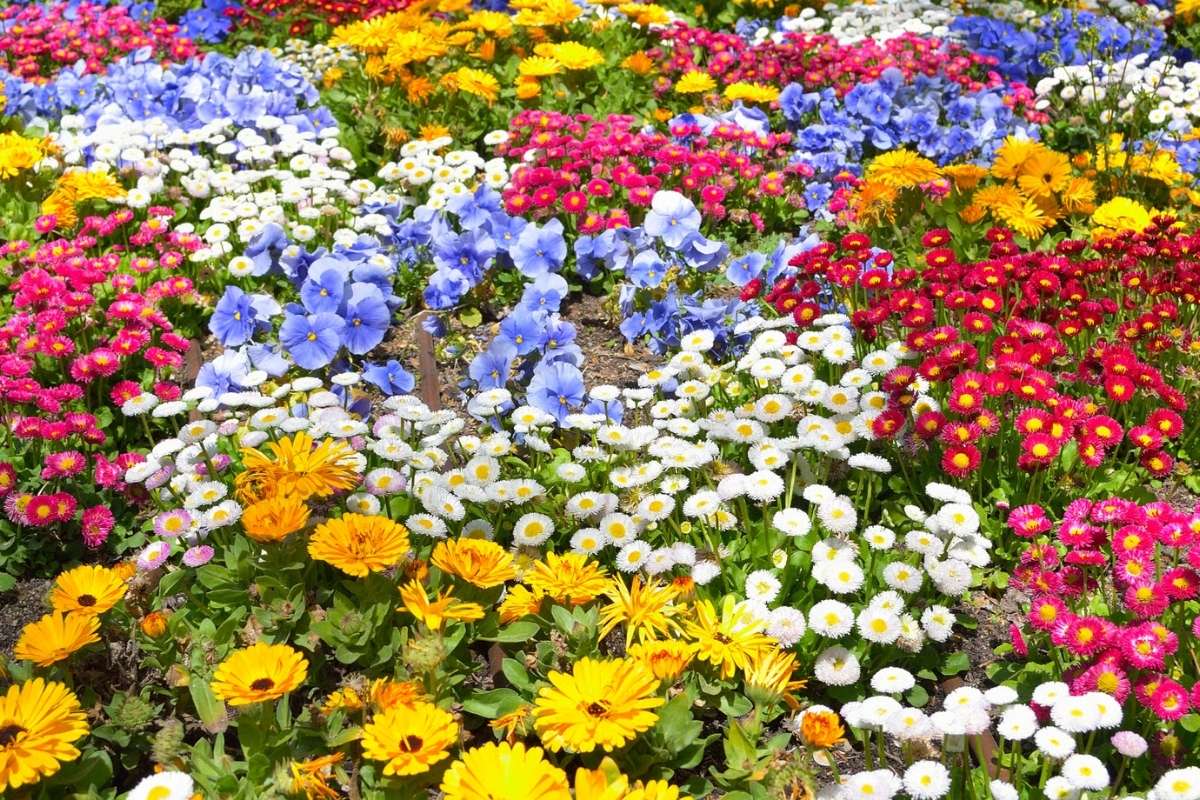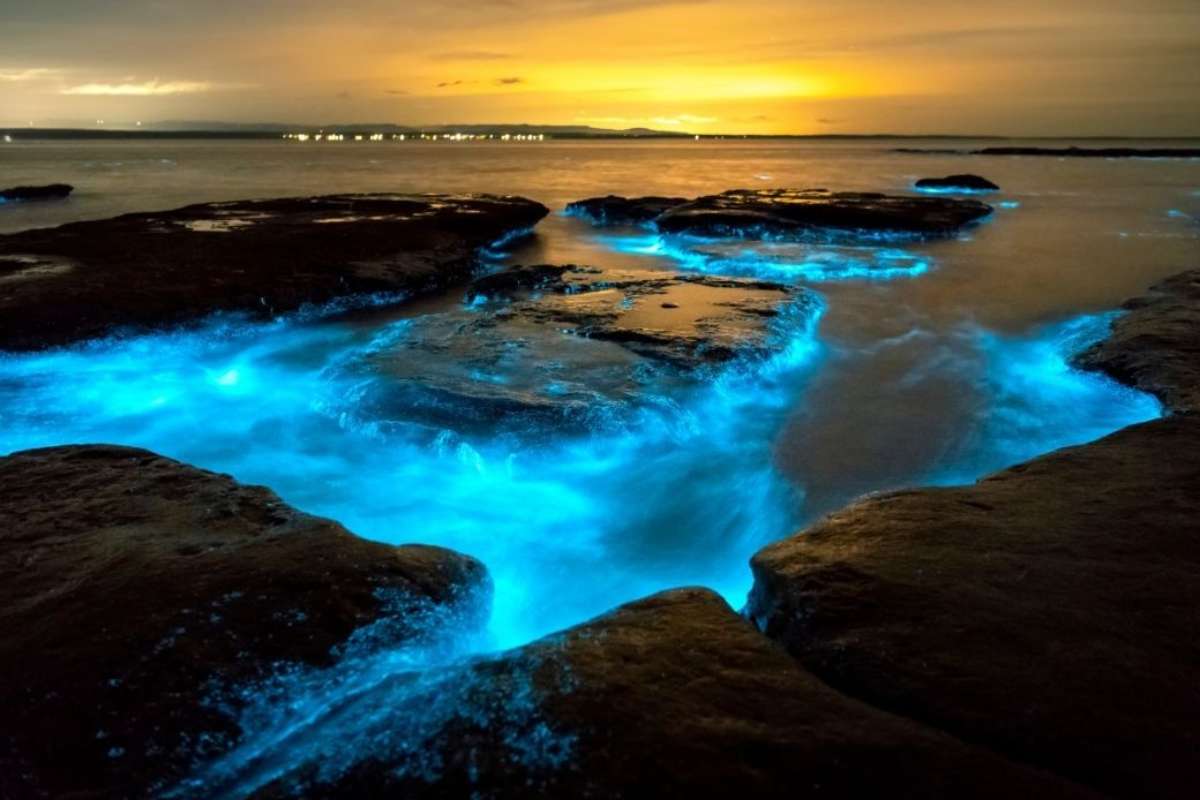
Nature has a way of surprising us every single day. From glowing oceans to rainbow-colored mountains and ice caves that look straight out of a fantasy movie, the natural phenomena in the world show just how incredible our planet can be. These events aren’t magic; they happen because of earth science, climate patterns, and natural forces working together in ways we’re still learning to understand.
Scientists record thousands of natural events every year, but only a few stand out for their beauty, rarity, or the sheer awe they inspire. For example, the Northern Lights appear when charged particles from the sun hit Earth’s atmosphere, while bioluminescent waves glow because of tiny microorganisms. Each phenomenon has its own story, and many of them attract travellers, researchers, and photographers from all over the globe.
In this blog, we explore 50 of the most fascinating natural wonders on Earth. Each one is explained in simple terms so you can appreciate what makes it special and why these moments remind us how extraordinary our planet really is.
What Are Natural Phenomena?
Natural phenomena are events or processes that occur in nature without any human involvement. These can be things we see in the sky, inside oceans, deep underground, or even right around us in everyday life. They happen because of natural forces such as weather changes, geological movements, biological reactions, or cosmic activity.
Some natural phenomena are frequent, like rainbows or tides, while others are rare and appear only under specific conditions, such as volcanic lightning or glowing bioluminescent beaches. Scientists study these events to understand how the Earth works, why these phenomena occur, and how they influence our environment, climate, and ecosystems.
In simple terms, natural phenomena are nature’s way of showing us the powerful and beautiful processes happening on our planet every single day.
The top 50 Rare Natural Phenomena in the World are as Follows:
Here’s a curated list of 50 Natural Phenomena in the World, some are rare sights, others are more common, but all are fascinating examples of Earth’s creativity. Many are drawn from a global compilation of surreal natural events.
1. Aurora Borealis (Northern Lights)
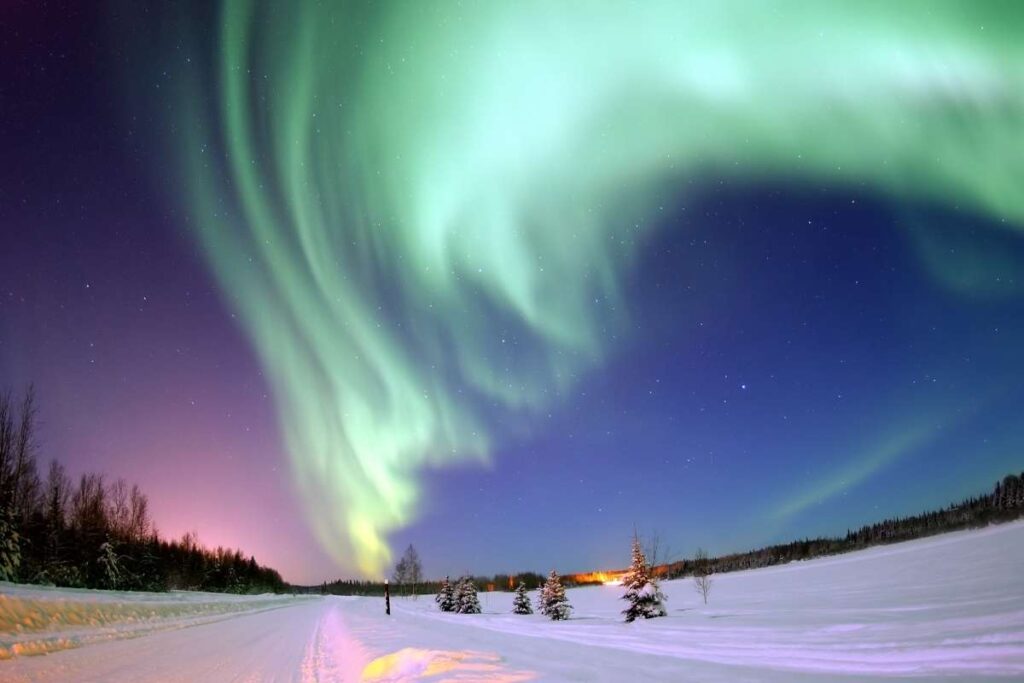
The Aurora Borealis forms when charged solar particles strike Earth’s magnetic field and collide with atmospheric gases, producing glowing waves of green, pink, violet, and red light. Solar Cycle 25, peaking in 2024–2025, has intensified auroras globally, making them visible as far south as Germany, France, and parts of the U.S. Midwest. The strongest displays appear during high geomagnetic storms (Kp index 6+).
Key Points:
- Peak activity expected through late 2025 due to heightened solar maximum.
- Best viewing regions: Alaska, Iceland, Norway, Finland, and Canada.
2. Bioluminescent Shores
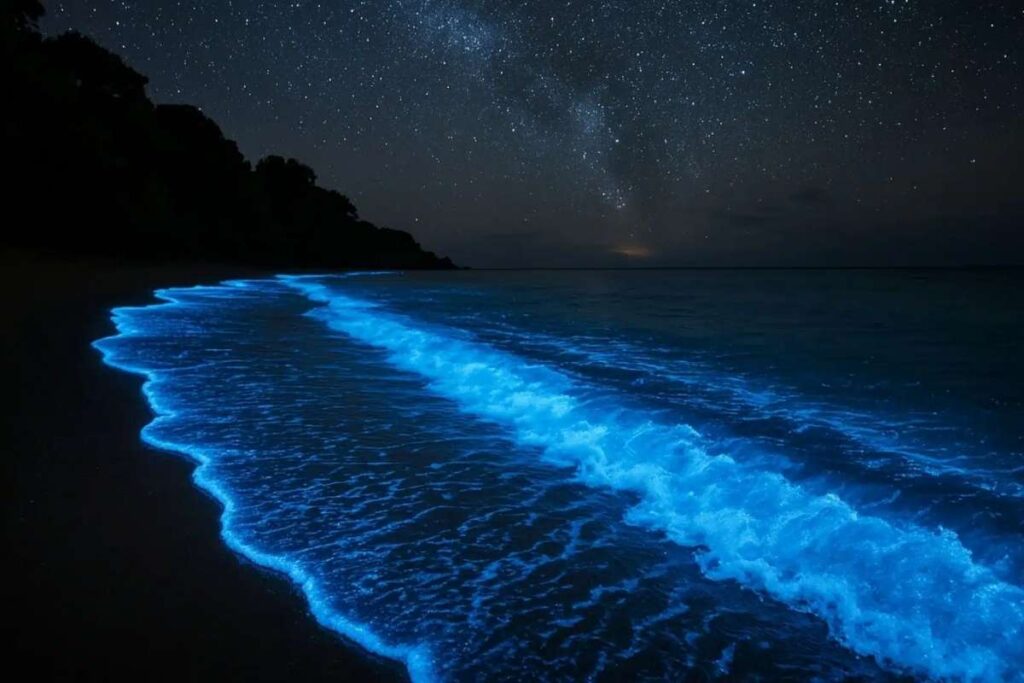
One of the most magical natural phenomena in the world, bioluminescent shores glow electric blue when waves or footsteps disturb them. Dinoflagellates such as Noctiluca scintillans emit these flashes as a defense mechanism. Climate shifts have made glowing events more frequent, creating surreal coastlines where every splash lights up the night.
Key Points:
- Heavy blooms often follow heatwaves or nutrient-rich runoff.
- Top locations: Maldives, Puerto Rico, Taiwan, California.
3. Catatumbo Lightning
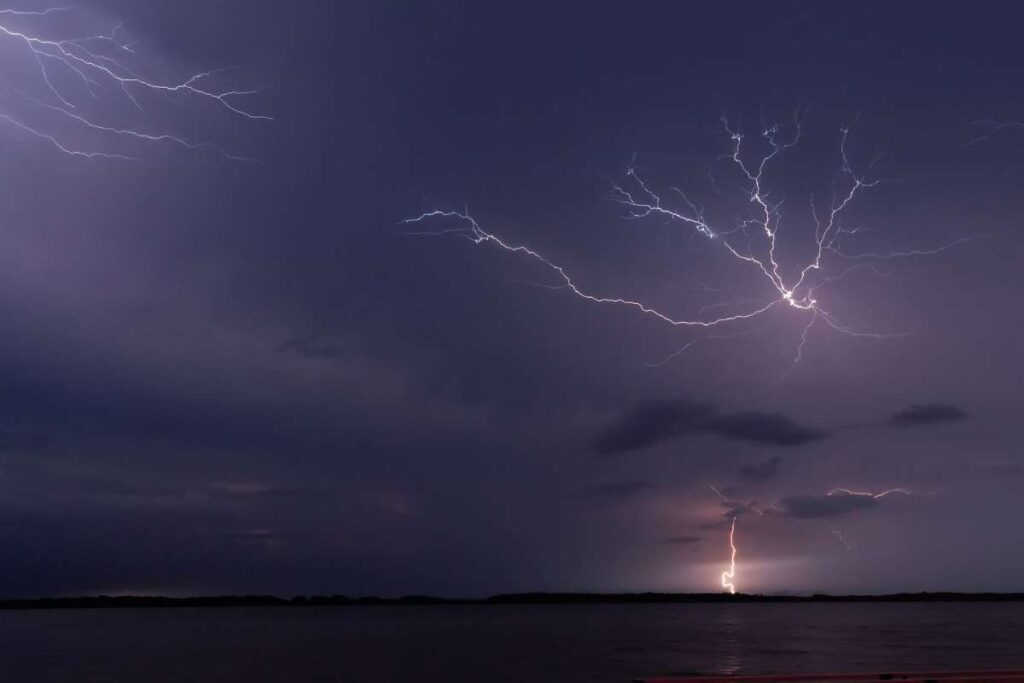
Catatumbo’s lightning storms occur over Lake Maracaibo, Venezuela, producing up to 260 nights of lightning annually. The region’s warm trade winds crash into cold mountain air, triggering continuous electrical storms. NASA monitoring (2023) confirmed it as the world’s highest lightning hotspot with over 200 lightning flashes per square kilometer per year.
Key Points:
- Peak season: September to November.
- Lightning activity influences regional nitrogen cycles.
4. Frozen Ice Bubbles
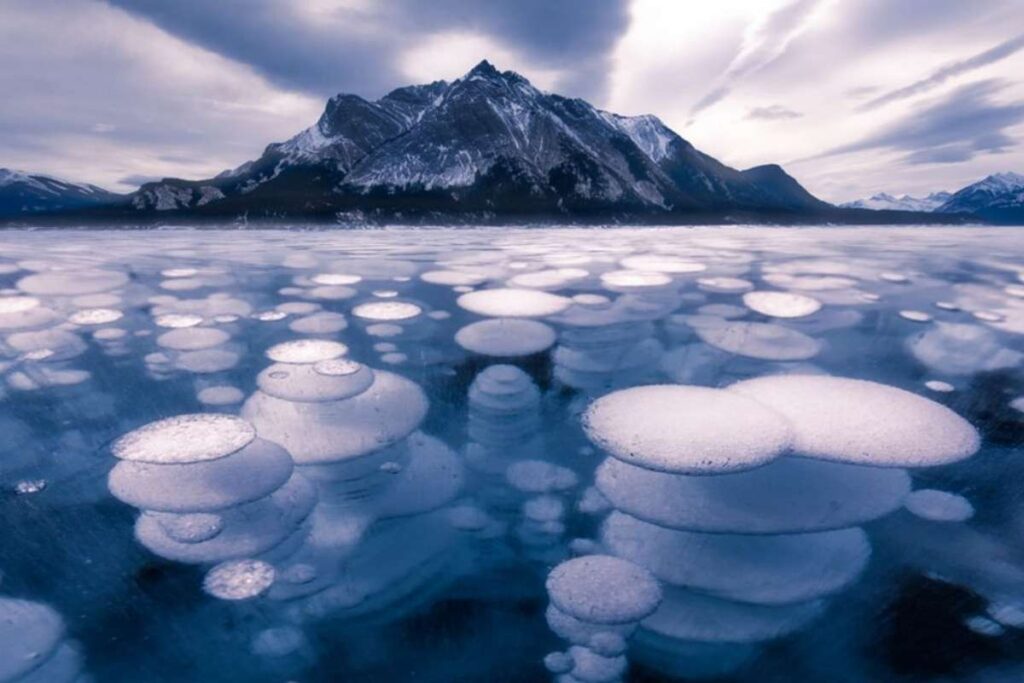
Methane bubbles trapped under frozen lakes like Alberta’s Lake Abraham create surreal white layers as organic matter decomposes underwater. During extreme winters, clearer ice reveals more bubble stacks. With rising global temperatures, scientists have noted increased methane release during thaw seasons since 2021.
Key Points:
- Methane levels can rise significantly during the spring melt.
- Found in Canada, Siberia, and Alaska.
5. Volcanic Lightning
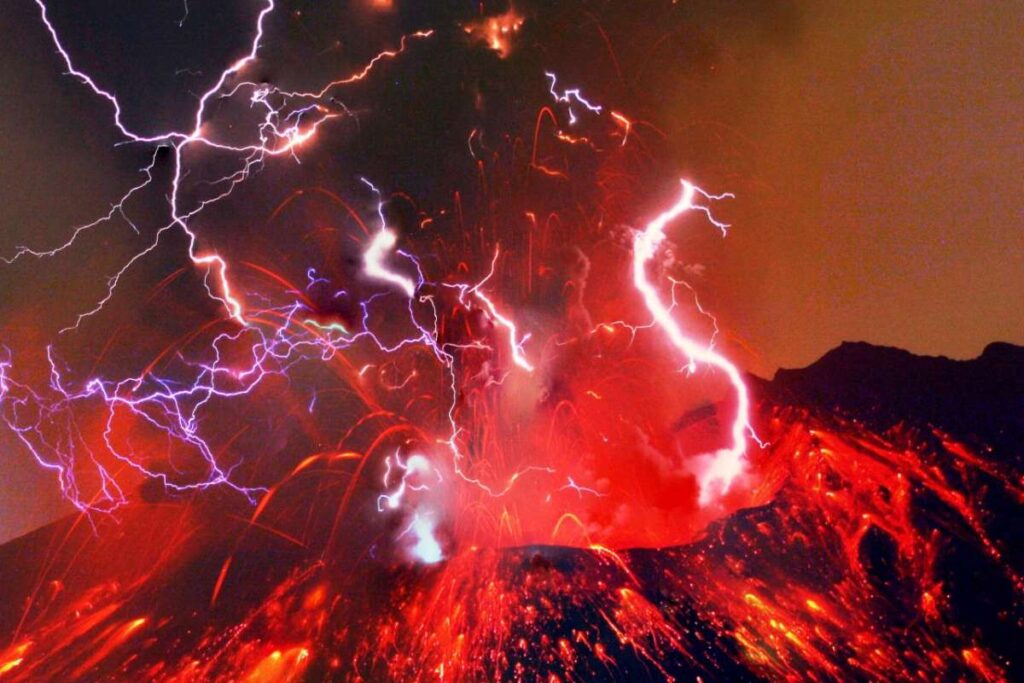
Volcanic lightning occurs when ash particles collide inside eruption plumes, generating static electricity. This intense display is one of the most dramatic natural phenomena in the world, revealing insights into the power and scale of volcanic eruptions. Recent events in Tonga and Indonesia have provided spectacular visuals of this rare phenomenon.
Key Points:
- Indicator of eruption strength and ash density.
- Common near volcanoes in Japan, Iceland, Indonesia, and Chile.
6. Turquoise Ice Crystals
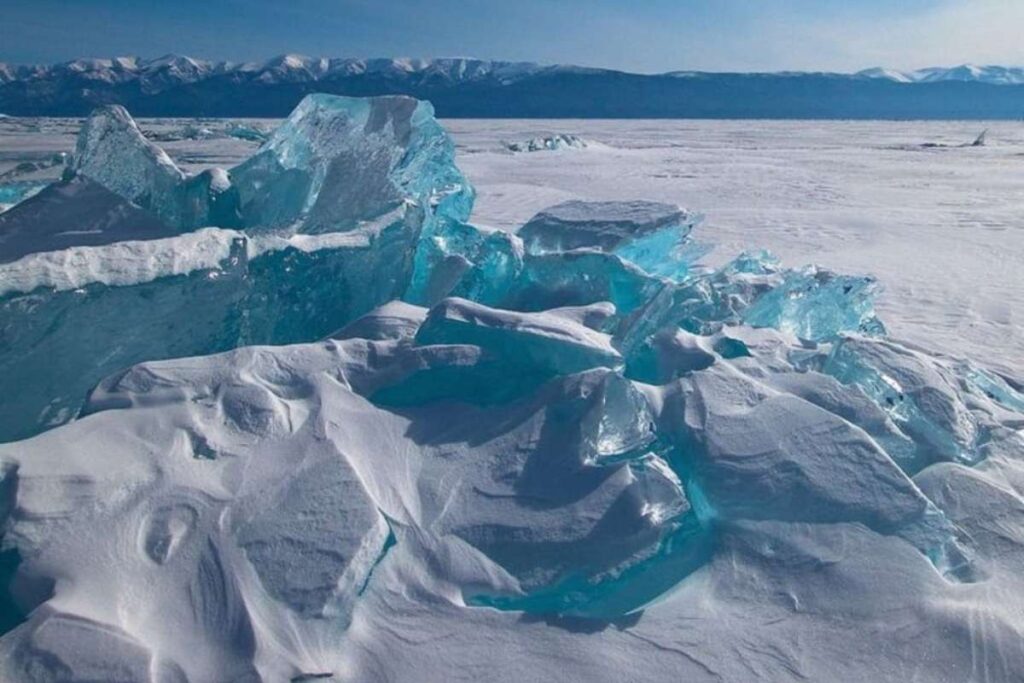
Glacial ice appears turquoise when compacted for centuries, squeezing out air bubbles and allowing only blue wavelengths to pass through. Climate studies reveal these formations are becoming harder to find as glaciers thin, making sightings more special than ever.
Key Points:
- Seen in Antarctica, Lake Baikal, and Iceland.
- Forms under high pressure and low air content.
7. Great Blue Hole
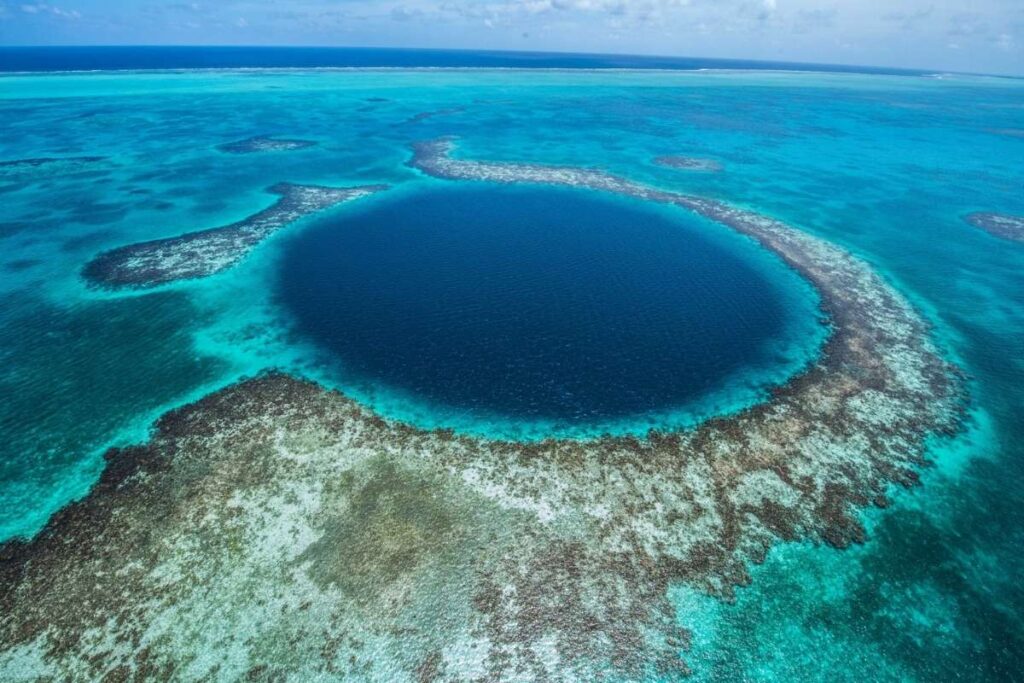
Belize’s Great Blue Hole is a giant marine sinkhole formed during the last Ice Age. At 318 meters across and 124 meters deep, it reveals submerged stalactites that prove it was once a dry cave. New 2018→2023 sonar scans showed previously unknown ledges and collapsed caverns.
Key Points:
- UNESCO World Heritage adjacent region.
- Popular for deep-diving expeditions.
8. Moonbow (Lunar Rainbow)
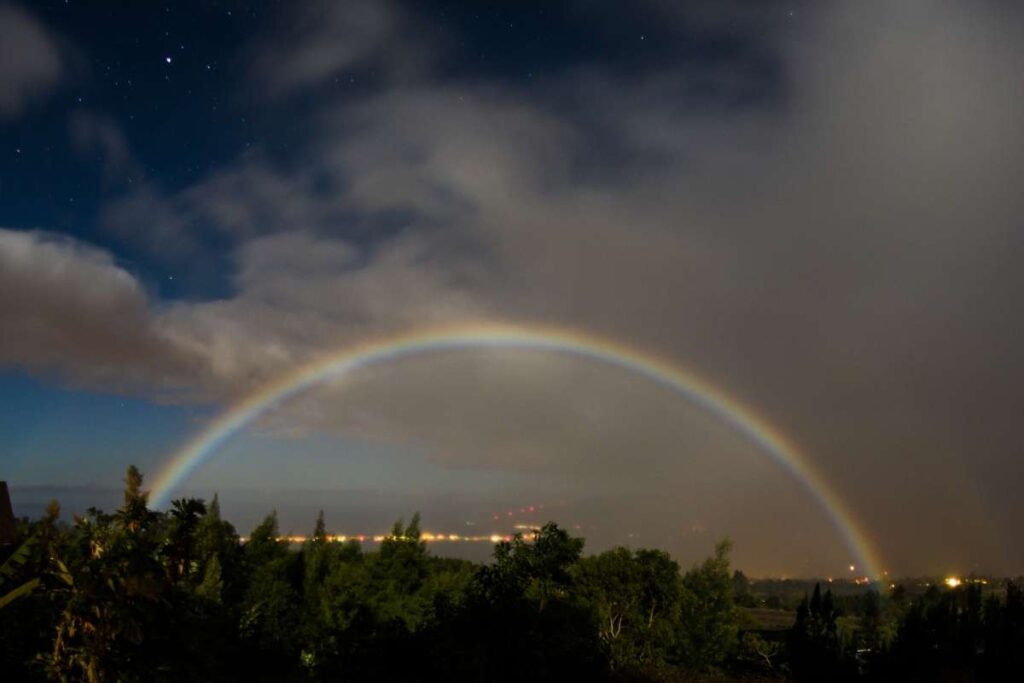
Moonbows are faint nighttime rainbows created when moonlight refracts through mist or water droplets. Due to low light, they often appear white to the naked eye, revealing full colors only in long-exposure photography. These luminous arcs represent an extraordinary form of natural phenomena in the world, captivating observers under ideal conditions.
Key Points:
- Best seen at Victoria Falls (Zambia) and Hawaii.
- Occur opposite the moon when it’s low in the sky.
9. Sort Sol (Starling Murmuration)
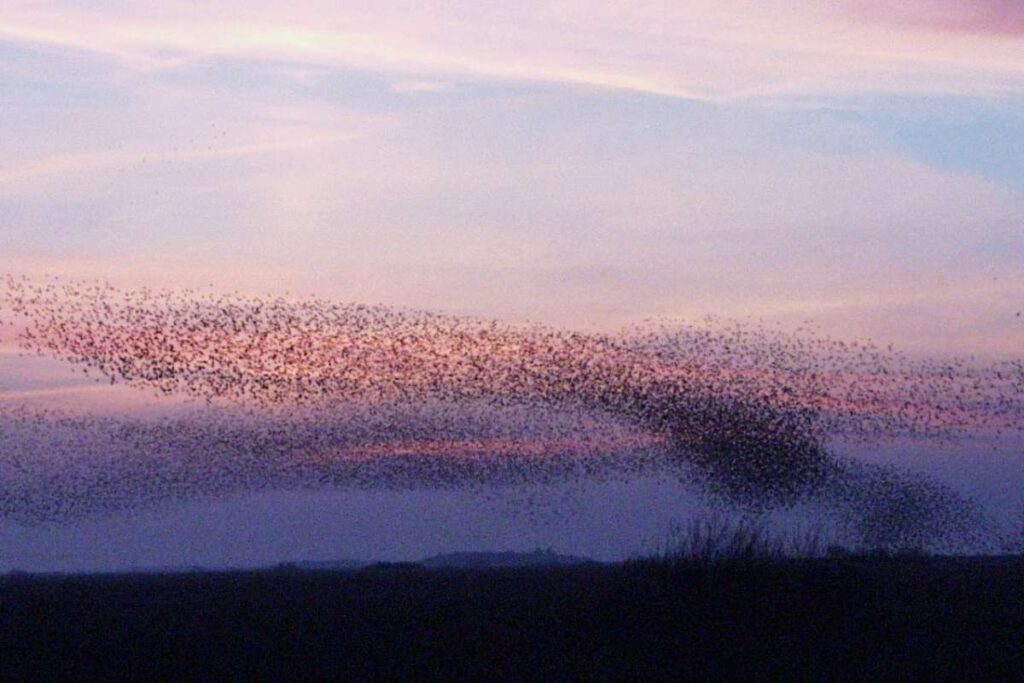
Millions of starlings create swirling aerial formations as part of collective defense behavior. Denmark experiences one of the world’s largest murmurations. Research from 2024 confirms starlings maintain coordinated movement by tracking the motions of their nearest seven neighbors.
Key Points:
- Occurs during migration seasons.
- Helps birds deter predators like falcons.
10. Sailing Stones (Moving Rocks)
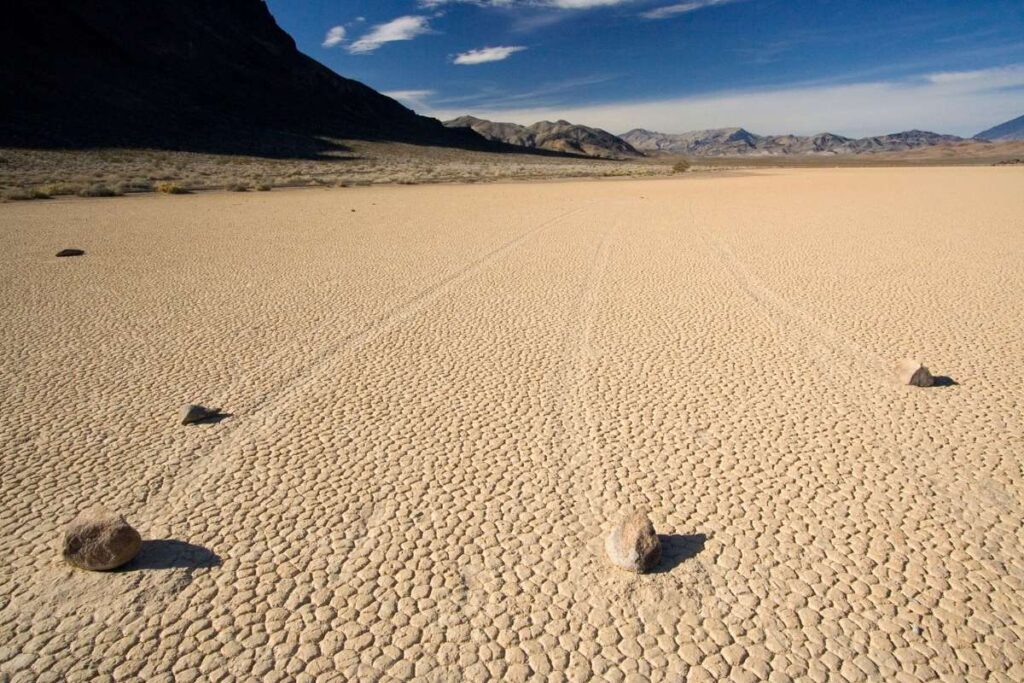
Rocks glide across Racetrack Playa in Death Valley when thin ice sheets form beneath them and are pushed by light winds up to 5 m/s. GPS data collected in 2023 shows stones can move several meters in a single event, despite appearing motionless for years.
Key Points:
- Movement occurs during rare winter freeze-thaw cycles.
- Tracks remain visible for decades.
11. Darvaza Gas Crater (“Door to Hell”)
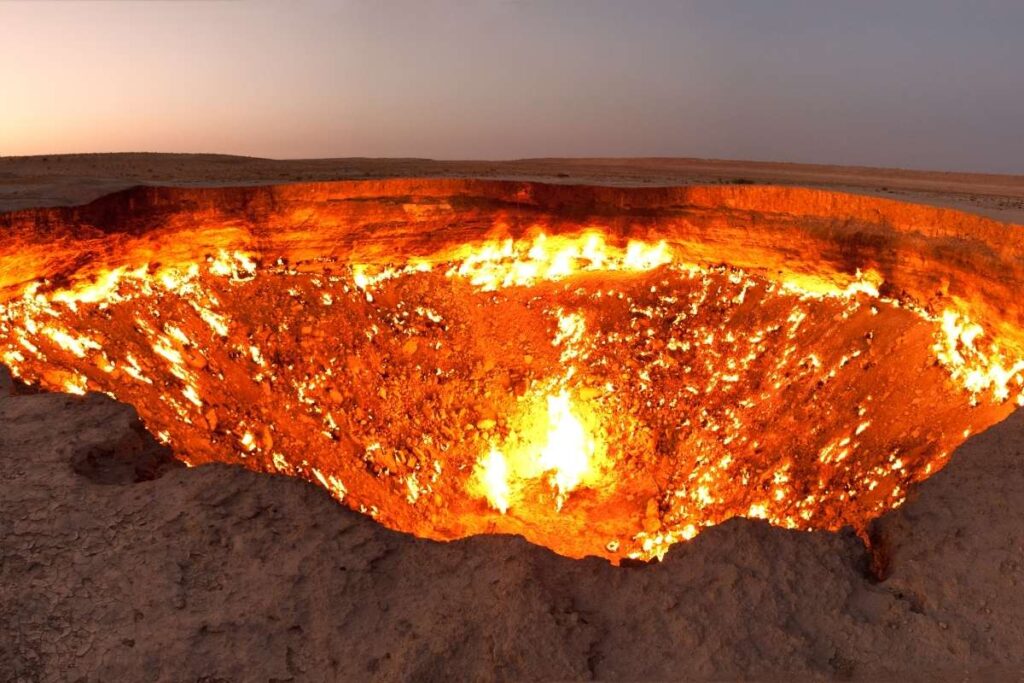
The Darvaza Gas Crater in Turkmenistan burns continuously due to methane-rich deposits. Its fiery interior creates an awe-inspiring spectacle in the desert. This blazing pit remains one of the most iconic natural phenomena in the world, drawing adventurous travelers and researchers alike.
Key Points:
- Constant temperature: up to 1,000°C near flames.
- Diameter: ~70 meters wide.
12. Moeraki Boulders
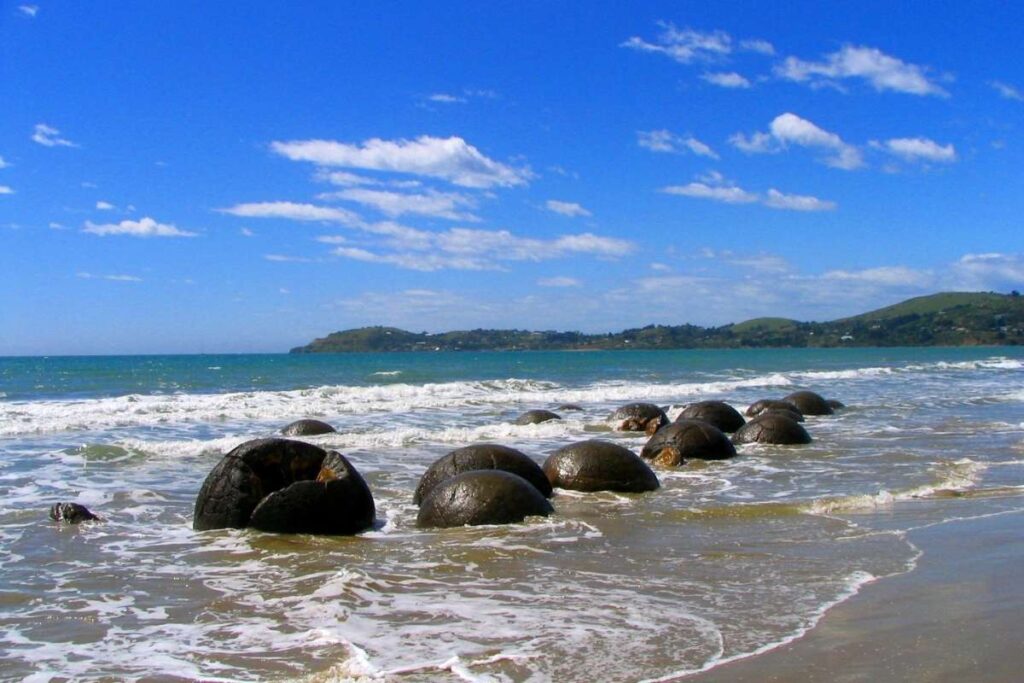
These spherical boulders formed 60 million years ago through calcite concretion. Some weigh several tons and measure up to 2 meters in diameter. Erosion continuously exposes new boulders along Koekohe Beach, New Zealand.
Key Points:
- Composed of mudstone and calcite crystals.
- Similar formations are found in Ireland.
13. Sky Mirror (Salt Flats)
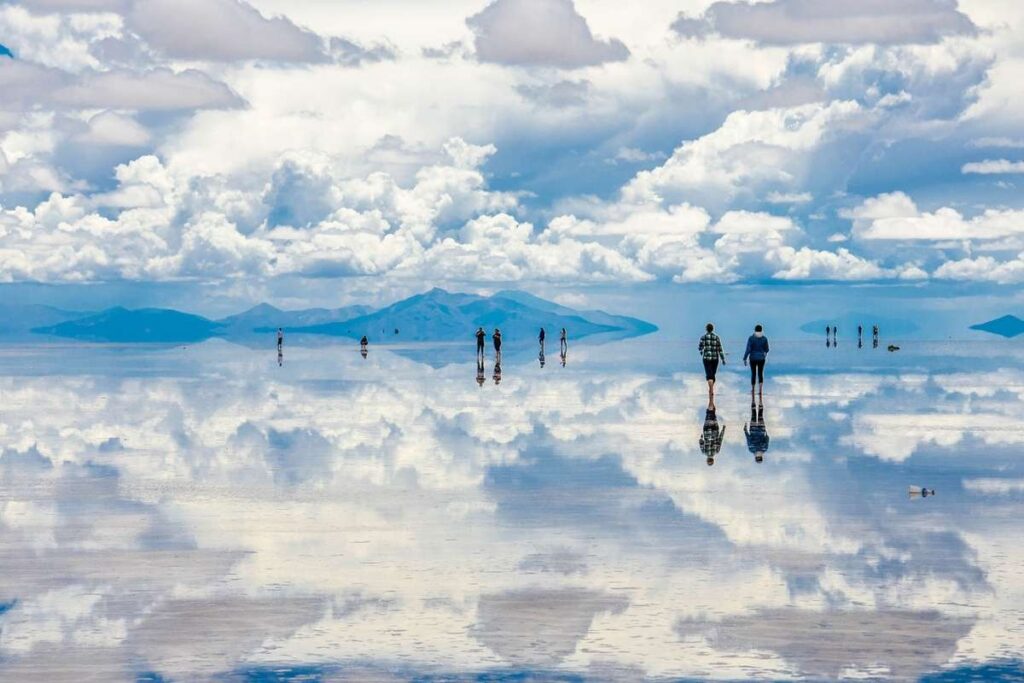
Salt flats like Bolivia’s Salar de Uyuni reflect the sky perfectly when covered by shallow rainwater. Seasonal flooding between December and April creates a mirrored landscape spanning over 10,000 square km, making it the world’s largest natural mirror.
Key Points:
- Location for astrophotography and optical studies.
- Also, a major lithium resource zone.
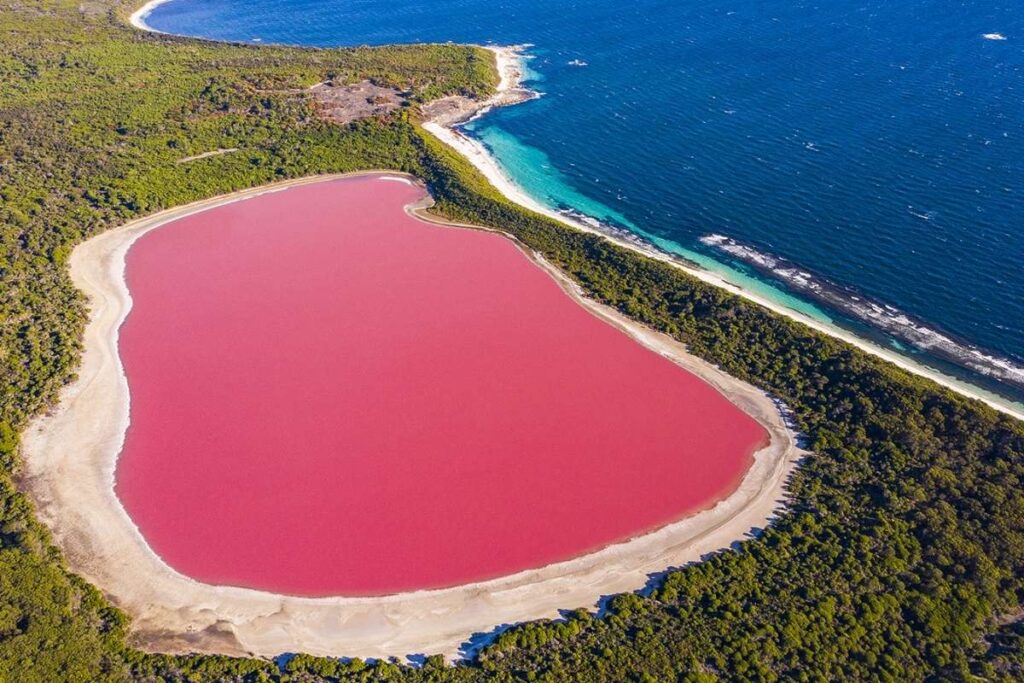
14. Pink Lakes
The Darvaza Gas Crater in Turkmenistan burns continuously due to methane-rich deposits. Its fiery interior creates an awe-inspiring spectacle in the desert. This blazing pit remains one of the most iconic natural phenomena in the world, drawing adventurous travelers and researchers alike.
Key Points:
- Top lakes: Lake Hillier, Lake Retba, Hutt Lagoon.
- Color changes through the year.
15. Giant’s Causeway
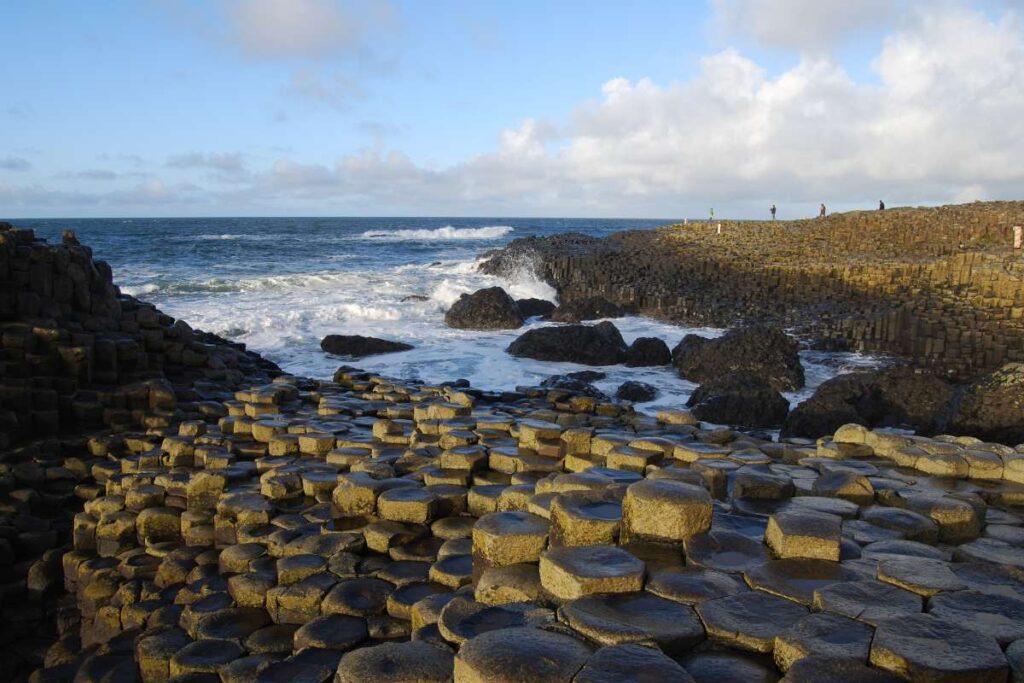
Formed 60 million years ago from cooling basalt lava, the Giant’s Causeway contains about 40,000 interlocking hexagonal columns. Studies confirmthat the uniform shapes result from slow cooling that created polygonal cracking patterns.
Key Points:
- UNESCO World Heritage site.
- Most columns have five to seven sides
16. Snow Chimneys (Fumarole Ice Towers)
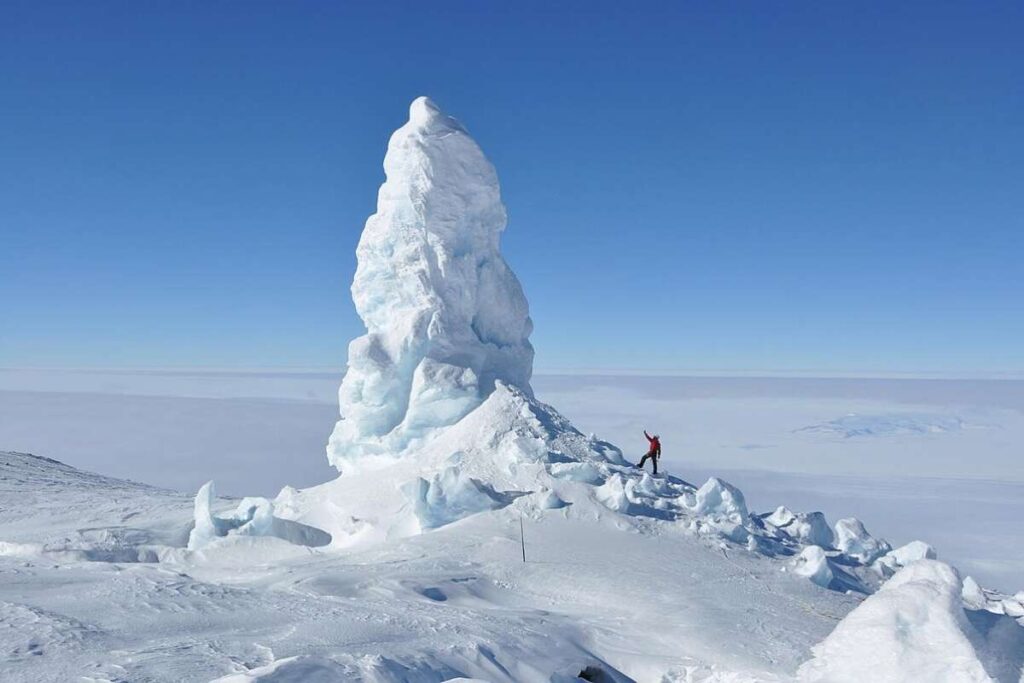
Snow chimneys form when volcanic fumaroles release warm steam beneath deep snowpacks. As the steam rises through small openings, it freezes on contact with the cold air, gradually building tall hollow towers of ice. These chimneys can reach several meters high and are typically found in high-altitude volcanic regions such as Antarctica’s Mount Erebus and Icelandic geothermal fields. Their structures constantly shift as steam flow and temperatures change.
Key Points:
- Only forms in active volcanic zones with sub-zero surface temperatures.
- Can collapse suddenly due to shifts in underground heat.
17. Lenticular Clouds
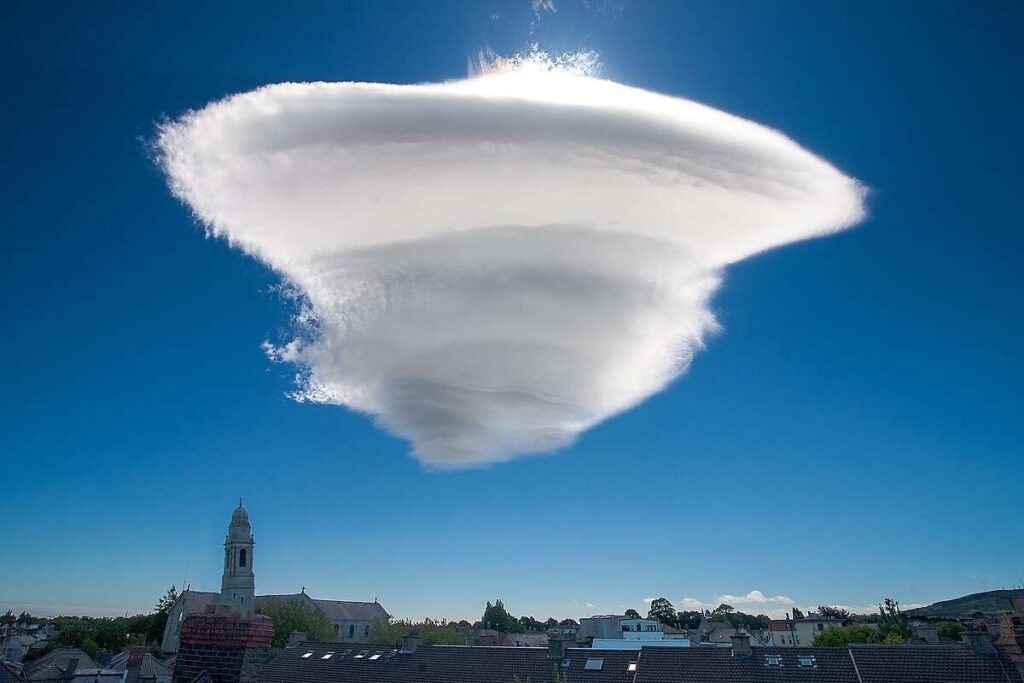
Stationary, lens-shaped clouds form when stable air flows over mountains, creating wave patterns. Their smooth, UFO-like appearance fascinates both pilots and skywatchers. These rare natural phenomena in the world serve as indicators of turbulent mountain airflow.
Key Points:
- Common near the Rockies, Andes, Alps, and Japan’s Mount Fuji.
- Can signal intense mountain-wave winds up to 100+ km/h.
18. River of Five Colours (Caño Cristales)
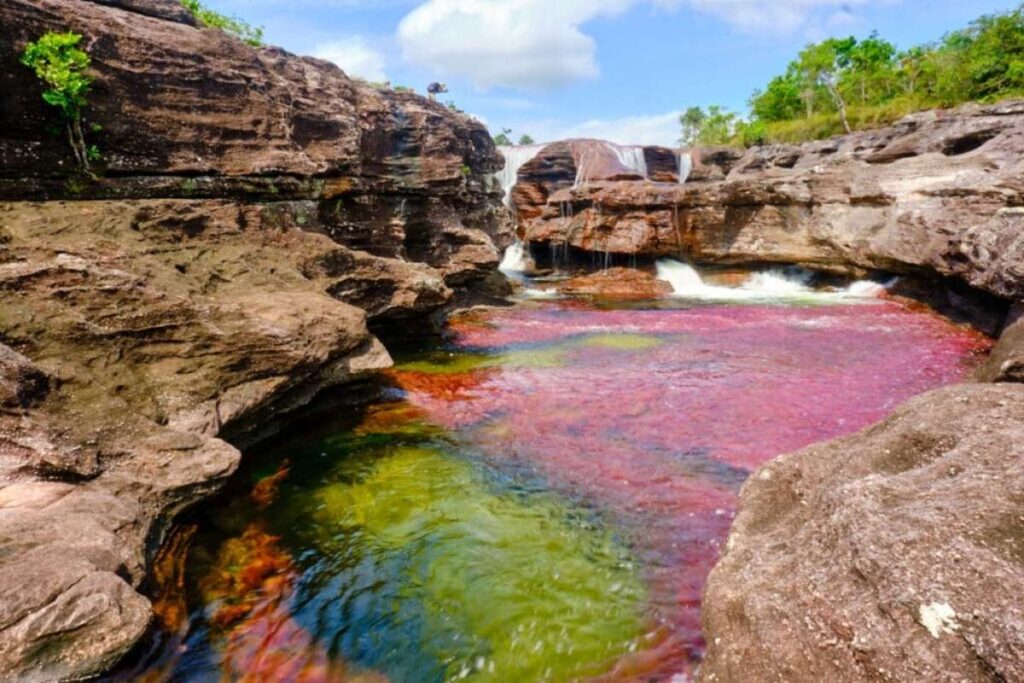
Located in Colombia, Caño Cristales turns vivid shades of red, yellow, green, blue, and black between June and November. The color comes from the aquatic plant Macarenia clavigera, which thrives only in specific water conditions. Studies in 2024 confirmed that increasing water temperature changes the river’s color intensity each year, making climate variability a major factor in seasonal displays.
Key Points:
- Only visible during specific flow + sunlight conditions.
- Known as the “Liquid Rainbow” due to its vibrant pigmentation.
19. Tidal Bore
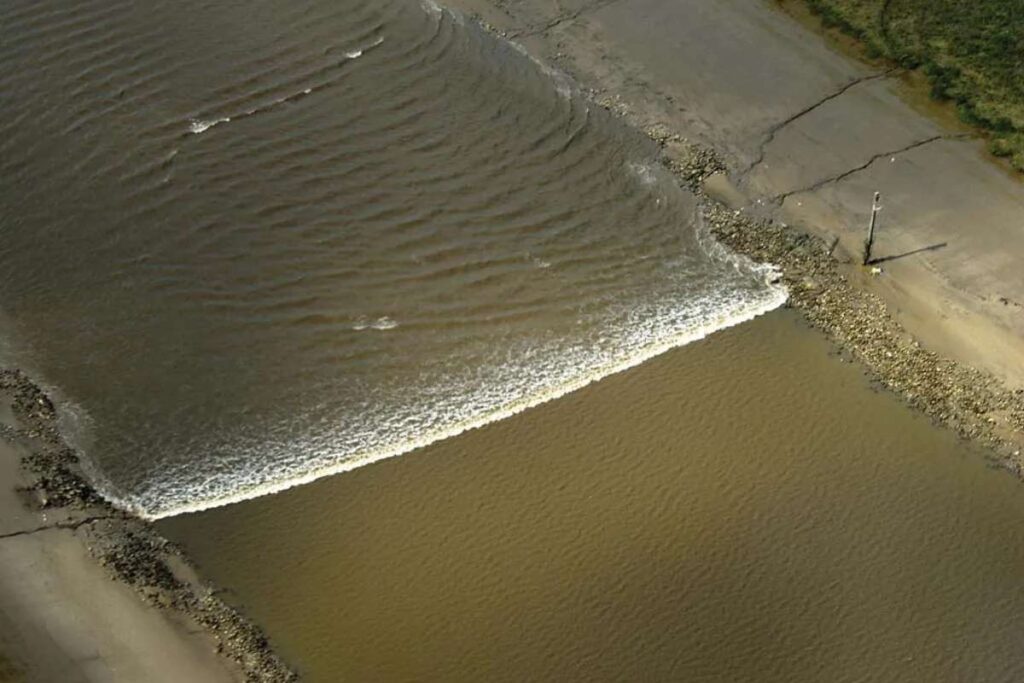
A tidal bore happens when incoming ocean tides push a single, powerful wave upstream against a river’s current. The wave can reach heights of 1–3 meters in certain regions. Surfers travel to spots like the Amazon’s Pororoca and China’s Qiantang River to ride these long, continuous waves that can last several minutes.
Key Points:
- Requires extreme tidal ranges, typically above 6 meters.
- Can cause sudden flooding and strong backward currents.
20. Flowering Desert
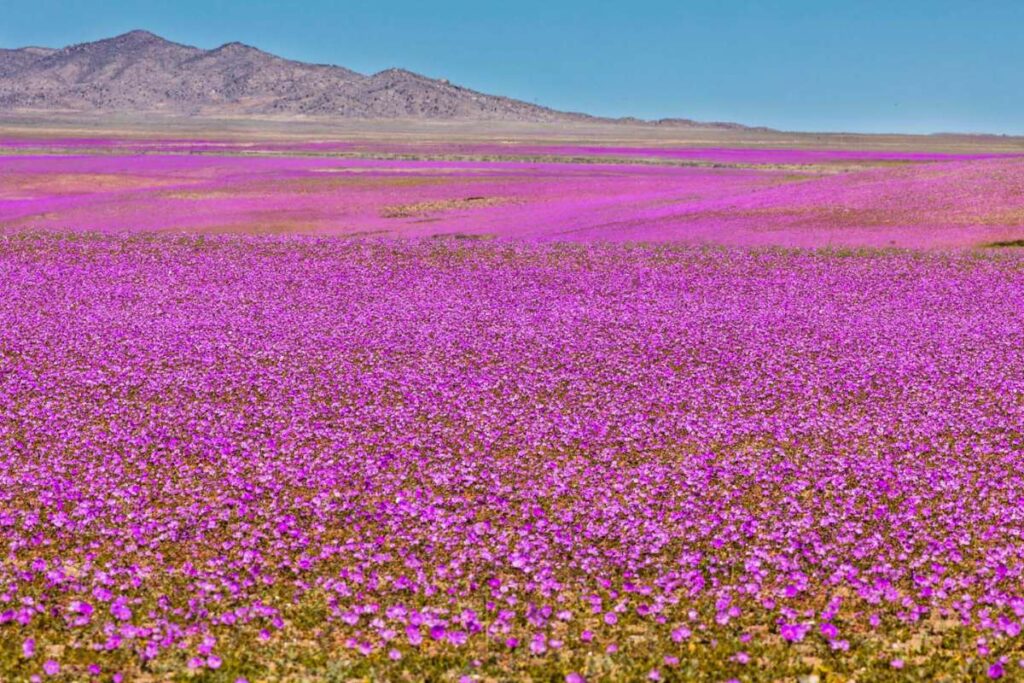
Some deserts, such as Chile’s Atacama, erupt into vibrant color after rare heavy rainfall. Dormant seeds bloom to cover the landscape with wildflowers, creating a fleeting spectacle. These colorful eruptions are striking natural phenomena in the world, celebrated for their rarity and beauty.
Key Points:
- Blossoms last only a few weeks.
- Species can remain dormant for years or decades.
21. Subterranean Ice Caves
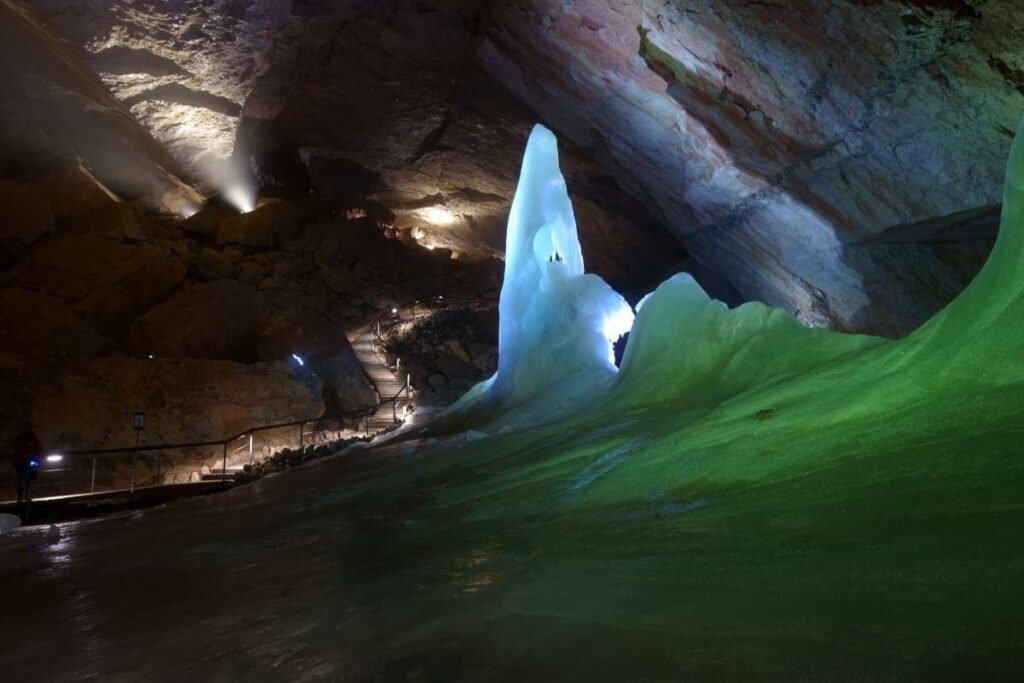
Ice caves form within or beneath glaciers, shaped by meltwater and shifting ice. Light refracting through dense ice walls produces glowing blue chambers that look otherworldly. Climate research in 2023 showed many glacier caves are retreating quickly, making them increasingly unstable but also revealing new formations as glaciers shift.
Key Points:
- Highly unstable due to glacial melting.
- Found in Iceland, Alaska, Patagonia, and the Alps.
22. Mammatus Clouds
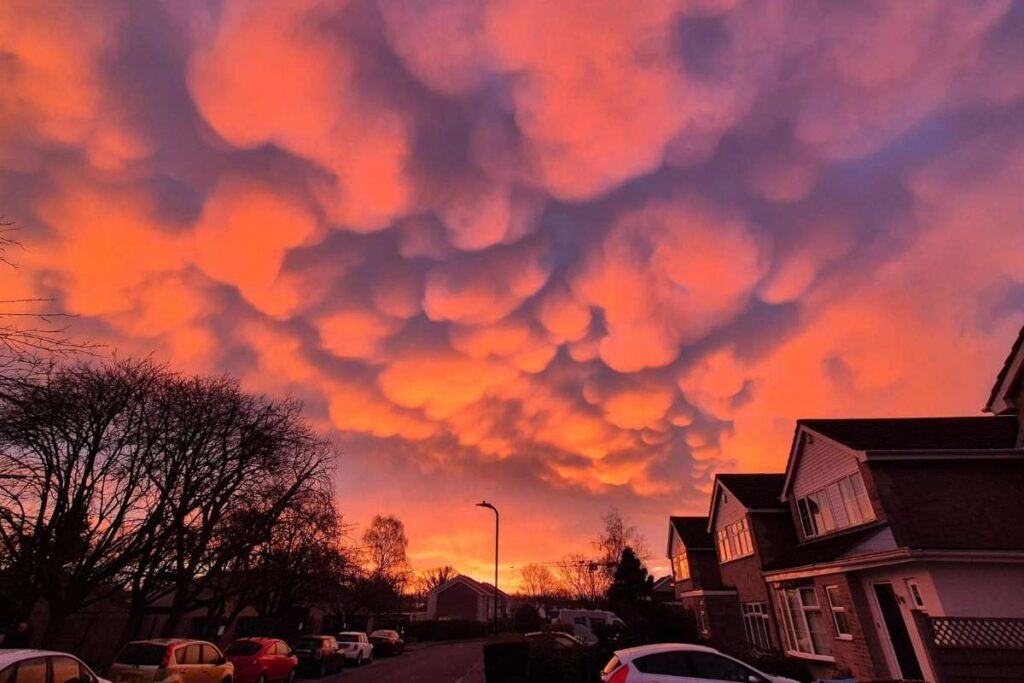
Mammatus clouds appear as pouch-like formations that hang beneath cumulonimbus clouds. They indicate powerful atmospheric turbulence and often follow severe thunderstorms. Their dramatic 3D texture makes them striking photographic subjects. Meteorological studies show they form when cold air sinks rapidly through moist, unstable layers.
Key Points:
- Often associated with severe storm aftermath.
- Can cover hundreds of miles of sky.
23. Nacreous Clouds (Polar Stratospheric Clouds)
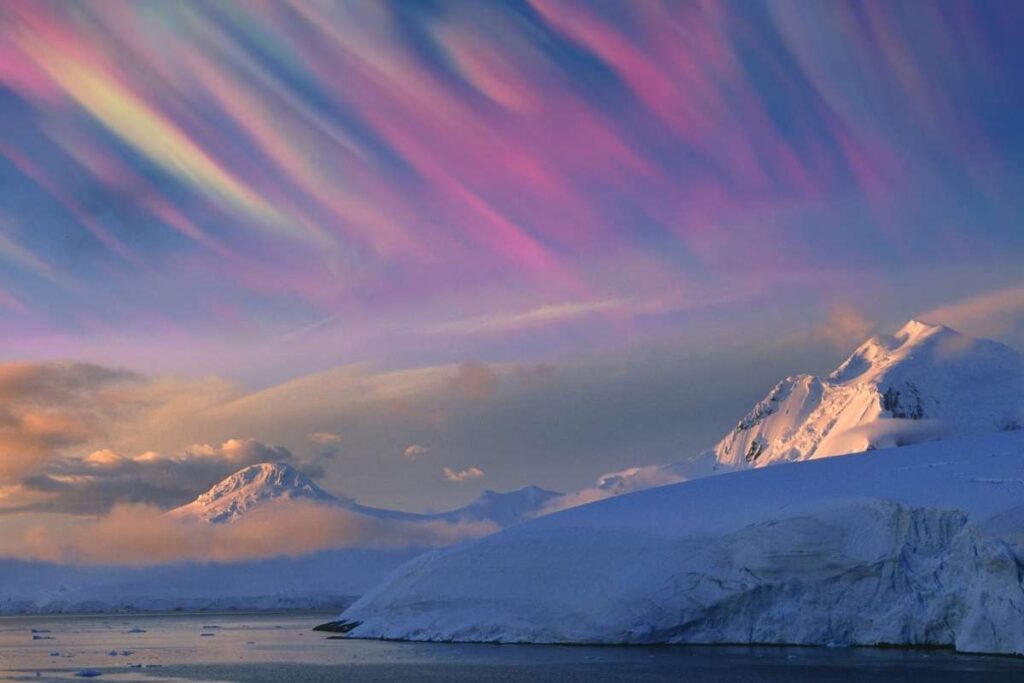
Shimmering in pastel hues high in the stratosphere, nacreous clouds form at extremely low temperatures below –78°C. These rare formations are considered extraordinary natural phenomena in the world, their iridescence captivating scientists and skywatchers alike.
Key Points:
- Contribute to ozone depletion by enabling chemical reactions.
- Visible mainly over Antarctica, Scotland, and Scandinavia.
24. Punch Hole Clouds
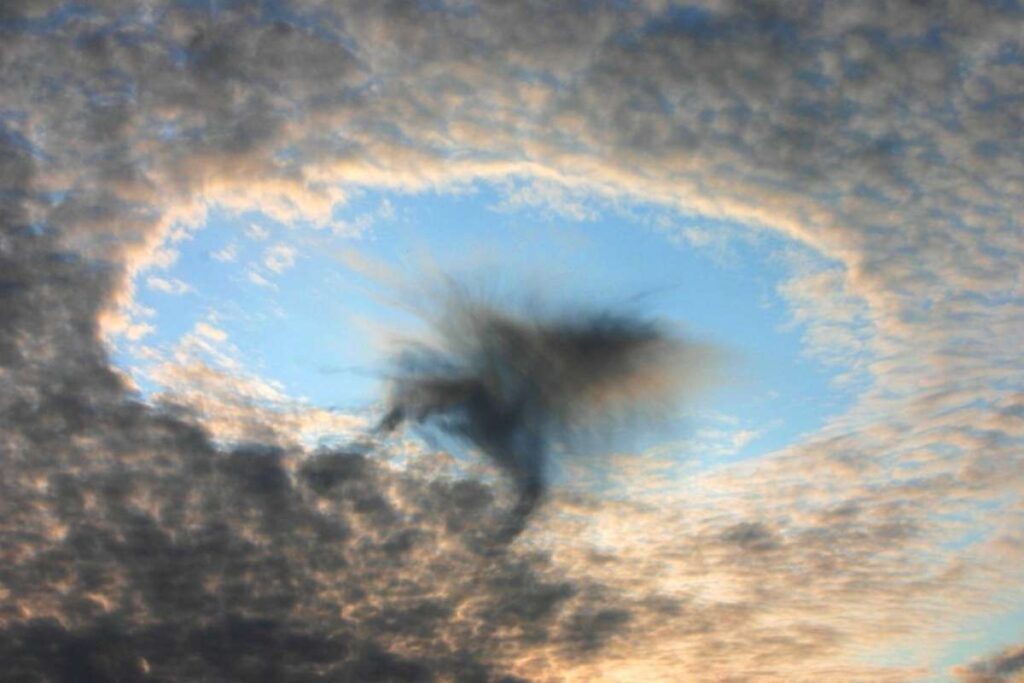
Punch hole clouds form when aircraft pass through thin, supercooled cloud layers, causing rapid ice crystal formation that clears a circular hole. These perfectly round gaps can span several kilometers. The phenomenon has become more common as air traffic increases, and satellite imagery now detects dozens daily worldwide.
Key Points:
- Triggered by aircraft passing through clouds.
- Often misinterpreted as UFO activity.
25. Rainbow
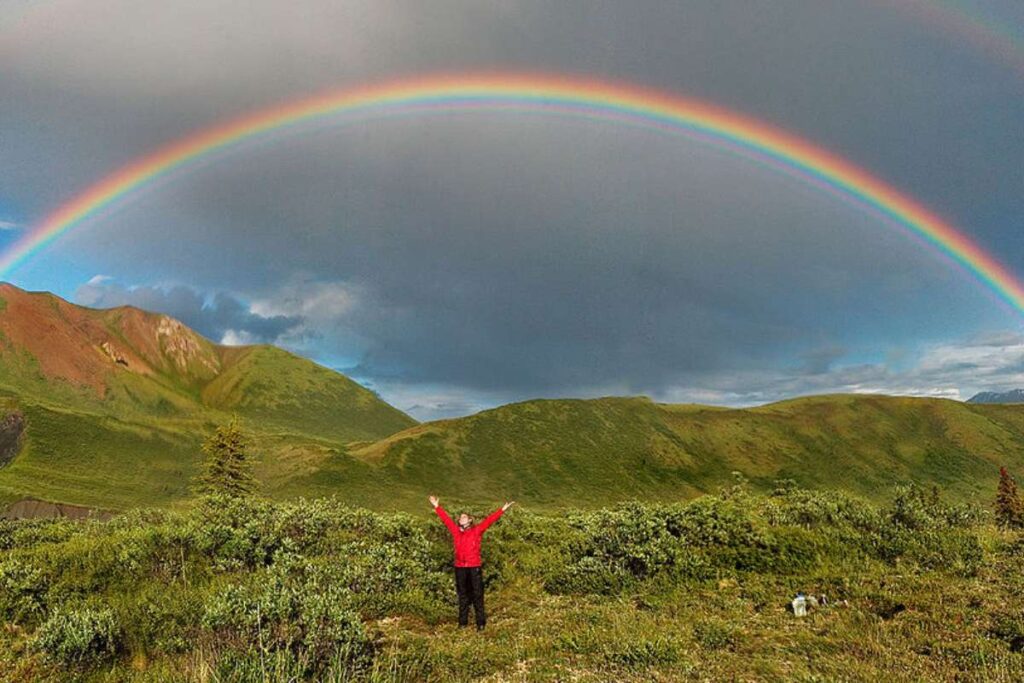
Rainbows occur when sunlight refracts, reflects, and disperses through water droplets, separating light into its spectrum. While common, double, and even triple rainbows have been increasingly documented thanks to better smartphone photography. Research shows rainbow visibility depends heavily on droplet size and sunlight angle (42° being optimal).
Key Points:
- Double rainbows have reversed secondary arcs.
- Most visible during post-rain sunlight.
26. Meteor Showers
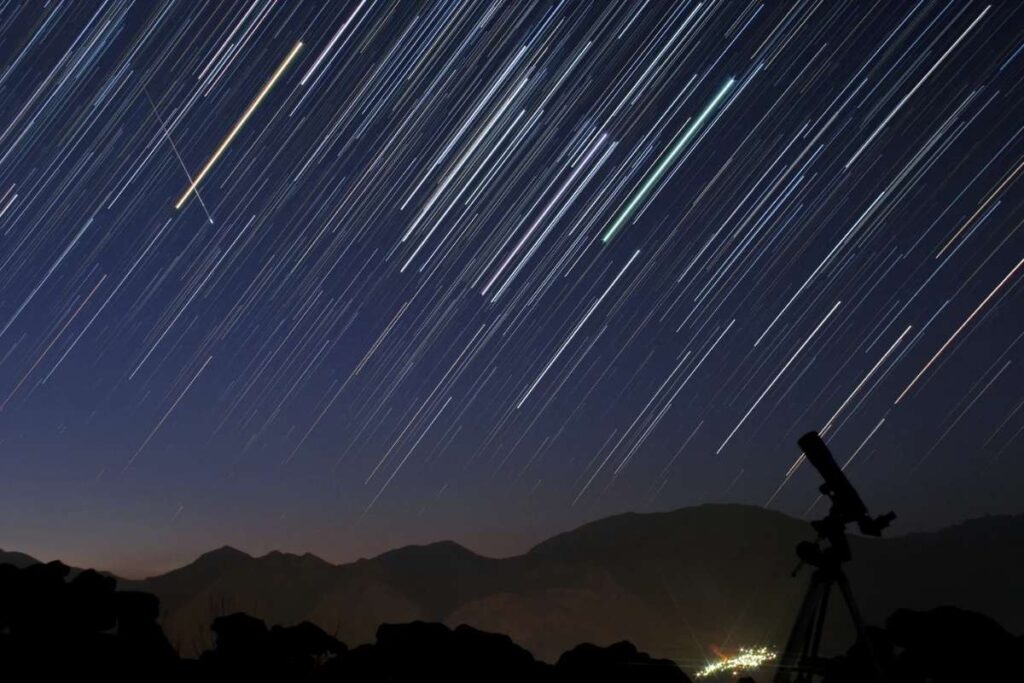
When Earth passes through debris streams left by comets, spectacular meteor showers light up the night. Events like the Perseids and Geminids can produce hundreds of meteors per hour. These celestial displays are breathtaking examples of natural phenomena in the world, drawing astronomers and enthusiasts worldwide.
Key Points:
- Best viewed in dark, moonless skies.
- Caused by tiny dust particles burning in Earth’s atmosphere.
27. Geysers
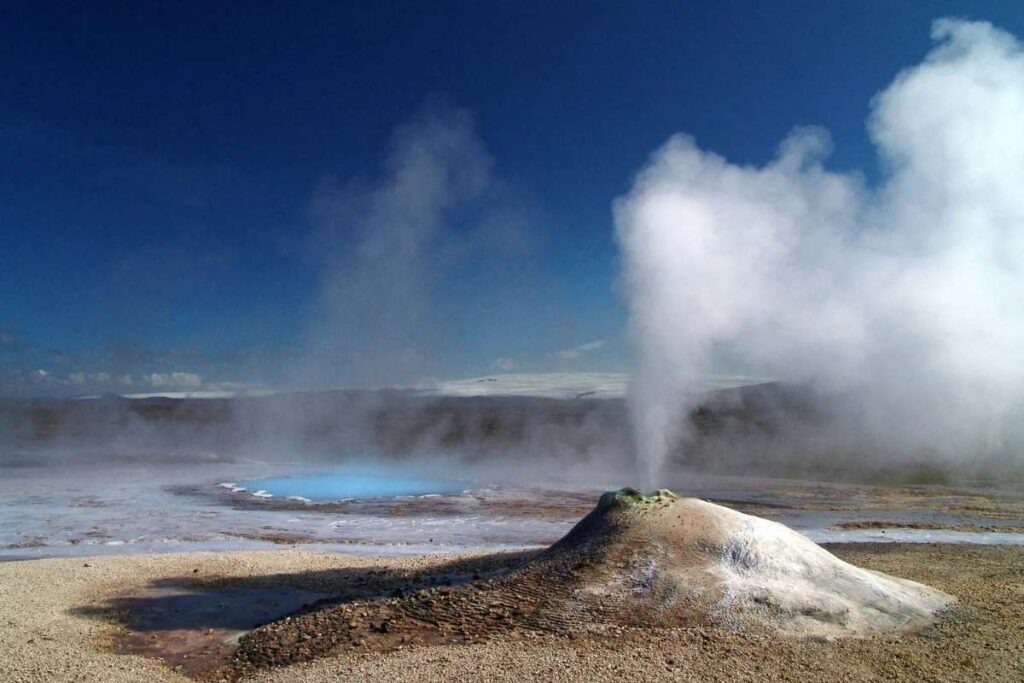
Geysers erupt when underground water is heated by magma until pressure builds and releases explosively. Yellowstone’s geysers are the most studied, with new seismic data in 2024 showing that underground plumbing systems shift more frequently than previously believed. Some geysers go dormant for years before suddenly reactivating.
Key Points:
- Require heat + water, + pressure.
- Extremely rare globally: fewer than 1,000 active geysers exist.
28. Seiches
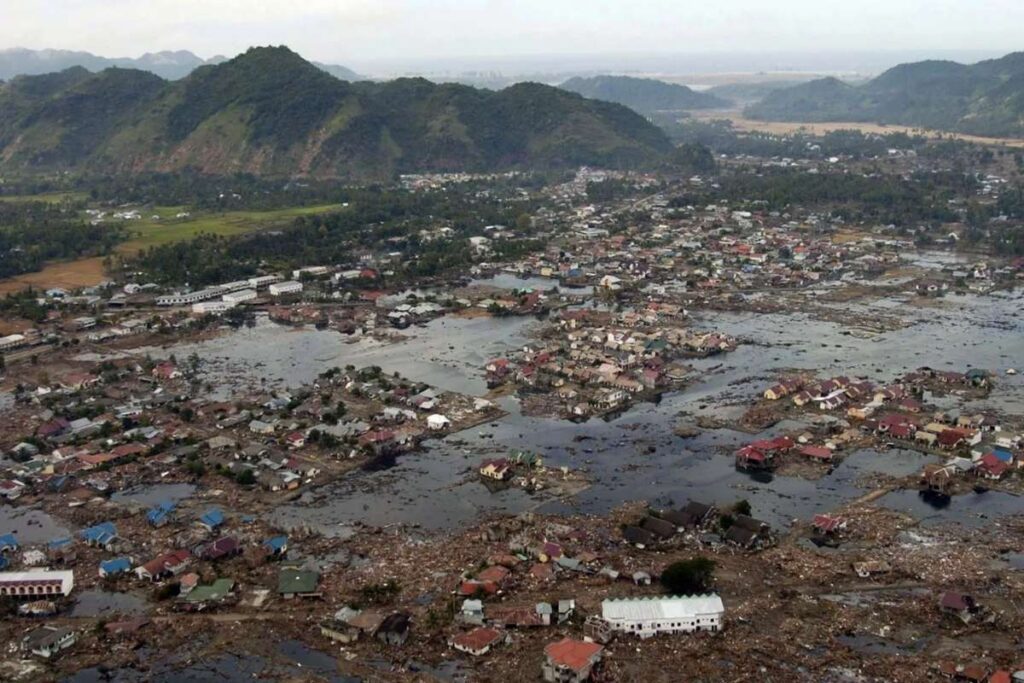
Seiches are standing waves in enclosed water bodies caused by wind, pressure changes, or seismic activity. They can cause water levels to oscillate for hours. Climate studies in 2023 revealed more frequent seiche events in the Great Lakes due to stronger atmospheric pressure shifts.
Key Points:
- Can be triggered by distant earthquakes.
- Observed in lakes, bays, and even swimming pools.
29. Volcanic Eruptions
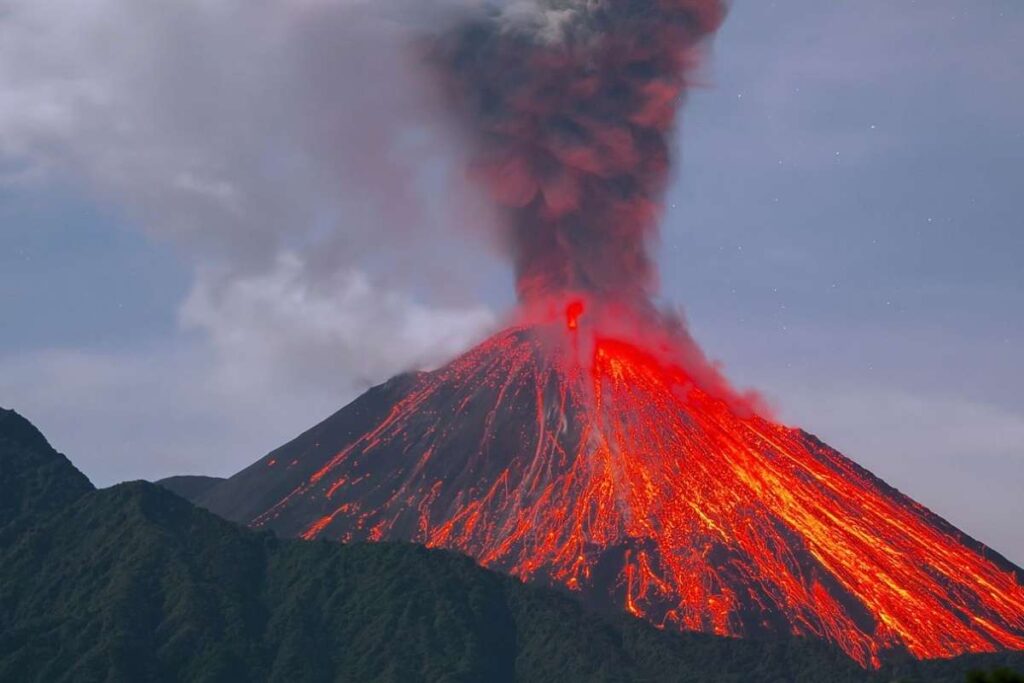
When magma, ash, and gases escape Earth’s crust, volcanic eruptions reshape landscapes and influence the climate. Major eruptions in Tonga, Iceland, and the Philippines recently demonstrated the power of these events. Such forces are among the most dramatic natural phenomena in the world, reminding us of the planet’s volatility.
Key Points:
- Over 1,350 potentially active volcanoes worldwide.
- Eruptions can cool global temperatures temporarily.
30. Earthquakes
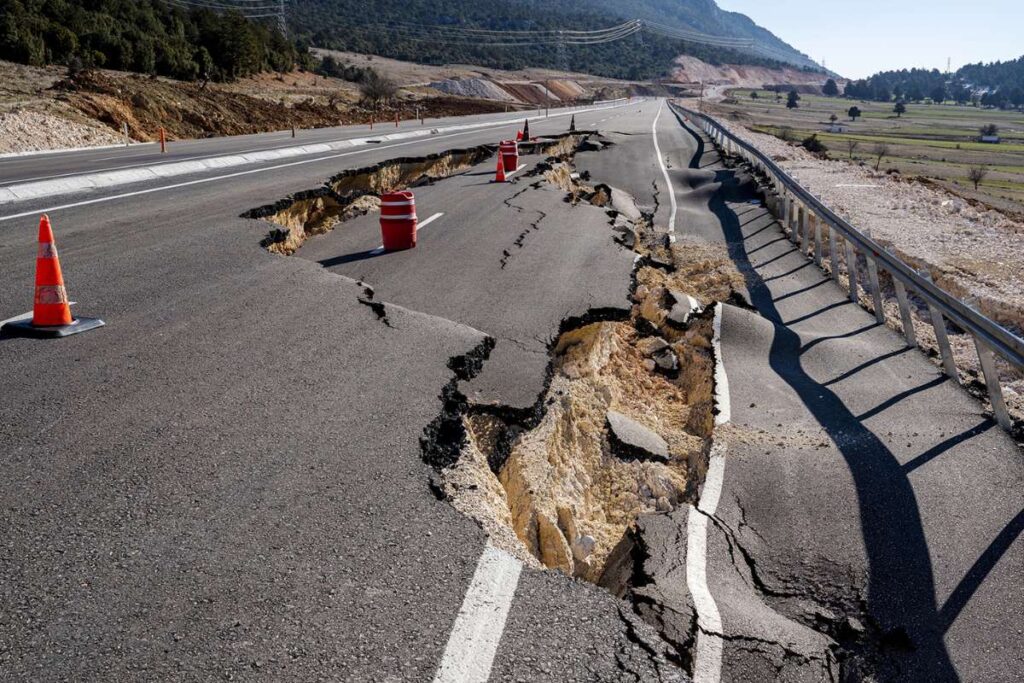
Earthquakes result from sudden shifts in tectonic plates along faults. Advances in early-warning systems since 2023 have made quake detection faster and more accurate, saving thousands of lives. Major quakes continue to reshape coastlines and create new landforms, especially along the Pacific Ring of Fire.
Key Points:
- Over 500,000 earthquakes occur yearly, but most are minor.
- Largest recent quake: Turkey–Syria 2023 (7.8 magnitude).
31. Tornadoes
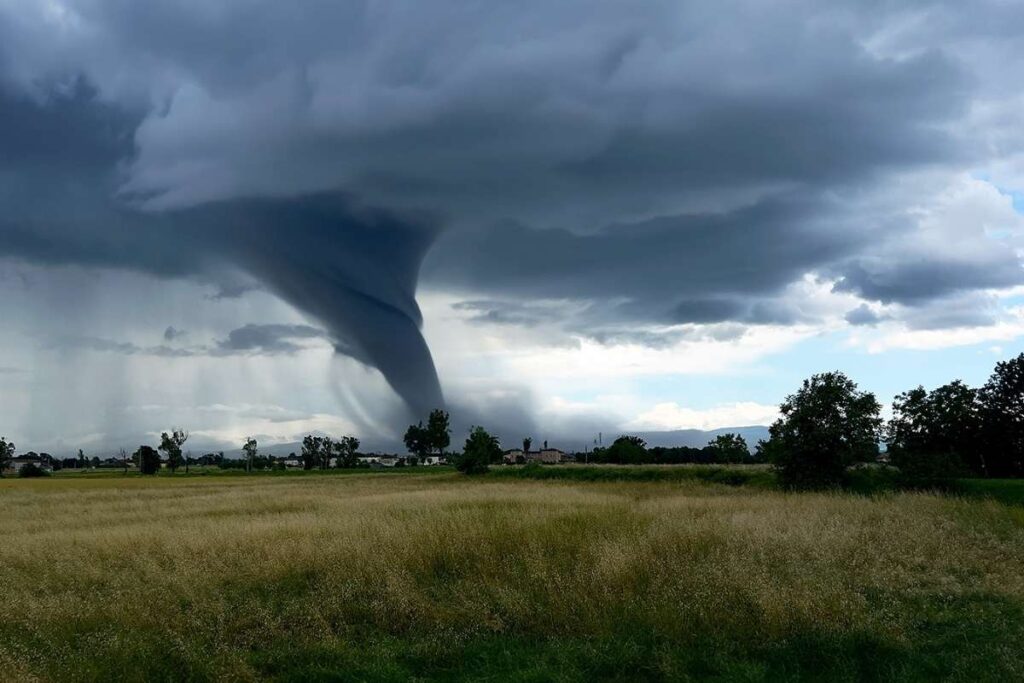
Tornadoes are violently rotating columns of air extending from thunderstorms to the ground. They form when warm, moist air meets cooler, drier air, creating intense updrafts and wind shear. In recent years, tornado alley patterns have shifted eastward toward states like Tennessee and Kentucky, a trend confirmed by NOAA in 2024. Tornado intensities are also becoming more erratic due to warming atmospheric conditions.
Key Points:
- The U.S. experiences 1,000+ tornadoes per year, the highest in the world.
- EF5 tornadoes can generate winds over 320 km/h (200 mph).
32. Ocean Tides

Ocean tides are caused by the gravitational pull of the moon and sun on Earth’s oceans. They regulate marine life and shape coastal landscapes. Monitoring systems in 2024 reveal the ongoing impact of sea-level rise on tidal patterns, highlighting this crucial natural phenomenon in the world.
Key Points:
- Areas like the Bay of Fundy record the world’s highest tides—up to 16 meters.
- Tides follow predictable lunar cycles lasting ~14 days.
33. Rock Erosion
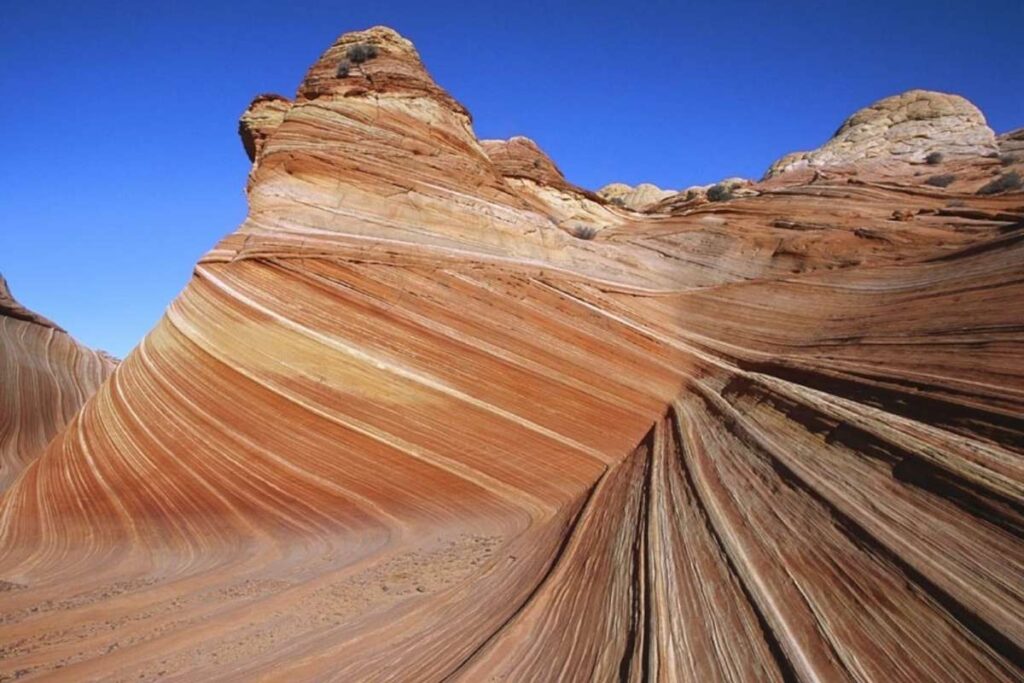
Rock erosion happens when wind, water, ice, and chemical reactions wear away rock surfaces over time. Iconic landscapes like the Grand Canyon, Bryce Canyon, and the Zhangjiajie pillars owe their structure to millions of years of erosion. As climate patterns become more extreme, erosion rates have increased in vulnerable regions, accelerating landform changes.
Key Points:
- Water is the most powerful erosive force on Earth.
- Creates arches, cliffs, canyons, and natural bridges.
34. Volcanic Landforms
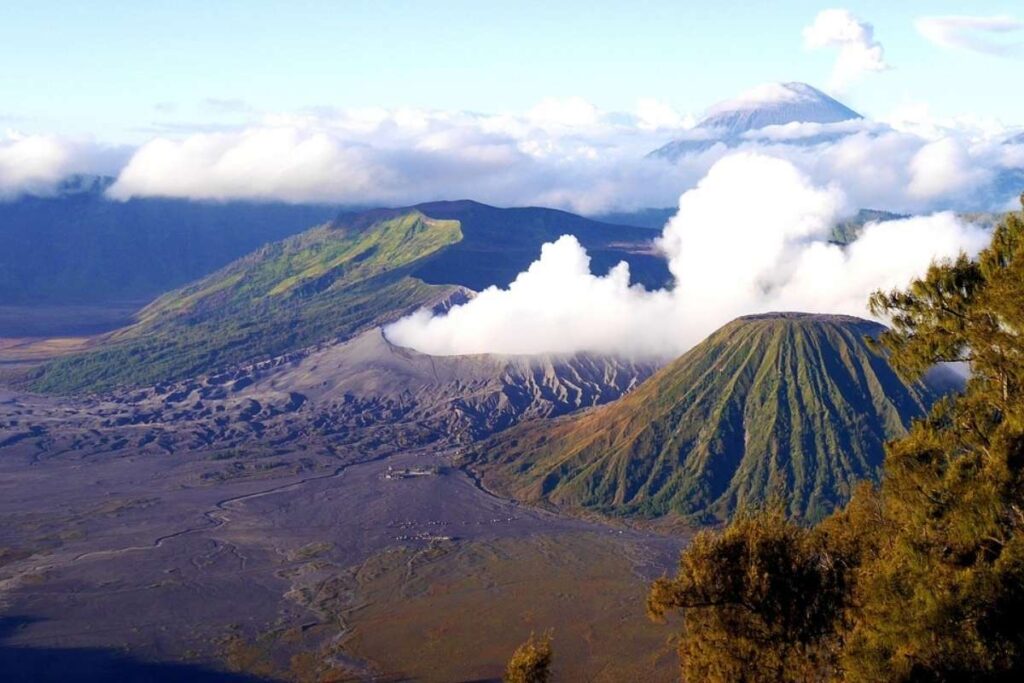
Volcanic landforms such as calderas, lava plateaus, volcanic cones, and craters are created by eruptions and magma movement. Islands like Hawaii and Iceland continue to grow due to active volcanism. A new landmass emerged near Iceland in late 2023 after continuous eruptions reshaped the surrounding terrain.
Key Points:
- Volcanic landforms reveal geological history and magma composition.
- Some dormant volcanoes may reactivate due to tectonic stress changes.
35. Bioluminescent Caves
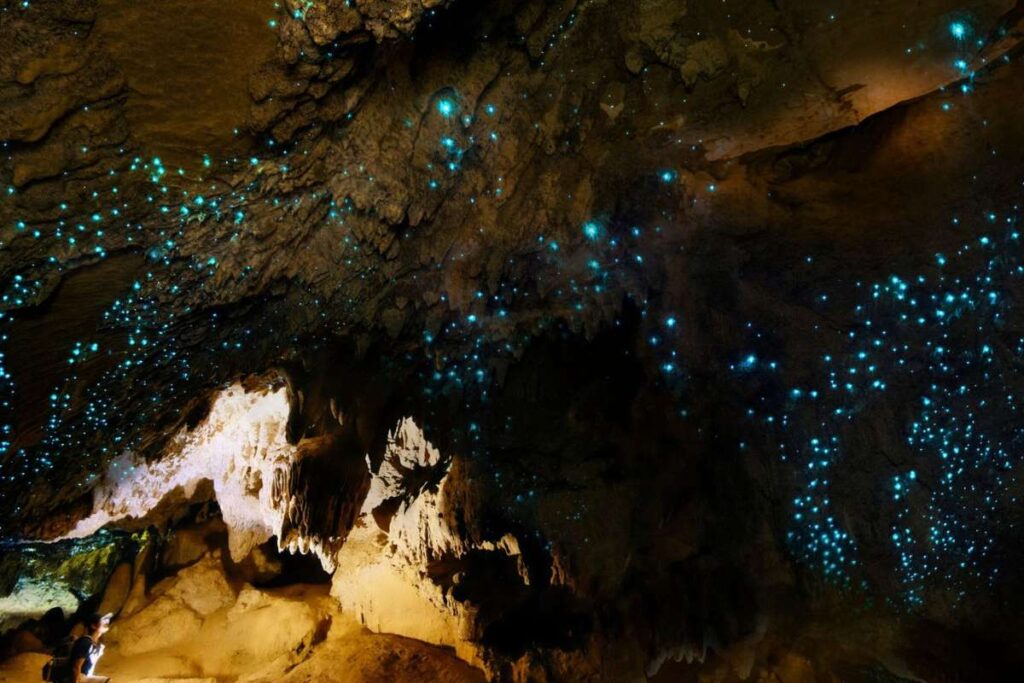
Caves glowing with bioluminescent organisms, like New Zealand’s Waitomo Caves, are among the most enchanting natural phenomena in the world. Glowworms, firefly larvae, and fungi create natural lighting that transforms dark chambers into luminous wonderlands.
Key Points:
- Light is produced through a chemical reaction called luciferin oxidation.
- Global warming threatens glowworm habitats due to moisture imbalance.
36. Colour-Changing Lakes
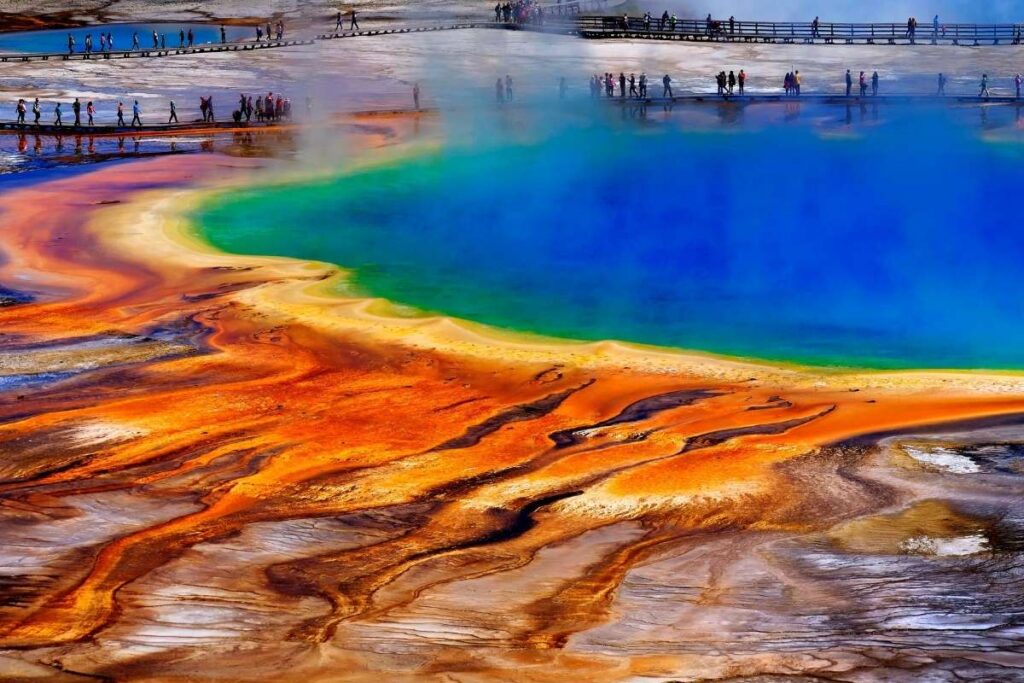
Some lakes shift color due to algae blooms, saline content, mineral deposits, or seasonal temperature changes. Examples include Lake Hillier in Australia and Lake Natron in Tanzania. Satellite data in 2024 confirmed that climate change has intensified algal blooms, making color transitions more dramatic in several lakes worldwide.
Key Points:
- Colors can change from pink to green to red, depending on conditions.
- Often high in salt or mineral concentration.
37. Lightning
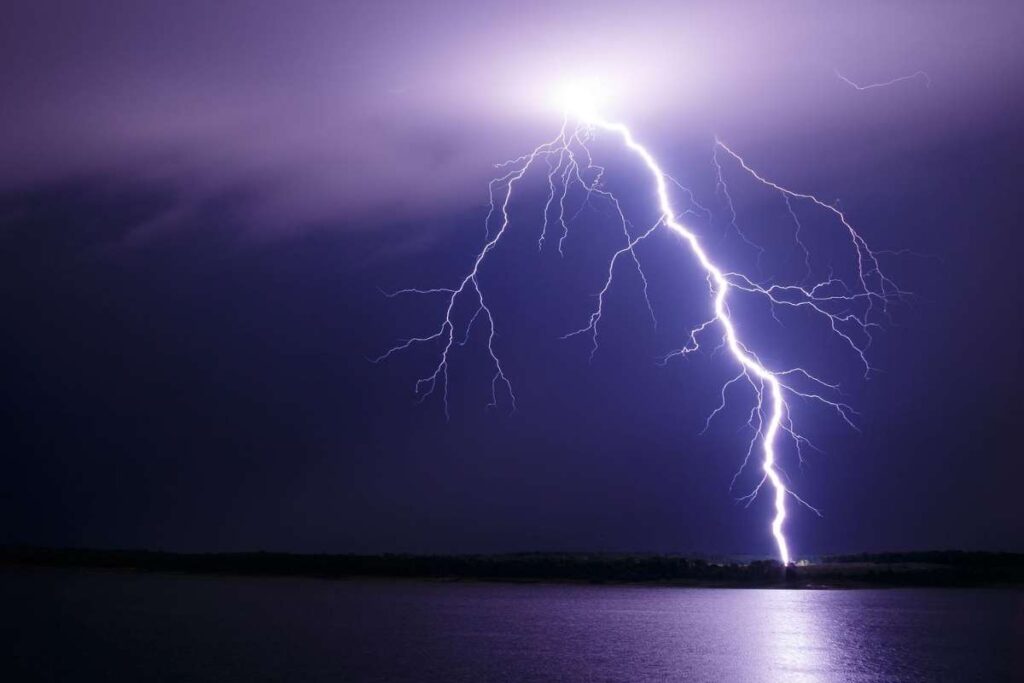
Lightning occurs when electrical charges build within clouds and discharge rapidly, producing intense light and thunder. Global lightning frequency has increased by ~7% since 2020, correlating with warmer surface temperatures. Superbolts—rare, ultra-powerful lightning strikes—have been documented more frequently across oceans.
Key Points:
- A single bolt can reach 30,000°C, hotter than the sun’s surface.
- Around 1.5 billion lightning flashes occur yearly.
38. Fog and Mist
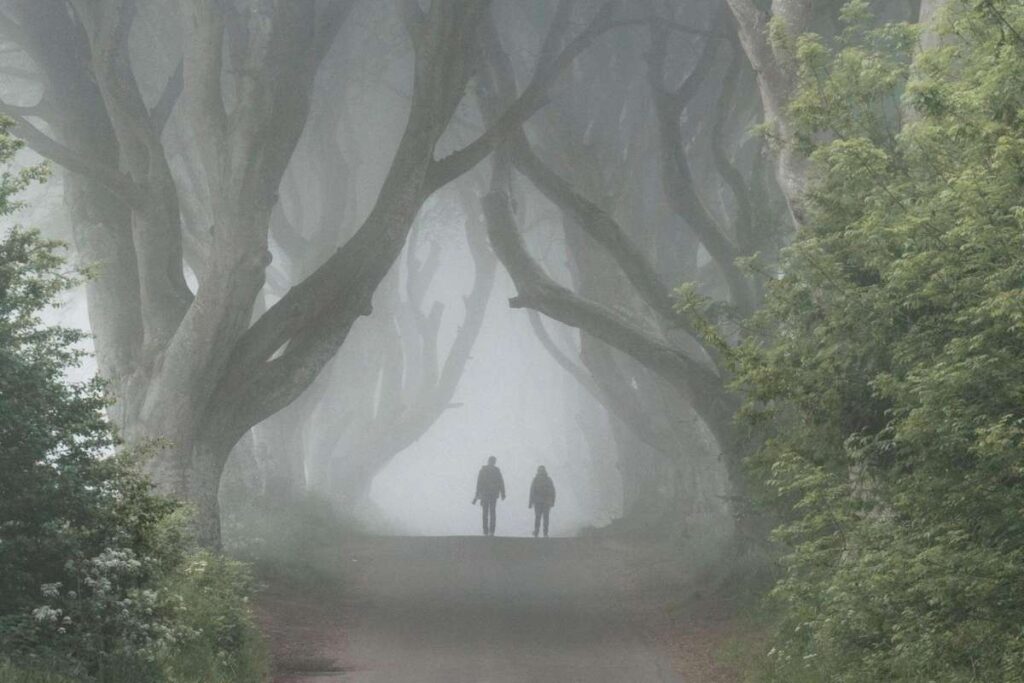
Fog forms when tiny water droplets suspend near the ground, creating reduced visibility. Coastal and mountainous regions see it frequently, and its presence is vital for sustaining ecosystems. Such atmospheric events are notable natural phenomena in the world.
Key Points:
- Fog has a higher density than mist and cuts visibility below 1 km.
- Essential for moisture in fog-dependent ecosystems.
39. Magnetic Phenomena
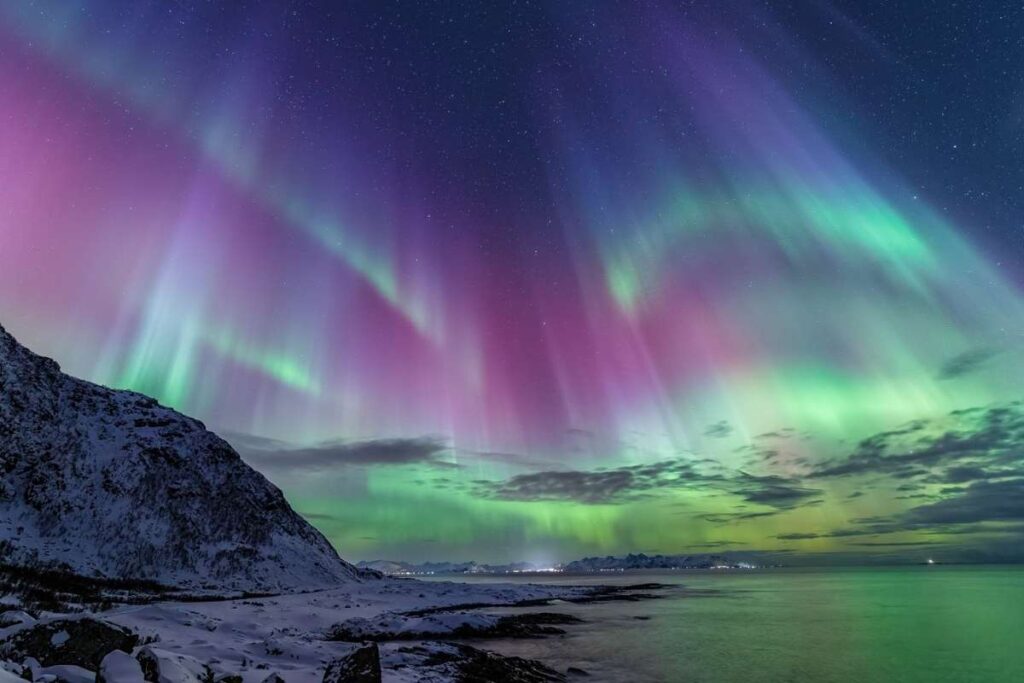
Earth’s magnetic field interacts with solar particles, creating auroras and influencing navigation systems. In 2024, NOAA announced an intensified solar cycle, causing more frequent geomagnetic storms. These disturbances affect GPS accuracy, aviation, and satellite systems, but also create brighter auroras at lower latitudes.
Key Points:
- Magnetic poles wander 10–15 km per year.
- Strong solar storms can disrupt power grids and communication networks.
40. Double Rainbows
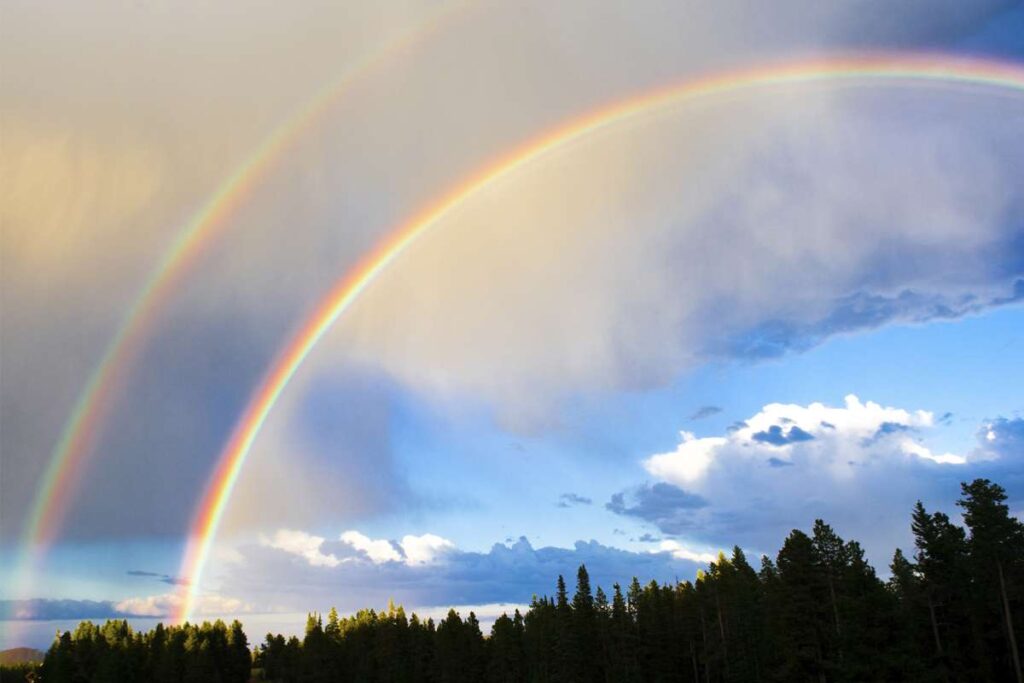
Double rainbows form when sunlight reflects twice inside raindrops, creating two arcs. The outer arc appears fainter and with reversed colors. Digital cameras and weather apps have made double rainbow sightings easier to analyze, and atmospheric data confirms they appear more frequently in humid tropical regions.
Key Points:
- The second arc appears at 50–53° relative to the sun.
- Caused by multiple internal reflections inside water droplets.
41. Cyclones and Hurricanes
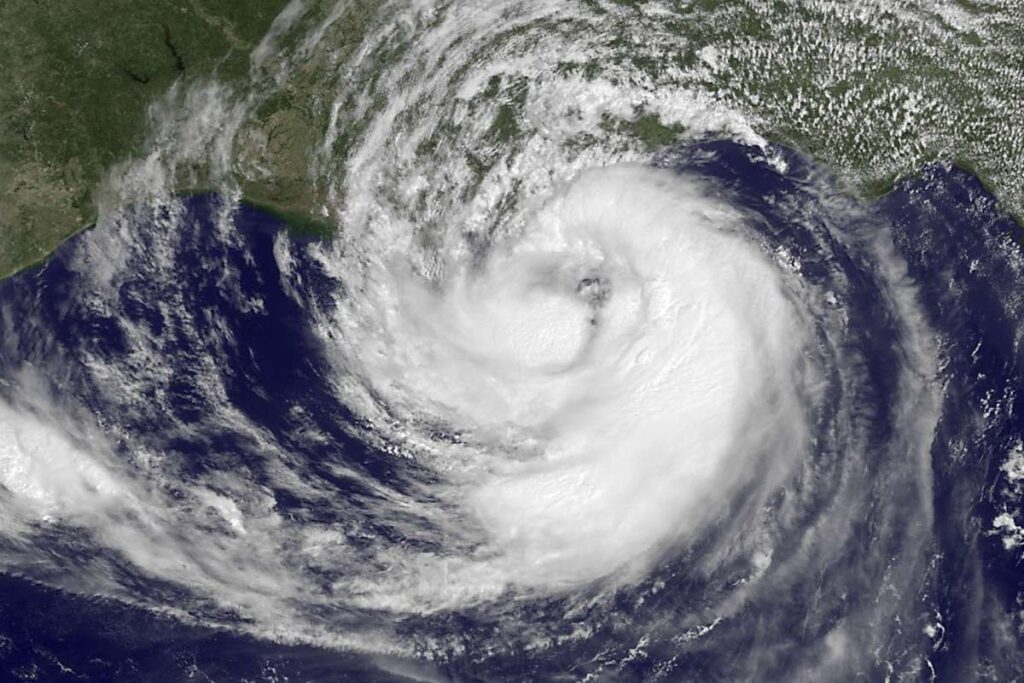
Cyclones and hurricanes are massive rotating storms fueled by warm ocean waters. Rising sea temperatures have led to stronger storms and record-breaking events. These devastating yet awe-inspiring natural phenomena in the world demonstrate nature’s immense power.
Key Points:
- Category 5 storms exceed 157 mph (252 km/h) winds.
- Storm frequency is stable, but intensity is increasing due to warming oceans.
42. Glacial Movement
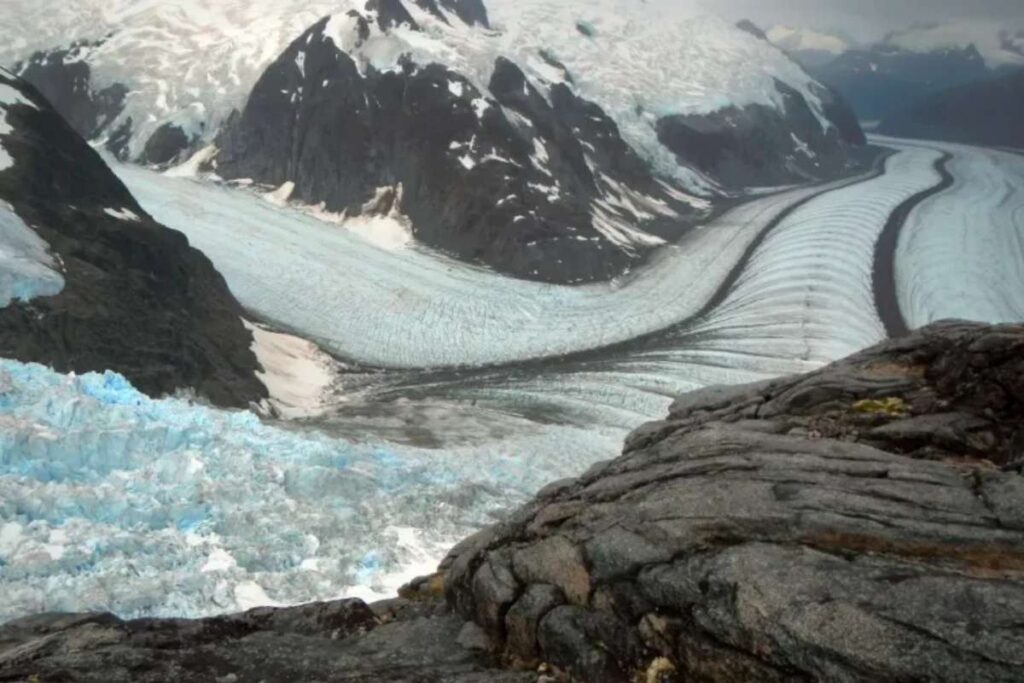
Glaciers move slowly due to gravity and internal ice deformation. Satellite data from 2024 confirmed accelerated melting and retreat in nearly all major glacier systems. Glacial movement carves valleys, fjords, and moraines, fundamentally shaping mountainous landscapes.
Key Points:
- Some glaciers move 1 meter/day, others only a few cm/year.
- Major melt zones: Himalayas, Alps, Alaska, Patagonia.
43. Karst Caves
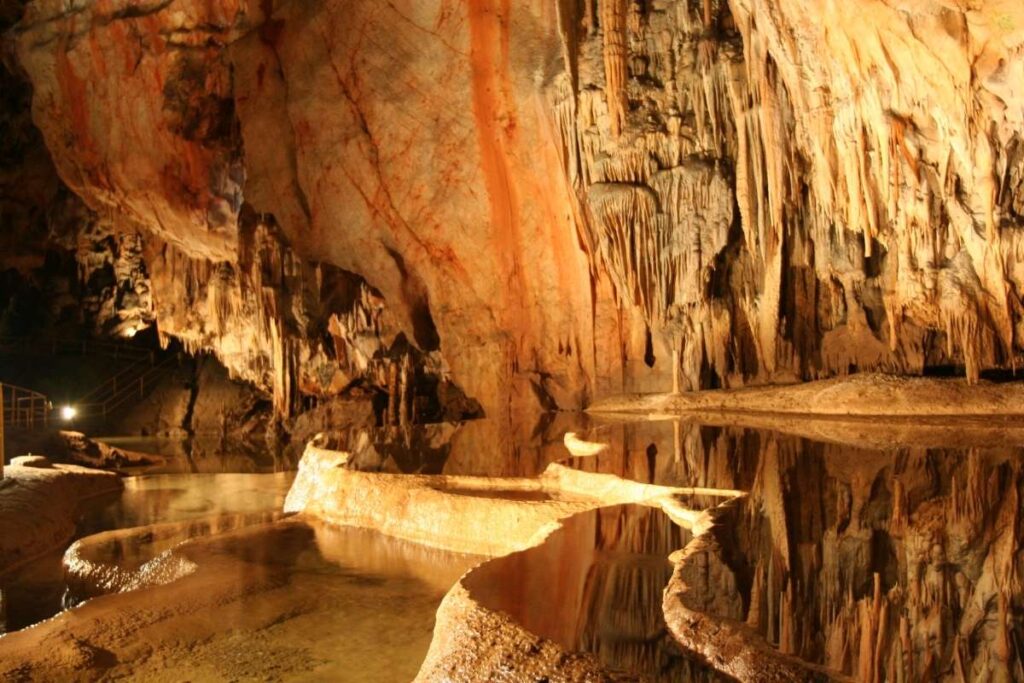
Karst caves form when slightly acidic rainwater dissolves limestone or dolomite over millions of years. Iconic karst formations like Vietnam’s Sơn Đoòng Cave continue to evolve as underground rivers reshape chambers. Lidar mapping in 2024 revealed new hidden passages never explored before.
Key Points:
- Characterized by sinkholes, stalactites, and stalagmites.
- Cover about 20% of Earth’s land surface.
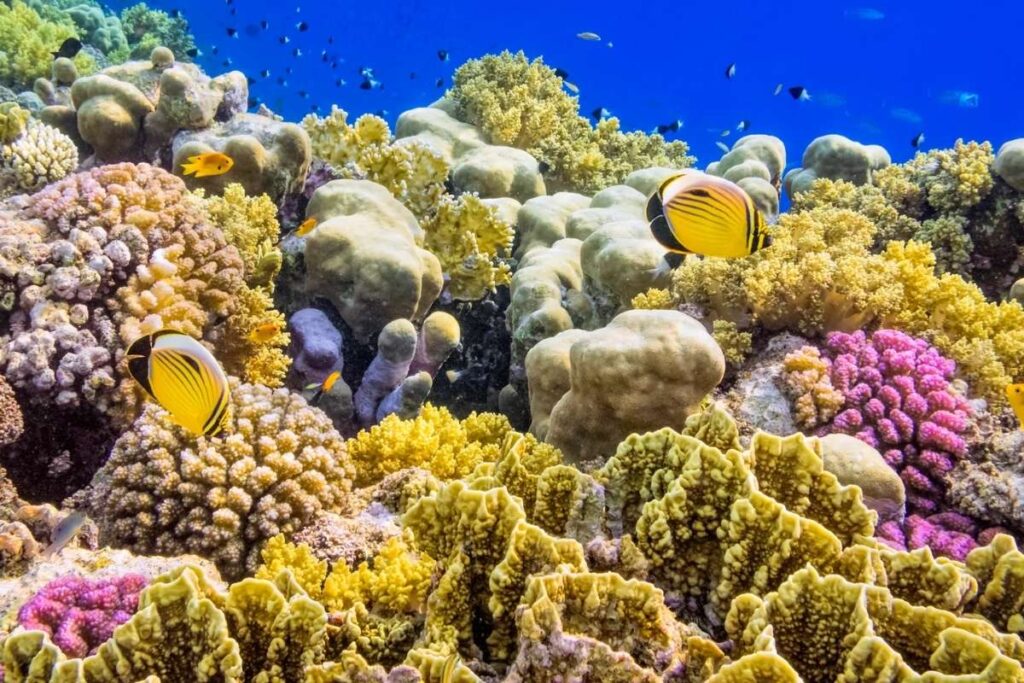
44. Coral Reefs
Coral reefs are massive underwater ecosystems built by coral polyps. Despite bleaching events in 2023–2024, some reefs—especially in the Pacific—showed signs of resilience and regrowth. Reefs support a quarter of marine life and play crucial roles in coastal protection and biodiversity. Despite bleaching events, some reefs show resilience, making them stunning examples of natural phenomena in the world.
Key Points:
- Cover less than 1% of the ocean but host 25% of marine species.
- Highly vulnerable to heat stress and ocean acidification.
45. Animal Migration
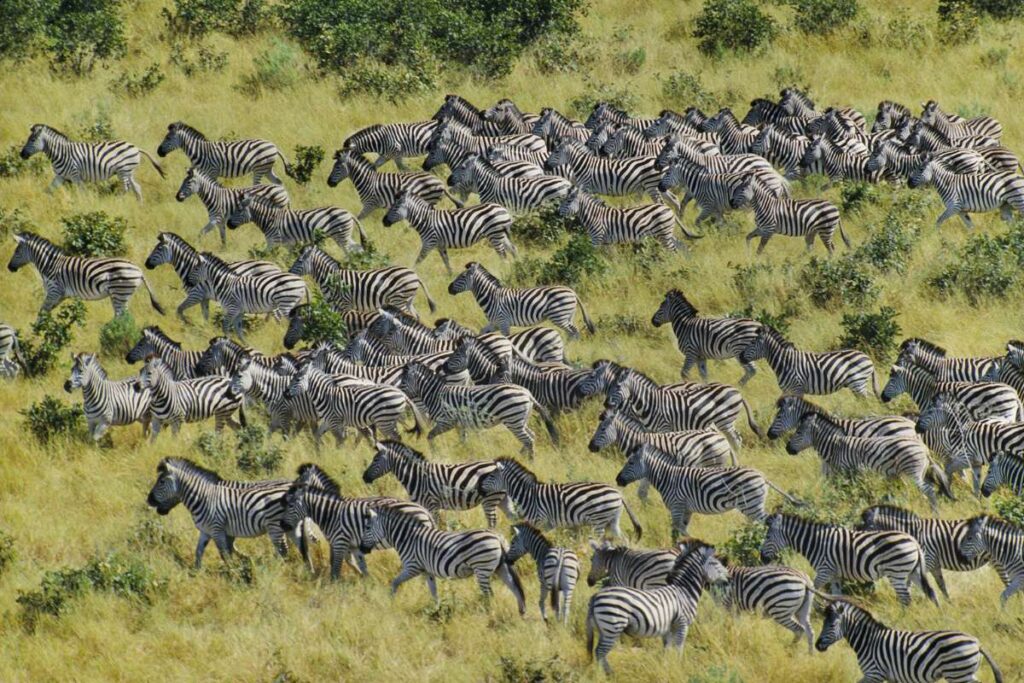
Animal migration involves long-distance movement driven by food availability, breeding, and climate. Famous migrations include the wildebeest herds in Africa and the monarch butterfly journeys in North America. Tracking devices in 2024 showed unprecedented route shifts due to temperature changes and habitat fragmentation.
Key Points:
- Some species migrate thousands of kilometers annually.
- Climate change is disrupting traditional migration routes.
46. Lava Lakes
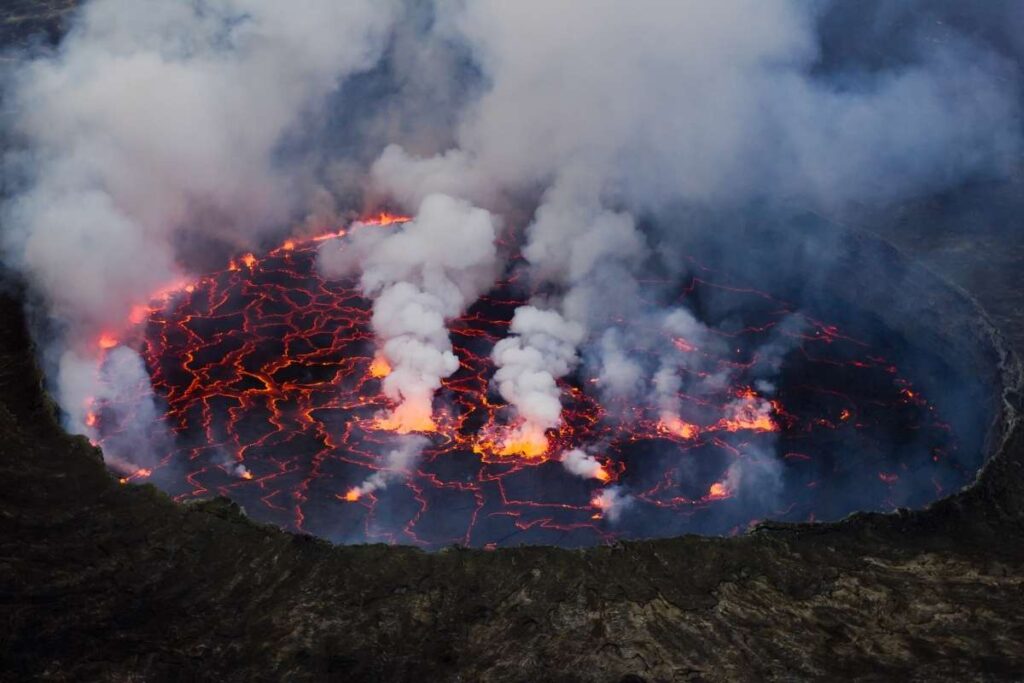
Lava lakes are sustained pools of molten lava inside volcanic craters. Only a few exist today—most notably at Mount Nyiragongo (DR Congo) and Erta Ale (Ethiopia). New thermal imaging data (2024) shows fluctuations in lava levels tied to deep magma chamber activity.
Key Points:
- Temperatures reach 1,200°C.
- Extremely rare: fewer than 10 active lava lakes worldwide.
47. Hot Springs
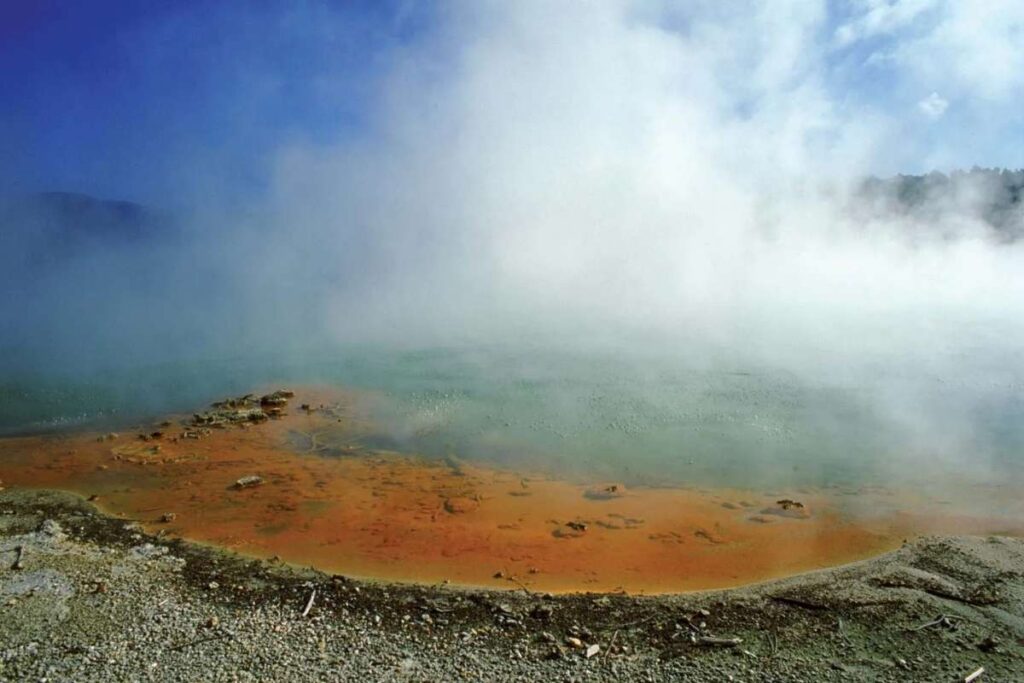
Geothermal heat warms underground water, producing mineral-rich springs. These pools are celebrated for therapeutic and recreational use. Some of the most scenic natural phenomena in the world occur where hot springs emerge in dramatic landscapes.
Key Points:
- Can exceed 90°C, depending on depth and heat.
- Often found in volcanic or tectonically active areas.
48. Waterfalls
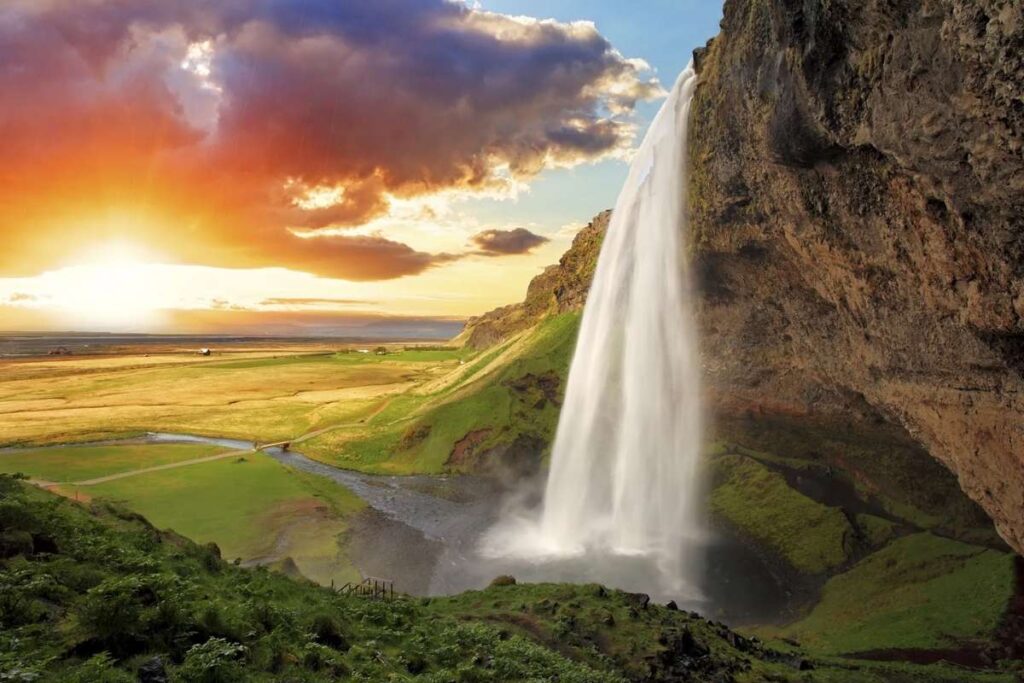
Waterfalls form when rivers drop suddenly over steep edges or cliffs. Famous waterfalls like Niagara, Angel Falls, and Iguazu continue to draw millions annually. Remote sensing studies show some waterfalls retreat by inches to feet each year due to erosion and climate-driven water flow changes.
Key Points:
- Angel Falls is the world’s highest at 979 meters.
- Waterfalls migrate upstream over time due to erosion.
49. Sand Dunes & Desert Mirages
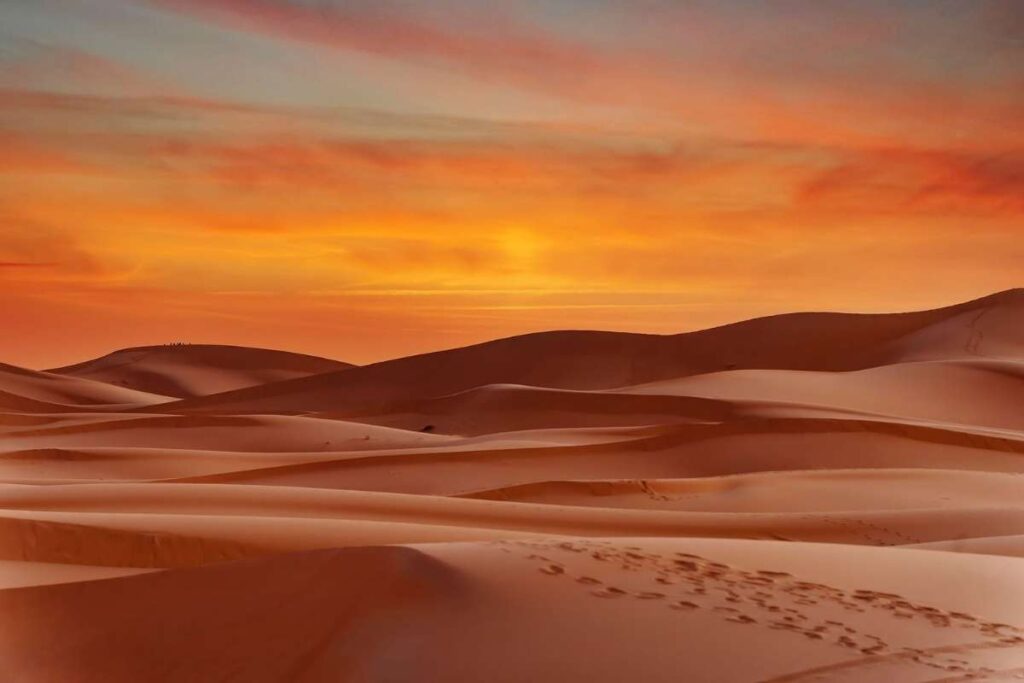
Dunes are shaped by wind as particles shift constantly, forming waves, ridges, and star-shaped structures. Desert mirages occur when heat bends light, creating illusions that look like water or reflective surfaces. In 2024, drone mapping revealed faster dune migration in the Sahara due to increased wind speeds.
Key Points:
- Dunes can migrate up to 20 meters per year.
- Mirages occur due to air density and temperature gradients.
50. Auroral Variants (Southern Lights – Aurora Australis)
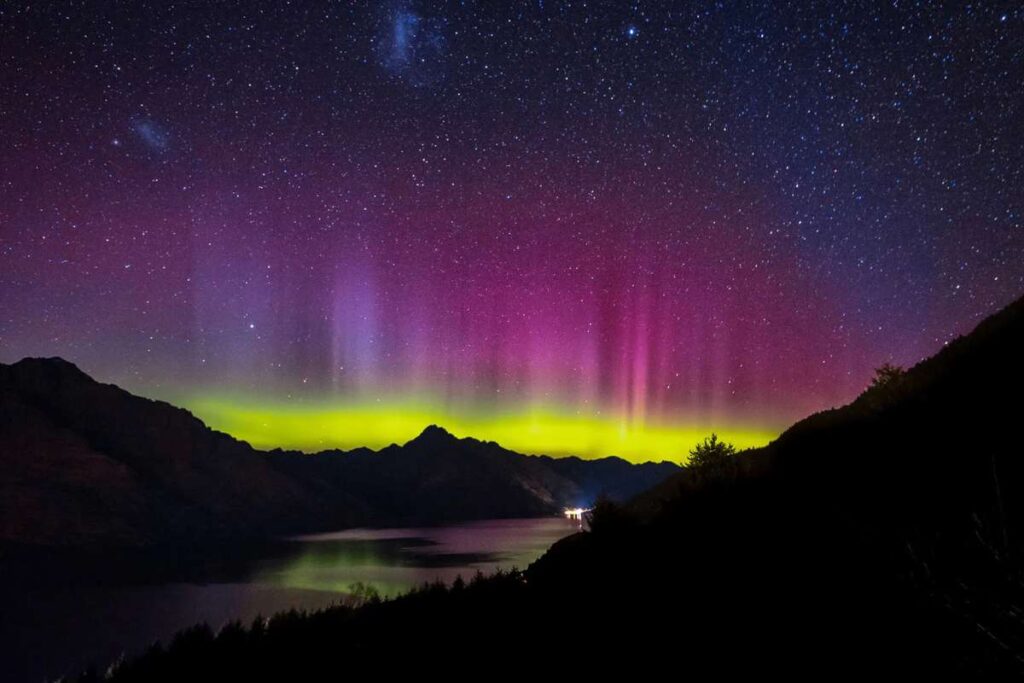
The Southern Lights appear when charged solar particles interact with Earth’s magnetic field over the southern hemisphere. Colors range from pink to green, depending on altitude and particle type. These spectacular displays are among the most celebrated natural phenomena in the world, illuminating polar skies in vivid hues.
Key Points:
- Most visible in Antarctica, Tasmania, and New Zealand.
- Intensified during solar storms and geomagnetic activity.
Conclusion:
The world is full of extraordinary moments that remind us how powerful and unpredictable nature can be. From glowing waters and sky-lit auroras to rare cloud formations and desert blooms, the natural phenomena in the world show us that our planet is constantly creating beauty in ways we often overlook. Each phenomenon, whether common or incredibly rare, helps us understand Earth a little better and appreciate the forces that shape our environment.
As science continues to evolve, we’re learning more about why these events happen and how they influence everything from climate patterns to ecosystems. But beyond the data and explanations, these natural wonders inspire curiosity, wonder, and a deeper connection to the world around us.
Whether you plan to witness them in person or simply enjoy learning about them, these 50 natural phenomena remind us that Earth is not just a place we live in, it’s a living, breathing masterpiece filled with surprises waiting to be discovered.
FAQs
1. What are the most famous natural phenomena in the world?
Some of the most famous natural phenomena include the Northern Lights (Aurora Borealis), bioluminescent beaches, volcanic eruptions, the Great Blue Hole, and rainbow rivers like Caño Cristales. These events are celebrated for their beauty, rarity, and scientific significance.
2. Why do natural phenomena occur?
Natural phenomena occur due to the Earth’s natural processes, such as weather patterns, geological activity, ocean currents, magnetic fields, and biological activity. For example, lightning forms due to atmospheric electricity, while bioluminescent waves are caused by light-emitting plankton.
3. Are all natural phenomena visible to the naked eye?
No, not all natural phenomena are easily visible. Some, like auroras, rare cloud formations, or deep-sea bioluminescence, are location-specific or require certain conditions to be observed. Others, like earthquakes or magnetic phenomena, are measurable but not always visually noticeable.
4. Can natural phenomena be predicted?
Some natural phenomena, like tides, meteor showers, and seasonal blooms, can be predicted with high accuracy. Others, such as volcanic eruptions, earthquakes, or sudden lightning storms, are harder to forecast but can sometimes be anticipated using scientific instruments and historical data.
5. Why should we study natural phenomena?
Studying natural phenomena helps us understand Earth’s processes, predict extreme events, protect ecosystems, and appreciate the planet’s beauty. It also inspires scientific discovery, travel exploration, and a deeper respect for the forces that shape our world.
Thanks for Reading!
See More
Top 30 Most Beautiful Spots in America That Will Leave You Breathless