Key Points:
- Peter Steinberger, creator of OpenClaw, has joined OpenAI to advance autonomous AI assistants.
- OpenClaw will remain open-source under a foundation supported by OpenAI.
- The move highlights a shift toward proactive, task‑executing AI agents as the next big computing platform.
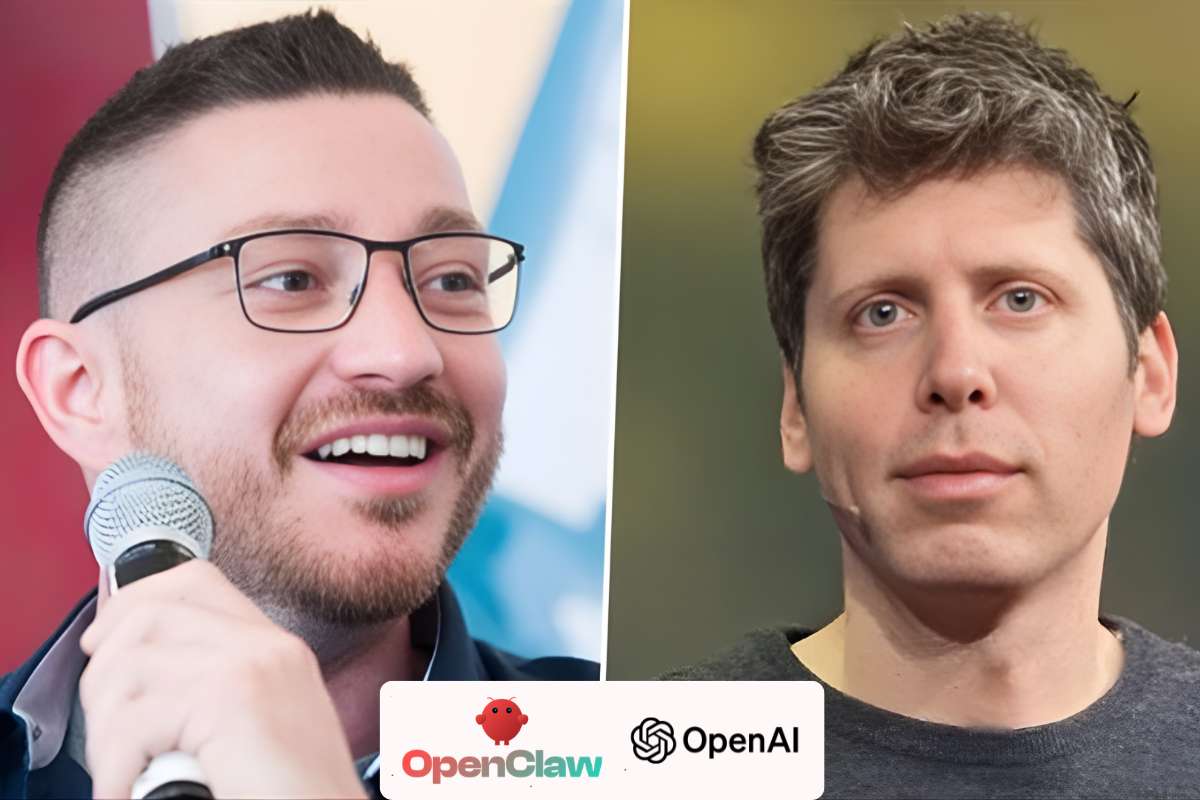
OpenAI has brought on Peter Steinberger, the creator of the fast-growing open-source AI agent OpenClaw, in a move that signals the company’s deepening focus on autonomous digital assistants. The announcement was confirmed by OpenAI CEO Sam Altman, who indicated that Steinberger will help advance the development of next-generation personal AI agents.
Peter Steinberger, an Austrian developer known for building developer-centric tools, gained global attention after launching OpenClaw in late 2025. The project quickly became one of the most talked-about open-source AI tools, earning massive community engagement and developer support within weeks of its release. Rather than scaling the platform independently into a commercial startup, Steinberger chose to join OpenAI, stating that his broader ambition is to push forward meaningful technological change at scale.
As part of the transition, OpenClaw will continue operating as an open-source initiative under a newly established foundation supported by OpenAI. The move aims to preserve the project’s community-driven roots while aligning it with OpenAI’s larger research and product ecosystem.
OpenClaw’s Rapid Rise and Industry Impact
OpenClaw emerged as a powerful example of the growing “agentic AI” movement, systems designed not just to respond to prompts but to autonomously complete real-world digital tasks. The tool enables users to automate workflows such as email management, scheduling, data retrieval, and cross-platform interactions. Its flexibility and open architecture made it especially popular among developers seeking greater transparency and customization than closed AI systems typically allow.
Within days of launch, OpenClaw recorded extraordinary traction across developer platforms, drawing hundreds of thousands of stars and millions of visits. The viral adoption underscored increasing demand for AI tools capable of acting independently rather than simply generating text or code.
However, its rapid growth also sparked conversations around security and responsible deployment. Autonomous agents, particularly open-source ones, can pose risks if misconfigured or exploited. Peter Steinberger consistently emphasized safety and transparency, maintaining that keeping the system open would allow broader scrutiny, faster improvements, and stronger safeguards through community collaboration.
The project’s success placed Steinberger at the center of intense industry attention. Major technology firms are racing to dominate the emerging AI agent space, viewing autonomous assistants as the next major computing platform shift. His expertise in building scalable, open systems made him a highly sought-after figure.
What does this mean for the Future of AI?
Peter Steinberger’s move to OpenAI reflects a broader shift in artificial intelligence from conversational chatbots toward fully capable digital agents that can plan, execute, and adapt. OpenAI has already invested heavily in advancing models capable of reasoning and multi-step task completion. With Steinberger onboard, the company is expected to accelerate work on AI systems that function more like proactive assistants than reactive tools.
The long-term vision centers on personal AI agents that can coordinate tasks across applications, devices, and services with minimal human supervision. Such systems could redefine productivity software, reshape enterprise workflows, and transform how individuals manage daily digital life.
At the same time, maintaining OpenClaw as an open-source foundation signals a balancing act. OpenAI appears to be embracing a hybrid approach combining community-led innovation with institutional resources and safety frameworks.
As competition intensifies in the AI sector, the recruitment of high-profile open-source developers like Peter Steinberger highlights how critical talent has become in shaping the next phase of artificial intelligence. If successful, this collaboration could mark a pivotal step toward more autonomous, capable, and widely accessible AI agents, potentially redefining the relationship between humans and intelligent systems.