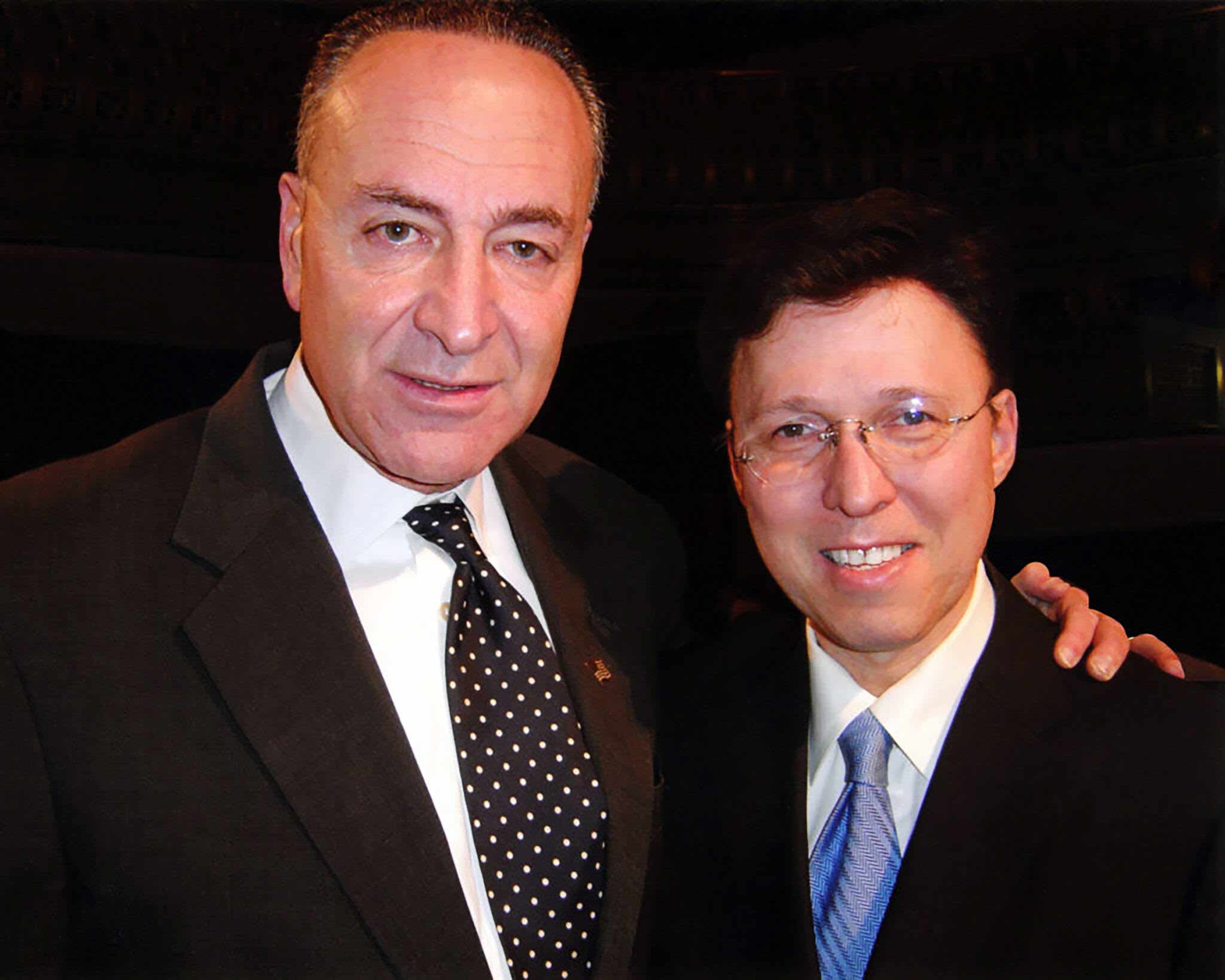
The Work That Holds: The Multifaceted Journey of Derek Bryson Park
There is a certain kind of person you don’t notice at first. They are not the loudest in the room, nor do they seek the spotlight. They rarely attach themselves to outcomes once they’ve been achieved. You see the finished structure, the stadium filled, the city rebuilt, the system functioning again, and you assume it arrived that way, fully formed. Well, it didn’t. Someone made sure it held.
Long before Derek Bryson Park entered the realms of finance, government, and capital flows, he developed a keen ability to observe how systems operate when no one else is paying attention. His instinct for understanding the machinery behind successful events grew from years of practical experience.
A Boy Who Stayed After Being Told No
At thirteen, Derek aspired to be part of the U.S. Open—not as a player, but close enough to be inside the system. When he was turned away for being too young, most would have walked away, but he didn’t. Instead, he took on small tasks like carrying coffee, running errands, and moving equipment—work that goes unnoticed but offers a unique perspective on the inner workings of the event.
What he witnessed was not just tennis; he observed coordination, timing, and pressure—an understanding that events of this magnitude rely on structured systems managed by those who recognize where vulnerabilities lie. By sixteen, he was no longer dismissed. By nineteen, he was the Director of Operations for the U.S. Open Tennis Championships, earning acclaim from The New York Times for his exceptional organizational insights. The U.S. Open was not merely a sporting event; it was a complex system with millions of moving parts operating under time constraints, public scrutiny, and constant interruptions. Derek was responsible for ensuring that none of it collapsed. He quickly learned that authority stemmed from clarity—knowing what needed to happen before someone asked.
He focused intently on making the system work, and this unwavering determination became a hallmark of his career. His career advanced as he refined his skills as Lamar Hunt’s Operations Manager at World Championship Tennis (WCT), where he gained invaluable insights from the founder of the Kansas City Chiefs franchise, the American Football League (AFL), and the Super Bowl.
This diverse skill set was further enhanced in his role as a facilities manager for Live Nation Entertainment (formerly Ron Delsener Enterprises), overseeing operations for some of the most prominent concerts and events in the industry.
At twenty-five, Derek transitioned into finance by joining APA Corporation (formerly Callon Petroleum Company). In this role, he raised over $225 million by managing large-scale limited partnership programs. His leadership was instrumental in establishing Callon Petroleum as the leading onshore oil and gas exploration and production company in the U.S. at the time.

Mississippi: Where Systems Break Faster
At twenty-seven, Derek became the statewide campaign manager for Bill Allain’s gubernatorial race in Mississippi. This role required control over a system that spanned counties, communities, and competing interests. He built it piece by piece—field operations, volunteer networks, messaging, fundraising, and scheduling. Just two weeks before the election, a serious rumor surfaced, threatening to derail the campaign.
Derek didn’t attempt to outmaneuver the rumor; he addressed the instability directly, pushing the issue upward where authority could restore structure. The response was straightforward: go back to work. That was enough. The campaign stabilized, not because the problem vanished, but because the reaction to it changed—demonstrating the importance of maintaining composure in the face of crisis.
In 1985, he returned to New York City to serve as National and Field Account Executive for Interpublic Group of Companies/SSC&B: Lintas, where he managed the Heineken Holland Beer account. He spearheaded multi-million-dollar multimedia advertising campaigns, showcasing his marketing acumen and strategic growth initiatives. Additionally, he played a key role in new business presentations, including a significant pitch for the U.S. Army Account at the Pentagon, assisting senior management at the highest level and reinforcing the agency’s reputation for dynamic branding solutions.
Wall Street: Where Consequences are Immediate
At the age of 29, Derek made a crucial decision to pivot away from a successful career managing sporting events, high-profile concerts, the oil and gas industry, and political campaigns, along with his role as a senior officer at the world’s largest advertising agency, to take on a front-line role as a dealmaker in the high-stakes world of Wall Street. This bold transition took him into an arena where the stakes were clear and outcomes unambiguous.
Joining Lehman Brothers as a Managing Director in their M&A and Structured Finance Departments, Derek immersed himself in the complex arena of buying and selling banks. Every negotiation felt like a critical match, demanding not just intelligence but also courage. He quickly became a key player in multi-billion-dollar transactions, including leading the negotiation of the largest-ever standalone Ginnie Mae mortgage servicing portfolio sale, valued at $14 billion.
His strategic vision was further exemplified by the divestiture of Wells Fargo Mortgage Bank to General Motors Acceptance Corporation and his pivotal role in M&T Bank’s joint venture acquisition of Goldome Federal Savings Bank from the FDIC. Prior to this, he served as Managing Director at Rafferty Holdings, LLC, and President of Cohane Rafferty Capital Markets, Inc., completing or evaluating transactions exceeding $1.5 trillion in mortgage servicing rights and credit card portfolios.
Derek also served as a Managing Director of the Potomac Funds, a leading provider of leveraged index and alternative-class mutual fund products (renamed Direxion Funds in 2006) and held the position of Vice Chairman at Southwest Security, a Federal Reserve Board-regulated bank holding company controlling United Mississippi Bank and other entities from 1999 to 2003. He also contributed as a Director on the Product Innovation Board of First Franklin Bank in San Jose, CA.
Public Service and Central Banking Leadership
In 1999, Derek began a distinguished career in public service when President Bill Clinton appointed him Director of the Federal Home Loan Bank, a role that positioned him as a Central Banker. His appointment was extended by President George W. Bush, underscoring his bipartisan support. Throughout his tenure, he solidified the foundations of housing finance and significantly improved the stability and accessibility of homeownership.
Derek’s work consistently focused on making systems hold under pressure. At the Federal Home Loan Bank, he helped the system achieve a balance sheet of $1.18 trillion, larger than the Federal Reserve at that point. His role required managing scale, directing capital, and containing risk, ensuring that the systems he worked within remained stable.
His influence extended beyond residential sectors; he played an instrumental role in urban development projects, notably the revitalization of Times Square and the construction of the Yankee and Mets stadiums, while serving as Acting Chairman of the New York Industrial Development Agency (IDA), which ranks as the nation’s second-largest issuer of municipal debt, following California. In 2006, he was honored with the “Bond Buyer’s Deal of the Year Award” for the IDA’s remarkable sale of $1.6 billion in bonds aimed at financing new stadiums for both baseball teams.
Global and Religious Diplomacy
Derek’s expertise extended beyond finance into diplomacy. He served as a junior ambassador for the Vatican to the United Nations, advocating for disarmament and advising cardinals under Pope John Paul II. His financial acumen proved invaluable to the Church during challenging times, enabling him to assist in asset liquidation strategies and navigate complex legal challenges. Derek’s structured financial discipline helped stabilize the Vatican, aligning its practices with modern expectations while ensuring long-term functionality.
Returning to Finance without Leaving It
As Principal at Wilmington Capital, Derek continues to shape financial landscapes with innovation and integrity. His strategic vision and adaptability have earned him a reputation as a trusted figure in finance. In his leadership approach, he combines forward-thinking strategies with time-tested principles—helping his clients grow. Furthermore, Derek has dedicated himself to mentoring aspiring leaders and actively engaging in philanthropic endeavors that support education and community development.
Notably, he served as Vice Chairman of The Winchendon School in Worcester County, Massachusetts, from 1990 to 2005, and as a director and member of the Executive Committee at Bishop’s College School in Lennoxville, Quebec, Canada, from 1994 to 2000. His commitment to nurturing future generations and contributing to the greater good exemplifies his holistic approach to leadership—earning him recognition as one of the Most Visionary Leaders in the Financial Sector.
What a Career Looks Like without Performance
Derek Bryson Park’s career may seem disjointed at first—spanning sports, marquee musical concerts, the petroleum industry, advertising, politics, finance, public service, and international diplomacy. However, each position has placed him inside a system under pressure, requiring the same response: stay calm, understand the structure, and fix what others overlook. The work itself resists drama; it is repetitive and precise, often unnoticed. Yet, without it, systems don’t last. Most careers are measured by visible achievements: deals closed, titles held, moments that can be pointed to.
Derek’s story is measured differently—by what did not happen. Systems did not collapse. Institutions did not fail when they could have. That absence is the result of someone paying attention long before it becomes necessary. This has been his work: quiet, consistent, and ongoing, as systems always require maintenance. It is not merely a story of success but a long practice of ensuring that things continue to work.