Key Points:
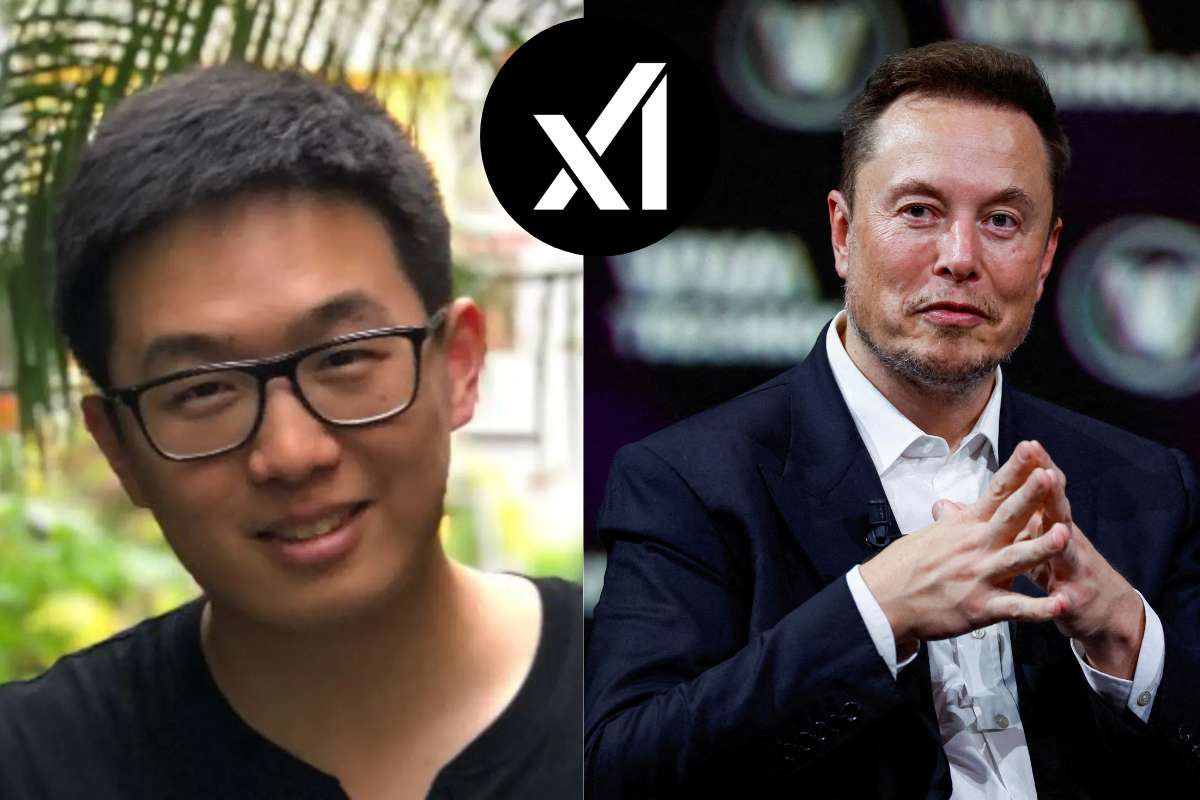
- xAI co-founder Yuhuai “Tony” Wu has stepped down, marking another major leadership change at Elon Musk’s AI startup.
- His departure adds to a pattern of co-founder exits amid restructuring and integration with Musk’s broader tech ecosystem.
- The company now faces the challenge of balancing rapid innovation with leadership stability as it pushes toward commercialization.
Elon Musk’s artificial intelligence startup, xAI, is undergoing another significant leadership shift following the departure of co-founder Yuhuai “Tony” Wu. Wu confirmed his resignation in a public statement, describing his time at the company as transformative and signaling that he is preparing for a new chapter in the AI field.
Tony Wu was among the original founding team members who helped launch xAI in 2023, when Musk assembled a group of prominent AI researchers to compete with established players in the rapidly expanding artificial intelligence landscape. His contributions were considered central to the company’s early technical direction and research strategy. In his farewell message, Wu expressed gratitude for the opportunity to work alongside Musk and the founding team, while also highlighting his belief that small, AI-driven teams can significantly reshape industries.
His exit marks the latest in a series of high-profile departures from the startup, raising questions about how leadership transitions may shape the company’s next phase.
Pattern of Departures and Corporate Restructuring
Tony Wu’s resignation follows a broader pattern of turnover among xAI’s founding members. Over the past two years, several co-founders have stepped away from the company, either to pursue independent ventures or to join other AI initiatives. The exits come during a period of rapid scaling, product development, and strategic restructuring within the organization.
Internally, leadership roles have reportedly been redistributed as xAI adapts to expansion pressures and evolving priorities. The company has been accelerating the development of its flagship AI systems, including its Grok chatbot, while simultaneously strengthening infrastructure and computational capacity.
Compounding the shift is xAI’s growing integration with Musk’s broader technology ecosystem. The company has deepened ties with SpaceX and other Musk-led ventures, reflecting a strategy aimed at combining AI capabilities with advanced hardware, satellite systems, and high-performance computing resources. Industry observers note that such integration may streamline innovation but can also intensify operational complexity during transitional phases.
As xAI pushes toward broader commercialization and potential public market ambitions, leadership continuity becomes increasingly critical. Executive reshuffles at this stage can influence investor perception, talent retention, and long-term product vision.
Implications for xAI and the Competitive AI Landscape
The artificial intelligence sector remains one of the most competitive and capital-intensive industries globally, with companies racing to develop advanced large language models and next-generation AI systems. In this environment, founding leadership teams often play an outsized role in defining research philosophy and strategic momentum.
Analysts suggest that while founder departures are not uncommon in high-growth startups, repeated exits within a short timeframe can create uncertainty. At the same time, such transitions may also reflect natural evolution as startups mature from research-driven labs into structured commercial enterprises.
For xAI, the focus now shifts to sustaining innovation while reinforcing stability. Musk continues to position the company as a key challenger in the AI race, emphasizing ambitious goals around artificial general intelligence and scalable AI tools.
Tony Wu’s departure does not signal an immediate operational slowdown, but it underscores the dynamic nature of the AI industry, where talent mobility and strategic pivots are frequent. As xAI advances its product roadmap and navigates regulatory scrutiny surrounding generative AI technologies, its ability to maintain cohesion at the leadership level will be closely watched.
The coming months may prove pivotal for the company, as it balances rapid technological ambition with organizational stability in a sector defined by constant disruption.