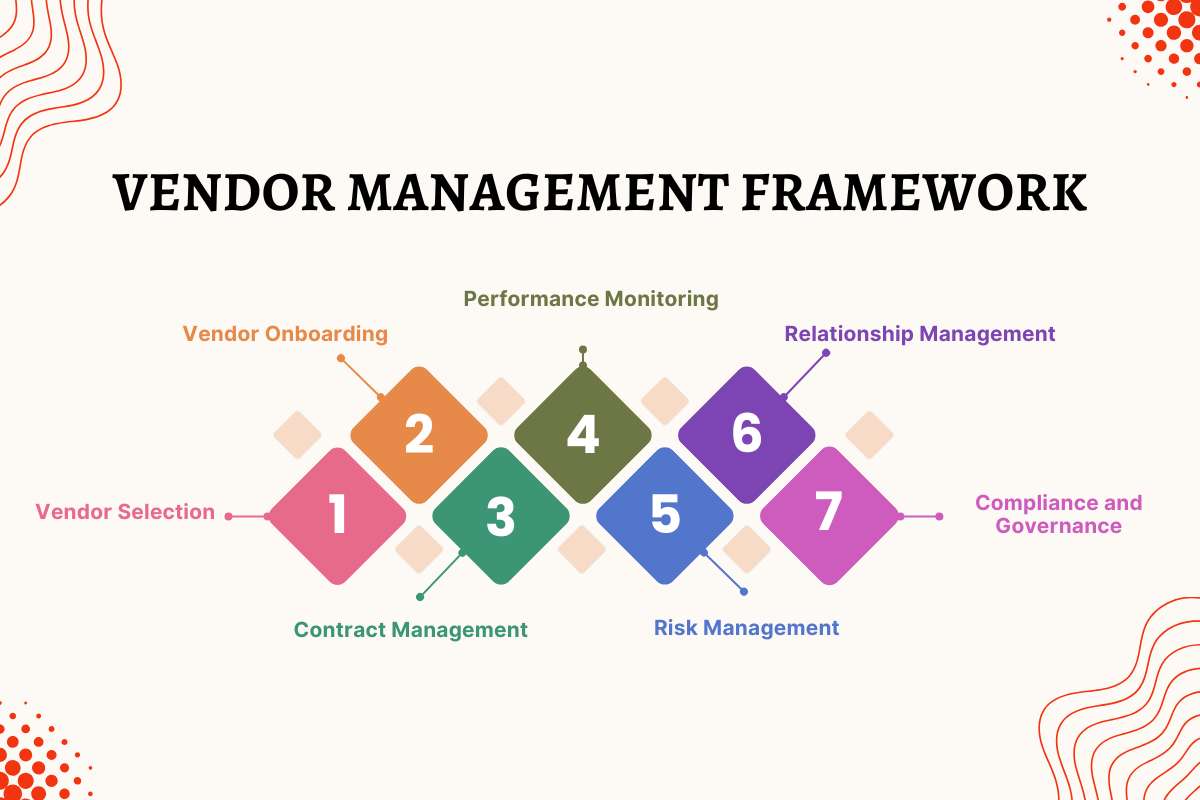
What is a vendor management framework? It is a structured system that helps businesses select, manage, monitor, and evaluate vendors across their lifecycle to maintain control over cost, performance, and risk. This article explains what a vendor management framework is and breaks down its key components, including vendor selection, onboarding, contract management, performance tracking, risk management, relationship building, and compliance.
Most companies don’t realize they have a vendor problem until something breaks. A delayed delivery, a compliance gap, a cost that quietly doubles over two quarters. By then, the issue is not the vendor. It is the absence of a system to manage them.
How do you stay in control once you start depending on external partners? This is why it is necessary to know what a vendor management framework is, as it lays out how vendors are chosen, what standards they are held to, how performance is reviewed, and what happens when things go off track. Without it, vendor relationships stay reactive and inconsistent. With it, they become predictable, measurable, and aligned to business outcomes.
What is a Vendor Management Framework?
A vendor management framework is a structured system that defines how a business works with its vendors. It covers the full lifecycle, from selection to review. Teams use it to set rules, assign roles, and follow clear processes. This removes guesswork and keeps decisions consistent. It also helps control costs, reduce risk, and improve vendor output over time.
The framework does not sit on paper. Teams use it in daily operations. It guides how vendors are chosen, how contracts are handled, and how performance is tracked. Each step connects with the next. This creates a steady and controlled way to manage external partners.
1. Vendor Selection:
Vendor selection sets the base for everything that follows. Teams start by defining clear needs. They outline scope, timelines, budget limits, and expected results. This step gives direction before any vendor search begins.
Next, teams build a list of possible vendors. They study each option in detail. They check experience, past work, pricing models, and service quality. They also look at industry knowledge and the ability to scale. This helps filter out weak options early.
Many teams use scorecards to compare vendors. Each vendor gets rated on fixed criteria. This keeps the process fair and simple to review. It also reduces bias in decision-making. A strong selection process lowers the chance of delays and poor delivery later.
2. Vendor Onboarding:
Onboarding prepares the vendor for real work. It sets the tone for the relationship. Teams share key documents, workflows, and policies at this stage. They also explain how communication will happen.
Clear onboarding avoids confusion. Vendors know what is expected from the start. They understand timelines, reporting formats, and approval steps. This reduces back-and-forth later.
Teams also complete compliance and security checks during onboarding. This includes legal approvals, data policies, and system access. Many companies follow a fixed checklist. This keeps onboarding consistent across all vendors. A weak onboarding step often leads to delays and repeated fixes.
3. Contract Management:
Contract management defines how both sides will work together. Teams create clear agreements that cover scope, pricing, and timelines. They also define service levels and delivery standards.
Strong contracts include more than basic terms. They outline penalties, escalation paths, and exit conditions. This helps manage issues if things go wrong. It also protects both parties.
Contracts should not stay static. Teams review them at regular intervals. Business needs change, and contracts must reflect those changes. Contracts are an integral part of knowing what is a vendor management framework as without updates, teams may follow terms that no longer fit current goals.
4. Performance Monitoring:
Performance monitoring tracks how well vendors deliver over time. Teams define clear metrics before work starts. These metrics often include delivery speed, quality, response time, and cost control.
Teams review these metrics on a fixed schedule. This may be weekly, monthly, or quarterly. Regular reviews help catch small issues early. This prevents larger problems later.
Many teams use dashboards to track vendor data. This makes performance visible and easy to compare. It also supports faster decisions. Strong monitoring keeps vendors accountable and aligned with business needs.
5. Risk Management:
Risk management focuses on identifying and reducing vendor-related risks. Every vendor brings some level of uncertainty. Teams must assess this from the start.
Common risks include delays, poor quality, data breaches, and compliance gaps. Financial instability is another key concern. Teams evaluate these risks during selection and review them often.
They also create plans to reduce risk. This may include backup vendors, stricter checks, or regular audits. A clear risk plan protects business operations. It also reduces the chance of sudden disruptions.
6. Relationship Management:
Relationship management focuses on how teams work with vendors over time. It is not just about tasks and outputs. It is about building trust.
Teams keep regular contact with vendors. They share feedback and discuss issues openly. This helps solve problems faster. It also builds a stronger working bond.
Good relationships lead to better results. Vendors respond faster and show more ownership. Over time, this improves service quality and stability. Strong partnerships also support long-term growth.
7. Compliance and Governance:
Compliance and governance ensure that all vendor work follows set rules. These rules may come from internal policies or external regulations. Teams must check both.
They review data protection, legal terms, and contract compliance. This keeps vendor activity within approved limits. It also reduces legal and financial risks.
Regular audits help maintain control. Teams can spot gaps and fix them early. Governance also defines who makes decisions and who reviews them. This prevents confusion and keeps vendor management structured.
How to Successfully Implement a Vendor Management Framework?

Knowing what a vendor management framework is works only when your teams apply it well. You need a clear plan and steady execution. Do not rush the setup. Start small and build as you go. Each step should solve a real need and add control. Below are simple, practical tips to guide your implementation.
1. Set Clear Goals from the Start
Define what you want to achieve. Keep goals short and specific. Focus on cost, quality, speed, or risk. Clear goals guide decisions. They help you choose vendors and track results.
2. Build a Strong Vendor Selection Process
Choose vendors with care. Look beyond price. Check their past work, reliability, and service quality. Use a simple scoring system. This helps you compare vendors in a fair and clear way.
3. Create Clear Contracts and Expectations
Write contracts in simple terms. Define scope, timelines, and service levels. Add performance targets and penalties if needed. This keeps vendors accountable.
4. Centralize Vendor Data
Store all vendor details in one place. Include contracts, contacts, and reports. A shared system saves time. It also improves decision-making.
5. Track Performance Regularly
Review vendor performance often. Use simple metrics like delivery time and quality. Share feedback with vendors. This helps fix issues early and improve results.
6. Manage Risks Early
Identify risks at the start. These may include delays, data issues, or cost changes. Create a simple plan to handle them. This reduces surprises later.
7. Build Strong Vendor Relationships
Learning what a vendor management framework is starts with communication. Treat vendors as partners. Communicate often and stay clear. Regular check-ins help solve issues fast and build trust.
8. Use the Right Tools and Systems
Avoid manual tracking where possible. Use tools to manage contracts and performance. Automation saves time and reduces errors.
9. Train Your Internal Team
Teach your team how to follow the process. Keep training simple and clear. Aligned teams work faster and make fewer mistakes.
10. Review and Improve the Framework
Check your framework often. Look for gaps and fix them. Small updates keep it useful and effective over time.
What are Some Vendor Management Trends in 2026?

The vendor management space is growing at a steady pace. The global vendor management software market is set to rise from USD 12.93 billion in 2026 to USD 30.86 billion by 2034. This reflects a CAGR of 11.49% over the forecast period. This growth shows that businesses are investing more in tools and systems to manage vendors with better control and clarity.
Teams are moving toward automation and real-time tracking. They use software to manage contracts, monitor performance, and reduce manual work. Many companies also use AI to study vendor data and spot risks early. At the same time, they focus more on risk management and compliance. They check financial stability, data security, and service quality on a regular basis to avoid disruptions.
Companies are also shifting to centralized platforms and stronger vendor relationships. They store all vendor data in one system, which improves visibility and speeds up decisions. Along with this, they treat vendors as long-term partners and work closely with them. This approach helps improve performance, supports growth, and makes vendor management more flexible as business needs change.
Conclusion:
Managing vendors without a clear system eventually creates more problems than it solves. Delays, rising costs, and inconsistent quality are usually symptoms of gaps in oversight rather than isolated issues. A structured approach brings those gaps into the open and replaces reactive decisions with defined processes.
Knowing what a vendor management framework is gives businesses control over how external partners are selected, monitored, and evaluated. It ensures accountability, improves performance tracking, and supports long-term efficiency. When applied consistently, it turns vendor relationships into a reliable extension of the business rather than a recurring risk.
FAQs
What is a vendor management framework?
It is a structured system that defines how a business selects, manages, and evaluates vendors across their entire lifecycle.
Why do businesses need a vendor management framework?
It helps maintain control over cost, quality, and risk by creating clear processes and accountability in vendor relationships.
What are the key components of a vendor management framework?
Vendor selection criteria, onboarding processes, performance metrics, risk assessment, contract management, and regular reviews.