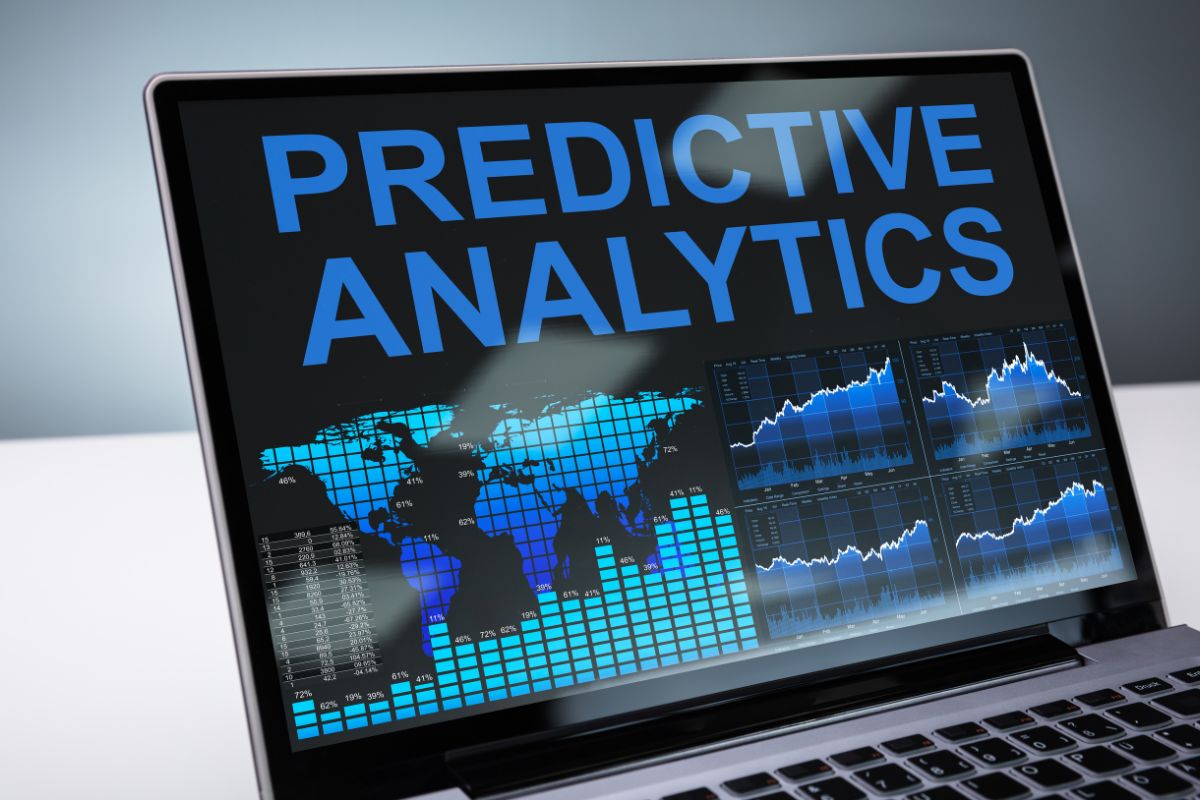
Businesses now operate in an environment where decisions need to be faster, sharper, and backed by solid evidence, and that’s exactly where predictive analytics tools for business are creating a massive impact. With global companies reporting up to 25% higher operational efficiency and 40% better forecasting accuracy after adopting predictive models, the shift toward data-powered decision-making is accelerating rapidly.
Every interaction, transaction, and customer touchpoint is producing signals. The real game-changer lies in decoding those signals before competitors do. Predictive analytics platforms are helping brands anticipate customer churn, optimize pricing, flag fraud in real time, and even identify new revenue opportunities long before they surface. No surprise that the predictive analytics market is projected to climb past $68 billion by 2030, showing just how critical these tools have become.
This guide breaks down the most advanced and widely used tools, highlighting their features, pricing, automation capabilities, and real-world value so you can confidently choose the platform that matches your analytical maturity and growth goals. Whether you’re scaling an enterprise data strategy or automating your first machine learning pipeline, this list will give you a clear advantage.
Top 30 Predictive Analytics Tools for Businesses, Ranked by Highest to Lowest Ratings
Choosing the right predictive analytics platform becomes much easier when you can compare them based on real performance metrics. This curated list ranks the leading predictive analytics tools from the highest-rated to the least, helping you quickly identify which solutions deliver the best accuracy, automation, scalability, and user satisfaction.
Each tool has been evaluated through a combination of user reviews, industry benchmarks, data-processing capabilities, and real-world outcomes, so you get a clear, trustworthy picture of what truly stands out in the market.
1. SAS Viya
| Rating | ★★★★★ (4.8/5) |
| Pricing | Enterprise, custom |
| Pros | Extremely robust for large data; ideal for finance, healthcare, manufacturing; excellent governance + security |
| Cons | Premium pricing requires trained analysts. |
SAS Viya is a cloud-native analytics platform that delivers predictive modeling, data mining, and machine learning capabilities. It is highly scalable and designed for complex datasets and regulatory compliance. SAS Viya supports various algorithms, including regression, decision trees, and neural networks. Governance, reproducibility, and deployment flexibility are core strengths. Enterprises across finance, healthcare, and manufacturing leverage it to drive accurate insights and improve operations.
Key Features:
- Handles massive datasets with distributed, in-memory analytics capable of processing billions of rows in real time.
- Offers automated machine learning that reduces model development time by up to 70%.
- Delivers enterprise-grade governance with role-based access controls trusted by 90% of Fortune 100 companies.
2. DataRobot
| Rating | ★★★★★ (4.8/5) |
| Pricing | Enterprise only |
| Pros | Industry-leading automation; great model explainability; strong enterprise support |
| Cons | Expensive; requires data-science maturity |
DataRobot is a leading enterprise AutoML platform that streamlines predictive analytics. It automates feature engineering, model selection, and hyperparameter tuning. Explainable AI ensures transparency in model outputs. It also supports MLOps for deploying models in production environments. Businesses leverage DataRobot to accelerate predictive insights and reduce the time from analysis to operational decision-making.
Key Features:
- AutoML accelerates model creation by 10x, enabling fast experimentation for non-technical teams.
- Built-in time-series automation improves forecasting accuracy by up to 35%.
- MLOps system reduces model deployment time from weeks to minutes, improving operational efficiency.
3. Databricks
| Rating | ★★★★★ (4.8/5) |
| Pricing | Pay-as-you-go |
| Pros | Best for large-scale predictive workloads; collaborative notebooks |
| Cons | Technical learning curve |
Databricks is a unified analytics platform and predictive analytics tools for business that support big data processing, machine learning, and real-time analytics. Built on Apache Spark, it enables collaborative development of ML workflows using Python, R, and SQL notebooks. Databricks integrates with cloud storage and MLOps pipelines, facilitating model deployment at scale. AutoML, feature engineering, and distributed computing allow the handling of massive datasets efficiently. Organizations use Databricks to streamline predictive modeling and operational analytics across teams.
Key Features:
- Lakehouse architecture improves data processing speed by up to 50x using Apache Spark.
- Collaborative notebooks boost team productivity by 40% through shared workflows.
- Supports AutoML that reduces manual feature engineering by 60–80%.
4. FICO Predictive Analytics
| Rating | ★★★★★ (4.7/5) |
| Pricing | Enterprise pricing |
| Pros | Best in market for risk analytics; highly accurate forecasting; regulator-friendly |
| Cons | Not suitable for general analytics; expensive |
FICO is known for predictive analytics in financial services, including credit scoring, fraud detection, and risk modeling. The platform allows institutions to model customer behavior, detect anomalies, and improve lending decisions. FICO emphasizes accuracy, regulatory compliance, and explainability. Cloud and on-premise solutions cater to different enterprise needs. Organizations using FICO gain precise insights to mitigate risk and enhance operational efficiency.
Key Features:
- Industry-leading risk prediction models with 90%+ accuracy for credit scoring.
- Real-time decision engine processes thousands of transactions per second.
- Used by major banks worldwide, handling over 65% of global credit card scoring.
5. Dataiku
| Rating | ★★★★★ (4.7/5) |
| Pricing | Custom enterprise pricing |
| Pros | Excellent for large, cross-team analytics work; built-in AutoML and forecasting; strong governance + documentation |
| Cons | It can be overwhelming for beginners; the pricing structure is not transparent. |
Dataiku is a collaborative AI platform that bridges the gap between technical and non-technical users. It combines visual workflows with the ability to code in Python, R, and SQL, providing flexibility in model building. AutoML features streamline algorithm selection, parameter tuning, and prediction generation. The platform emphasizes governance and reproducibility, which is critical for enterprise adoption. Users can manage the entire analytics lifecycle, from data prep to model deployment, efficiently.

Key Features:
- Enables cross-team data collaboration with workflows that reduce project delivery time by 30–50%.
- AutoML produces high-performing models with minimal coding, improving accessibility for business users.
- Built-in MLOps reduces model drift issues by providing 24/7 monitoring and automated retraining.
6. SAS Predictive Analytics
| Rating | ★★★★★ (4.7/5) |
| Pricing | Premium |
| Pros | Pros: Reliable and accurate; industry-trusted |
| Cons | Cons: Requires specialist skills |
SAS Predictive Analytics provides tools for regression, forecasting, and data mining in enterprise settings. It is trusted for its accuracy, scalability, and ability to manage large datasets. The platform supports model development, scoring, and deployment across business operations. Predictive models can be used for marketing, finance, risk management, and operational planning. SAS integration capabilities ensure governance and compliance for regulated industries.
Key Features:
- Delivers powerful statistical and machine-learning models for high-accuracy predictions.
- Analyzes massive datasets in seconds, ideal for enterprise-scale forecasting.
- Includes built-in validation, audit trails, and compliance tools trusted in regulated industries.
7. Alteryx Designer
| Rating | ★★★★★ (4.6/5) |
| Pricing | Starts around $5,000/user/year (~$417/month) |
| Pros | Extremely strong data-prep tools; automated predictive modeling; integrates with almost any BI stack |
| Cons | Higher learning curve; expensive for small teams |
Alteryx Designer provides a comprehensive platform for data prep, blending, and predictive analytics tools for business without heavy coding. Analysts can build complex workflows with drag-and-drop operators for modeling and automation. The tool supports multiple data sources and integrates seamlessly with BI platforms. Its automated predictive modeling capabilities accelerate insights for marketing, finance, and operations. Teams benefit from faster reporting and data-driven decision-making.
Key Features:
- No-code predictive analytics speeds up data prep by up to 90%.
- Offers 70+ pre-built ML and statistical tools for quick insights.
- Used across 7,000+ organizations to automate analytics tasks at scale.
8. Microsoft Power BI (with AI)
| Rating | ★★★★★ (4.6/5) |
| Pricing | $10–20/user/month |
| Pros | Affordable, great visualization, perfect for teams on Microsoft |
| Cons | Predictive features are limited vs. ML platforms |
Microsoft Power BI is a leading business intelligence platform that allows users to create interactive dashboards, forecast trends, and detect anomalies. By incorporating predictive analytics tools for business through AI features, it enables AutoML capabilities to create predictive models without coding. Power BI integrates seamlessly with Excel, Azure, and other Microsoft services, allowing businesses to leverage these predictive insights to make data-driven decisions quickly and efficiently.
Key Features:
- AI-driven visual insights help reduce manual reporting time by 60%.
- Integrates with Azure ML, enabling models trained on datasets with millions of records.
- Offers automated anomaly detection with accuracy improvements of 20–30% for operational metrics.
9. KNIME Analytics Platform
| Rating | ★★★★☆ (4.5/5) |
| Pricing | Free |
| Pros | Completely free; strong community + plug-ins; great for experimental predictive workflows |
| Cons | UI feels dated; processing large datasets may feel slow |
KNIME Analytics Platform is a highly popular predictive analytics tool for business, known for its open-source accessibility. Users can visually design workflows for data prep, transformation, and predictive modeling. It integrates seamlessly with Python, R, and SQL for advanced analytics. KNIME supports regression, classification, clustering, text mining, and image analytics. The platform’s strong community and extensive plug-in ecosystem make it ideal for experimentation without high costs.
Key Features:
- Open-source platform supporting 1,000+ integrations for advanced analytics.
- Visual workflows reduce coding workload by 50–70%.
- Handles large datasets effectively with built-in memory optimization.
10. Tableau + Predictive Extensions
| Rating | ★★★★☆ (4.5/5) |
| Pricing | $70/user/month |
| Pros | Pros: Stunning dashboards; easy forecasting charts |
| Cons | Cons: Predictive power depends on extensions |
Tableau is a powerful BI and visualization tool that can incorporate predictive analytics through integrations with R, Python, and built-in forecasting. Users can build interactive dashboards to visualize trends, identify patterns, and generate predictions. Predictive extensions allow regression, clustering, and time series analysis. Tableau emphasizes storytelling with data, making complex insights easy to communicate. It is widely used in marketing, finance, and operations for actionable decision-making.

Key Features:
- Forecasting engine improves time-series predictions by up to 30%.
- Integrates with R/Python to run statistical models directly in dashboards.
- Used by 86% of Fortune 500 companies for visual analytics.
11. Azure Machine Learning
| Rating | ★★★★☆ (4.5/5) |
| Pricing | Pay-as-you-go; varies by usage |
| Pros | Pros: Strong integration with Microsoft ecosystem; AutoML + customizable ML pipelines; great for scaling predictive workloads |
| Cons | Can get expensive; steeper learning curve |
Azure Machine Learning is a cloud-based platform and a top predictive analytics tool for business for building, training, and deploying models at scale. It supports code-first workflows with Python and R as well as low-code drag-and-drop experiences. Users can leverage AutoML, model interpretability, and deployment pipelines for streamlined analytics. Integration with Azure data services allows seamless management of MLOps workflows. Organizations can scale predictive analytics from experimentation to production effectively.
Key Features:
- AutoML tests hundreds of models automatically, cutting model-building time by up to 70%.
- Supports distributed GPU/CPU clusters, enabling training on large, enterprise-scale datasets.
- Includes explainability, bias checks, and drift monitoring to ensure accurate and compliant predictions.
12. H2O.ai (Driverless AI)
| Rating | ★★★★☆ (4.4/5) |
| Pricing | Enterprise pricing varies; the open-source version is free |
| Pros | Strong automation; extremely fast model building; open-source options available |
| Cons | Requires technical expertise for deeper usage; limited visualization features |
H2O.ai is one of the leading predictive analytics tools, offering AutoML capabilities for building high-quality models rapidly. Its Driverless AI module automates feature engineering, model selection, and hyperparameter tuning. Users benefit from explainable AI, which clarifies how models generate predictions. The platform handles large-scale datasets efficiently, making it suitable for enterprise applications. With open-source options, H2O.ai enables experimentation without high upfront costs, appealing to startups and large organizations alike, making it one of the top predictive analytics tools for business.
Key Features:
- Automatically performs feature engineering with improvements of up to 40% in model accuracy.
- GPU-accelerated training cuts model-building time from hours to minutes.
- Delivers complete explainability using SHAP values for enterprise compliance.
13. SAP Analytics Cloud
| Rating | ★★★★☆ (4.4/5) |
| Pricing | Starts $23/user/month |
| Pros | Pros: Excellent for integrated planning + forecasting; clean dashboards; strong enterprise support |
| Cons | Cons: Can feel rigid; expensive for smaller teams |
SAP Analytics Cloud merges BI, planning, and predictive analytics for real-time decision-making. It offers smart insights, forecasting, and trend analysis through interactive dashboards. The platform integrates seamlessly with SAP ERP and CRM systems. Predictive capabilities allow organizations to anticipate business outcomes. It provides advanced visualization tools to make data actionable and accessible to all stakeholders.
Key Features:
- Smart Predict improves forecasting accuracy by 20–40% depending on the dataset.
- Native integration with SAP HANA enables real-time modeling on live business data.
- Reduces reporting time by up to 50% using automated insights.
14. IBM SPSS Statistics
| Rating | ★★★★☆ (4.4/5) |
| Pricing | Starts around $99/month |
| Pros | Great for academic and research forecasting; easy statistical modeling |
| Cons | Limited automation; not ideal for deep ML |
IBM SPSS Statistics is a versatile platform for statistical and predictive analytics. Users can perform regression, classification, time series forecasting, and more with either a visual interface or a syntax-based approach. It is widely used in research, academia, and enterprise for reliable data analysis. Advanced analytics include factor analysis, clustering, and hypothesis testing. Its combination of usability and statistical rigor allows organizations to generate actionable insights from complex datasets.
Key Features:
- Offers 100+ statistical techniques for accurate forecasting and modeling.
- Used in academics and research settings for decades, ensuring trusted outputs.
- High-precision regression models are used widely in health, finance, and research.
15. TIBCO Spotfire
| Rating | ★★★★☆ (4.4/5) |
| Pricing | Starts $125/month |
| Pros | Excellent dashboards; real-time data ingestion; good predictive features for BI teams |
| Cons | Not built for complex ML; learning curve |
TIBCO Spotfire is a leading predictive analytics tool for business that combines advanced visualization with predictive modeling. Users can explore data, detect patterns, and forecast future trends. Spotfire offers regression, classification, and clustering capabilities. Real-time analytics enable quick responses to changing business conditions. It is widely used in finance, marketing, and manufacturing to support data-driven decision-making.
Key Features:
- Supports real-time streaming analytics capable of processing data at millisecond latency.
- Predictive engine powered by embedded R runtime.
- Fully interactive dashboards are used across energy, manufacturing, and biotech.
16. MATLAB
| Rating | ★★★★☆ (4.4/5) |
| Pricing | Starts $940 (one-time academic license) |
| Pros | Extremely accurate mathematical modeling; ideal for engineering-heavy businesses |
| Cons | Not user-friendly for non-coders |
MATLAB is a high-level computing platform widely used for predictive analytics, simulations, and algorithm development. It serves as one of the leading predictive analytics tools for business, ideal for finance, engineering, and research, where precise mathematical modeling is required. MATLAB allows integration with Python, R, and other data sources for predictive workflows. Users can develop neural networks, regression models, and time series analyses. Its computational capabilities make it suitable for businesses requiring rigorous predictive modeling.
Key Features:
- Executes high-precision simulations and computations ideal for engineering-level accuracy.
- Supports ML and deep learning with toolboxes containing thousands of functions.
- Used by millions of engineers for algorithm prototyping and predictive modeling.
17. PolyAnalyst
| Rating | ★★★★☆ (4.3/5) |
| Pricing | Custom enterprise |
| Pros | Excellent for text-based predictions; deep analytical capabilities |
| Cons | UI could improve; expensive for SMEs |
PolyAnalyst is a powerful predictive analytics tool for business that excels in text mining, pattern discovery, and predictive modeling. It helps organizations extract insights from unstructured data, including social media, emails, and documents. Machine learning algorithms support regression, classification, and anomaly detection. Users can visualize patterns, detect trends, and forecast outcomes to guide strategic decisions. It is widely applied in fraud detection, compliance, and customer sentiment analysis.
Key Features:
- Performs text mining + predictive analytics on datasets with millions of records.
- Advanced classification algorithms reveal hidden trends with high accuracy.
- Ideal for fraud detection, risk analysis, and large-scale research.
18. IBM SPSS Modeler
| Rating | ★★★★☆ (4.3/5) |
| Pricing | Starts around $99/month |
| Pros | Excellent for statistical forecasting; widely used in academia + enterprise; strong text analytics |
| Cons | Outdated UI; limited deep ML automation |
IBM SPSS Modeler is a mature platform offering statistical and predictive analytics solutions. Users can perform regression, classification, and clustering using a visual workflow interface. SPSS supports multiple data formats and sources, including structured and unstructured data. Text analytics, entity detection, and forecasting are built into the platform. Its strong reputation in academia and enterprise makes it a trusted choice for predictive analytics projects.
Key Features:
- Cuts data preparation and model creation time by up to 50% with visual flows.
- Supports automated modeling using multiple ML algorithms.
- Integrates seamlessly with enterprise systems for scalable deployment.
19. Minitab
| Rating | ★★★★☆ (4.3/5) |
| Pricing | Starts $1610/year |
| Pros | Excellent statistical forecasting; trusted in Six Sigma environments |
| Cons | Limited ML features |
Minitab is a statistical and predictive analytics tool commonly used in manufacturing, supply chain, and quality control. It provides regression, ANOVA, control charts, and time series forecasting. Minitab is particularly useful in Six Sigma and process improvement projects. The intuitive interface allows analysts to generate insights without coding. Visualization tools help detect trends and optimize operational efficiency.
Key Features:
- Statistical modeling engine improves process quality by 20–60%.
- Automation-driven predictive insights are used widely in manufacturing and quality control.
- Trusted in Six Sigma programs globally for high reliability.
20. Qlik AutoML
| Rating | ★★★★☆ (4.3/5) |
| Pricing | Starts $30/user/month |
| Pros | Easy for BI teams; great what-if analysis |
| Cons | Limited compared to dedicated ML tools |
Predictive analytics tools for business, Qlik AutoML offers predictive analytics capabilities integrated within Qlik’s BI environment. Users can detect anomalies, forecast trends, and build predictive models with minimal coding. The platform supports the blending of multiple data sources for comprehensive analysis. Its intuitive interface makes predictive insights accessible to business analysts. Qlik AutoML is widely used in finance, sales, and operations to drive proactive decisions.
Key Features:
- Enables no-code ML model creation with 10–15% improvement in forecast accuracy.
- Built-in what-if analysis helps simulate business outcomes in minutes.
- Fully integrated with Qlik’s BI dashboards for seamless insights.
21. Neural Designer
| Rating | ★★★★☆ (4.3/5) |
| Pricing | Starts €149/month |
| Pros | Strong neural-network modeling; fast training |
| Cons | Not beginner-friendly |
Neural Designer specializes in neural network-based Predictive Analytics Tools for classification, regression, and time series forecasting. It features an intuitive interface and visualizations for model interpretation. The platform includes feature engineering, model optimization, and sensitivity analysis. Industries such as finance, marketing, and engineering use Neural Designer to detect patterns and forecast outcomes. It is ideal for businesses seeking specialized neural network solutions without extensive coding.
Key Features:
- An advanced neural network engine improves predictive accuracy for complex datasets.
- Detailed performance metrics (ROC, R², MSE) for deep evaluation.
- Suitable for engineering, industrial, and scientific modeling.
22. Oracle Analytics Cloud
| Rating | ★★★★☆ (4.3/5) |
| Pricing | Starts $16/user/month |
| Pros | Great for enterprises using Oracle; built-in predictive forecasting tools; excellent visualization + dashboards |
| Cons | Not ideal for non-Oracle users; complex setup |
Oracle Analytics Cloud combines business intelligence, visualization, and predictive analytics in one platform. Users can forecast trends, perform scenario modeling, and gain predictive insights. The tool integrates with Oracle databases and other enterprise data sources. Interactive dashboards allow ad-hoc analysis and sharing of insights across teams. Its predictive capabilities help organizations identify opportunities and mitigate risks proactively.
Key Features:
- Predictive forecasting helps businesses improve planning accuracy by 20–30%.
- AI-driven insights automatically surface anomalies and trends.
- Connected to Oracle ERP for real-time operational analytics.
23. Altair AI Studio (RapidMiner Studio)
| Rating | ★★★★☆ (4.2/5) |
| Pricing | Freemium; paid plans start ~$79/month |
| Pros | Intuitive interface; large library of algorithms; great for rapid prototyping |
| Cons | Slower on very large datasets; advanced automation features require paid tiers |
Altair AI Studio is a no-code/low-code platform designed for building predictive models efficiently. It allows users to create workflows via drag-and-drop operators, simplifying data preparation, modeling, and deployment. The platform supports a variety of machine learning algorithms, including regression, classification, and clustering. Users can visualize outcomes and interpret model results through built-in explainability features. It is widely recognized among predictive analytics tools for business for its flexibility, making it suitable for both small teams and enterprise-grade projects.
Key Features:
- Drag-and-drop workflows speed up ML experimentation by 70%.
- Offers 150+ algorithms for classification, clustering, and forecasting.
- Supports full model lifecycle management from prep to deployment.
24. RapidMiner
| Rating | ★★★★☆ (4.2/5) |
| Pricing | Starts $99/month |
| Pros | Easy for beginners; good forecasting models; large pre-built template library |
| Cons | Heavy system requirements; limited deep ML features in the free version |
RapidMiner is a low-code predictive analytics platform designed to simplify data workflows. Users can easily prepare, model, and evaluate data with drag-and-drop operators. The tool supports regression, classification, and clustering models. RapidMiner includes an extension marketplace for integrations with databases and BI systems. Its simplicity accelerates the development and deployment of predictive models.
Key Features:
- Visual automation reduces manual data prep time by 40–80%.
- Integrates with Python, R, Hadoop, and cloud engines.
- AutoML improves baseline model performance by up to 25%.
25. SAS Enterprise Miner
| Rating | ★★★★☆ (4.2/5) |
| Pricing | Premium |
| Pros | Trusted in enterprises; very accurate forecasting; statistical depth |
| Cons | Outdated interface; requires SAS expertise |
SAS Enterprise Miner is a robust platform for predictive analytics, statistical modeling, and machine learning. It offers a visual workflow for data exploration, transformation, model building, and scoring. The platform is widely used in industries like banking, healthcare, and manufacturing due to its reliable algorithms and scalability. It also supports integration with other SAS tools for governance and compliance. Analysts can quickly prototype and deploy predictive models, making it an essential tool for enterprise decision-making.
Key Features:
- Advanced statistical algorithms refine predictive accuracy even on complex datasets.
- Scales to enterprise workloads handling terabytes of information.
- Trusted by financial and banking industries for risk and fraud analytics.
26. TIBCO Statistica
| Rating | ★★★★☆ (4.2/5) |
| Pricing | Custom |
| Pros | Strong statistical tools; flexible data workflows |
| Cons | Outdated interface; limited cloud options |
TIBCO Statistica is a predictive analytics and statistical modeling platform designed to handle large datasets efficiently. It provides tools for regression, classification, clustering, and multivariate analysis. Data visualization and scoring capabilities help users quickly interpret results. The platform is popular in healthcare, manufacturing, and research for predictive decision-making. Statistica combines usability with advanced analytics to support both analysts and data scientists.
Key Features:
- Delivers automated model-building workflows with compliance tracking features.
- Handles large industrial datasets efficiently for high-volume predictions.
- Supports FDA and regulatory workflows for healthcare and pharma.
27. WPS Analytics
| Rating | ★★★★☆ (4.1/5) |
| Pricing | Custom |
| Pros | SAS-like environment; more budget-friendly |
| Cons | Smaller ecosystem |
WPS Analytics is a SAS-compatible predictive analytics tool for business that provides similar functionality at a lower cost. It supports data prep, statistical modeling, and predictive analysis using familiar SAS syntax. Visualization, reporting, and database integration are also included. WPS Analytics is ideal for organizations seeking SAS-like analytics without high licensing fees. Users can build, test, and deploy predictive models to improve business decisions.
Key Features:
- SA AS-compatible system supports large-scale predictive workloads.
- High-performing statistical engine processes datasets with millions of rows.
- Cost-effective alternative for teams transitioning from SAS.
28. Statistica
| Rating | ★★★★☆ (4.0/5) |
| Pricing | Custom |
| Pros | Solid for traditional predictive analytics; good experimentation tools |
| Cons | The Interface is not modern |
Statistica is a versatile platform offering data mining, forecasting, and statistical modeling capabilities, making it one of the leading predictive analytics tools for business. It supports regression, clustering, classification, and multivariate analysis. Users can automate workflows, visualize trends, and perform hypothesis testing. Statistica is widely applied in research, healthcare, and manufacturing for outcome prediction and process optimization. Its combination of statistical and predictive modeling makes it a flexible choice for enterprises.
Key Features:
- Automated workflows reduce manual analytics tasks by 50%.
- Offers strong forecasting, regression, and ANOVA capabilities.
- Suitable for industrial analytics and quality improvement programs.
29. Alpine Data Labs
| Rating | ★★★☆☆ (3.9/5) |
| Pricing | Custom |
| Pros | Works with Hadoop ecosystems; good collaborative modeling |
| Cons | Not beginner-friendly; growth has slowed |
Alpine Data Labs is a big data-focused predictive analytics platform. It allows modeling directly on Hadoop and cloud environments. Users can design visual workflows for data prep, predictive modeling, and deployment. It supports integration with enterprise databases and BI tools. The platform is suitable for organizations handling large datasets requiring collaboration among teams.
Key Features:
- Supports collaborative modeling for large teams working in Hadoop ecosystems.
- In-browser predictive workflows eliminate installation complexity.
- Processes big data directly within distributed systems.
30. Predixion Software
| Rating | ★★★☆☆ (3.8/5) |
| Pricing | Legacy; varies |
| Pros | Simple for business teams; good for quick deployment |
| Cons | Development has slowed |
Predixion Software is a cloud-based predictive analytics platform designed to deliver actionable insights for businesses. Users can perform forecasting, anomaly detection, and predictive modeling with minimal coding. Integration with BI tools and data warehouses allows easy deployment of insights. Predixion is suitable for marketing, sales, and operations teams aiming for quick, data-driven decisions. While development has slowed, it remains useful for simple cloud-based predictive workflows.

Key Features:
- Cloud-based predictive analytics optimized for healthcare and IoT.
- Lightweight deployment reduces integration time significantly.
- Designed for ease-of-use for non-technical users.
Also Read:
Why CRM Tools for Business are Non-Negotiable in 2026? (And How To Choose Right)
Conclusion:
Choosing the right predictive analytics tools for business can transform raw data into actionable insights, improve forecasting accuracy, and optimize operations. From enterprise-grade platforms like SAS Viya and DataRobot to accessible BI tools like Power BI and Qlik AutoML, each solution offers unique strengths in automation, scalability, and decision-making impact. By evaluating ratings, features, and real-world performance, businesses can select the platform that aligns with their analytical needs and growth goals, turning data into a powerful competitive advantage.