“Wealth can only be accumulated by the earnings of industry and the savings of frugality.”
John Tyler
You see headlines about billion-dollar companies and record-breaking fortunes almost every week. Have you ever wondered who stands behind those numbers? What decisions did they make when others hesitated? What risks did they take that changed the course of entire industries?
The richest men in the world built their wealth through bold ideas, relentless focus, and strategic thinking. Their journeys often began with simple concepts that grew into global enterprises across technology, retail, finance, energy, and manufacturing. When you look at their stories closely, you begin to see patterns of persistence, innovation, and a vision that set them apart.
The Top 20 Richest Men in the World and the Empires Behind Their Fortunes
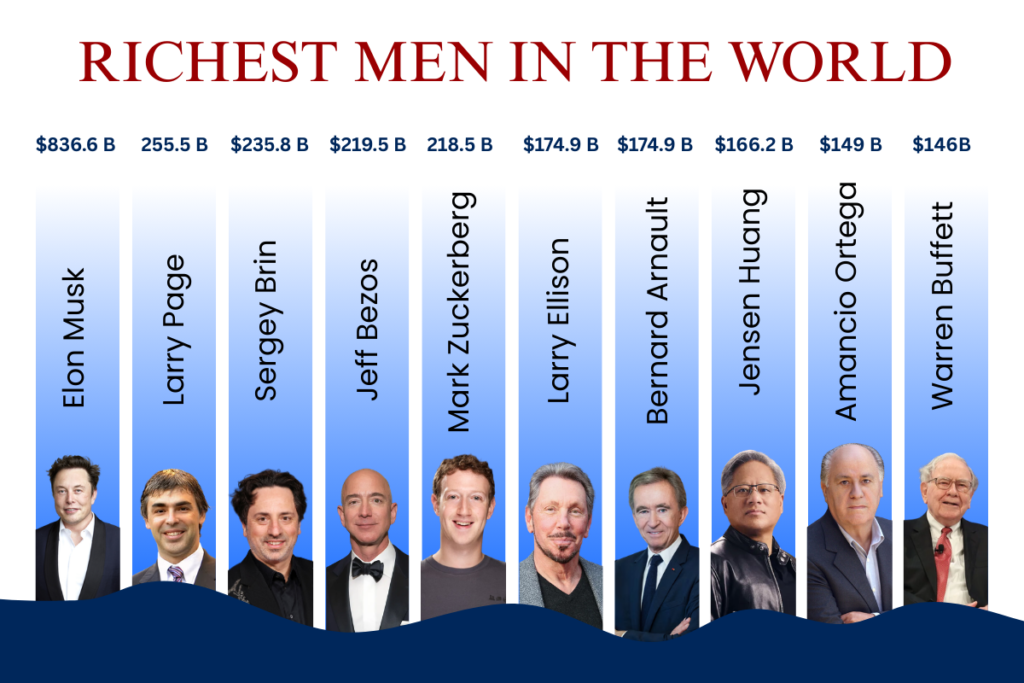
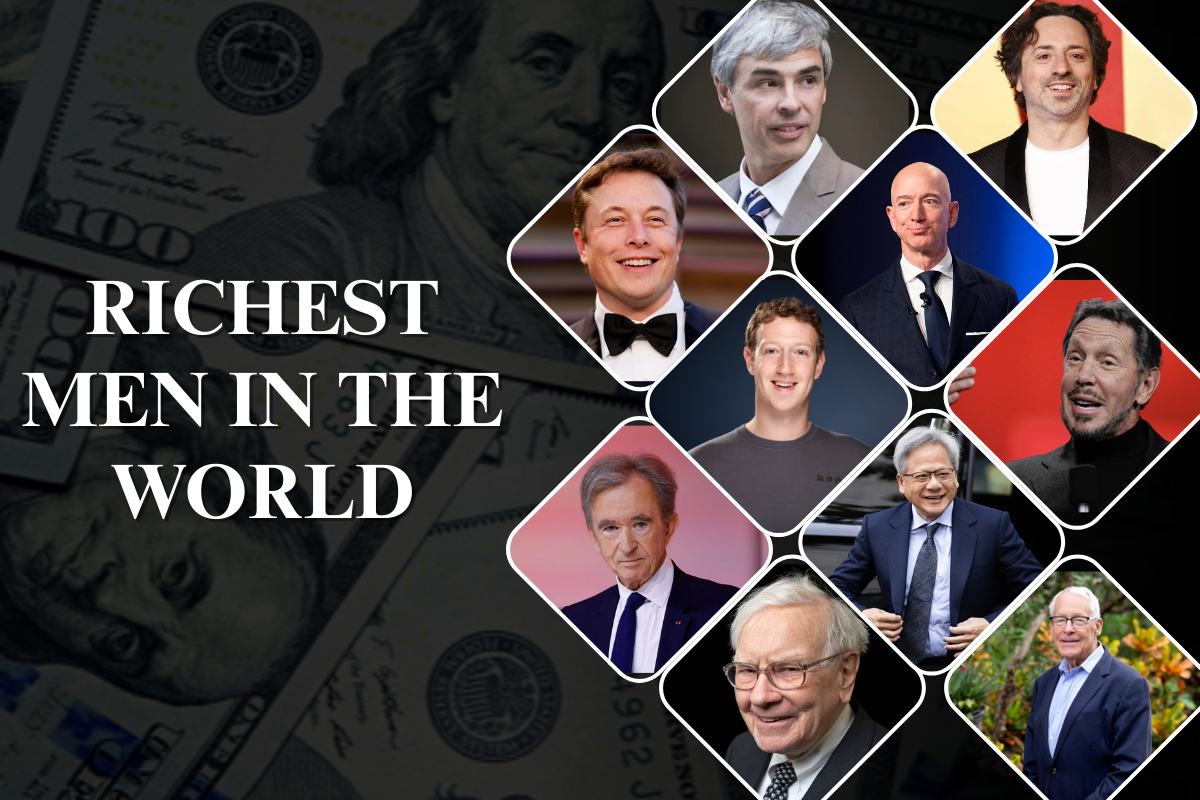
The names on this list control companies that operate at a massive scale. Their businesses span technology, retail, telecom, luxury goods, energy, and finance. Many of these firms serve millions or even billions of customers each year.
We have curated this list of the richest men in the world from Forbes’ Real-Time Billionaire List. The list updates after every working day. Hence, the rankings in this blog and the actual list might change over time. We have also arranged them from the least to the most rich according to their net worth.
20. Changpeng Zhao
- Net worth: $78.8 B
- Industry: Cryptocurrency exchange
- Age: 49
- Nationality: Canada
Changpeng Zhao, known as CZ, built his wealth through the crypto boom. He founded Binance in 2017 after spotting rapid growth in digital assets. The platform lets users trade coins like Bitcoin and many others. Binance grew fast because it offered low fees and a wide range of tokens.
Zhao had experience in trading software before launching the exchange. He focused on speed, global reach, and constant updates. As crypto adoption increased, Binance became one of the largest exchanges in the world.
19. Thomas Peterffy
- Net worth: $83.2 B
- Industry: Discount brokerage
- Age: 81
- Nationality: United States
Thomas Peterffy earned his fortune by reshaping stock trading. He founded Interactive Brokers, a leader in the discount brokerage industry. The company offers low-cost online trading for stocks, options, and futures.
Peterffy began as a programmer and brought automation to Wall Street. He built electronic systems when most traders still used paper tickets. This gave his firm speed and lower costs. As online investing expanded, Interactive Brokers grew worldwide.
18. Mukesh Ambani
- Net worth: $100.7 B
- Industry: Diversified
- Age: 68
- Nationality: India
Oil built the base of Mukesh Ambani’s empire, but telecom and retail fueled its rapid rise. He leads Reliance Industries, a company that began in petrochemicals and refining. Over time, he pushed it into consumer-facing sectors. The launch of Jio changed India’s data market by offering affordable internet at scale. That disruption strengthened his position among the richest men in the world by expanding digital access to millions.
It also brought in millions of users and strong foreign investment. Ambani also expanded into retail stores and digital platforms across the country. His strategy blends scale, pricing power, and long-term bets on technology.
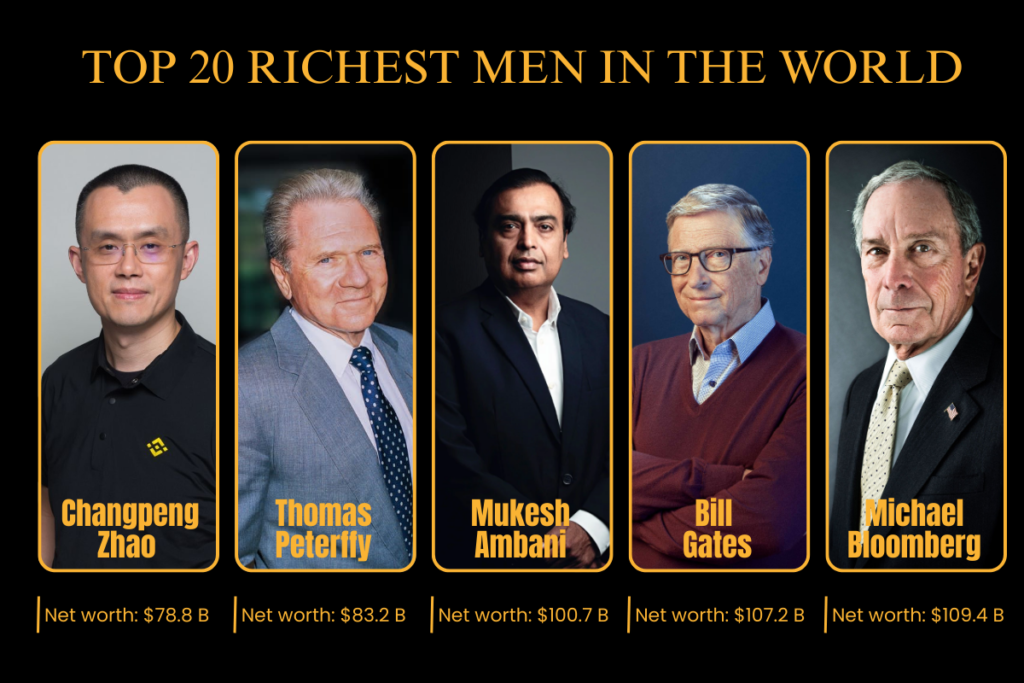
17. Bill Gates
- Net worth: $107.2 B
- Industry: Microsoft/Tech
- Age: 70
- Nationality: United States
Bill Gates co-founded Microsoft and helped shape the modern software industry. The company builds operating systems, cloud tools, and business software. Its early product, Windows, became the standard for personal computers.
Gates focused on software licensing, which created steady revenue as PC sales grew worldwide. Microsoft later expanded into cloud computing and enterprise services. Even after stepping back from daily operations, Gates kept a large stake in the company.
16. Michael Bloomberg
- Net worth: $109.4 B
- Industry: Bloomberg LP, Media and data
- Age: 84
- Nationality: United States
Michael Bloomberg built his fortune by selling financial data to Wall Street. After leaving Salomon Brothers, he founded Bloomberg L.P. in 1981. The company created the Bloomberg Terminal, which gives traders real-time market data, news, and analytics. Banks and investment firms pay high subscription fees to use it. Recurring revenue models like this often explain how founders often become the richest men in the world.
Bloomberg focused on accuracy and speed. His terminals became essential tools in global finance. Over time, the company expanded into media, television, and digital news. Strong recurring revenue and global demand for financial data drove his steady wealth growth.
15. Carlos Slim Helu
- Net worth: $113.9 B
- Industry: Telecom
- Age: 86
- Nationality: Mexico
Carlos Slim Helu controls a vast telecom empire across Latin America. Through América Móvil, he provides mobile and broadband services to millions of customers. The company operates in the telecommunications industry, which benefits from constant demand for connectivity.
Slim began by investing in undervalued companies during Mexico’s economic downturn. He later expanded into banking, retail, and infrastructure. Still, telecom remains the core of his wealth. By building strong market share in multiple countries, Slim created one of the largest business groups in the region.
14. Steve Ballmer
- Net worth: $122.2 B
- Industry: Microsoft, Tech
- Age: 69
- Nationality: United States
Steve Ballmer joined Microsoft in 1980 as one of its early employees. He later became CEO and led the company for 14 years. During his tenure, Microsoft expanded its enterprise software, server products, and developer tools. Revenue and profits grew strongly under his leadership.
Ballmer built most of his wealth through his large ownership stake in Microsoft. Even after stepping down, he kept those shares. As Microsoft’s value increased over time, so did its fortune. Long-term equity ownership like this often defines the wealth of the richest men in the world. His long association with the software giant remains the core source of his wealth.
13. Michael Dell
- Net worth: $134 B
- Industry: Dell Technologies
- Age: 61
- Nationality: United States
Michael Dell started his company from a college dorm room. He founded Dell Technologies with a simple idea: sell computers directly to customers. This direct sales model reduced costs and improved margins.
Dell grew fast as the demand for a personal computer increased in homes and offices. Over time, the company expanded into servers, storage, and cloud infrastructure. A major merger with EMC strengthened its enterprise business. By focusing on hardware and corporate tech solutions, Dell built a lasting technology empire.
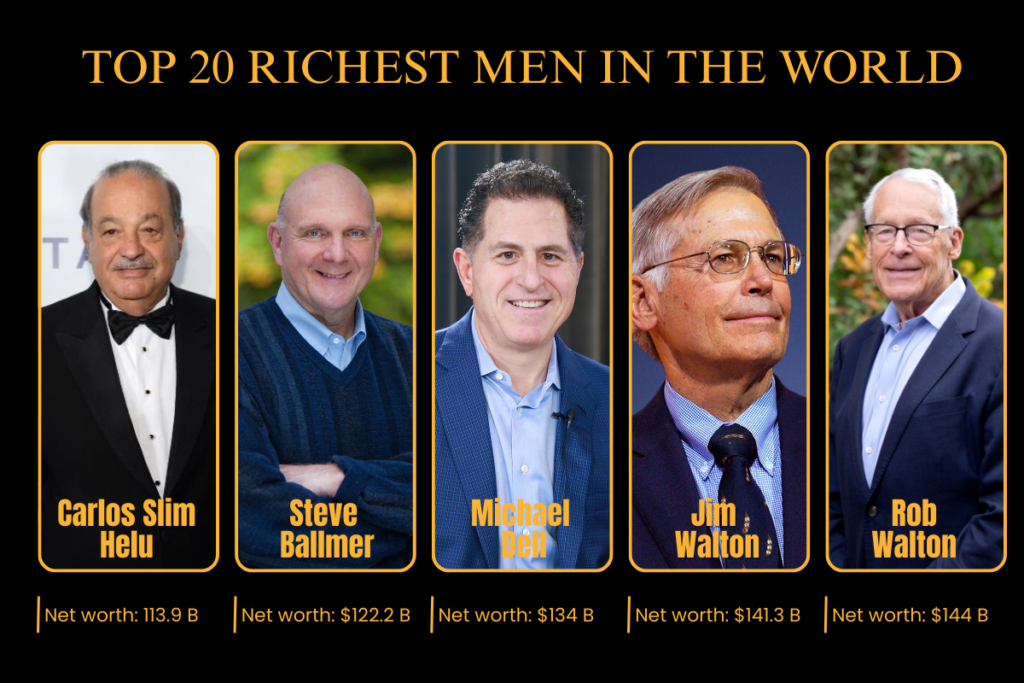
12. Jim Walton
- Net worth: $141.3 B
- Industry: Walmart, Retail
- Age: 77
- Nationality: United States
Retail scale defines the wealth of Jim Walton. He is the youngest son of Sam Walton and holds a major stake in Walmart. The company operates thousands of stores worldwide and leads the global retail industry. Its model focuses on low prices, large volume, and strong supply chains.
Jim Walton served for years on Walmart’s board and helped guide long-term strategy. The company expanded into e-commerce and digital services to compete with online rivals. Steady sales growth and global reach continue to support the family’s vast fortune.
11. Rob Walton
- Net worth: $144 B
- Industry: Walmart, Retail
- Age: 81
- Nationality: United States
For decades, Rob Walton helped oversee one of the world’s largest retail chains. As the eldest son of Sam Walton, he inherited a strong ownership stake in Walmart. He served as chairman for many years and guided the company through major expansion. Such sustained leadership over global retailers is a common trait seen among the richest men in the world.
Walmart built its dominance on bulk buying power and low-cost pricing. The company grew across the United States and later into global markets. Under Rob Walton’s leadership, it strengthened logistics and entered online retail.
10. Warren Buffett
- Net worth: $146 B
- Industry: Berkshire Hathaway, Investments
- Age: 95
- Nationality: United States
Warren Buffett built his wealth through disciplined investing. He leads Berkshire Hathaway, a firm that owns businesses across insurance, energy, railroads, and consumer goods. Buffett buys strong companies at fair prices and holds them for the long term.
Berkshire also owns large stakes in public companies such as Apple Inc. and Coca-Cola. His focus on steady growth and strong cash flow shaped the firm’s success. Over decades, this patient approach turned Berkshire into a global investment powerhouse and built one of the largest personal fortunes in history.
9. Amancio Ortega
- Net worth: $149 B
- Industry: Zara, Fashion retail
- Age: 89
- Nationality: Spain
Fast fashion transformed the career of Amancio Ortega. He founded Inditex, the parent company of Zara. The business designs, produces, and sells clothing at high speed. Stores refresh styles quickly, which keeps customers returning.
Ortega built a tight supply chain that links design teams with factories and retail outlets. This system reduces delays and cuts excess inventory. Zara expanded across Europe, the Americas, and Asia. By controlling production and distribution, Ortega created a retail model that changed the global fashion industry.
8. Jensen Huang
- Net worth: $166.2 B
- Industry: Semiconductors, Tech
- Age: 63
- Nationality: United States
Graphics chips placed Jensen Huang at the center of the AI boom. He co-founded Nvidia in 1993 to build powerful GPUs for gaming. Over time, those chips became vital for data centers and artificial intelligence systems.
Huang pushed Nvidia beyond gaming into cloud computing and machine learning. Major tech firms rely on its processors to train AI models. Control over foundational technology can rapidly elevate founders into the richest men in the world tier. Huang’s steady leadership and focus on high-performance computing turned the company into a key player in the semiconductor industry.
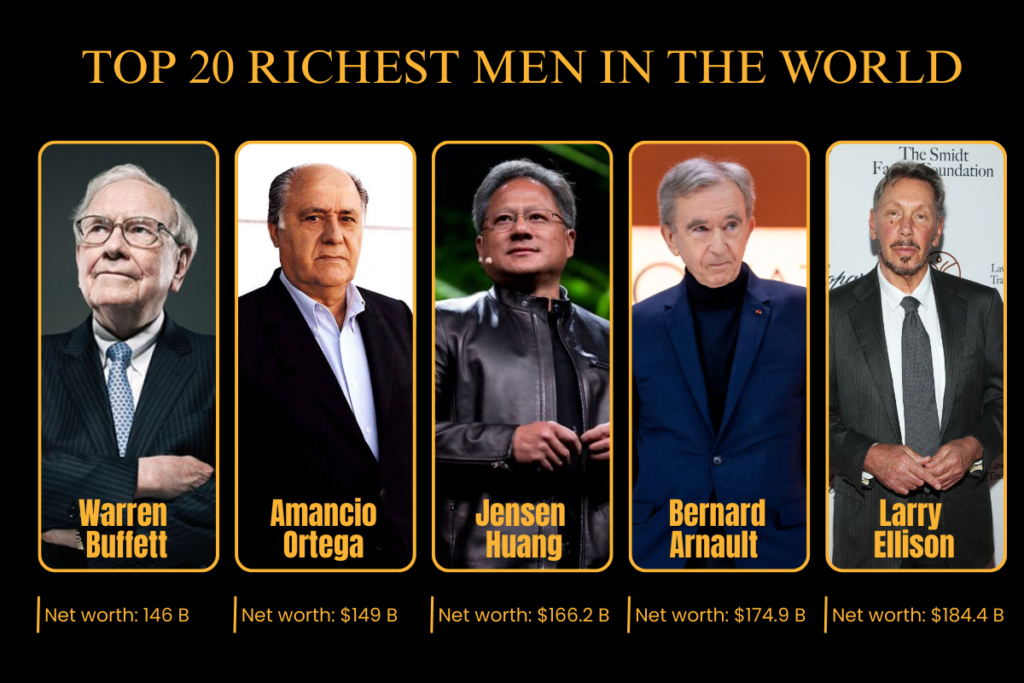
7. Bernard Arnault
- Net worth: $174.9 B
- Industry: LVMH, Luxury goods
- Age: 76
- Nationality: France
Luxury brands drive the fortune of Bernard Arnault. He leads LVMH, a group that owns fashion, jewelry, and cosmetics houses. Its portfolio includes brands such as Louis Vuitton and Dior.
Arnault grew the company through strategic acquisitions and tight brand control. He focuses on exclusivity, craftsmanship, and global expansion. LVMH earns strong margins because luxury customers value heritage and quality. By building a powerful portfolio of premium brands, Arnault shaped one of the largest luxury groups in the world.
6. Larry Ellison
- Net worth: $184.4 B
- Industry: Oracle, Tech
- Age: 81
- Nationality: United States
Enterprise software became big business in the late 20th century, and Larry Ellison moved early. In 1977, he co-founded Oracle Corporation to focus on relational database systems. These systems help large firms store, organize, and retrieve data fast.
Instead of chasing small clients, Ellison targeted major corporations and government agencies. That strategy brought large, steady contracts. Over time, Oracle expanded into cloud infrastructure and business applications. Ellison kept a strong ownership stake, so as Oracle’s value grew, so did his personal wealth.
5. Mark Zuckerberg
- Net worth: $218.5 B
- Industry: Facebook, Tech
- Age: 41
- Nationality: United States
At age 19, Mark Zuckerberg launched Facebook from his dorm room. What began as a campus network quickly spread across universities and then worldwide. The platform allowed users to share updates, photos, and messages in real time.
As user numbers climbed into the billions, advertising became the main revenue engine. The company later rebranded as Meta Platforms and expanded into virtual reality and digital ecosystems. Platforms with billions of users frequently produce founders who join the richest men in the world rankings.
4. Jeff Bezos
- Net worth: $219.5 B
- Industry: Amazon, e-commerce, and Tech
- Age: 62
- Nationality: United States
Online shopping changed retail, and Jeff Bezos helped drive that shift. In 1994, he founded Amazon as an online bookstore. He focused on low prices, fast delivery, and wide selection. Customers responded quickly, and Amazon expanded into electronics, clothing, and cloud services.
A major growth engine came from Amazon Web Services, which provides cloud infrastructure to businesses worldwide. That division generates strong profits. Bezos reinvested earnings into logistics and technology, which strengthened Amazon’s market position and raised its long-term value.
3. Sergey Brin
- Net worth: $235.8 B
- Industry: Google, Tech
- Age: 52
- Nationality: United States
As we enter the top 3 of this list of the richest men in the world, we must take a look at Sergey Brin.
Search engines once gave mixed results, but Sergey Brin worked to change that. He co-founded Google with a focus on ranking web pages through advanced algorithms. The goal was simple: deliver more relevant results.
As internet use surged, Google became the gateway to online information. The company built a strong advertising model that matched ads to search queries. It later formed Alphabet Inc. to manage ventures in cloud computing, AI, and other projects. Brin’s early stake in Google remains the main source of his wealth.
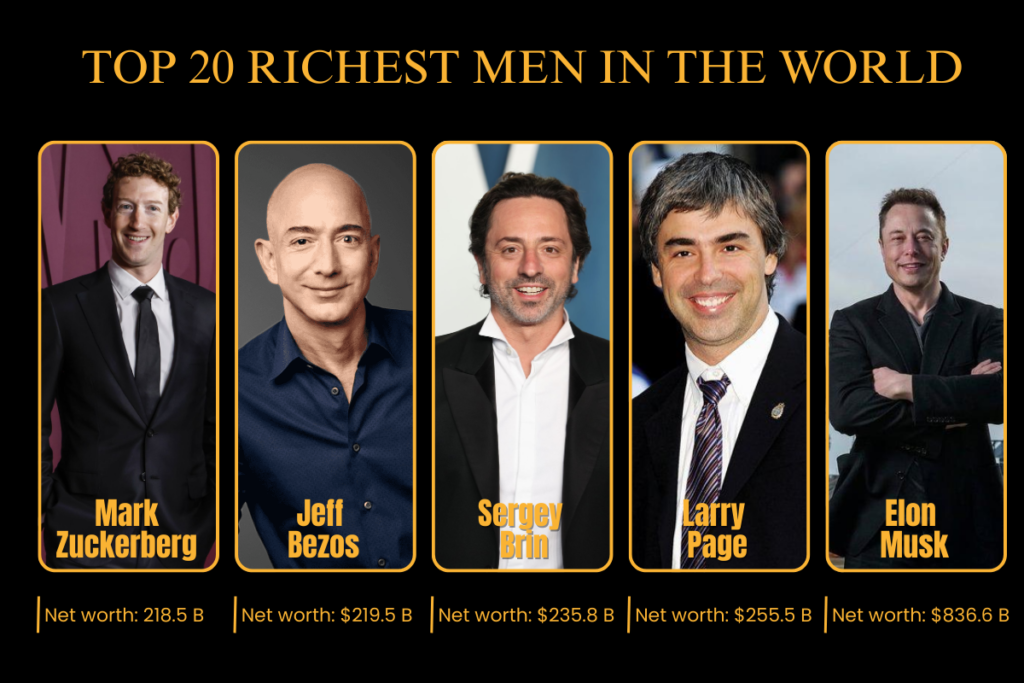
2. Larry Page
- Net worth: $255.5 B
- Industry: Google, Tech
- Age: 52
- Nationality: United States
The idea behind Google began as a research project at Stanford. Larry Page wanted to rank web pages based on links and relevance. That system improved search results and helped users find information faster.
As traffic grew, Google built a powerful advertising engine around search. Businesses paid to appear next to user queries, which created steady revenue. Page later helped form Alphabet Inc. to manage expanding ventures in cloud computing, AI, and hardware. His large ownership stake in the company drives most of his wealth today.
1. Elon Musk
- Net worth: $836.6 B
- Industry: Tesla, SpaceX, Tech
- Age: 54
- Nationality: United States
Electric vehicles and space travel define the career of Elon Musk. He leads Tesla, which produces electric cars and battery systems. Tesla pushed EVs into the mainstream through innovation and scale.
Musk also founded SpaceX to reduce the cost of space launches. The company builds reusable rockets and partners with governments and private firms. He has held stakes in ventures like X Corp. as well. Strong investor belief in his companies has driven sharp rises in valuation, which explains the size of his fortune.
How do the Richest Men in the World Affect the Global Economy?
In 2026, the global economy is projected to grow around 3.1 percent, according to the International Monetary Fund.
Many of the world’s largest companies are led or founded by the richest men in the world. Their firms operate in sectors like technology, energy, retail, and finance. When these companies expand, hire workers, and invest in infrastructure, they contribute directly to GDP growth. Massive spending on factories, data centers, logistics, and research supports jobs and supply chains across countries.
At the same time, their investment decisions influence stock markets and global capital movement. If major firms slow spending, delay projects, or cut costs, it can affect broader economic momentum. In a year with projected 3.1 percent growth, the strategic choices of top corporate leaders can shape how strong or uneven that growth becomes across regions and industries.

Meet the 30 Top Inspirational Women in the World Who Redefine Success
The 30 Top Inspirational Women in the World Who Broke Barriers: 1. Alicia Garza 2. Malala Yousafzai 3. Amanda Nguyen 4. Amika George 5. Patrisse Cullors
Conclusion:
The Richest men in the world hold positions that reflect scale, influence, and long-term strategic thinking. Their fortunes come from years of building companies, expanding into new markets, and making calculated investment decisions. Behind every net worth figure stands a series of risks, setbacks, and critical choices that shaped their path.
When you examine their journeys, you notice patterns of persistence, innovation, and disciplined execution. These examples offer insight into how global enterprises grow and how leadership, timing, and vision contribute to lasting financial success.
FAQs
1. How is wealth measured for the richest men in the world?
Wealth is usually calculated based on publicly available data, including company shares, investments, assets, and market valuations.
2. Do rankings of the richest men in the world change often?
2. Do rankings of the richest men in the world change often?
3. Do rankings of the richest men in the world change often?
Yes. Net worth can fluctuate due to stock market changes, business performance, investments, and economic conditions.
4. Does high net worth mean liquid cash?
Not necessarily. Much of their wealth is tied to company shares and investments rather than cash holdings.