Process improvement is the practice of fixing broken business workflows to cut waste and boost profit. By using frameworks like Lean or Six Sigma, you can turn messy tasks into smooth, data-driven systems. Don’t let operational friction slow your team down. Ready to scale? Start applying these proven strategies today to optimize your business and achieve consistent growth throughout the rest of the year.
Many businesses have the right tech stack but still struggle to run smoothly. When workflows feel heavy, you are likely hitting the limits of your current systems.
Solving this requires a smarter approach to process improvement. By using AI data to find hidden waste, the most efficient teams are now cutting through the noise to focus on what actually drives revenue.
To help you build that momentum, let’s start by breaking down exactly what it means and how it can start working for you today.
What Do You Mean by Process Improvement?
So, what exactly is process improvement? It is a proactive habit of checking how your business runs so you can cut out the clunky parts. It goes way beyond just managing daily tasks. Instead, you look at the big picture to see where things slow down or lose value.
This isn’t about drawing flowcharts on a whiteboard. It is about using data to get consistent results that boost your bottom line.
You are making a continuous commitment to finding ways to make work faster, cheaper, and easier. Whether you are fixing how your team handles sales leads or speeding up your supply chain, you are creating a culture where everyone looks for better ways to get things done using the resources you already have.
How Does Process Improvement Work?
You don’t need a complex degree in operations management to see results. Most successful teams rely on a simple roadmap known as the DMAIC framework. This is your step-by-step guide to moving from messy to efficient.
Here is how to apply each stage to your business:
- Define: Start by picking one specific bottleneck. Do not try to fix everything at once. Ask yourself: “What is the one task that wastes the most time or money?”
- Measure: You cannot improve what you do not track. Gather hard numbers. How long does the task take now? How many errors happen in a week? This is your baseline.
- Analyze: Find the root cause. A great trick here is the “5 Whys.” When you find a problem, ask ‘Why?’ five times until you reach the core issue, not just the symptom.
- Improve: Run a pilot test. Before you roll out a new process to the whole company, test it with a small group to see if it actually fixes the problem.
- Control: Lock in your success. Once the fix works, create a simple checklist or a dashboard so you can make sure the process doesn’t slide back to the old, messy way.
Which Process Improvement Methodology is Right for You?

You don’t need to master every theory to see results. You just need to pick the one that solves your biggest current bottleneck. Here are the three most common frameworks used by industry leaders:
1. Lean
Lean focuses on speed and cutting waste. If a step doesn’t directly add value to the customer, it is considered waste and should be removed.
How to use it:
- Draw out every single step of a workflow (e.g., how you onboard a new client).
- Mark the steps the customer is willing to pay for.
- Simplify, combine, or delete the steps that are just bureaucracy, and don’t add value.
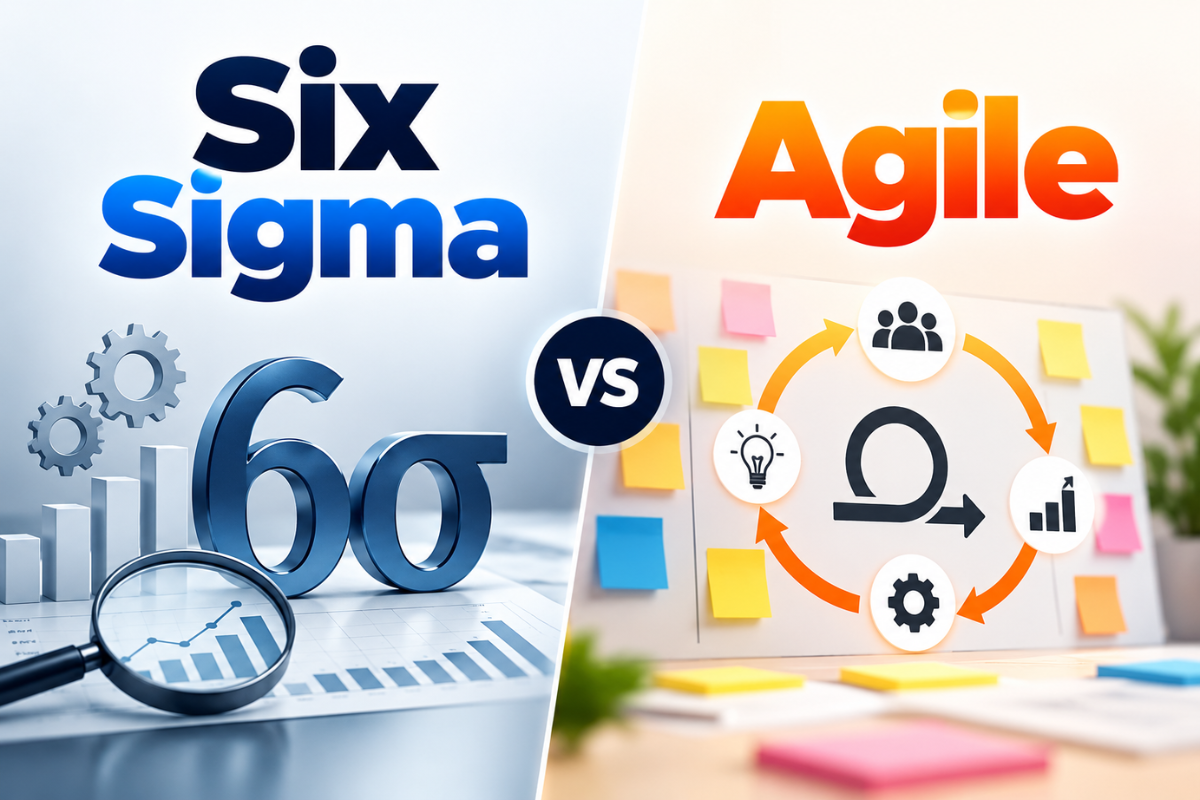
2. Six Sigma
Six Sigma uses statistical data to find out why errors happen. It is perfect if your goal is near-zero defects and high consistency.
How to use it:
- Track how often an error happens (e.g., ‘10% of our invoices have the wrong price’).
- Use the ‘5 Whys’ method (ask why the error happened five times) to find the deep-rooted issue, not just the symptom.
- Build a strict standard, such as a mandatory checklist, that every employee must follow to keep the error rate near zero.
3. BPM
Business Process Management (BPM) looks at the entire lifecycle of your business. It is not about one task. It is about how different teams talk to each other.
How to use it:
- Track how a project moves from Sales to Marketing to Finance.
- Find the department where work usually gets stuck or delayed.
- Use software to automate the movement of data between these teams so things never get lost in email chains.
Here is a quick breakdown to help you compare them:
| Methodology | Best For | Complexity Level |
| Lean | Speed and removing waste | Low to Moderate |
| Six Sigma | Reducing defects and errors | High |
| BPM | End-to-end transformation | High |
How to Choose Your Path?
Follow these three simple steps to find the right fit for your business:
- If you are drowning in slow work, start with Lean. It is the best place to start if you want to clear your schedule and boost productivity quickly.
- If you have too many errors or returns, choose Six Sigma. Use this if your output is inconsistent. It relies on data to track exactly where things go wrong. It takes more work to set up, but it is the best way to ensure your product quality is bulletproof.
- If your teams are out of sync, use BPM. Use it to map out the hand-offs between these teams. It helps you fix the gaps where information usually gets lost.
Start with the method that fixes your most urgent pain point. Once you get a quick win, you can layer in more complex frameworks later. If you are just getting started, Lean is almost always the easiest path to success.
Why is Process Improvement Worth Your Time?

When your operations run smoothly, everything else gets easier. The biggest payoff is a noticeable shift in how your business performs from the inside out.
73% of leaders who integrated digital capabilities end-to-end achieved broad organizational impact. When done right, this practice turns into predictable growth for your team.
Here are the main benefits you can expect:
- Higher Efficiency: By cutting out wasted steps, you get more done in less time.
- Lower Costs: Fixing broken workflows means less money spent on fixing mistakes or redoing work.
- Happier Teams: When you automate the boring, repetitive tasks, your staff can focus on the work that actually matters, which helps prevent burnout.
- Better Consistency: A standard process means the same high-quality result every single time, whether it’s a customer order or an internal report.
- Faster Growth: Optimized processes allow you to scale your business without needing to add endless headcount.
You can see how this maturity changes your business outcomes in the table below:
The Impact of Process Maturity
| Maturity Level | Characteristics | Primary ROI Driver |
| Initial | Reactive, manual, siloed work | Immediate cost avoidance |
| Defined | Standardized, documented steps | Reduced error rates |
| Managed | Measured with specific KPIs | Scaling team capacity |
| Optimized | AI-led, continuous refinement | Revenue acceleration |
Common Pitfalls and How to Avoid Them?

Even with the best tools, many initiatives fail. Research indicates that 50% to 70% of process improvement projects struggle because teams choose the wrong method or lack leadership support.
Do not make the tool trap mistake. This happens when you buy expensive software without understanding your existing process flaws.
Always map your current workflow before you try to automate it. Furthermore, ensure your leaders actively participate. Change requires top-down advocacy to succeed.
Conclusion:
Process improvement is about getting better every single day. By combining smart AI tools with the right frameworks, you can turn your daily operations into a real competitive advantage.
Don’t wait for the perfect moment to start. Pick your biggest bottleneck, apply one of these methods, and take that first step today. Your future team will thank you
Frequently Asked Questions
Q: Can a small business use Six Sigma?
A: Yes, but keep it agile. Small businesses benefit more from Lean principles. Focus on removing waste rather than complex statistical certifications.
Q: How do I know if my process needs improvement?
A: Look for pain points, like high employee burnout, repeated customer complaints, or slow cycle times. If a task feels repetitive or error-prone, it is likely a candidate for optimization.
Q: Should I automate everything?
A: No. Start by automating low-value, repetitive tasks. Keep human oversight for high-risk decisions or tasks that require empathy and complex judgment.