
Think about the last conversation where someone spoke, and you nodded along, but your mind was already somewhere else. The words were heard, but the meaning did not fully land. This everyday moment captures the difference between active vs passive listening. One approach requires presence and intention, while the other happens on autopilot.
How you listen affects trust, understanding, and the flow of every conversation. In work meetings, personal relationships, and casual chats, the contrast between active vs passive listening shapes outcomes more than most people realize. Knowing how these two styles differ helps you listen with purpose and respond in ways that truly connect.
But first, we need to define what active vs passive listening is.
What is Active Listening?
Active listening is when you fully focus on the speaker and try to understand their message. You pay attention to words, tone, and body language. You respond, ask questions, or paraphrase to show understanding. The goal is clear communication and connection.
➨ Example: During a team meeting, Sarah listens to her colleague explain a project issue. She nods, asks clarifying questions, and repeats key points to confirm understanding. This helps the team solve the problem faster.
What is Passive Listening?
Passive listening is when you hear the speaker but do not actively engage. You may stay quiet and polite, but your attention drifts. Understanding is minimal, and you do not provide feedback. The focus is just on receiving information.
➨ Example: In the same meeting, John hears the discussion while checking emails. He does not respond or ask questions. Later, he struggles to recall the project details because he wasn’t fully attentive.
Now you know what active and passive listening mean. Understanding active vs passive listening helps clarify why some conversations lead to connection while others cause confusion.
Next, we will see the differences between them and how they can silently influence conversations between two people.
Active Vs Passive Listening: The 7 Silent Characteristics of a Conversation
Active and passive listening shape how people understand and respond to conversations. One involves attention and engagement, while the other stays surface-level. The following differences affect trust, clarity, and outcomes in daily interactions in the background.
1. Body Language

✦ Active listening includes paying attention to the speaker’s body language and using your own to show engagement. You maintain eye contact, nod, and mirror gestures when appropriate. These nonverbal cues signal that you are present and interested in understanding the message.
Example: During a one-on-one, Ravi watches his manager explain a new task. He leans slightly forward, nods occasionally, and smiles at relevant points. His manager notices his engagement and feels encouraged to share more details.
✦ Passive listening ignores body language, both yours and the speaker’s. You might stare blankly, avoid eye contact, or appear distracted. The listener’s posture and expressions give little feedback, leaving the speaker unsure if they are understood.
Example: In the same meeting, Priya sits back in her chair with arms crossed while her manager talks. She occasionally glances at her phone. The manager senses disinterest and repeats information to make sure it is received.
2. Response Timing
✦ Active listening involves responding thoughtfully and at the right moment. The listener does not interrupt or rush the speaker. Instead, they pause, consider the message, and reply in a way that shows understanding and engagement.
Example: During a team discussion, Anya listens to her colleague explain a challenge. She waits until he finishes, then asks a clarifying question about the process. Her timely response helps the team explore solutions efficiently.
✦ Passive listening often results in delayed, irrelevant, or no responses. The listener may wait too long to react or reply without fully grasping the context. This can lead to miscommunication or missed opportunities.
Example: In the same discussion, Vikram nods while his colleague talks, but stays silent. When he finally speaks, his comment doesn’t relate to the issue. The team has to repeat parts of the explanation, slowing progress.
3. Trust Building

✦ Active listening helps build trust between the speaker and listener. By paying attention, showing empathy, and responding appropriately, the listener demonstrates respect and reliability. This encourages open communication and strengthens relationships.
Example: During a feedback session, Maya listens carefully to her teammate’s concerns about a project. She acknowledges the points and asks how she can support. Her teammate feels valued and more confident sharing future ideas.
✦ Passive listening does little to build trust. The listener may hear the words but does not show understanding or interest. This can make the speaker feel ignored or undervalued, weakening the connection.
Example: In the same session, Raj keeps quiet and looks away while his teammate talks about challenges. The teammate senses indifference and hesitates to share problems openly in the future.
4. Emotional Impact
✦ Active listening positively affects emotions by making the speaker feel heard and understood. It conveys empathy and validation, helping reduce stress or frustration. This type of listening strengthens emotional bonds and creates a supportive environment.
Example: During a personal conversation, Aisha listens carefully as her friend talks about a stressful day. She responds with understanding, acknowledges the feelings, and offers support. Her friend feels comforted and less overwhelmed.
✦ Passive listening often fails to address the speaker’s emotional needs. The listener may hear the words but does not connect or respond empathetically. This can leave the speaker feeling isolated or ignored.
Example: In the same conversation, Karan hears his friend talk but remains silent and distracted. His friend leaves feeling unheard and discouraged, with their stress unresolved.
5. Problem Solving

✦ Active listening helps solve problems more effectively. The listener focuses on understanding the situation before offering solutions. They ask questions, clarify points, and confirm details to avoid misunderstandings. This approach encourages collaboration and often leads to practical outcomes.
Example: During a team meeting, Priya listens carefully as her colleague explains a delay in production. She asks what caused the problem and suggests steps to fix it. Her questions help the team spot a simple error, and together they resolve the issue quickly.
✦ Passive listening makes problem-solving harder. The listener hears information but does not engage deeply. They may miss key details or misunderstand the context. As a result, solutions are often ineffective or incomplete.
Example: In the same meeting, Sameer nods while his colleague talks, but does not ask any questions. Later, he suggests a solution that does not address the main issue. The team has to repeat the discussion, delaying the resolution.
6. Conflict Management
✦ Active listening helps manage conflicts by ensuring each person feels heard and understood. The listener stays calm, focuses on the speaker’s words, and asks questions to clarify concerns. This reduces misunderstandings and prevents the situation from escalating. Active listeners show empathy and validate feelings while staying solution-focused.
Example: During a disagreement at work, Anil listens to his teammate explain why a deadline was missed. He repeats the main points to confirm understanding and asks how he can help. Both feel understood, and they agree on a plan to finish the project on time.
✦ Passive listening often worsens conflicts. The listener may hear the argument but does not engage or acknowledge the other person’s perspective. Misunderstandings remain, and frustration grows. The lack of response can make others feel ignored or dismissed.
Example: In the same situation, Rina hears her teammate explain the delay but stays silent. She does not respond or clarify anything. The teammate feels unheard, tension rises, and the conflict lingers longer than necessary.
7. Context Awareness

✦ Active listening means noticing the situation while paying attention to the speaker. Listeners watch tone, mood, and surroundings to fully understand the message. They adjust their replies based on what is happening. This helps avoid confusion and improves communication.
Example: During a client call, Meera hears that the client sounds worried. She asks questions gently and explains steps slowly. The client feels understood and more confident about the plan.
✦ Passive listening ignores the situation and only hears the words. The listener may miss tone, emotion, or important clues. This can lead to wrong responses or misunderstandings. Passive listeners often fail to grasp the full meaning.
Example: In the same call, Aman hears the words but does not notice the client is anxious. He responds quickly without adjusting his tone. The client feels ignored and frustrated, making the conversation less effective.
To Summarize Active Vs Passive Listening:
Active listening involves full focus, understanding, and thoughtful response to the speaker, while passive listening is limited to hearing words without deep engagement. Active listeners show interest, empathy, and clarity through feedback and attention. Passive listeners are often distracted and rarely confirm understanding. The key difference lies in intention, presence, and the quality of connection created.
But one question remains.
Which One is Better?
The debate between active vs passive listening is much deeper than what you see on the surface.
Active listening is usually better than passive listening. It helps people understand each other and build trust. Active listeners pay attention to words, tone, and body language. They ask questions, repeat key points, and respond carefully. This reduces mistakes and helps solve problems faster.
Passive listening can work when you only need basic information. But it often causes misunderstandings and weaker connections. The listener may seem polite, but gives little value to the conversation.
For personal and work situations, active listening is more effective. It improves teamwork, manages conflicts, and strengthens emotional bonds. People feel heard and respected. Over time, practicing active listening creates stronger relationships and better results in most situations.
Ultimately, when to use active vs passive listening comes down to using them in the right context and conversation.
Tips to Improve Listening
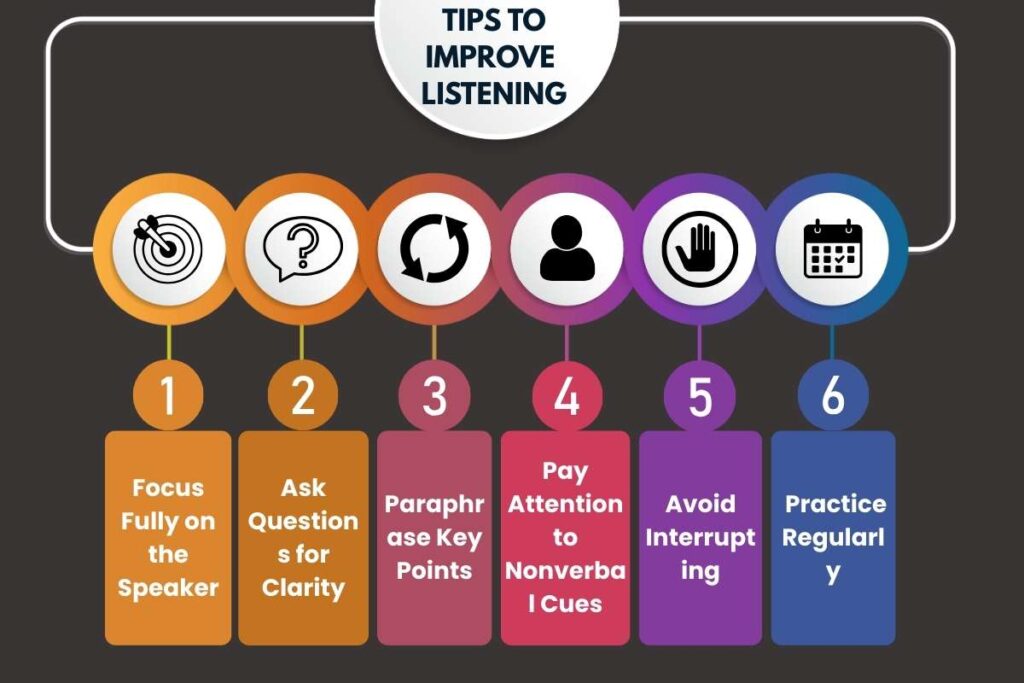
Having good communication is very important in both your personal and professional life. In fact, over 60% of workplace mistakes are due to communication failures. Learning how to use active vs passive listening improves communication skills in both personal and professional settings. The following tips focus on simple habits that help you listen more clearly and respond with intent.
1. Focus Fully on the Speaker:
Give your complete attention to the person speaking. Avoid checking your phone, thinking about other tasks, or letting your mind wander. Concentrating fully allows you to hear both the words and the meaning behind them.
2. Ask Questions for Clarity:
If something is unclear, ask questions to better understand the message. Avoid making assumptions or guessing. Clarifying shows engagement and helps you retain the information accurately.
3. Paraphrase Key Points:
Restate important ideas in your own words to ensure you understand correctly. Summarizing key points also reinforces memory and allows the speaker to confirm that you got the message.
4. Pay Attention to Nonverbal Cues:
Notice tone, gestures, facial expressions, and body language. These cues often reveal more than words alone. Being aware of them helps you understand emotions andthe context behind the conversation.
5. Avoid Interrupting:
Let the speaker finish their thoughts before responding. Interrupting can break their flow and cause miscommunication. Waiting for natural pauses ensures the speaker feels heard and respected.
6. Practice Regularly:
Listening is a skill that improves with consistent effort. Apply these techniques in meetings, casual talks, and daily conversations. The more you practice, the more attentive and effective you become.
Conclusion:
Listening is a choice you make in every conversation. When you understand the difference between active vs passive listening, you gain control over how people feel when they speak to you. Active listening creates clarity, trust, and stronger connections because it shows presence and respect. Passive listening may seem harmless, but it often leads to missed details and shallow understanding. Choosing to listen actively can change how conversations unfold and how relationships grow over time.
FAQ
1. 1. What is the main difference between active vs passive listening?
Active listening involves focus, empathy, and thoughtful responses. Passive listening involves hearing words without full attention or engagement.
2. Is passive listening always bad?
Not always. Passive listening can work in low-stakes situations, but it is less effective for meaningful or emotional conversations.3. Can active listening be learned?
Yes. Active listening is a skill that improves with practice, awareness, and intention.