We’ve all met that one person who can make people laugh without even trying, and it instantly makes them more memorable, more likable, and more fun to be around. But here’s the part most people don’t realize: being funny isn’t some rare talent. It’s a skill you can actually learn, and science backs this up.
Communication studies show that people who use humor naturally are seen as up to 40% more likable and trustworthy. Even workplaces with humor-positive cultures report higher creativity and lower burnout. So if you’ve ever asked how to be funny?, you’re not really asking how to entertain a crowd, you’re actually asking how to build stronger connections, feel more confident, and make everyday moments lighter.
In the sections ahead, we’ll break down what actually makes humor work, clear up the biggest myths, and explore simple, practical ways to become naturally funnier, no forced jokes, no awkward punchlines, just real, relatable humor anyone can learn.
The Science of Humor
Humor isn’t just entertaining; it’s a neurological response rooted in how your brain processes surprise, pattern breaks, and novelty. When you laugh, the brain releases dopamine and endorphin chemicals tied to pleasure and stress relief. That’s why learning how to be funny? Cann improves not just your social presence but also your mental well-being.
But the benefits go far beyond just feeling good. Research from the Mayo Clinic and other medical studies shows that laughter lowers stress hormones like cortisol, relaxes muscles, and even boosts immune function. Essentially, a good laugh acts like a mini-workout for your brain and body, strengthening your resilience to stress while enhancing mood and alertness.
Humor also works as a social tool. Humans are wired to respond to shared laughter; it signals safety, trust, and social bonding. This is why people who use humor effectively tend to form connections faster, diffuse tension in tricky situations, and create environments where others feel comfortable and engaged.
In short, learning how to be funny? It’s not just about making people laugh; it’s about understanding how your brain reacts, how your body benefits, and how humor strengthens social connections, all while boosting your own well-being.
Common Misconceptions about Humor that Hold You Back

When it comes to humor, several myths can hold people back from learning how to be funny? Let’s break them down:
✦ “You’re either born funny or not.”
Research shows that humor is a skill anyone can develop. Timing, observation, and practice often matter more than innate talent.
✦ “Being funny means being loud or always cracking jokes.”
Subtle, well-timed humor is often more effective than constant jokes. Overloading conversations can feel forced or awkward.
✦ “Sarcasm works everywhere.”
Humor is highly context-dependent. What’s funny in one group or culture may not work in another. Understanding social cues is essential.
✦ “Funny people are always confident.”
Confidence can help, but humor can be learned and applied even by introverts or shy individuals. It’s about technique, not personality.
✦ “You need to memorize jokes.”
Genuine humor comes from observation and relatability, not rote punchlines. Everyday situations can provide endless material.
By understanding and overcoming these misconceptions, anyone can start learning how to be funny in a way that feels natural, relatable, and socially smart.
Types of Humor You Can Use to Connect and Entertain
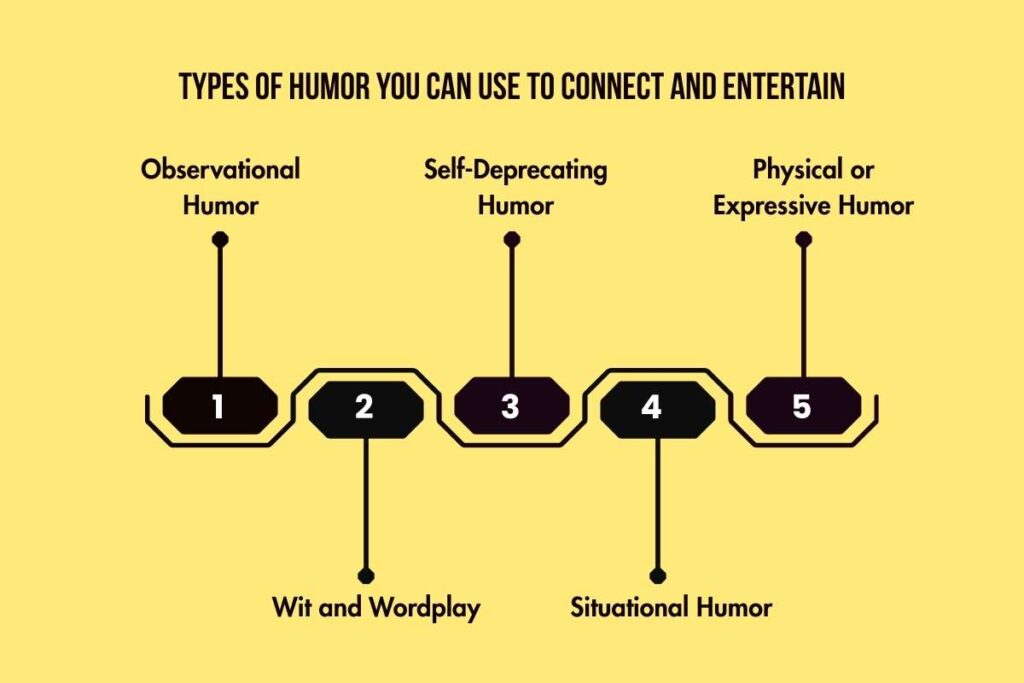
Humor isn’t one-size-fits-all. Different types of humor work in different situations, personalities, and social settings. Understanding the main types can help you choose what feels natural and effective.
1. Observational Humor:
This is about noticing the funny or ironic details in everyday life. Comedians like Jerry Seinfeld built careers on this type, and research shows people relate more to humor they see in shared experiences.
2. Wit and Wordplay:
Clever twists of language, puns, and double meanings make people laugh by surprising their expectations. This type of humor stimulates cognitive engagement, which explains why witty remarks feel so satisfying.
3. Self-Deprecating Humor:
Poking fun at yourself can make you more approachable and relatable. Studies indicate that people who use light self-deprecating humor are often perceived as more trustworthy and likable.
4. Situational Humor:
Humor that arises naturally from a scenario or environment, like reacting to an awkward moment or a funny coincidence, can make interactions feel spontaneous and memorable.
5. Physical or Expressive Humor:
Body language, facial expressions, and gestures often enhance verbal jokes. From a simple eye-roll to a funny dance, physical cues can amplify the humor and make it more memorable.
Each type has its place, and the best humor often mixes several approaches depending on the audience and context. By recognizing these styles, you can start experimenting and building your unique way of making people laugh, an essential step in learning how to be funny.
Why Humor Matters?
Humor isn’t just about getting laughs; it’s a powerful tool that shapes how we connect, communicate, and even thrive in life. Studies show that people who use humor effectively are not only more likable but also perceived as smarter and more approachable. In social settings, a well-timed joke can break the ice, ease tension, and make interactions feel smoother and more enjoyable.
From a psychological perspective, humor strengthens emotional intelligence. Being funny requires observing cues, reading reactions, and adjusting delivery, which improves social awareness and empathy. Research also shows that humor can enhance persuasion and leadership. For example, leaders who use appropriate humor are more likely to inspire creativity, build team cohesion, and manage stress within their groups.
Humor also plays a role in personal confidence. When you can make others laugh naturally, it signals self-assurance without arrogance. Over time, this skill boosts your social presence, helps you form stronger relationships, and opens doors in both personal and professional environments.
In short, learning how to be funny?Iss not just about entertainment; it’s about connection, influence, and well-being, making it a vital skill for everyday life.
Do’s and Don’ts of Using Humor Effectively

Knowing how to be funny? It isn’t just about what you say; it’s also about what you avoid. Humor works best when it’s mindful, well-timed, and appropriate for the audience. Here are some key do’s and don’ts to keep in mind:
Do’s:
- Pay attention to timing. A well-timed joke or witty remark lands far better than one delivered at the wrong moment.
- Observe your environment. Everyday situations often provide the best material for humor.
- Be authentic. Humor feels most natural when it aligns with your personality.
- Keep it inclusive. Aim for jokes that everyone can enjoy without targeting or offending anyone.
- Use humor to connect. Funny remarks are most effective when they build rapport, lighten tension, or enhance conversation.
Don’ts:
- Don’t punch down. Avoid humor that makes others feel bad or targets vulnerable groups.
- Don’t overexplain. Let your audience get the joke; explaining it ruins the effect.
- Don’t force it. Humor works best when it’s spontaneous and natural.
- Don’t rely on stereotypes. Avoid outdated or offensive tropes; they can backfire and harm relationships.
- Don’t try too hard. Overdoing jokes can feel inauthentic or awkward.
By following these guidelines, you can practice humor confidently and responsibly, ensuring your attempts at fun leave a positive impression while strengthening social bonds.
The Social and Mental Health Benefits of Laughter
Laughter does far more than lighten a moment; it triggers measurable changes in your brain and body that can improve emotional resilience, strengthen relationships, and boost overall well-being. If you’re learning how to be funny?, understanding these benefits shows why humor is one of the most effective tools for personal and social growth.
-1024x683.jpg)
Science-Backed Benefits:
1. Reduces stress and lifts your mood
Laughter releases dopamine and endorphins while reducing cortisol, creating an instant sense of relief and happiness. Research shows that laughter-based activities can lower cortisol levels by up to 32%.
2. Strengthens immunity and supports healthier aging
Mayo Clinic research highlights that laughter stimulates immune cells and increases antibodies that help protect against illness.
3. Improves emotional resilience
Laughter encourages cognitive flexibility, helping people reframe problems, cope with setbacks, and maintain a balanced mindset during stressful times.
4. Builds stronger social connections
Sharing a laugh signals trust and safety, making it easier to bond with others. Studies show that people who laugh together report higher relationship satisfaction and deeper long-term closeness.
5. Boosts teamwork and creativity
Workplaces that encourage humor see more open communication, collaborative problem-solving, and innovative thinking all driven by the positive emotional energy laughter creates.
All of this reinforces one thing: learning how to be funny? It isn’t just about cracking jokes. It’s a powerful way to enhance mental health, foster stronger relationships, and elevate your overall quality of life.
Conclusion:
Learning how to be funny? It isn’t about memorizing jokes or becoming the life of the party overnight. It’s a skill rooted in science, observation, and authenticity. Humor boosts endorphins, reduces stress, strengthens relationships, and enhances social and emotional intelligence, benefits that go far beyond simple entertainment.
By understanding the types of humor, avoiding common misconceptions, and practicing the do’s and don’ts, anyone can develop a natural, relatable sense of humor. Whether it’s making friends laugh, easing tension at work, or simply enjoying life more, humor is a powerful tool that improves both your well-being and your connections with others.
Start small: notice the funny moments in everyday life, experiment with subtle humor, and observe how people respond. Over time, these habits build confidence, social ease, and a genuinely fun personality. Remember, being funny isn’t about perfection; it’s about connecting, sharing joy, and making life a little lighter for yourself and those around you.
FAQs: How to Be Funny?
1. What are the main types of humor I can use?
Common types of humor include observational humor, wit and wordplay, self-deprecating humor, situational humor, and physical or expressive humor. Each type works differently depending on your personality and the social context.
2. Why does humor matter in social and professional life?
Humor strengthens relationships, boosts likability, and enhances communication. Studies show that individuals who use humor effectively are perceived as more approachable, trustworthy, and creative both in social and workplace settings.
3. Can anyone learn how to be funny, or is it an innate skill?
Absolutely! Humor is a skill that can be developed over time. Research shows that observation, timing, and practice matter more than innate talent. By understanding different types of humor and practicing in everyday situations, anyone can become funnier.
4. Are there any health benefits to being funny or laughing often?
Yes! Laughter releases endorphins, reduces stress hormones like cortisol, improves immune function, and enhances emotional resilience. Regular laughter can also improve mental well-being and strengthen social bonds.
5. What are common mistakes to avoid when trying to be funny?
Some common pitfalls include overexplaining jokes, forcing humor, using sarcasm inappropriately, relying on stereotypes, or trying too hard. Effective humor works best when it’s natural, well-timed, and socially aware.