Good communication starts with your ears, not your mouth. While most people focus on what to say next, the best learners know how to sit back and truly hear. This brings up an interesting question: What is passive listening? It is a simple way of hearing where you take in words without jumping in to talk or give feedback.
Passive listening is a key tool for your daily life. It helps you enjoy a podcast, follow a boss’s speech, or learn from a teacher. By staying quiet and soaking up the message. You can gather all the facts before you decide how to act. It is the first step to becoming a great student and a better friend.
What is Passive Listening?
Hearing someone speak without responding verbally or physically is known as passive listening. Passive listening is a one-way street, in contrast to active listening. This involves asking questions and demonstrating your attention. You remain silent and take in the words as if you were a recorder.
Communication researchers describe listening as a staged process, where passive listening helps build context before deeper engagement begins.
There are two ways that this style can occur. Sometimes it’s deliberate, such as when you pay attention to a lengthy lecture to learn facts. Sometimes it happens accidentally, like when you are preoccupied with your phone and hear only fragments of a conversation. Passive listening is primarily about obtaining information without participating, whereas active listening fosters interpersonal connections.
Passive vs. Active Listening: Key Differences
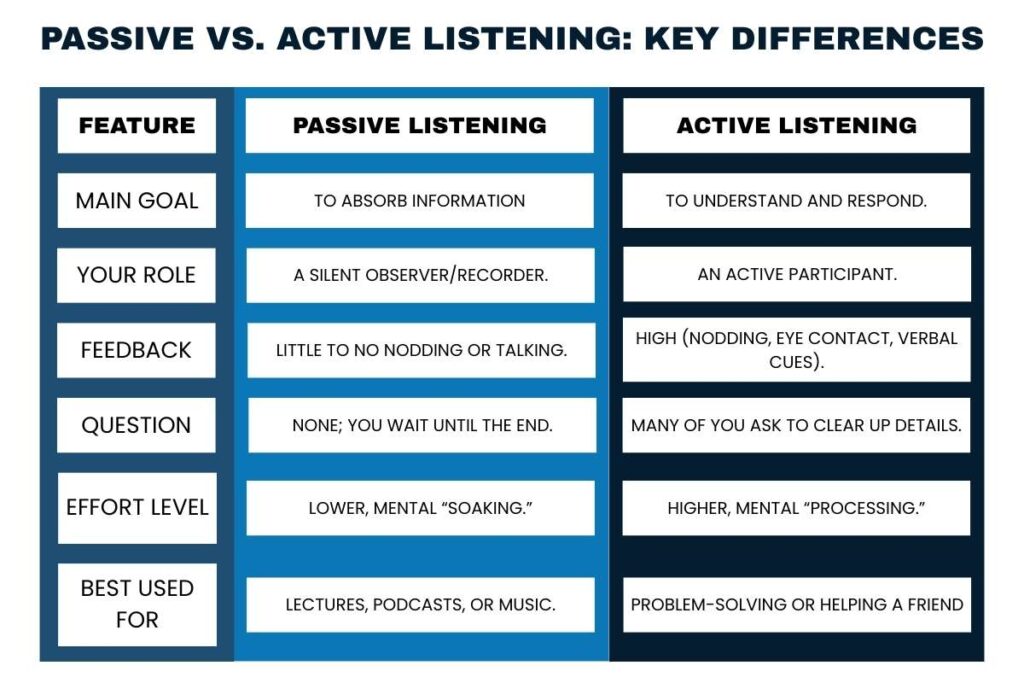
While both styles involve hearing, they serve very different purposes. Use this table to quickly compare the two and decide which one you need for your current situation.
| Feature | Passive Listening | Active Listening |
| Main Goal | To absorb information. | To understand and respond. |
| Your Role | A silent observer/recorder. | An active participant. |
| Feedback | Little to no nodding or talking. | High (nodding, eye contact, verbal cues). |
| Question | None; you wait until the end. | Many of you ask to clear up details. |
| Effort Level | Lower, mental “soaking.” | Higher, mental “processing.” |
| Best Used For | Lectures, podcasts, or music. | Problem-solving or helping a friend |
Characteristics of Passive Listening:
A passive listener often acts like a background observer rather than a partner in the conversation. Because they aren’t fully engaged, they show specific signs that set them apart from active listeners.
Here are the main traits of this listening style:
- Limited Interaction: They rarely jump into the conversation. They take a “back seat” approach, letting the speaker do all the heavy lifting without adding their own thoughts or questions.
- Little to No Feedback: You won’t see much “body talk” from a passive listener. They usually skip the nodding, smiling, or eye contact that tells a speaker, “I’m with you.”
- Lower Retention: Without making a mental effort to connect with the words, it is much harder for them to remember what was said later on.
- Distracted Behavior: You might notice signs like zoning out (staring into space) or multitasking. If someone is checking their phone or typing an email while you talk, they are likely in passive mode.
Techniques of Passive Listening:
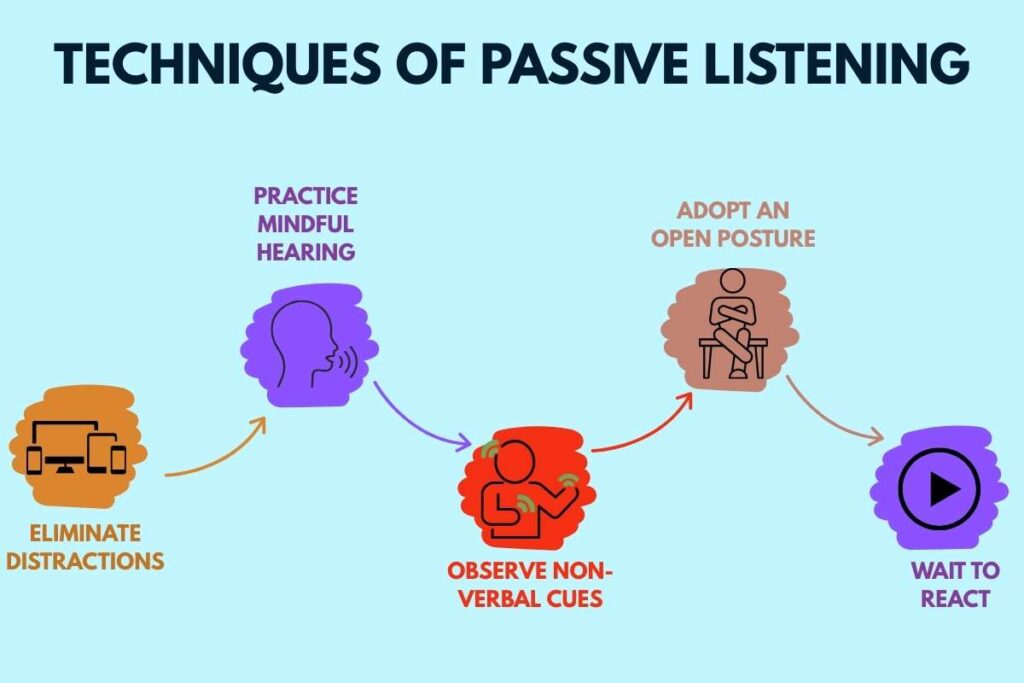
To master passive listening. You must learn how to receive information without getting in the way of the message. Even though you aren’t speaking. These techniques help you stay focused and absorb more details:
➣ Eliminate Distractions: Start by creating a quiet space. Put away your phone, close extra tabs on your computer, and clear your desk. A focused environment stops your mind from wandering and helps you hear every word.
➣ Practice Mindful Hearing: Try to silence your “inner voice.” Often, we start judging or planning our answer while the other person is still talking. By staying mindful, you let the speaker finish their full thought without your own opinions getting in the way.
➣ Observe Non-Verbal Cues: Pay attention to more than just words. Watch the speaker’s body language and listen to their tone of voice. A speaker’s face often tells you if they are sad, happy, or serious, which helps you understand the true meaning of their message.
➣ Adopt an Open Posture: Even if you aren’t talking, your body should look ready to learn. Leaning in slightly and keeping your arms uncrossed makes it easier for your brain to stay alert and open to new ideas.
➣ Wait to React: The most important part of passive listening is knowing when to stay quiet. Do not interrupt, even if you disagree. By waiting until the very end to react, you ensure you have the whole story before you make a move.
Benefits of Passive Listening
When people ask, “What is passive listening?” they often think it is a bad habit. However, listening quietly has many hidden strengths. It allows you to take in the world around you without the stress of having to talk back right away.
Here are six key benefits of using this style:
- Absorb Info Without Pressure: You can focus entirely on what is being said because you don’t have to worry about what to say next. This makes learning feel much easier.
- Perfect for Lectures: In a classroom or a big meeting, passive listening helps you catch every detail. It allows the teacher or boss to finish their points without being stopped.
- Builds Empathy: By giving someone a safe, quiet space to talk, you show them that their feelings matter. It lets them vent or share their story fully.
- Reveals Work Patterns: In the office, staying quiet helps you see team dynamics. You can notice who leads the talk and how people really feel about a project.
- Reduces Conflict: Sometimes, reacting too fast can start an argument. Listening passively gives you time to cool down and understand the situation before you act.
- Saves Energy: Talking and thinking of questions can be tiring. Passive listening lets you learn and observe while keeping your mental energy high for later tasks.
What Research Says About Passive Listening?
“Learning often starts with quiet exposure. Understanding deepens only after the brain has time to absorb information.” – Educational psychology insight.
Passive Listening in Communication & Learning Research

Communication researchers explain listening as a spectrum, not a single skill. Passive listening sits at the foundational level. This is where information is received before deeper cognitive processing begins.
According to listening theory in communication studies, people often start with passive listening to build context, then shift to active listening once they understand the full message. This staged approach helps prevent misunderstandings and emotional overreactions.
In learning psychology, passive listening is commonly linked to initial exposure. Educational models show that learners often absorb information passively first, then strengthen retention through reflection, note-taking, or discussion afterward.
How to Develop Passive Listening Skills?
Becoming a great listener takes practice, but it is a skill that anyone can learn. To truly understand what is passive listening? You must learn how to be a quiet observer who still stays sharp and focused.
Here are four ways to build this skill:
- Set Intentions Before Listening: Before a talk or a video starts, tell yourself your only job is to understand. By setting this goal, you stop your mind from trying to come up with answers or interruptions. This keeps your focus on the speaker’s message.
- Practice in Everyday Scenarios: You don’t need a classroom to practice. Try it while listening to your favorite podcast, watching a news report, or sitting in a work meeting. Focus on just taking in the information without checking your phone or talking back.
- Use Reflection After Listening: Once the speaker is done, take a moment to think. Mentally summarize the main points in your head. Asking yourself, “What were the three biggest ideas I just heard?” helps make sure the information actually sticks.
- Pair with Active Listening When Needed: The best listeners know when to switch gears. Use passive listening to gather all the facts first. Then, once you have the full story, move into active listening by asking questions or sharing your thoughts.
Examples of Passive Listening (With Contexts):
Seeing how this skill works in real life makes it easier to use. Here are some common ways people use passive listening every day:
➣ In a Meeting: Sometimes, your only job is to learn about a new company rule or a project update. You sit quietly and soak up the facts without needing to give feedback or ask questions.
➣ During a Lecture or Presentation: In a classroom, you listen to a teacher explain a big idea. By staying quiet, you can follow the whole story from start to finish to understand the main concepts.
➣ Casual Conversations: If a friend is sad or just wants to tell a long story, you might just listen. Giving them space to speak without jumping in shows you are there for them.
➣ Multitasking Scenarios: You might have the news or a radio show playing while you clean your room or cook. You are hearing the words, but your hands are busy with other tasks.
➣ Language Learning: Many people listen to podcasts or songs in a foreign language while they work. Even if you aren’t focusing hard, your brain gets used to the sounds and rhythm of the new language.
Psychology Behind Passive Listening:
Psychologists note that passive listening reduces cognitive load. It is the mental effort required to process information. When people are not pressured to respond immediately, their brains can focus fully on comprehension rather than formulation.
This is why passive listening is especially effective during:
- Lectures and presentations
- Emotional conversations
- Early stages of learning new topics
By lowering mental stress, listeners can absorb ideas more calmly and objectively.
When Passive Listening Serves You Best?

Knowing when to stay quiet is just as important as knowing when to speak. It helps you recognize the moments when your ears should be open and your mouth should be closed. After you understand what is passive listening? Here are some ways you can utilize it:
- Educational Contexts: In large seminars or busy classrooms, the goal is to take in a lot of new ideas. Passive listening allows you to follow the teacher’s logic from start to finish without breaking their flow.
- Large Group Information Sessions: When a leader is giving a speech or a company update, it is best to listen quietly first. This ensures you get all the facts before the floor opens up for questions.
- Situations Needing Emotional Space: If a friend is venting about a bad day, they often don’t want advice. They just want to be heard. Passive listening gives them the uninterrupted space they need to feel better.
- Preliminary Listening: This is the “look before you leap” stage. You listen passively to get the “big picture” of a topic. Once you understand the basics, you can switch to deeper engagement and ask better questions.

Conclusion:
You now understand the key to being an excellent listener! What is passive listening? It goes beyond simply remaining silent. It’s a clever way to learn, be kind to friends, and catch every detail in a busy world. By using your ears as a “sponge,” you can gather information before speaking intelligently.
Try just relaxing and taking it all in the next time you’re in a classroom or meeting. When you’re not preoccupied with what to say next, you may be surprised at how much more you notice. Practice now, and you’ll see an increase in your comprehension!
FAQ:
1. When is passive listening most effective?
Passive listening works best during information-heavy situations such as training sessions, webinars, classroom lectures, or public talks. It is also useful when observing group dynamics or allowing someone to express themselves freely.
2. Is passive listening the same as being distracted?
Not always. Passive listening can be intentional, such as quietly absorbing information. However, distraction often leads to unintentional passive listening, where the message is only partially processed or misunderstood.
3. How does passive listening impact learning?
Passive listening allows learners to take in information without pressure, but retention and comprehension may be lower compared to active learning. Combining passive listening with note-taking or reflection improves learning outcomes.