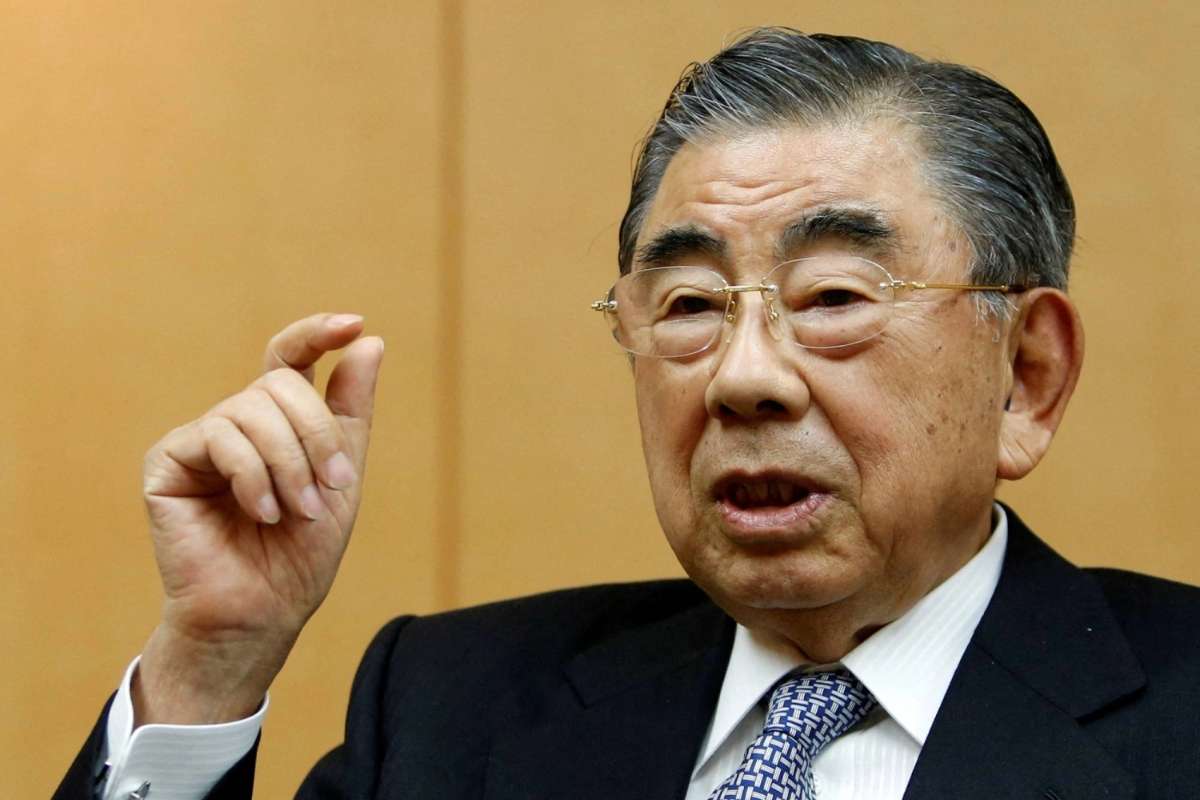
Key Takeaways:
- Seven-Eleven Japan founder Toshifumi Suzuki passed away at age 93 on May 18.
- He pioneered daily inventory data tracking and introduced fresh, ready-to-eat meals.
- Suzuki successfully rescued and took over the bankrupt U.S. parent firm in 1991.
Toshifumi Suzuki, founder of Seven-Eleven Japan and a key architect of Japan’s convenience store industry, died of heart failure on May 18 at age 93, Seven & i Holdings announced Monday.
Suzuki helped transform convenience stores from small neighborhood shops into a dominant force in Japan’s retail sector through data-driven inventory systems, ready-to-eat meals and rapid product turnover.
Suzuki Builds Japan’s Convenience Store Empire
Born in Nagano in 1932, Suzuki joined retailer Ito-Yokado in 1963 after working at a book wholesaler. Despite doubts about the business model at the time, he partnered with Southland Corp., the U.S. operator of 7-Eleven, in 1973 to establish Seven-Eleven Japan.
The company opened its first store in Tokyo in 1974 and quickly expanded nationwide. Suzuki introduced detailed sales tracking and inventory analysis, helping stores tailor products to local demand and reduce waste.
“He changed how Japanese consumers shop daily,” retail analyst Hiroshi Tanaka said. “Convenience stores became more than places to buy snacks. They became essential community hubs.”
Japan now has more 7-Eleven stores than any other country, with the chain widely recognized for fresh food offerings, efficient logistics and customer service.
Retail Strategy Drives Global Growth
Suzuki also played a central role in rescuing Southland Corp. in the early 1990s after the U.S. parent company filed for bankruptcy under heavy debt tied to a leveraged buyout.
Under Suzuki’s leadership, Seven-Eleven Japan strengthened its influence over the global brand and expanded aggressively across Asia and North America.
In 2005, Suzuki established Seven & i Holdings, bringing together supermarkets, department stores and convenience store operations under one corporate structure.
Company officials credited Suzuki with building one of Japan’s most influential retail groups.
“Toshifumi Suzuki laid the foundation for modern convenience store operations in Japan,” Seven & i Holdings said in a statement Monday. “His management philosophy and innovation reshaped the retail industry.”
Leadership Dispute Marks Final Years
Suzuki stepped down as chairman in 2016 following a management dispute within Seven & i Holdings, ending more than four decades of leadership. Even after leaving the company’s top post, he remained an influential figure in Japan’s business community.
Known as an avid reader and disciplined executive, Suzuki often emphasized efficiency, customer behavior analysis and adaptation to changing consumer habits.
Industry observers said his retail methods influenced convenience store operators worldwide, particularly the use of real-time sales data and localized product strategies.
“He was ahead of his time in understanding consumer demand,” said business professor Keiko Matsuda of Waseda University. “Many practices now considered standard in retail were pioneered under his leadership.”
Suzuki is survived by his family. Seven & i Holdings did not announce funeral details.
Visit Visionary CIOs Magazine for the latest information.