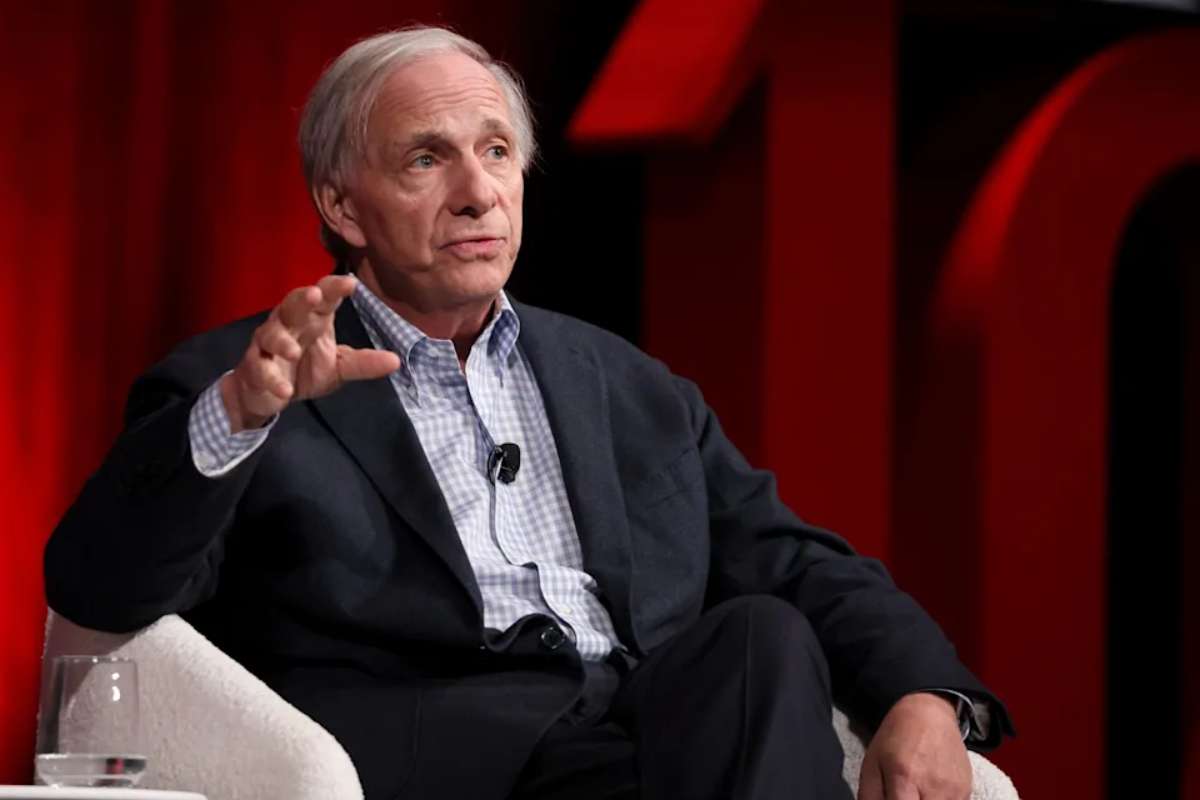
Key Takeaways
- Ray Dalio identifies recurring cycles driving the rise and fall of empires.
- The United States currently exhibits signs of long-term systemic economic decline.
- Historical analysis suggests that nations face turbulence due to debt and internal conflict.
Legendary hedge fund investor Ray Dalio has concluded a decade-long examination of 500 years of history, warning that major global powers, including the United States, are nearing a precarious stage of internal and external disorder.
Decoding The Historical Big Cycle
In his extensive research, the founder of Bridgewater Associates identified a repeating pattern he calls the ‘Big Cycle.’ By studying the historical trajectories of the Dutch, British, and American empires, Dalio observed that nations typically progress through distinct phases of innovation, economic dominance, and eventual decline.
“All monetary, political, and geopolitical orders rise, evolve, and collapse in a repeating pattern,” Dalio noted in his findings. His analysis suggests that this cycle generally spans approximately 75 years, often ending in periods of significant social and economic upheaval.
According to Ray Dalio, these transitions are rarely abrupt but instead follow a predictable progression of rising debt, wealth inequality, and political polarization.
Signs Of Impending Global Instability
Dalio’s research highlights eight specific metrics that gauge the health of a world power, ranging from technological innovation and military strength to the status of a nation’s currency as a global reserve. When these factors begin to degrade, he argues, a nation loses its competitive edge.
“History rarely repeats exactly, but it often rhymes,” explained Dr. Elena Vance, a senior economist at the Global Institute for Fiscal Policy. “Dalio’s work correctly identifies that excessive debt and internal social fragmentation are the silent killers of imperial longevity. We are seeing these stressors manifest globally today, particularly within Western financial centers.”
Dalio warns that the current era mirrors the tumultuous years preceding 1945, marked by strained international relations and an emerging power struggle between established leaders and rising competitors such as China. He characterizes this phase as ‘Stage 5,’ a period immediately preceding the potential breakdown of established global orders.
Navigating The Path Of Future Uncertainty
The implications of this cycle are particularly vital for global investors and policymakers, many of whom have grown accustomed to the relative stability of the post-World War II era.
Investor Ray Dalio suggests that failure to recognize these long-term trends leads to institutional complacency and shock when market corrections inevitably occur.
“Investors often focus too heavily on the immediate news cycle,” said investment strategist Mark Thompson. “Dalio provides a necessary, if uncomfortable, lens for viewing the macro-environment. His work suggests that maintaining the status quo is increasingly unlikely as debt burdens rise beyond sustainable levels.”
Investor Ray Dalio concludes that while the decline of an empire is not predestined, reversing the trend requires significant policy shifts, including a renewed focus on education and bipartisan consensus. Without such structural reforms, he suggests the world should prepare for a period of radical change unlike anything seen in the modern era.
Visit Visionary CIOs Magazine for the latest information.