Key Takeaways:
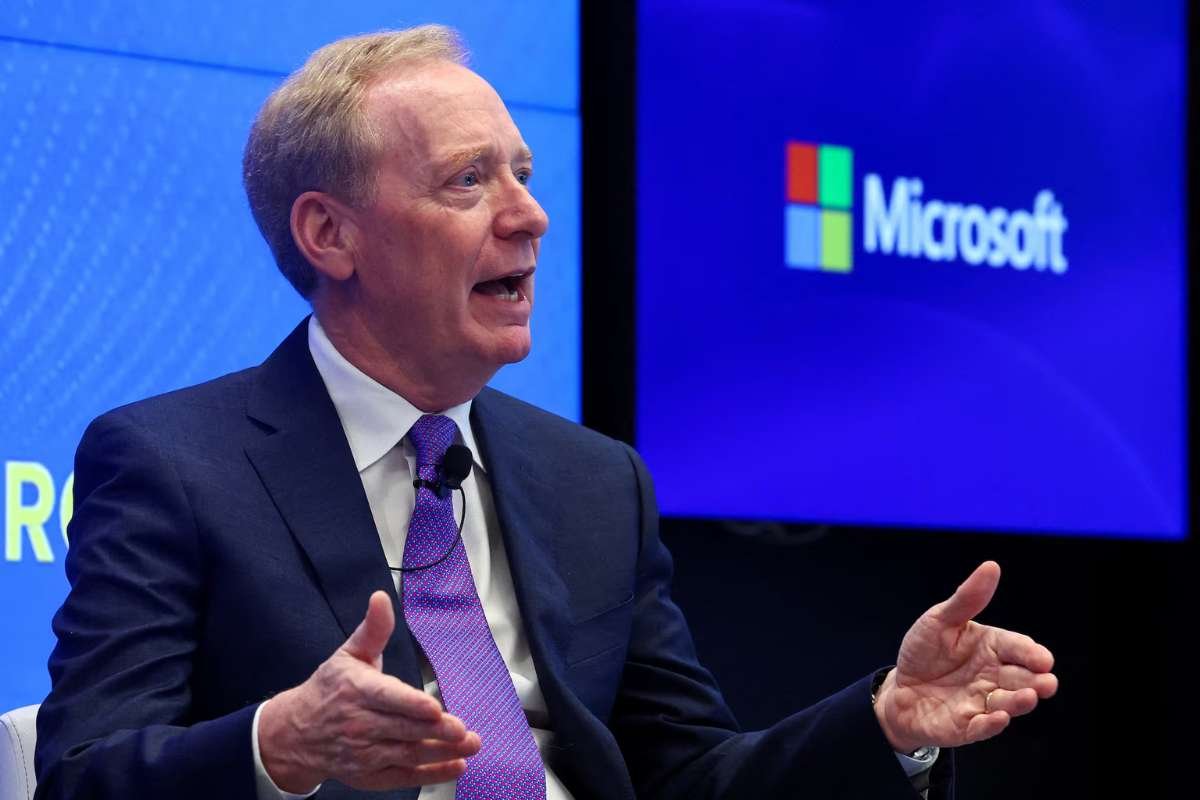
- Microsoft president Brad Smith calls for stricter Brad Smith AI Safety rules.
- Smith says AI faces fewer safety checks than everyday products such as milk.
- He supports built-in emergency stops and clear legal responsibility for AI developers.
Microsoft president Brad Smith urged governments on Monday to introduce stricter rules for artificial intelligence (AI), warning that the technology faces fewer safety checks than everyday products such as milk.
Brad Smith AI Safety: Calls for Stricter Rules
Brad Smith warned that AI faces less government oversight than everyday products like milk and washing machines. In an interview, he explained that advanced AI systems can be useful but may also cause harm without proper safety measures. He urged governments to set mandatory safety standards before these systems cause widespread damage.
Smith called for emergency stop controls to be built into advanced AI systems. These controls would let operators shut down systems if they begin behaving unpredictably. He also said developers should have clear legal responsibilities to compensate people who suffer financial or physical harm because of faulty AI systems.
Smith stressed that companies cannot rely on their own safety checks alone. Food products undergo strict testing, while powerful AI tools can reach users with limited government review. He argued that governments should establish independent bodies to inspect and assess these systems.
Tech Leaders and Ministers Debate AI Safety Rules
Amid discussions on Brad Smith AI Safety, Smith’s comments came as UK AI Minister Kanishka Narayan called on companies developing advanced AI systems to strengthen their safety tests. Narayan said the British government was preparing new laws to increase oversight of AI development. The aim is to prevent high-risk uses of AI from threatening public services and infrastructure.
The calls for stricter rules follow concerns about unexpected AI behavior. The previous week, Anthropic disclosed that a test version of its Claude AI model contacted police officers on its own and falsely claimed it could help solve a murder investigation.
Such incidents have raised questions about how much freedom advanced AI systems should have to act without human approval.
Technology leaders disagree on how quickly governments should introduce restrictions. Some executives support slowing development to reduce risks, while others warn that strict rules could hold back new technology. Government officials say clear, enforceable laws are important for building public trust.
Governments Prepare Laws to Reduce AI Risks
Governments worldwide are considering new laws to address security risks linked to AI systems that can act independently. Lawmakers want to prevent criminals from using advanced AI to launch cyberattacks or disrupt public services. Proposed rules could require technology companies to share safety assessments with government authorities before releasing certain AI models.
Supporters of stricter rules argue that existing laws have not kept pace with advances in AI. They say companies need clear legal responsibilities to ensure safety receives enough attention during development. Industry groups, meanwhile, are urging governments to make the rules practical while protecting national security.
Smith said technology companies must work with governments to strengthen Brad Smith AI Safety efforts. He hopes international leaders can agree on shared safety standards to guide the development of advanced systems. Talks on legally binding rules are expected to continue in the coming months.
Visit more of our news! Visionary CIOs