An event planning venture today operates at the intersection of organization, client trust, and execution under pressure. Events have become more structured, more accountable, and far more outcome-focused than they were a decade ago. Clients no longer look only for decoration ideas or venue suggestions. They expect planners to manage timelines, control budgets, coordinate teams, and resolve problems before they become visible.
Running an event planning business also means managing multiple moving parts simultaneously. Vendors, guests, venues, permits, technology tools, and client expectations all come together on a fixed date that cannot be postponed. This makes planning a discipline that relies on preparation and systems rather than improvisation. The role now requires transparent processes, financial awareness, and strong communication skills.
Whether you are starting an event planning business or refining an existing one, understanding how the industry functions in 2026 is essential. In this article, you will gain a clear view of how to start, what tools are required, where challenges arise, and how professionals build consistency over time.
How to Start an Event Planning Venture?
Starting an event planning business begins with defining the type of work you want to handle. Some planners specialize in personal events, such as weddings and celebrations. Others work primarily with companies on conferences, brand events, and internal gatherings. This decision affects pricing, workload, marketing approach, and even the tools you will need to use.
Once the focus is clear, you must handle the business setup properly. This includes registration, tax compliance, and basic financial structure. Even small planning firms benefit from having written contracts, formal invoices, and documented payment terms. These steps protect the planner and establish credibility with clients and vendors.
Experience plays a critical role at this stage. Many successful planners begin by assisting experienced professionals or managing smaller events independently. This phase helps develop vendor relationships, problem-solving skills, and a realistic understanding of timelines. A portfolio built from real projects carries far more weight than promotional claims.
Understanding the Scope of The Business of Event Planning
The scope of an event planning business extends far beyond the event day itself. Planning begins weeks or months in advance and continues even after the event concludes. Client consultations, budgeting, vendor negotiations, scheduling, and contingency planning form the core of the work.
In 2026, clients expect planners to provide clarity and structure throughout the process. This includes regular updates, shared documents, and clear approval stages. Many planners now act as project managers, ensuring that every task is tracked and completed on time.
The scope also varies based on event type. Corporate events often involve compliance, reporting, and coordination with stakeholders. Personal events focus more on experience and emotional value. Understanding these differences helps planners position their services accurately and avoid taking on work that exceeds their capacity.
Business Models and Revenue Structure
An event planning business typically earns revenue through planning fees, coordination charges, or a percentage of the overall event budget. Some planners offer fixed packages, while others use customized pricing based on the project’s complexity and scale.
Transparency is essential. Clients want to understand what they are paying for and how costs are managed. Clear proposals that outline deliverables, timelines, and responsibilities reduce disputes and build trust. In professional settings, unclear pricing often leads to dissatisfaction even if the event itself is successful.
Many planners also build long-term value by offering additional services such as vendor sourcing, guest management, or post-event reporting. These services increase revenue while strengthening client relationships.
Essential Tools and Resources for Modern Planners
Professional event delivery in 2026 relies on systems as much as it does on people. Below are the tool categories every event planning business should have, along with their functions, top product choices, and practical selection tips.
1. Project management and task tracking
➧ Why it matters: Events are complex projects with many parallel tasks and interdependencies. A central project manager avoids missed deadlines and duplicated work.
➧ What to use: Asana, Monday.com, ClickUp, Trello, Smartsheet. These platforms provide task lists, timelines, Gantt views, and dependencies, allowing you to map pre-event milestones through to post-event wrap-up. Asana and Monday are commonly explicitly recommended for event planning workflows in 2026 guides.
➧ How to apply: Build a template project per event type (conference, wedding, corporate meeting) that includes task owners, due dates, approval points, and vendor deliverables. Use dependencies for milestone gating (for example, venue confirmation before production booking).
➧ Tip: Choose a system that integrates with your calendar, file storage, and communication stack so updates are automatic.
2. Budgeting and financial control
➧ Why it matters: Budget overruns are the top cause of client disputes. Clear budget tools track committed costs, invoices, deposits, and sponsor income to ensure accurate financial management.
➧ What to use: Smartsheet templates for budgets, Eventify or Planning Pod for event-specific budget management, or standard accounting software like QuickBooks/Xero for bookkeeping. Smartsheet keeps standard templates and can scale to complex budgets.
➧ How to apply: Maintain a live budget that shows planned vs actual spend, committed vs due payments, and a line item status (booked, pending, paid). Lock the budget template once the client has signed off, and update it every week to ensure accuracy.
➧ Tip: Add a contingency line of 5 to 12 percent and track contingency draws separately.
3. Registration, ticketing, and attendee management

➧ Why it matters: Registration serves as both the revenue engine and the primary data source for attendee experience initiatives. The right platform reduces manual check-in friction and supports expo and session management.
➧ What to use: Eventbrite for a broad reach; Ticket Tailor or Fienta for lower fees; Whova, Bizzabo, or Cvent for conferences and enterprise events. Market comparisons in 2026 reveal a split between marketplace ticketing tools and enterprise platforms, which offer more comprehensive features. Utilize marketplace platforms for public, ticketed events, and all-in-one event platforms for conferences that require agenda and speaker management.
➧ How to apply: Match the platform to your scale and feature needs. Simple admissions use lightweight ticketing; multi-track conferences require an event management platform with speaker, agenda, and badge printing support.
➧ Tip: Conduct an on-site check-in test at least once before the live event using the same device types your team will use.
4. Event mobile apps and attendee engagement
➧ Why it matters: For higher-touch events, an app improves navigation, session feedback, networking, and sponsorship visibility. Apps also collect engagement analytics that justify client ROI.
➧ What to use: Whova, EventMobi, Bizzabo, or Eventbrite alternatives. These platforms include agendas, push messages, attendee profiles, polling, and sponsor pages—comparative reports in 2025 and 2026 place Whova and EventMobi among the best in class for engagement features.
➧ How to apply: Offer an app for mid-to-large events; for small, local events, use a simple web portal or shared schedule to minimize development overhead.
➧ Tip: Limit push messages to two to three key reminders per day to avoid notification fatigue.
5. Virtual and hybrid event platforms
➧ Why it matters: Hybrid remains standard in 2026. Platform choice affects streaming quality, networking features, and integration with registration.
➧ What to use: Zoom and Microsoft Teams remain top for simple virtual sessions. For larger or hybrid events, Bizzabo, Airmeet, Hopin, vFairs, and Remo are common choices depending on format and interactivity needs. TechRadar and platform roundups highlight Zoom for its reliability, while platforms like Airmeet are recommended for expo-style networking.
➧ How to apply: Run a technical rehearsal for all streaming sessions, test bandwidth per room, and confirm fallback streams. Create separate run sheets for in-person and virtual technical sessions.
➧ Tip: Use a single sign-on or integrated registration so virtual attendees appear in the same database as on-site attendees.
6. Venue management and floor plan tools
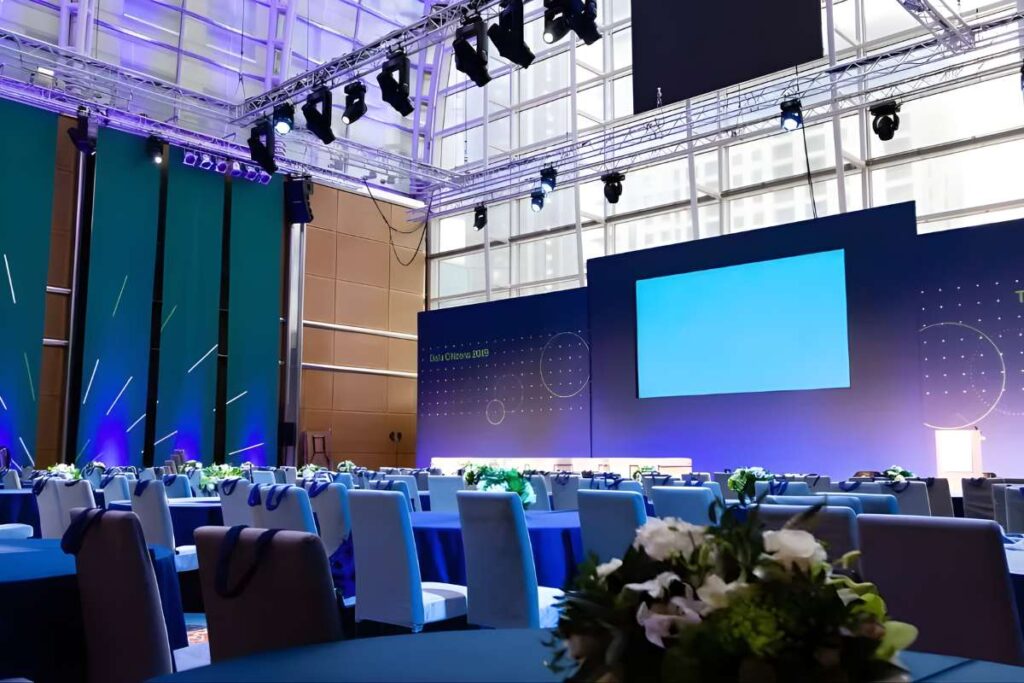
➧ Why it matters: Accurate floor plans and seat maps are essential for production, safety, and sponsor placement.
➧ What to use: Social Tables, Allseated, and Cvent’s floor plan modules are the standard options. Cvent remains a strong choice for venue sourcing and hotel management, particularly for larger events.
➧ How to apply: Create a layered floor plan (including loads, power, sight lines, exits, and sponsor footprint) and circulate it to the production, AV, and venue teams.
➧ Tip: Maintain a versioned floor plan to track changes and approvals.
7. Vendor management, contracts, and e-signatures
➧ Why it matters: Vendors must be tracked for performance, pricing history, and insurance or compliance documents. Contracts need signatures and version control.
➧ What to use: DocuSign or HelloSign for e-signatures; a CRM such as HubSpot or Airtable for vendor directories and performance notes. Keep copies of certificates of insurance and contact escalation trees in a shared folder for easy access. Capterra and product pages highlight the need for centralized vendor databases.
➧ How to apply: Create a vendor intake form and standard contract templates. Store performance notes after each event for scoring and rehiring decisions.
➧ Tip: Include a vendor SLA clause that clarifies arrival times, setup windows, and penalties for late delivery.
8. Communication and collaboration
➧ Why it matters: Quick, traceable communication reduces confusion on busy event days.
➧ What to use: Slack or Microsoft Teams for real-time messaging, Google Workspace or Microsoft 365 for document collaboration, and Miro for creative brief workshops and layout brainstorming. Tech roundups recommend Slack and Microsoft Teams as primary tools for team communication in modern workflows.
➧ How to apply: Create channels for each event and a channel for urgent on-site communications. Keep a pinned checklist and contact tree for rapid access.
➧ Tip: Enforce a consistent naming convention for files and channels to help new team members quickly locate resources.
9. Production, AV, and streaming tools
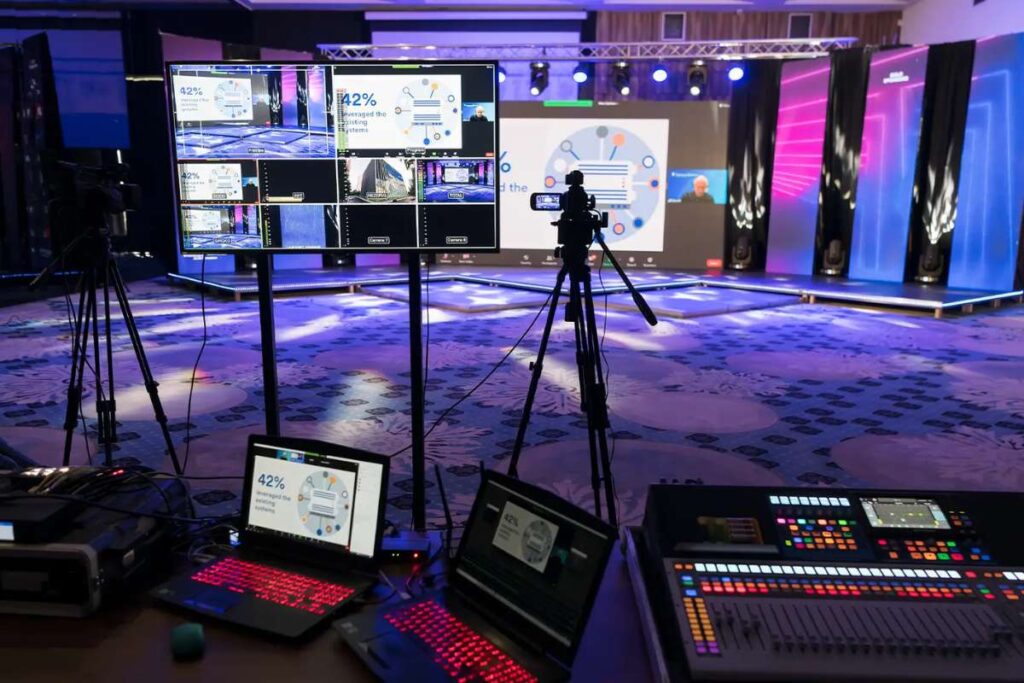
➧ Why it matters: AV failures are visible and costly. Production tools cover run of show, cueing, encoder settings, and backup streams.
➧ What to use: OBS or StreamYard for smaller streams, an enterprise encoder and CDN for larger broadcasts. Hire a dedicated AV lead for events over a few hundred attendees and use a cloud-based run of show document for real-time updates.
➧ How to apply: Run a dry run that mirrors the event day schedule and confirm all codecs, camera sources, and backup internet options.
➧ Tip: Always have at least two internet feeds and a separate cellular bonding solution for critical live streams.
10. Marketing, CRM, and analytics
➧ Why it matters: Marketing drives registrations, and reporting demonstrates the value of events to clients and sponsors.
➧ What to use: Mailchimp, HubSpot, or ActiveCampaign for email and CRM. Utilize Google Analytics and the platform’s built-in analytics to track referral sources, ticket conversions, session attendance, and engagement rates.
➧ How to apply: Tag all campaigns, run A/B tests on messaging, and capture UTM parameters for every link. Share a short post-event analytics report with clients, measuring attendance, engagement, and conversion. Platform comparisons show CRM integration significantly improves follow-up and lead capture.
➧ Tip: Create standard KPI dashboards for each event type, allowing clients to receive consistent reporting immediately after the event.
11. Payments, invoicing, and insurance
➧ Why it matters: Clean cash flow keeps operations stable. Proper insurance prevents liability exposure.
➧ What to use: Stripe or Square for card processing, QuickBooks or Xero for invoicing and bookkeeping. Ensure you have event-specific liability insurance and require vendor insurance where appropriate.
➧ How to apply: Require deposits on contract signing, use staged payment milestones, and reconcile payments weekly.
➧ Tip: Add a late payment clause and automated invoice reminders.
Quick selection checklist (how to choose the right tool)
- Define the single biggest problem the tool must solve.
- Confirm key integrations: calendar, PM tool, registration, and accounting.
- Try a free demo with a sample event and multiple team members.
- Confirm support SLAs for live day issues.
- Check the total cost of ownership: subscription, setup, training, and per-event fees.
Many 2026 platform comparisons emphasize that integration and support are more important than a lengthy feature list. Pick fewer tools that work together rather than many disconnected platforms.
Quick implementation roadmap (30, 60, 90 days)
- 30 days: Choose project manager, budget template, and registration platform. Build templates.
- 60 days: Integrate communication tools, vendor CRM, and payment flows. Run internal rehearsal.
- 90 days: Roll out the attendee app for a pilot event, test virtual streaming, and finalize reporting templates.
Final note on training and data hygiene
Invest time in team onboarding and keep vendor and attendee data clean. Regularly archive old events, rotate passwords, and document workflows to ensure continuity and security. Accurate data and well-trained staff reduce pressure on event day and improve client confidence.
The Event Management Process in Practice
Every Event Planning Business follows a structured process, regardless of size. The first phase involves understanding client goals, defining success criteria, and setting a realistic budget. Decisions made at this stage influence every step that follows.
The planning phase encompasses venue selection, vendor coordination, scheduling, and obtaining necessary approvals. Contracts are finalized, timelines are confirmed, and backup plans are prepared. A strong event planning business treats risk management as a standard part of its planning.
Execution is where preparation is tested. On the event day, planners oversee setup, manage schedules, and respond to unexpected issues. Following the event, responsibilities include payment processing, feedback collection, and performance reviews. Post-event analysis helps improve future projects and strengthens professional credibility.
Roles Within an Event Planning Business
Even small event planning ventures involve multiple roles. The lead planner handles client communication and overall direction. Coordinators manage logistics, schedules, and interactions with vendors.
Administrative responsibilities include contracts, invoicing, and compliance. Marketing efforts focus on proposals, client outreach, and maintaining visibility. As the business grows, these roles become more specialized, improving efficiency and reducing burnout.
Clear role definition helps teams function smoothly and allows planners to scale operations without losing quality.
Common Challenges in the Industry
Pressure is a constant factor in an event planning business. Fixed deadlines, high expectations, and unpredictable variables create stress. Vendor delays, weather issues, and last-minute changes require quick decision-making.
Budget limitations also create tension. Clients often expect premium results within strict cost limits. Managing expectations through honest communication and documentation helps reduce conflict.
Competition has increased as more people enter the field. Sustainable success depends on consistency, professionalism, and a strong reputation, rather than aggressive promotion.
Practical Tips for Long-Term Success
Consistency builds trust. Delivering reliable results leads to repeat clients and referrals, which remain the strongest drivers of growth in this industry.
Strong systems reduce mental load. Templates for proposals, contracts, and timelines save time and improve accuracy. Reviewing processes regularly helps identify inefficiencies before they become problems.
Continuous learning matters. Client expectations, technology, and regulations are constantly evolving. Planners who adapt steadily remain relevant without disrupting their operations. Clear communication, realistic promises, and accountability remain essential at every stage of the process.
Conclusion
An event planning business in 2026 requires structure, discipline, and adaptability. Creativity matters, but it must be supported by systems, financial clarity, and strong execution. Professionals who treat Event Planning Business as managed projects rather than informal tasks are better positioned for long-term stability and success.
With the proper foundation, tools, and mindset, planners can build sustainable operations that grow through trust and performance.