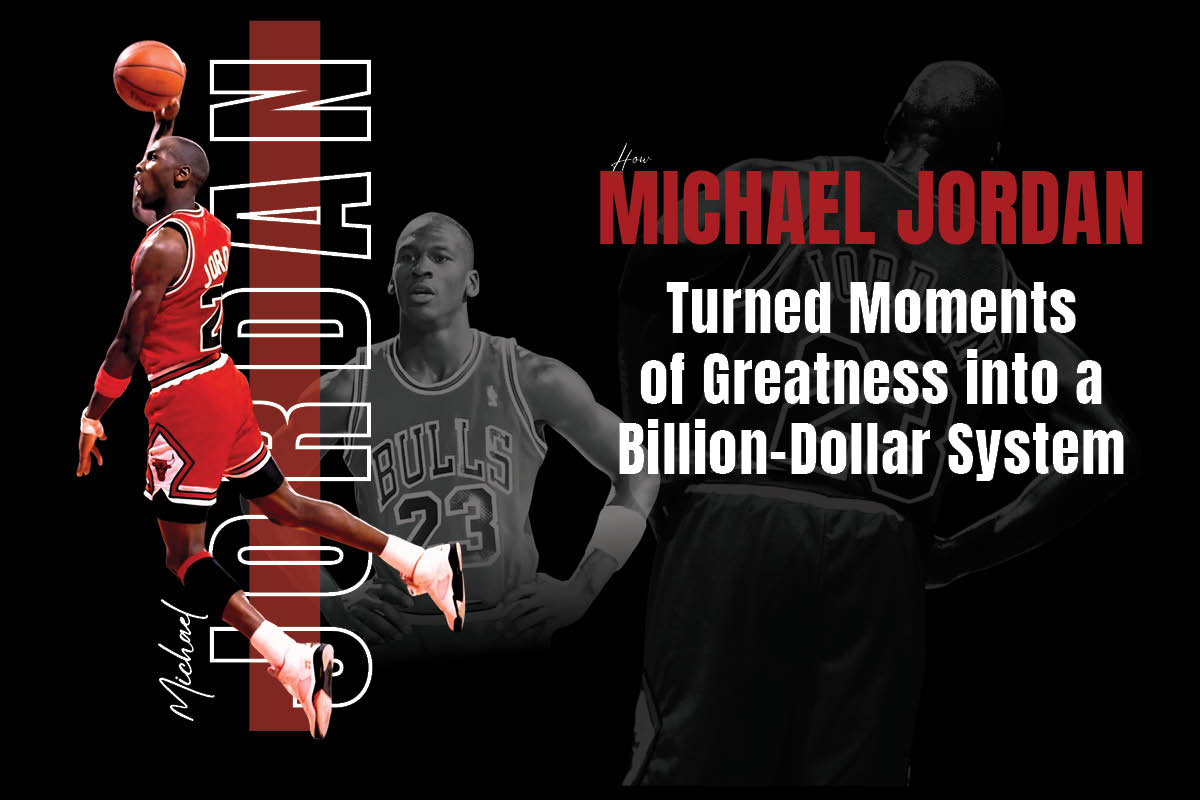
It was not just a moment or fraction of a second when time seemed to hesitate. A player hung mid-air longer than physics should allow. Defenders froze, the crowd inhaled, and in that suspended silence, something shifted. This wasn’t just skill. It wasn’t just athleticism. It was control over the game, over the moment, almost over reality itself.
Can you guess this figure who made pressure look predictable?
Night after night, the pattern repeated. Impossible shots became routine. Clutch moments became an expectation. Opponents didn’t just lose, they unraveled. And somewhere between the roar of arenas and the quiet calculation behind every move, a presence began to take shape. Not just a player, but a force.
But the real mystery wasn’t confined to the hardwood because, as the echoes of sneakers on court floors faded, the same mind was orchestrating something far bigger, turning influence into currency, identity into enterprise, and excellence into a global standard. Endorsements weren’t just deals; they became declarations. A name wasn’t just worn; it was owned, scaled, and immortalized. And only then did the world fully recognize him as “Michael Jordan.”
The athlete who became a global signal
Before Michael became a business empire, he became a universal language. His dominance with the Chicago Bulls redefined what excellence looked like in professional sports. Six Championships. The iconic fadeaway, the defensive intensity, and the ability to deliver in the most critical moments turned him into more than an athlete; he became a global signal of success. But Michael’s true distinction wasn’t just skill; it was mentality. He approached every game as a contest of control. Every opponent was a problem to solve. Every moment of pressure was an opportunity to assert dominance. This mindset didn’t just build a legendary career; it created a transferable framework.
Michael Jordan understood something early that many did not: visibility without ownership is fleeting. Influence without structure is temporary. So while the world celebrated the athlete, Michael was quietly preparing for the next game.
The business blueprint: turning identity into intellectual property
At a time when most athletes were signing endorsement deals, Michael was redefining them. His partnership with Nike was not just about wearing a brand; it was about becoming one. The creation of the Air Jordan line marked a shift in how athletes could monetize their identity. This wasn’t a product placement; it was a co-creation of cultural currency. The brilliance lay in ownership. Instead of a one-time payout, Michael aligned himself with long-term revenue generation. Every release, every design, every campaign reinforced not just a shoe, but a narrative. The result? A brand that would outlive seasons, teams, and even generations.
Playing the long game: ownership over endorsement
Michael Jordan’s transition from athlete to investor was not accidental; it was strategic. His stake in the Charlotte Hornets marked a defining shift. In a league where players earned millions, he moved into a space where value was built, not just received. Ownership gave him control, influence, and a seat at a table that few athletes had historically occupied.
This decision reflected a broader philosophy: short-term earnings create wealth, but long-term ownership creates legacy. By stepping into ownership, he redefined what post-athletic success could look like, not as an extension of fame, but as a reinvention of purpose.
The billion-dollar athlete
Michael Jordan didn’t just become wealthy; he changed the financial ceiling for athletes.
Becoming the first athlete to reach billionaire status wasn’t the result of contracts or salaries alone. In fact, much of his wealth was built after his playing career ended. Strategic endorsements, calculated investments, and the continued growth of the Jordan Brand positioned him as a dominant force in global business.
His earnings from Nike alone, years after retirement, surpass what he made during his NBA career. This inversion of income, where post-career success outweighs active earnings, highlights the power of brand equity when managed effectively. Jordan didn’t rely on his past. He monetized it.
The power of scarcity and premium branding
One of the most understated aspects of Jordan’s business success lies in his understanding of psychology. The Air Jordan brand thrives on scarcity. Limited releases, controlled supply, and cultural anticipation transformed sneakers into symbols. Ownership of a pair became more than a purchase; it became participation in a legacy.
This approach elevated the brand into the premium space, where demand consistently exceeds availability. It is a model that many brands attempt, but few execute with the same consistency. Jordan didn’t just sell products. He sold aspiration.
Michael Jordan: the business behind the legend
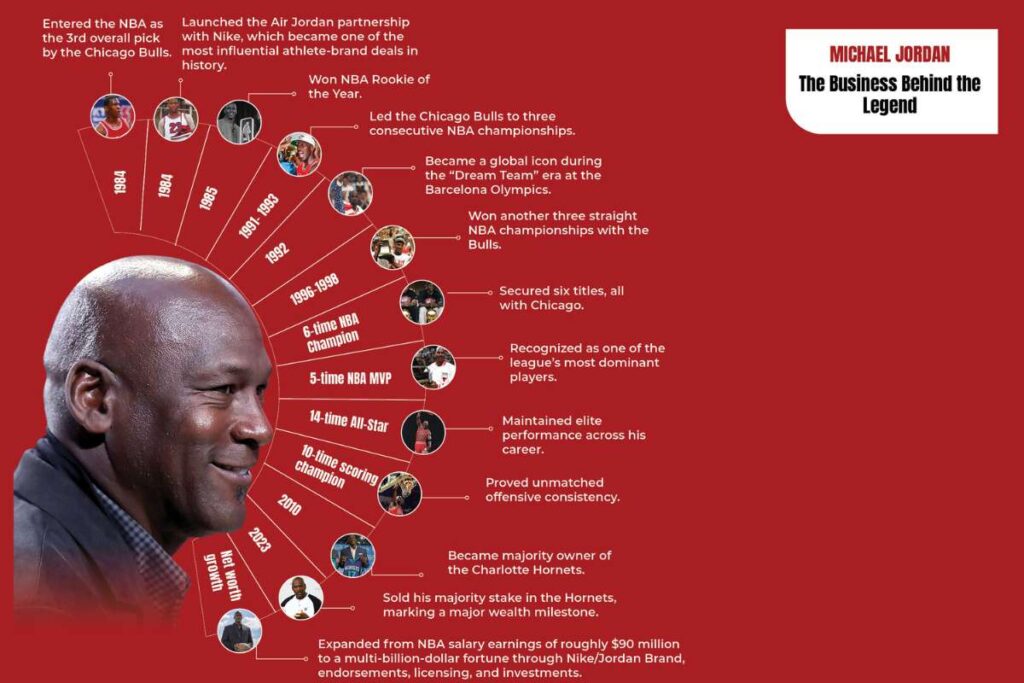
From NBA dominance to global brand power, Michael Jordan’s journey is a rare story of athletic greatness transformed into lasting business success.
- 1984: Entered the NBA as the 3rd overall pick by the Chicago Bulls.
- 1984: Launched the Air Jordan partnership with Nike, which became one of the most influential athlete-brand deals in history.
- 1985: Won NBA Rookie of the Year.
- 1991–1993: Led the Chicago Bulls to three consecutive NBA championships.
- 1992: Became a global icon during the “Dream Team” era at the Barcelona Olympics.
- 1996–1998: Won another three straight NBA championships with the Bulls.
- 6-time NBA Champion: Secured six titles, all with Chicago.
- 5-time NBA MVP: Recognized as one of the league’s most dominant players.
- 14-time All-Star: Maintained elite performance across his career.
- 10-time scoring champion: Proved unmatched offensive consistency.
- 2010: Became majority owner of the Charlotte Hornets.
- 2023: Sold his majority stake in the Hornets, marking a major wealth milestone.
- Net worth growth: Expanded from NBA salary earnings of roughly $90 million to a multi-billion-dollar fortune through Nike/Jordan Brand, endorsements, licensing, and investments.
The mindset that built two empires
What connects a championship-winning athlete to a billion-dollar entrepreneur is not circumstance; it is mindset. Michael Jordan’s approach to competition was rooted in obsession. He wasn’t driven by participation; he was driven by control. Every weakness was analyzed, every failure internalized, every success leveraged as a stepping stone.
This same mindset translated into business. Where others saw endorsements, he saw equity. Where others saw retirement, he saw expansion. Where others relied on reputation, he built systems. Discipline, consistency, and an uncompromising standard of excellence became the operating principles of both his careers. He didn’t separate the athlete from the entrepreneur. He evolved one into the other.
Legacy beyond the court and the boardroom
Michael Jordan’s impact extends far beyond his own success. He redefined the relationship between athletes and brands, shifting the narrative from representation to ownership. In doing so, he created a blueprint that future generations would follow.
Athletes like LeBron James have built on this model, entering business with a mindset shaped by the path Michael carved. The idea that an athlete could be both a performer and a powerful business entity is now widely accepted, but it was not always so. He didn’t just participate in this shift. He initiated it.
His legacy is not confined to trophies or titles. It exists in contracts negotiated differently, brands built more strategically, and careers extended far beyond the game.
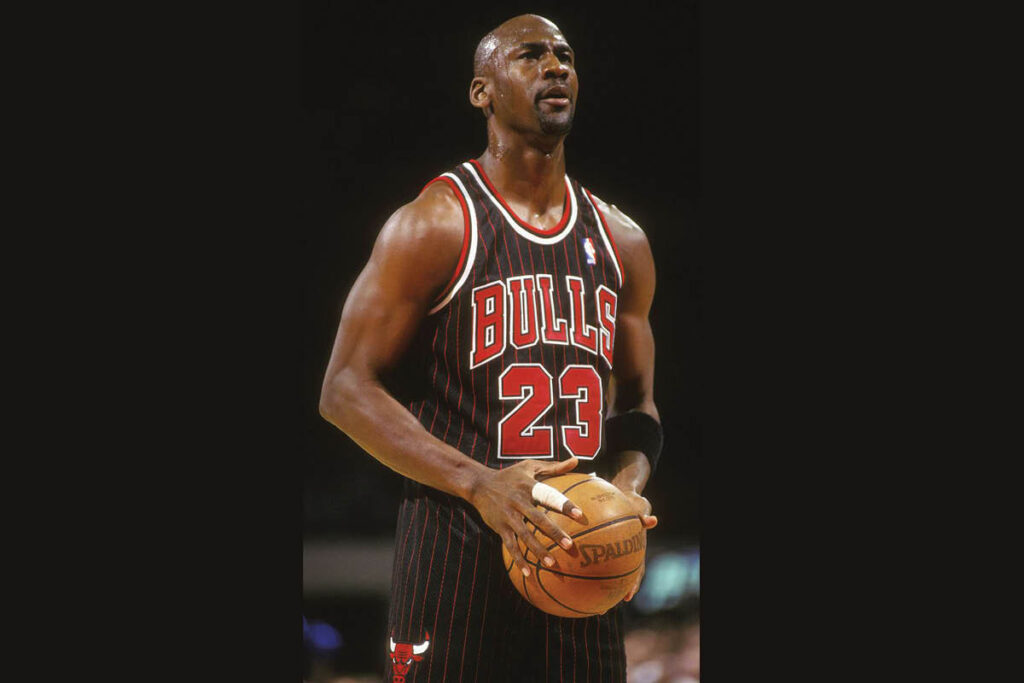
More than a player, a system
Michael Jordan is no longer just a name associated with greatness. He is a system. A system that transforms influence into equity. Visibility into ownership. Performance into permanence.
What began as moments of brilliance on a basketball court evolved into a global business architecture, one that continues to generate value, relevance, and aspiration decades later. In the end, Michael didn’t just master the game. He changed what the game was.