Making a product that lasts takes more than just launching it. The product life cycle is the path every product follows, from its inception to its end. Understanding this journey helps businesses make informed decisions about when to invest, adjust their course, or retreat. The product life cycle tells the story of how a product grows, peaks, and eventually fades, but also how it can be renewed and refreshed. Mastering this cycle means more than mere survival; it’s about extending the product’s time in the spotlight and maximising its potential in every phase.
Understanding the details of each stage in the product life cycle facilitates easier planning and decision-making. Whether a product is new to the market or has been around for years, aligning marketing and development with the right phase can enhance sales and keep customers engaged. In this article, the focus will be on marketing strategies, benefits, and clearly defined stages of the product life cycle to help businesses win in 2026 and beyond.
What Is A Product Life Cycle?
It refers to the stages a product goes through from the initial concept to its decline in the market. Businesses that understand the product life cycle can make better marketing decisions, extending the product’s presence and maximising profits at each stage. In 2026, applying the right marketing strategies in alignment with these stages is more important than ever. Whether launching something new or managing an established product, knowing helps shape key tactics, from building early buzz to refreshing a product for lasting appeal.
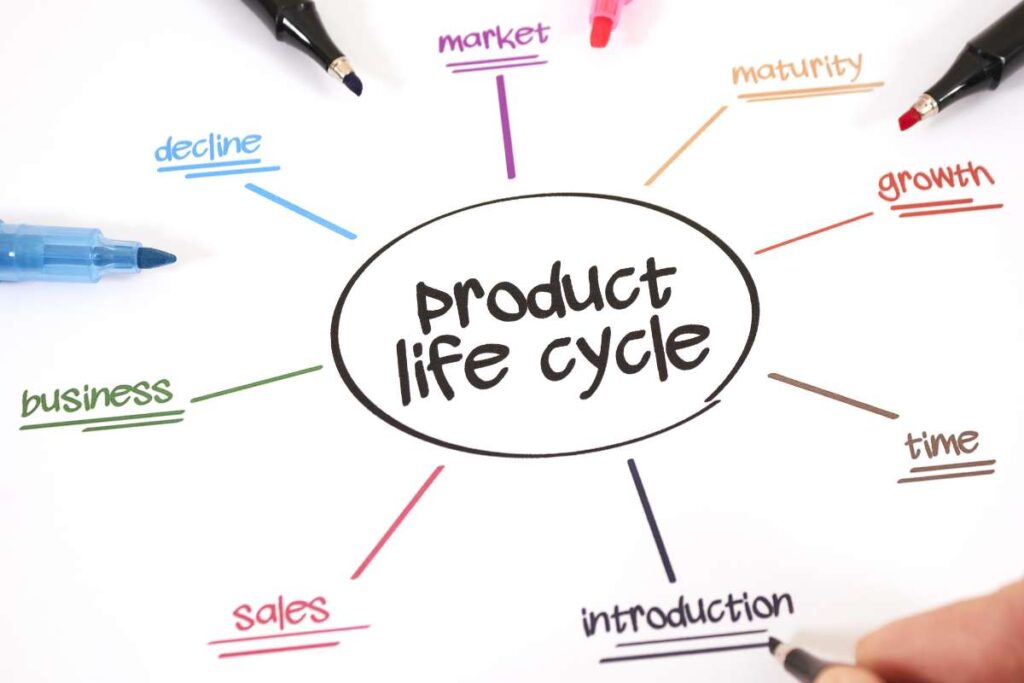
The product life cycle consists of five stages: development, introduction, growth, maturity, and decline. Each phase calls for specific marketing approaches, such as creating awareness in the introduction stage, driving adoption and expanding distribution during growth, focusing on differentiation in maturity, and revitalising or rebranding in decline. In this article, the focus will be on practical marketing strategies, the benefits of understanding the product life cycle, detailed stage descriptions, and answers to common questions—all of which are relevant for success in 2026 and beyond
Five Marketing Stages of Product Life Cycle
Understanding each stage of the product life cycle enables companies to plan more effectively and make informed decisions about where to allocate their resources. Each phase has unique characteristics, challenges, and opportunities that shape how a business should approach marketing and product development.
1. Development Stage
The development stage is where everything begins. Your product is still being created, tested, and refined based on market research and customer feedback. At this point, there are no sales yet, and costs are high due to the significant investment in research, design, and prototyping. The primary goal during development is to determine whether there’s real market demand for your idea and to shape the product to meet what customers actually need, rather than what you think they want.
2. Introduction Stage
Once your product launches, it enters the introduction stage. This is when customers first discover your offering, but awareness is still low, and sales growth is slow. You’ve now started generating revenue, though it may be modest compared to your expenses. Marketing becomes critical here because most people are unaware of your product’s existence, and you need to create buzz and convince early adopters to try it.
3. Growth Stage
As the product gains acceptance, you move into the growth stage. Demand rises sharply, sales climb quickly, and your costs begin to fall relative to revenue. Competition may appear around this time as other companies notice your success and launch similar products. This stage is exciting because your market share grows and profits increase, but it also demands that you stay innovative and keep customers engaged.
4. Maturity Stage
The maturity stage arrives when sales level off and the market becomes saturated. Your product has captured most of the available customers, and competition is fierce. Profit margins narrow as companies compete for the same customers. Despite slower growth, this stage can still be profitable because your production costs are low and you have an established customer base. However, it’s the hardest stage to maintain momentum.
5. Decline Stage
Eventually, every product enters the decline stage as sales and profits drop. This happens for various reasons: new competitors offer better solutions, technology changes make your product obsolete, or customers lose interest. It’s a challenging phase, but some companies successfully navigate it by reinventing their product, entering new markets, or finding new uses for what they’ve built.
Marketing Strategies for Each Stage of the Product Life Cycle
Now that you understand what happens at each stage of the product life cycle, let’s examine the specific marketing strategies that are most effective during each phase.
➧ Development Stage Marketing Strategies
During the development phase, your focus is on validating your idea before committing fully to production and marketing. The product life cycle depends on getting this phase right, because mistakes made here are more costly to rectify later.
- Run fake door tests to gauge market interest by creating simple landing pages or ads that prompt people to click through or express interest.
- Beta test your product with real users to uncover bugs and usability issues in a safe environment before your full launch.
- Create early momentum and word-of-mouth buzz within your target market through beta testing.
➧ Introduction Stage Marketing Strategies
When your product launches, everything changes. You need to build awareness fast and convince people to try something they’ve never heard of. Success during the introduction stage sets up your product for growth.
- Create a unique brand identity and messaging that defines what makes your product different and why customers should care.
- Launch on Product Hunt and similar platforms to connect with early adopters who actively search for new solutions.
- Offer limited free trials that let potential customers use your product without paying upfront.
- Send reminders as trial periods end, highlighting the benefits of upgrading to keep users engaged and encourage them to make a purchase.
- Personalise the onboarding experience by asking users about their goals and showing relevant features first.
➧ Growth Stage Marketing Strategies
During growth, your product is taking off, but competition is starting to show up. Your marketing strategy during the growth phase of the product life cycle should focus on expanding reach and deepening customer relationships.
- Announce new features regularly through in-app messages, tooltips, and email to keep customers engaged.
- Expand your distribution channels by forming strategic partnerships and implementing targeted sales methods that reach a wider audience more effectively.
- Shift your messaging from awareness to preference by highlighting why customers should choose your product over competitors.
- Utilise pricing strategies that strike a balance between growth and profit, testing various price points to optimise acquisition and profitability.
- Collect feedback through NPS surveys to measure customer satisfaction and identify areas for improvement.
- Prioritise product improvements based on customer feedback to maintain a competitive advantage.
➧ Maturity Stage Marketing Strategies
Maturity is tough because growth slows down, and competition is everywhere. Your marketing strategy during this phase of the product life cycle should focus on maintaining customer loyalty and differentiating yourself from rivals.
- Highlight what makes you different through marketing campaigns that emphasise your competitive advantages.
- Demonstrate to customers why your product is superior to alternatives, emphasising its quality and reliability.
- Convert power users into brand advocates by encouraging them to leave reviews on G2, Capterra, and Trustpilot.
- Request testimonials and case studies from loyal customers to build social proof.
- Run loyalty and retention campaigns with rewards programs and exclusive benefits for long-term customers.
- Continue innovating with more minor updates to demonstrate to customers that you’re continually improving the product.
➧ Decline Stage Marketing Strategies
When sales start falling, you have choices to make about your product’s future. The strategies you use during the product life cycle’s decline phase determine whether you exit gracefully or attempt to revive the situation.
- Explore new international markets where your product may still be gaining traction.
- Craft your product and marketing message to reach your target audience in new regions and languages effectively.
- Lower your prices to attract bargain-hunting customers and maintain volume.
- Offer lifetime deals or special discounts to loyal customers while maintaining profit margins.
- Reduce expenses by cutting back on costly marketing and distribution channels.
- Focus on keeping your most profitable customer segments happy and engaged.
- Pivot your product or reposition it for new use cases and different audiences.
- Rebrand or bundle your product with other offerings to create new value and appeal.
Benefits of Product Life Cycle Marketing

Using this model in marketing offers several advantages. It supports better decision-making by mapping marketing efforts to product stages, enabling cost optimisation and better investment targeting. This approach improves control over marketing outcomes and supports long-term strategic planning. Businesses can anticipate competition and prepare in advance for each phase, potentially elongating the product’s economic life.
Moreover, product life cycle marketing fosters stronger customer relationships by delivering the right message at the right time, thereby enhancing brand loyalty and customer retention. It also encourages continuous innovation and adaptation, enabling companies to stay relevant in evolving markets. Ultimately, this leads to higher profits, reduced risks, and a more straightforward path for product development and marketing.
Conclusion
Understanding the product life cycle enables businesses to manage products effectively through each phase with clarity. From development to decline, aligning marketing strategies with each stage helps maximise sales, customer loyalty, and profits. While every product’s journey is unique, understanding its stages prepares companies to adapt and make better decisions. Embracing this approach is essential in 2026, as it enables products to stay competitive for longer and reach their full market potential.
FAQs
Q1: How can marketing adapt during different stages?
Marketing changes from raising awareness early on to building customer preference and loyalty during the mature phase. In the later stage, efforts focus on renewing interest or managing costs as the product declines.
Q2: What is the difference between the product life cycle and the BCG matrix?
The product life cycle tracks a product’s journey from launch to exit. The BCG matrix helps businesses determine how to allocate their investments by analysing market share and growth rate.
Q3: Do the stages vary in length?
Yes, some products move quickly through stages, especially with rapidly changing technologies, while others maintain stable sales for more extended periods of maturity.
Q4: Why is customer feedback important?
Feedback helps improve the product, add features, and reduce churn, especially during development and growth phases.
Q5: How can companies extend their product’s market presence?
By innovating features, refreshing packaging, rebranding, finding new markets, adjusting prices, or relaunching improved versions to keep customer interest alive.