Have you ever finished a conversation and realized you did not truly understand the other person? That gap often comes down to one skill many people overlook. What is active listening? It is the practice of fully focusing on a speaker, understanding their message, and responding with intention rather than habit.
Active listening goes beyond hearing words. It involves attention, empathy, and clear feedback that shows you value what is being said. In workplaces, relationships, and daily interactions, this skill helps reduce misunderstandings and builds trust. When people feel heard, conversations become more meaningful and productive.
In this article, we explain what active listening is, why it matters, and how you can apply it in real life.
What is Active Listening?
Active listening is a communication skill where the listener gives full attention to the speaker and works to understand both meaning and emotion. It goes beyond hearing words. The listener stays mentally present and responds with care. The goal is understanding, not replying fast.
From a scientific view, psychologists define active listening as a structured way of listening that includes attention, reflection, clarification, and emotional validation. Carl Rogers and Richard Farson first described it as a process that improves understanding and trust between people. The listener does not stay passive. They stay engaged throughout the exchange.
Active listening includes verbal and nonverbal actions. These actions include eye contact, nodding, short verbal cues, and thoughtful follow-up questions. Each action signals interest and respect. Together, they help the speaker feel safe to share openly.
Scenario 1: A colleague shares concerns about workload. A passive listener may say, “That’s tough,” and move on. An active listener listens fully, notices stress in the tone, and responds with, “You seem stretched thin and worried about deadlines. Did I get that right?” This response confirms understanding and opens space for a deeper talk.
Scenario 2: A partner talks about a bad day. If you jump in with advice, they may feel unheard. If you listen, reflect feelings, and ask gentle questions, they feel supported. The problem may stay, but the connection grows stronger.
How Can You Improve Your Active Listening Skills?

Knowing what is active listening? is not enough on its own. The skill only works when people apply it in real conversations. Small listening habits shape how clearly messages are understood. The following tips focus on practical actions and explain exactly why each one improves listening.
1. Give your Full Attention
Full attention removes mental noise. When you stop multitasking, your brain processes details better. This helps you catch meaning, tone, and emotional cues. The speaker feels valued because your focus stays on them alone.
2. Avoid Interrupting
Interruptions break the speaker’s thought flow. They also signal impatience or judgment. When you wait, you hear the full message. This leads to a clearer understanding and fewer assumptions.
3. Reflect and Paraphrase
Paraphrasing checks accuracy. When you repeat ideas in your own words, you confirm understanding. This also helps the speaker correct you if needed. It reduces confusion and builds trust.
4. Ask Clear and Open Questions
Open questions invite detail. They help the speaker explore thoughts more deeply. This leads to richer conversations and better problem-solving. It also shows genuine interest in their view.
5. Observe Nonverbal Signals
Body language often reveals emotion. A pause, a sigh, or folded arms can signal stress or doubt. When you notice these signs, you respond with empathy. This deepens understanding beyond words.
6. Respond with Empathy and Not Solutions
People often want understanding first. Empathy calms emotions and builds safety. Once emotions settle, solutions become easier to discuss. This order improves communication outcomes.
What are the Benefits of Active Listening?
When people understand what is active listening, the results become visible across many areas of life. Strong listening improves communication, trust, and emotional clarity. These benefits appear at work, in schools, and in personal relationships. Each area gains value in a different but measurable way.
➢ At Work: Active listening improves team performance and leadership effectiveness. It reduces misunderstandings, builds trust, and ensures clearer decisions. Employees who feel heard are more engaged, take ownership of tasks, and contribute to a calmer, more productive workplace. Conflicts are easier to resolve when everyone feels understood.
➢ At School: Students and teachers benefit when active listening is applied. Students comprehend lessons better, ask sharper questions, and engage more in class discussions. Classrooms become more respectful and emotionally safe, encouraging participation. Peer relationships improve as misunderstandings drop and collaboration increases.
➢ In Personal Life: Active listening strengthens bonds and emotional health. It deepens connections, reduces arguments, and provides meaningful emotional support. Consistently listening with care builds trust and reliability in long-term relationships. It also enhances self-awareness, helping you understand your own reactions and communicate more effectively.
Across all areas, active listening transforms interactions by promoting56 understanding, empathy, and trust. This is why it is important to know what is active listening. Small, consistent listening habits create measurable improvements in communication, relationships, and emotional clarity.
What Not to Do While Practicing Active Listening?

- Do Not Reply Early: When you rehearse responses, you stop listening. You miss key details and emotions. Staying present improves understanding and response quality.
- Do Not Judge or Dismiss Feelings: Judgment shuts people down. Phrases that minimize feelings create distance. Validation helps people feel safe and open.
- Do Not Rush the Conversation: Speed creates pressure. People may hold back important details. Allowing pauses helps thoughts surface naturally.
- Do Not Multitask: Phones and screens divide attention. Even brief distractions break the connection. Full focus keeps communication clear and respectful.
- Do Not Turn the Focus Back to Yourself: Sharing your own story too fast shifts attention. The speaker may feel ignored. Stay with their experience before sharing yours.
What is the Difference Between Active Listening and Passive Listening?
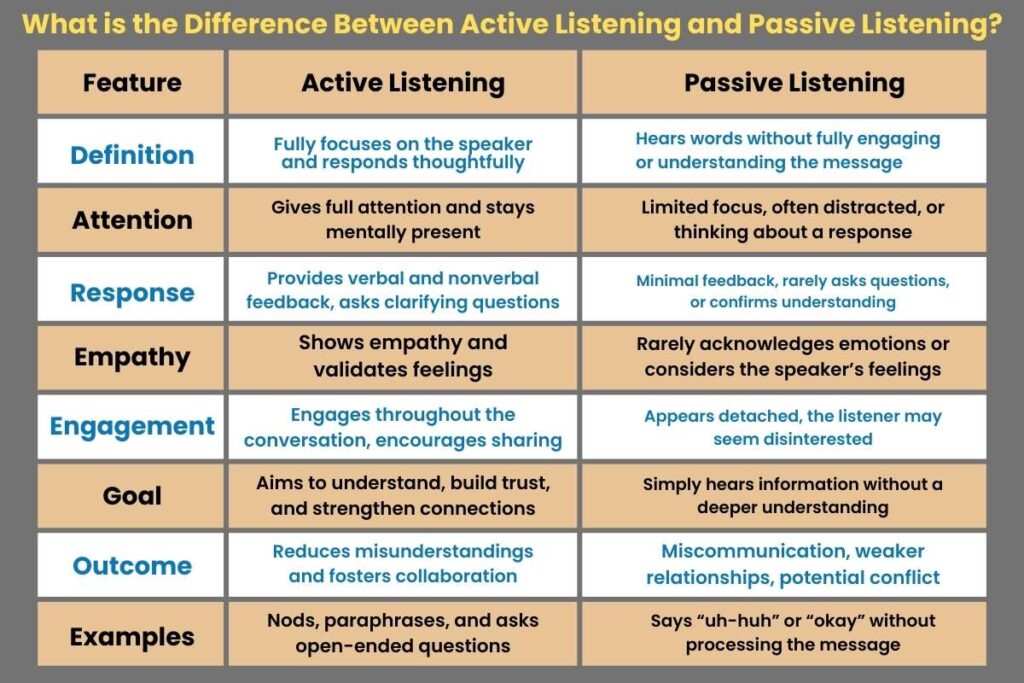
When it comes to communication, not all listening is equal. Understanding the difference between active listening and passive listening can transform your conversations, whether at work, school, or in personal relationships. Active listening engages the mind and emotions, while passive listening often misses the deeper meaning of what’s being said.
| Active Listening | Feature | Passive Listening |
| Fully focuses on the speaker and responds thoughtfully | Definition | Hears words without fully engaging or understanding the message |
| Gives full attention and stays mentally present | Attention | Limited focus, often distracted, or thinking about a response |
| Provides verbal and nonverbal feedback, asks clarifying questions | Response | Minimal feedback, rarely asks questions, or confirms understanding |
| Shows empathy and validates feelings | Empathy | Rarely acknowledges emotions or considers the speaker’s feelings |
| Engages throughout the conversation, encourages sharing | Engagement | Appears detached, the listener may seem disinterested |
| Aims to understand, build trust, and strengthen connections | Goal | Simply hears information without a deeper understanding |
| Reduces misunderstandings and fosters collaboration | Outcome | Miscommunication, weaker relationships, potential conflict |
| Nods, paraphrases, and asks open-ended questions | Examples | Says “uh-huh” or “okay” without processing the message |
Case Study:
A workplace study published in the Journal of Occupational Health Psychology examined active listening training for managers. The program focused on listening skills, reflection, and emotional awareness. After training, employees reported better communication and stronger support from managers.
The study also found lower stress levels among staff. Managers showed improved listening behavior and reduced rushed communication patterns. This case shows that active listening can improve both performance and employee well-being when practiced consistently.

Conclusion:
Hopefully, this article answered your question of “What is active listening?”
Active listening is a simple skill, but its impact is powerful. When you focus fully on the speaker, conversations become clearer and more respectful. This approach helps you avoid misunderstandings and respond with purpose. Over time, it can strengthen trust in both personal and professional relationships.
By practicing active listening daily, you can become a better communicator. You also become more aware of emotions, tone, and intent. These small changes lead to stronger connections and more productive discussions. Listening well is an active choice that improves how you relate to others.
FAQs
1. What is active listening in simple words?
Active listening means paying full attention to the speaker and understanding their message before responding. It involves focus, empathy, and thoughtful feedback.
2. How is active listening different from hearing?
Hearing is passive and automatic. Active listening requires effort, attention, and understanding of both words and emotions.
3. Can active listening improve workplace communication?
Yes, active listening improves teamwork, reduces conflicts, and leads to clearer decision-making at work.