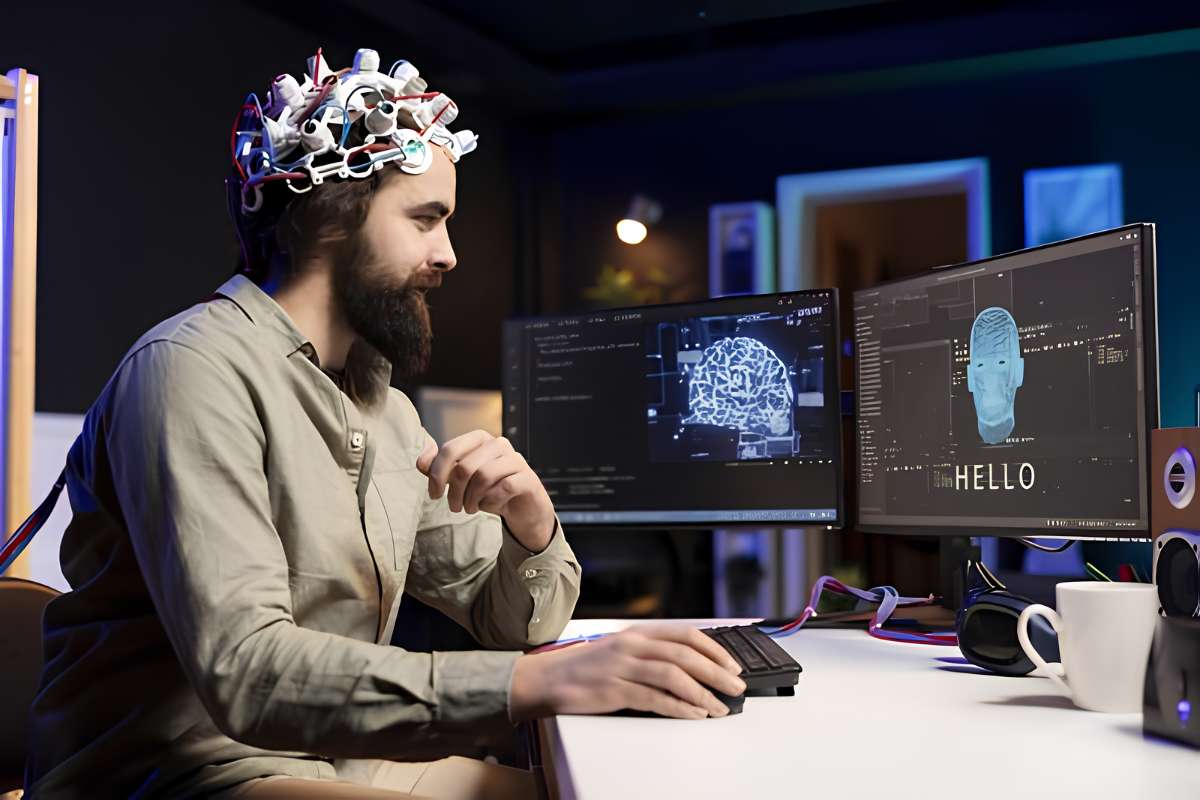
Business Use Cases of EEG Systems include improving products, testing marketing campaigns, enhancing employee training, and supporting workplace safety. Organizations are also using EEG in healthcare services and brain-computer interfaces. As the technology becomes more accessible, businesses are exploring how brain data can support better decisions, stronger performance, and improved user experiences.
EEG systems measure the brain’s electrical activity using sensors placed on the scalp. Once used mainly in hospitals and research labs, they are now being adopted by businesses as well.
Unlike medical EEG systems that support diagnosis, commercial EEG platforms help organizations understand attention, engagement, mental workload, and user behavior. Data can be analyzed in real time for immediate feedback or reviewed later for deeper insights.
This article explores the leading business use cases of EEG systems and how companies are using brain data to improve products, training, safety, and customer experiences.
Why Are Businesses Investing in Commercial EEG Technology?
Commercial EEG platforms help organizations measure attention, engagement, mental workload, stress, fatigue, and other cognitive factors. Unlike clinical EEG systems used for diagnosis, they are typically smaller, more portable, and designed for workplace and research applications. Data can be analyzed in real time for immediate feedback or reviewed later to identify patterns and trends.
Businesses are increasingly adopting EEG technology because traditional methods, such as surveys and interviews, rely on what people remember and report. EEG provides a direct view of how people respond during training, product interactions, advertisements, and other experiences.
Growing demand for measurable behavior data, advances in wearable devices, faster analysis tools, and lower hardware costs have made EEG more practical for commercial use.
According to a 2025 Neurotech Market Atlas analysis, EEG is the most widely used neurotechnology modality, with approximately 46% of neurotechnology companies using it. In the consumer neurotechnology segment, adoption rises to nearly 64% of companies.
Improving Product Design Through Neurofeedback with EEG Systems
Business Use Cases of EEG Systems include helping companies design products that are easier and more enjoyable to use. While surveys and interviews can reveal opinions, EEG data shows how people respond in the moment as they interact with a product.
This can help teams spot points of confusion, frustration, or mental effort that users may not notice or mention later.
Where EEG Supports Product Design
Companies use EEG systems to evaluate:
- Consumer electronics
- Software and digital tools
- Websites and mobile apps
- Product packaging
- User interactions with physical products
- Finding Cognitive Friction
Cognitive friction occurs when users have to spend more mental effort than expected to complete a task. EEG data can help teams identify confusing screen layouts, features that are difficult to understand, moments where attention drops, and steps that slow progress. By addressing these issues, businesses can create simpler products, smoother workflows, and better overall user experiences.
EEG vs Traditional User Testing
Traditional user testing methods remain valuable, but they do not always capture what users experience in the moment. EEG adds another layer of insight by measuring attention and cognitive effort during an interaction, helping teams identify issues that may go unnoticed in surveys or interviews.
| Method | Main Limitation | What It Reveals |
| Surveys | Depends on user opinions | What users say they experienced |
| Interviews | Relies on memory | What users remember afterward |
| EEG | Requires specialized equipment | How users respond in real time |
This real-time view gives product teams information that traditional testing methods often miss, making EEG a valuable tool during product development.
Marketing and Consumer Research Business Use Cases of EEG Systems
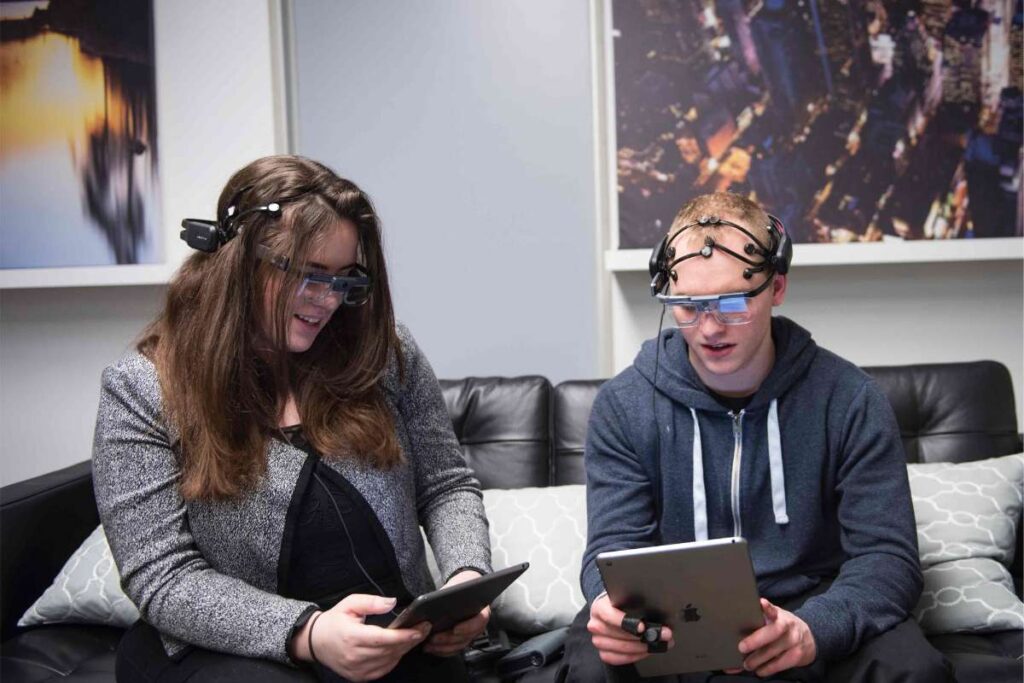
Getting honest customer feedback is not always easy. A person may say they liked an advertisement, but that does not mean it held their attention. Others may forget which parts of a campaign stood out. EEG technology helps marketers study reactions as they happen.
| Use Case | What EEG Measures |
| Ad testing | Attention, distraction, emotional engagement, and message recall |
| Packaging & retail displays | Customer engagement with different designs |
| Websites & digital campaigns | Attention to layouts, content, and key information |
| Brand recall studies | Responses to logos, slogans, and product placements |
A retailer might compare two package designs to see which one generates stronger engagement. Similarly, an e-commerce company can test different webpage layouts to identify which design keeps visitors focused on important information. These insights help businesses make data-backed decisions before launching products, campaigns, or customer experiences.
Workforce Training and Employee Performance Monitoring with EEG Systems
Employee training is expensive, so companies want to know whether it is actually working. Test scores can show what workers remember, but they do not always reveal how difficult the learning process was. EEG technology provides another way to measure training effectiveness.
Measuring Learning and Mental Workload
During training sessions, EEG systems can help identify:
- When employees are fully engaged
- When attention starts to drop
- When information becomes too difficult to process
- When mental workload becomes too high
This helps organizations find parts of a training program that may need improvement.
Improving Training Programs
For example, an aviation company may find that a training module creates excessive cognitive load. Instead of adding more training time, it can simplify the lesson to improve learning outcomes.
Similar approaches are being explored in manufacturing, healthcare, defense, and energy, where effective training can directly impact safety, performance, and operational efficiency.
Supporting Long-Term Skill Development
EEG data can also help organizations compare different training methods. Companies can evaluate whether simulations, videos, hands-on exercises, or classroom instruction keep learners engaged and improve skill retention.
According to the World Economic Forum’s Future of Jobs Report 2025, nearly 39% of workers’ existing skills are expected to be transformed or become outdated between 2025 and 2030. As businesses adapt to changing skill requirements, interest in more effective training methods continues to grow.
Reducing Fatigue and Improving Workplace Safety with EEG Systems
Business Use Cases of EEG Systems include monitoring fatigue in safety-critical workplaces. In industries such as mining, transportation, aviation, manufacturing, and logistics, even a brief loss of focus can increase the risk of accidents.
Detecting Fatigue
EEG systems measure changes in brain activity linked to reduced alertness and mental fatigue. This can help organizations identify when workers may need breaks, schedule changes, or workload adjustments.
For example, companies can use EEG data during pilot programs to study how attention changes during long shifts and repetitive tasks.
EEG vs Wearables
Most wearables track physical signals such as heart rate and movement. EEG systems measure brain activity directly, providing a clearer view of mental fatigue.
This is important because a worker may appear physically fine while experiencing a drop in concentration. By detecting these changes earlier, organizations can take preventive action and create safer work environments.
Brain-Computer Interfaces and New Models for Business Use Cases of EEG Systems
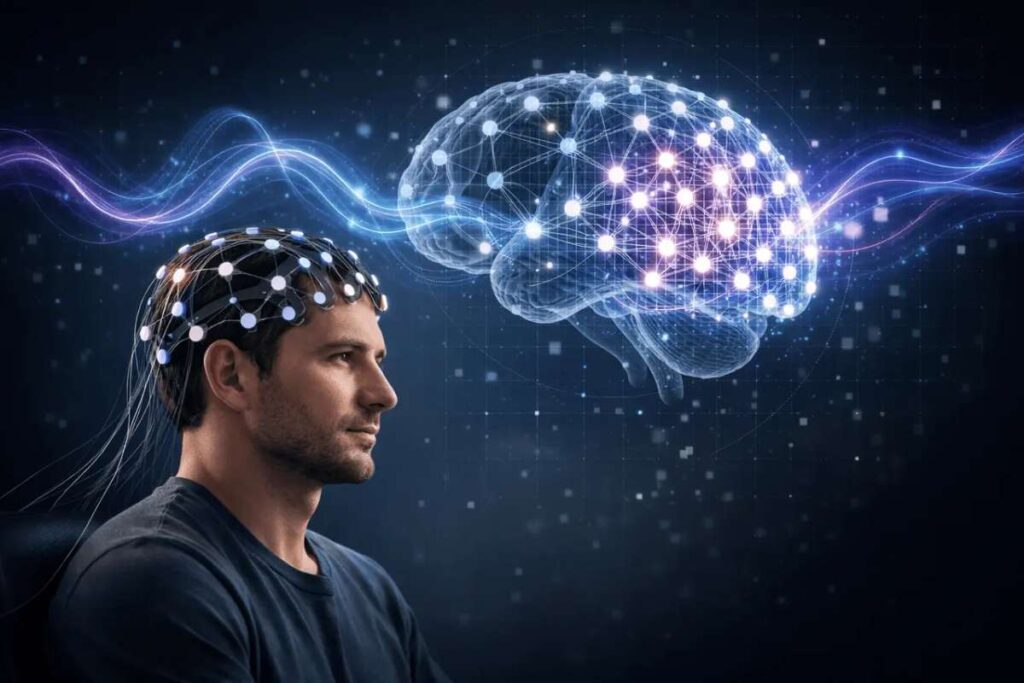
Brain-computer interfaces, or BCIs, allow people to interact with devices using brain signals instead of physical movements. Many non-invasive BCIs rely on EEG technology because it can capture brain activity without surgery.
Emerging Applications
EEG-powered BCIs are being used in smart device control, assistive technologies, industrial systems, and gaming experiences. In some applications, users can control a cursor, select commands, or interact with software using brain signals alone.
As the technology advances, companies are exploring new products and services built around these capabilities. In many cases of EEG systems, the focus is expanding beyond data collection to creating new ways for people to interact with technology. While adoption is still growing, BCIs remain one of the most promising areas in neurotechnology.
Healthcare Business Use Cases of EEG Systems
Healthcare organizations are increasingly using EEG technology beyond traditional clinical diagnosis. New service models are emerging as providers look for ways to monitor patients, collect data remotely, and expand access to care.
| Application | Business Value |
| Remote monitoring services | Supports patient tracking outside clinical settings |
| Telehealth integration | Extends neurological assessments to remote patients |
| Sleep monitoring businesses | Enables large-scale sleep analysis and reporting |
| Cognitive assessment platforms | Supports screening and cognitive performance evaluation |
| Clinical research services | Improves data collection for studies and trials |
Business Benefits
- Faster data collection and analysis
- Better patient monitoring between visits
- More scalable service delivery
- Greater access to neurological assessments
- Improved support for research programs
According to the World Health Organization, neurological conditions affect more than 3 billion people worldwide and are now the leading cause of ill health and disability globally. This growing burden is increasing demand for scalable monitoring, assessment, and neurological care services, creating new opportunities for EEG-enabled healthcare solutions.
Challenges Businesses Must Consider Before Adopting EEG Systems
Business Use Cases of EEG Systems continue to expand, but adoption is not without challenges. Organizations need to consider technical, operational, and ethical factors before investing in the technology. The biggest challenge is turning raw brain signals into reliable business insights while protecting user privacy.
Key Challenges
- Data privacy: Brain data can be sensitive, making clear consent and secure data handling essential.
- Signal quality: EEG signals can be affected by movement, poor sensor placement, and environmental noise.
- User comfort: Some EEG devices can be uncomfortable during long sessions.
- Regulatory requirements: Organizations must comply with industry and regional data regulations.
- Data interpretation: Brain signals are complex and should not be viewed without proper context.
- Integration costs: Hardware, software, training, and analysis tools can increase implementation costs.
Businesses that address these challenges early are more likely to see meaningful results from their EEG initiatives.
The Future of EEG in Business
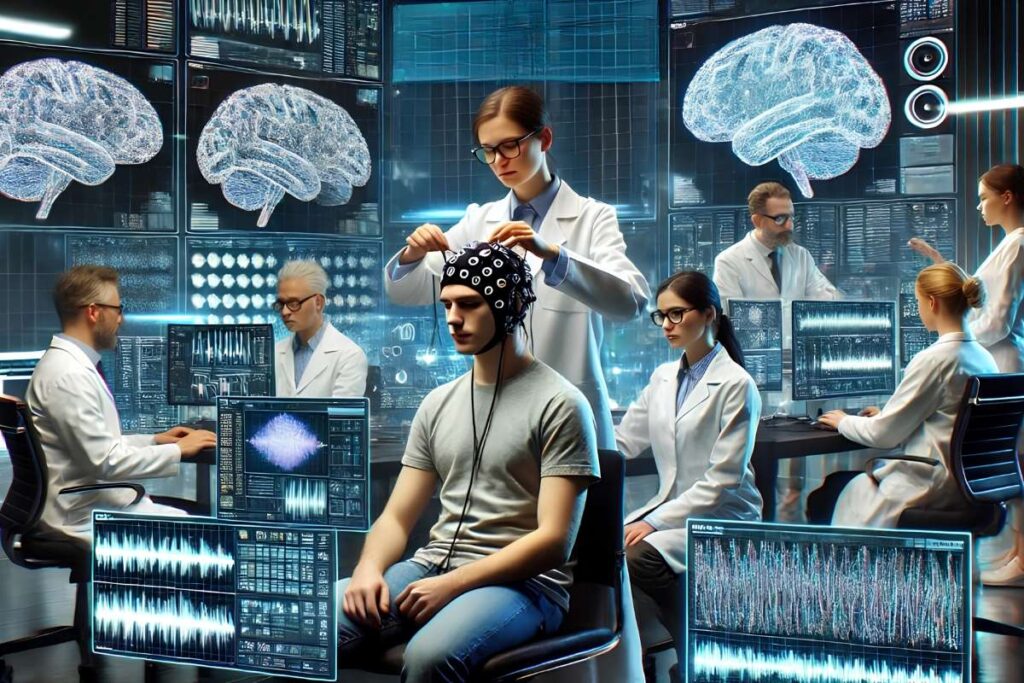
EEG technology is no longer limited to hospitals and research labs. Today, business use cases of EEG systems include product design, employee training, workplace safety, customer research, and other applications that help organizations make more informed decisions.
As devices become smaller and easier to deploy, new opportunities are emerging in areas such as smart workplaces, personalized learning, cognitive wellness, and brain-computer interfaces. At the same time, organizations must address challenges related to privacy, data quality, and interpretation.
The future of EEG in business will depend on more than collecting brain data. Companies that can use these insights responsibly and turn them into real-world value will be best positioned to benefit from the next wave of neurotechnology innovation.
FAQs
What are EEG systems used for in business?
Businesses use EEG systems for product testing, training, safety monitoring, and consumer research.
Can EEG systems measure employee attention?
Yes. EEG systems can track attention levels and cognitive workload during tasks.
How do companies use EEG in marketing?
EEG helps measure attention, engagement, and reactions to advertisements and campaigns.
Are EEG systems only used in healthcare?
No. They are also used in manufacturing, retail, transportation, education, and research.
What is the biggest benefit of EEG technology for businesses?
One of the main business use cases of EEG systems is providing direct insight into how people respond during real-world experiences, helping organizations make more informed decisions.