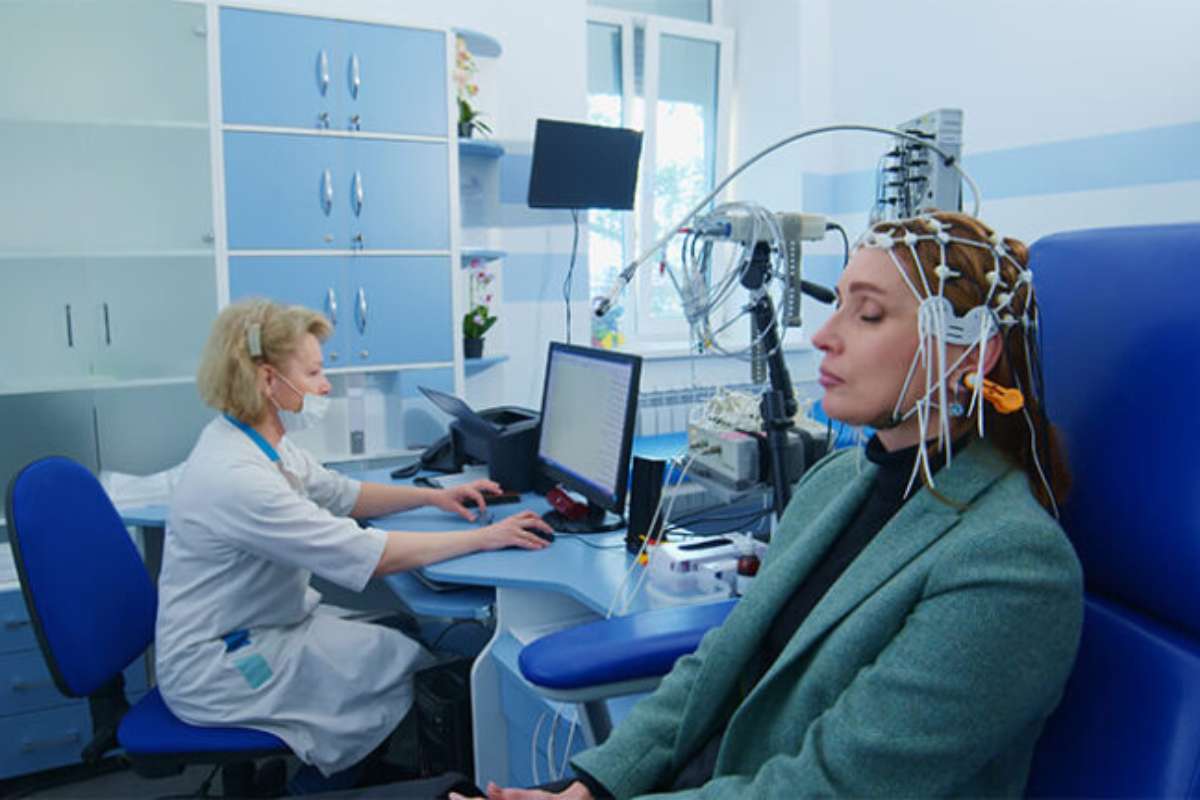
EEG-based BCI applications are moving from labs into everyday use, offering a safe alternative to invasive brain surgeries. These wearable headsets use dry sensors to capture electrical brain signals, which software then turns into instant digital commands. It helps doctors treat patients and lets people control computers without using their hands. This guide breaks down how the EEG systems in BCI technology translate thoughts into computer commands.
Did you know the market for brain-reading tech could hit $11 billion by 2030? That is a massive amount of money for tools that can decode human thoughts.
While high-profile brain surgeries get all the news, the real everyday business value lies in a much safer option. Non-invasive EEG systems in BCI technology are comfortable headsets that sit right on your head to read electrical brain signals. They are safe, cheap to make, and ready for public use right now.
To understand how this tech is shifting from labs to the real world, let’s look at exactly what these systems do.
What is the Role of EEG Systems in BCI Technology?
Electroencephalography (EEG) systems act as the primary data-gathering tool for commercial brain-computer networks. They capture raw electrical pulses from the scalp and turn those analog signals into digital commands. Without this hardware, software developers would have no scalable way to collect brain data.
In the broader market, EEG serves as an accessible user interface. It moves brain-computer interface (BCI) tech out of hospital operating rooms and drops it straight into the consumer sector. Because these headsets are safe and easy to wear, they allow businesses to build brain-controlled applications for everyday users.
Right now, this technology serves three main functions in corporate strategy. First, it helps marketing teams track real-time consumer attention during product testing. Second, it powers hands-free control systems for industrial workers in safety zones. Finally, it provides instant data for wellness programs tracking workplace fatigue.
Why are EEG Signals Important for BCI Communication?
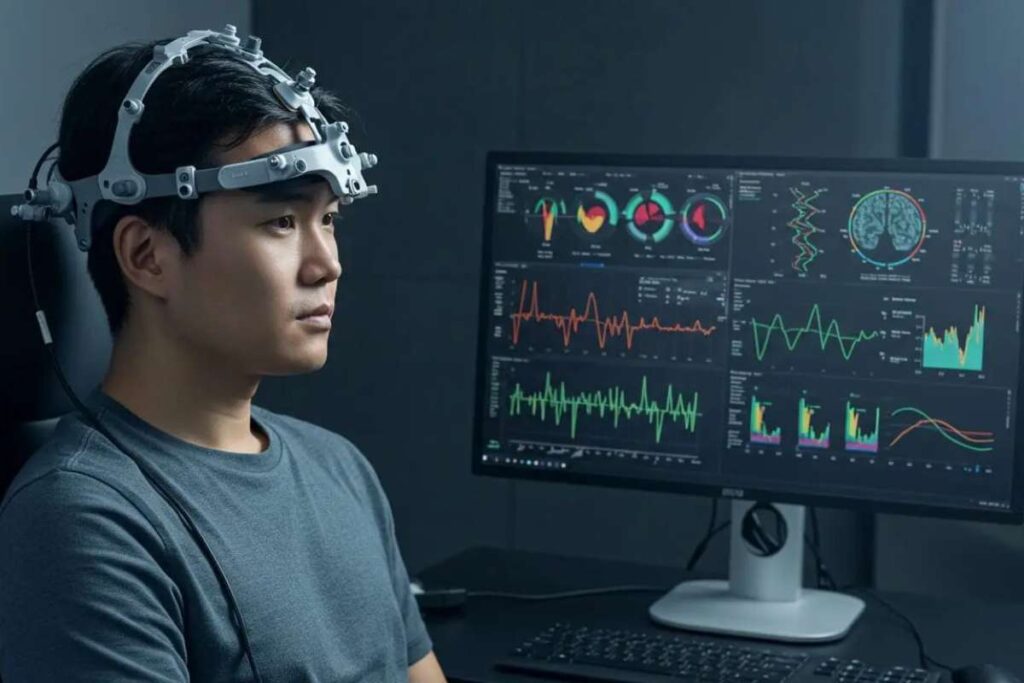
Let’s understand how these raw brain waves work and exactly why businesses are rushing to adopt this technology.
- Real-Time Data Capture: Every thought or movement creates tiny electrical pulses. EEG Systems in BCI Technology capture these changes in milliseconds, whereas other scans, like fMRI, take seconds or minutes to respond.
- Decoding Specific Wave Frequencies: Brain waves contain distinct frequencies that reveal a user’s exact state of mind. BCI software monitors these patterns to map human intent directly to computer actions.
- Zero-Delay Command Execution: The continuous data stream creates an unbroken loop between human and machine. For business applications, this means software can track attention shifts or execute commands purely through thought with zero noticeable delay.
How EEG Systems Work in Brain-Computer Technology?
EEG-based brain-computer interfaces operate through a precise, four-step pipeline that translates biological thought into digital action in real time.
1. Signal Generation (The Brain)
Every thought, emotion, or planned movement begins with neurons firing in the cerebral cortex. When millions of these neurons fire at the same time, they create a tiny electrical charge. If a user intends to move a computer cursor to the right, a specific cluster of neurons generates a distinct voltage shift.
2. Signal Detection (The Sensors)
Because these electrical signals must travel through brain tissue, bone, and skin, they arrive at the scalp extremely weak, often measuring between 5 and 100 microvolts. To capture them, an EEG headset uses specialized electrodes placed at strategic points across the scalp.
3. Signal Amplification and Filtering (The Hardware)
The raw data picked up by the sensors is too quiet for a computer to read directly. The headset sends this raw data through an internal amplifier, which boosts the signal strength up to 10,000 times.
4. Feature Extraction and Translation (The Software)
Once the signal is clean, digital signal processing (DSP) algorithms take over. The software breaks down the complex brain waves into specific frequencies:
- Delta (<4 Hz): Deep sleep.
- Theta (4–8 Hz): Drowsiness, deep relaxation, or light sleep.
- Alpha (8–12 Hz): Relaxed alertness or reflection.
- Beta (12–30 Hz): Active thinking, focus, or high alert.
- Gamma (>30 Hz): High-level cognitive processing and problem-solving.
Machine learning models scan these frequencies to find matching patterns. Once the software spots the exact pattern for an action, it instantly turns that brainwave shape into a digital command for the computer to execute.
What are the Components of EEG-Based BCI Systems?
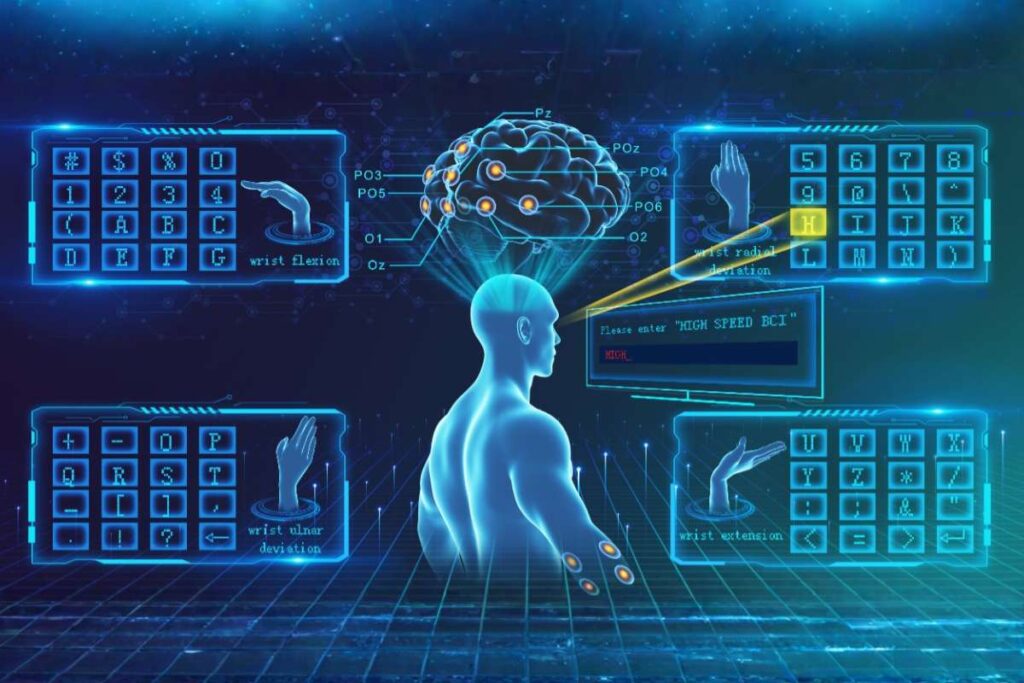
A standard EEG setup relies on four main parts working together:
- The Sensors: Small disks that sit on the scalp to catch electrical signals.
- The Amplifier: A tool that boosts the weak brain waves so computers can see them.
- The Processing Software: An AI tool that decodes the waves and spots patterns.
- The Output Device: The screen, drone, or robotic limb that executes the final command
Why are Investors Funding EEG-Based BCI Applications Now?
Money is pouring into this sector because the hardware is getting better, cheaper, and safer. While the entire industry is growing at 9.9% a year, venture capital is specifically moving toward non-invasive tools.
To understand why, you have to look at how these systems compare to invasive options. Invasive systems require a doctor to open the skull. While this provides a very clear brain signal, it is highly regulated and carries heavy financial risks.
EEG-based BCI applications completely avoid these massive medical trial costs and surgical risks. Anyone can buy an EEG headset online and put it on in their living room. Even though the signal is slightly weaker because the sensors sit outside the skull, modern software is excellent at cleaning up the data. For everyday business and gaming uses, non-invasive EEG is the clear winner for both users and investors.
What are the Latest Advancements of EEG Systems in BCI Technology?

In 2026, engineers are making hardware and software much smarter and easier to use. These updates allow businesses to build better tools for everyday life.
- Generative AI for Brain Signals: New computer models can now read complex brain waves and turn them directly into text or images. Instead of just moving a cursor, a user can think of a word, and the software types it out.
- Hybrid Sensor Systems: Now, companies are mixing EEG headsets with eye-tracking cameras. When you look at an object and think about an action, the system combines both signals. This makes hands-free control much faster and more accurate for gaming and smart home devices.
- Smart and Shared Control: Modern brain headsets no longer wait for a perfect command. They use shared control. If a user wants to move a robotic arm to pick up a cup, the brain signal just gives the main goal. The machine handles the small, exact movements. This reduces the mental effort needed to use the tech.
- Human-in-the-Loop Training: Software programs are now using brain data to train themselves in real time. If a user feels tired or notices an error, the headset picks up that exact brain wave. The computer then instantly changes its own behavior to help the user better.
Conclusion:
EEG Systems in BCI Technology are moving fast from research labs into practical business tools for healthcare, gaming, and workplace focus. As AI improves brain-signal decoding and devices become more affordable, these applications could reshape how humans interact with machines over the next decade. 2026 may be the year brain-computer interfaces stop being experimental and start becoming mainstream.
Frequently Asked Questions
What is the best use for EEG Systems in BCI Technology?
The best use right now is for research, gaming, and neurorehabilitation. Hospitals use them to help stroke patients recover. Tech companies use them to test how people react to new software.
How much does an EEG BCI headset cost?
Consumer headsets can cost anywhere from $300 to $2,000. High-end medical and research caps can cost tens of thousands of dollars. Prices continue to drop as the parts get cheaper to make.
Are EEG-Based BCI applications safe to use?
Yes. Because they sit firmly on the outside of your head, they carry no surgical risk. They only read the electrical signals your brain naturally makes. They do not send electricity back into your brain.