Understand the difference between EEG and BCI systems in minutes: EEG records brain activity, while BCI converts those signals into actions. This guide explains how both technologies work together, where EEG ends, and BCI begins, and why this distinction matters for prosthetics, communication devices, gaming, and future human-machine interaction. Readers will also discover real-world 2026 applications, BCI types, and the role of AI in transforming brain signals into usable commands.
Could your brain control a computer? If yes, is it the EEG vs BCI Systems that make it possible? Most people think of these as competing technologies, but they are not. EEG is a method to record brain signals. BCI is a full communication system based on such signals. This distinction is important because it changes how we think about neurotechnology, from medical prosthetics to mind-reading devices.
In this guide, we take a layered, system-based approach to dissect EEG vs BCI systems, so you can clearly understand what each does, where they overlap, and why both are important for the future of human-machine interaction.
EEG and bci systems: features, uses, and core concepts:
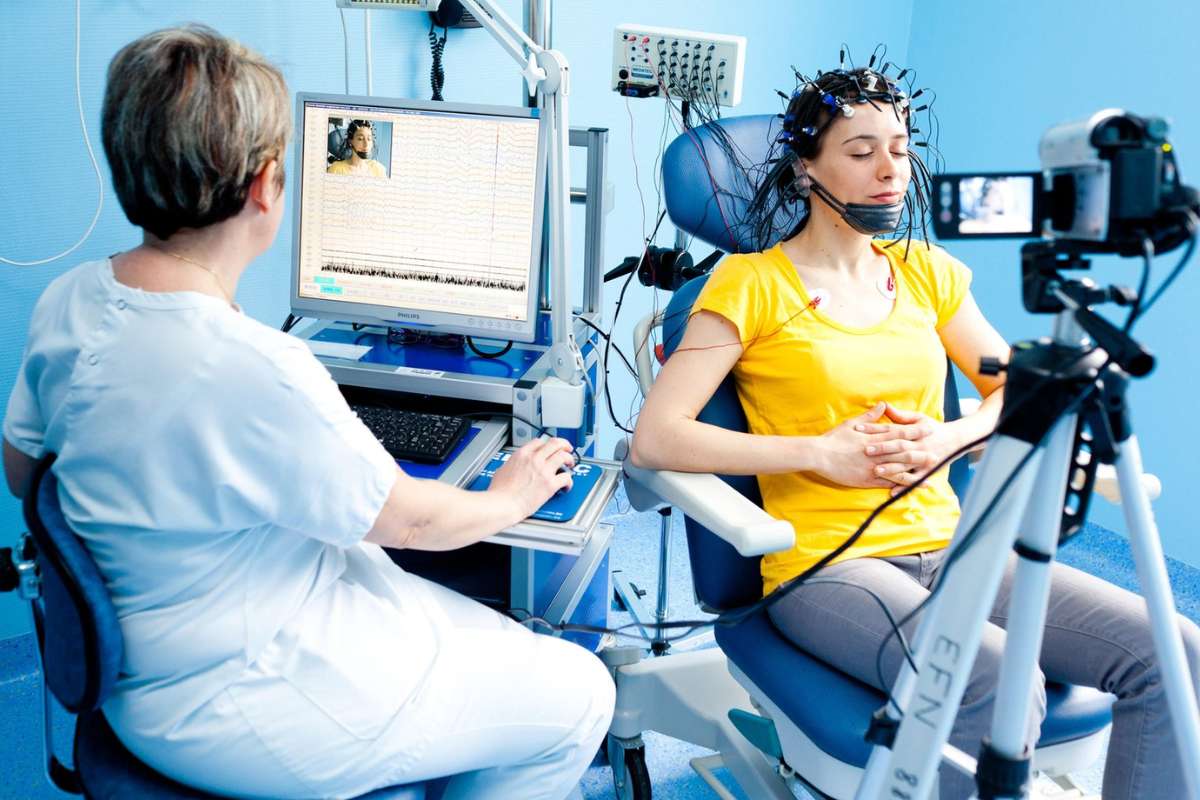
EEG (Electroencephalography) measures the electrical activity of the brain using scalp electrodes. It captures raw brain signals but does NOT interpret their meaning. EEG is purely a sensor technology that records wave patterns (alpha, beta, gamma, theta, delta) showing when neurons are active.
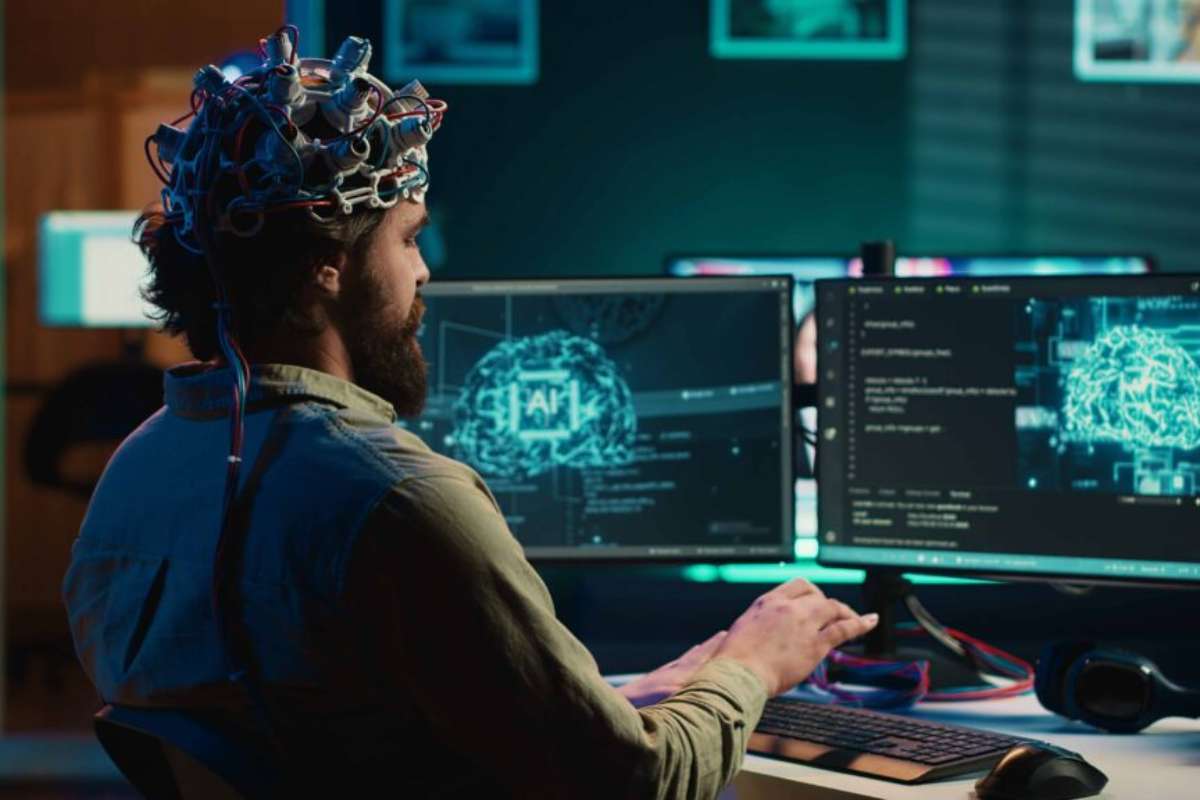
BCI (Brain-Computer Interface) is a complete system that interprets brain signals and converts them into commands. It includes hardware (sensors), software, and decoding algorithms that translate intent into action. BCI enables direct communication between the brain and external devices like cursors or prosthetic limbs.
Key Insight
EEG is a sensor technology. BCI is a full communication system. When comparing EEG vs BCI Systems, the distinction is clear: EEG just records, while BCI acts.
Simple Analogy
- EEG = microphone (just picks up sound)
- BCI = speech recognition + assistant response system (understands words and takes action)
A microphone records sound but doesn’t really understand it, similar to an EEG recording brain waves but not decoding them. The speech recognition software decodes the audio, and the assistant responds with commands, much like how BCI decodes brain signals and executes actions.
Primary Uses
| EEG | BCI |
| Diagnosing epilepsy & seizures | Diagnosing epilepsy & seizures |
| Controlling prosthetic limbs | Controlling prosthetic limbs |
| Sleep disorder monitoring | Sleep disorder monitoring |
How EEG Technology Records Brain Activity?
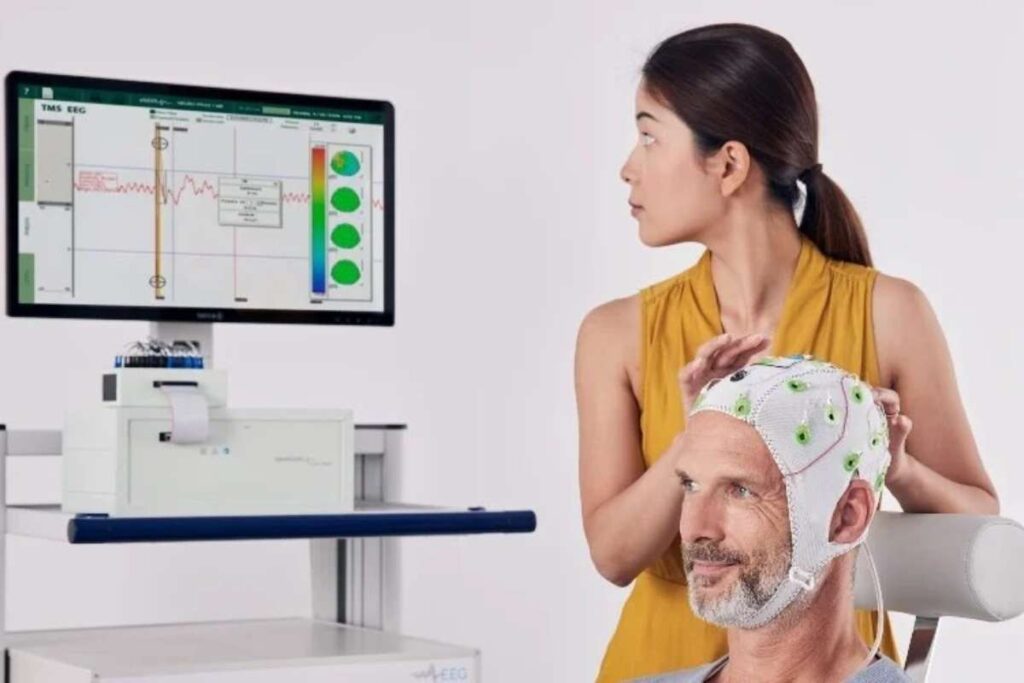
EEG technology records brain activity by sensing the electrical signals of neurons firing in the cerebral cortex. Large groups of neurons firing together generate postsynaptic potentials, which can be detected by electrodes on the scalp.
Electrode Placement: The internationally accepted standard for electrode placement is the 10–20 system. It is based on anatomical landmarks (nasion and inion) and the electrodes are placed at intervals of 10% or 20% of the distance on the skull, assuring consistent coverage of all the brain areas.
Brainwave Types (by frequency):
- Delta (0.5–4 Hz): Deep sleep, recovery
- Theta (4–8 Hz): Creativity, REM sleep, dreaming
- Alpha (8–14 Hz): Relaxed state, daydreaming
- Beta (14–38 Hz): Active concentration, alertness
Noise & Distortion: EEG signals face interference from muscle movement, eye blinks, and baseline noise, requiring filtering techniques.
EEG is low-resolution but fast and non-invasive because it measures large neuron groups (not single neurons), making it hard to pinpoint exact locations. However, it captures millisecond-level changes and uses scalp electrodes without surgery, making it ideal for timing studies but limited for deep brain structures.
In EEG vs BCI Systems, EEG provides the raw signals that BCI decodes.
How BCI Systems Convert Brain Signals Into Actions?
BCI systems follow a 5-step pipeline to transform brain activity into commands:
BCI Pipeline
- Signal Acquisition
Captures brain signals via EEG (scalp electrodes) or implants (intracranial)
- Signal Filtering
Removes noise and artifacts using band-pass filters to isolate brainwave frequencies
- Feature Extraction
Identifies relevant patterns in time, frequency, or spatial domains (e.g., Fourier transforms, PCA)
- Machine Learning Classification
Uses adaptive classifiers, deep learning, or random forests to decode intent from patterns
- Output Execution
Translates commands into actions: cursor movement, robotic arm control, or text typing
Key Insight
BCI is not hardware. It is an interpretation pipeline. The hardware (EEG/implants) just captures signals; BCI is the software system that interprets and acts.
EEG vs BCI Systems: Key Structural Differences
| Feature | EEG | BCI |
| Scope | Device/sensor technology | Complete system (hardware + software + algorithms) |
| Function | Captures raw electrical signals | Interprets signals and converts to commands |
| Output Capability | Passive data (waveforms only) | Actionable control (cursor, robotic arm, text) |
| Accuracy | Low spatial resolution, noise-prone | Higher effective accuracy via ML decoding |
| Complexity | Simple signal recording | Complex pipeline: filtering → extraction → classification → execution |
| Use Cases | Diagnosis (epilepsy, sleep), research | Prosthetics, wheelchair control, communication for paralysis |
Strong Differentiation
EEG alone = passive data (just records brain waves)
BCI = actionable control system (decodes intent and executes actions)
In EEG vs BCI Systems, EEG provides the raw signals while BCI transforms them into real-world control.
Where EEG Ends, and BCI Begins (Critical Distinction Section):
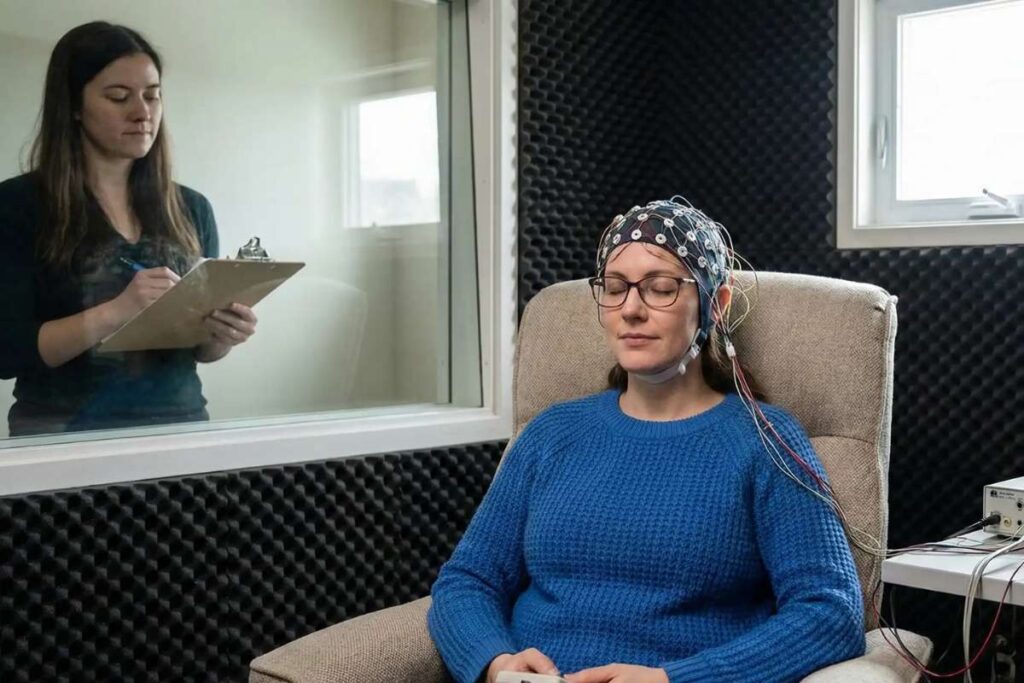
EEG produces raw, uninterpreted signals, just electrical waveforms from brain activity.
BCI starts when signals are:
- Decoded → AI algorithms interpret what the brain signal means
- Classified → Machine learning identifies patterns (e.g., “left hand” vs. “right hand” thought)
- Mapped to actions → Commands are sent to external devices
Diagram-Style Flow: The Boundary Between EEG and BCI
Brain → EEG (sensor) → Signal Processing → AI Decoder → Command Output
↑ ↑
│ │
EEG ENDS HERE BCI BEGINS HERE
(raw signals only) (interpretation + action)
The EEG picks up the signal but does nothing with it. When these signals are fed into the processing pipeline, the BCI is initiated, filtered, and features are extracted, and a classifier decides what action to take.
The key difference in EEG vs BCI Systems is: EEG = recording, BCI = acting on that recording.
Types of BCI Systems: Non-Invasive, Invasive, Hybrid:
1. Non-Invasive BCI (EEG-based)
- How it works: Uses scalp EEG electrodes to capture brain signals
- Pros: Safe, no surgery required, easy to use
- Cons: Low accuracy due to skull interference and weak signals
- Best for: Healthy users, research, consumer applications
2. Invasive BCI
- How it works: Neural implants (electrodes) are surgically placed directly on or inside the brain tissue.
- Examples: Neuralink threads, Precision Neuroscience Layer 7 Cortical Interface
- Pros: High precision, captures 1–2 billion data points per minute, strong signals
- Cons: Surgery required, long-term safety concerns, risk of infection
- Best for: Paralysis patients, severe motor disorders
3. Hybrid BCI
- How it works: Combines EEG + other signals (eye tracking, EMG, EOG)
- Example: EEG + eye tracking improves communication accuracy to 76–100%
- Pros: More accurate than single-modality, expands command options
- Cons: More complex setup, requires multiple sensors
- Best for: Disorders of consciousness, stroke recovery, complex control
Real-World Applications in 2026:
Prosthetic Limb Control
Researchers at the University of Pittsburgh developed a BCI that enables users to move robotic arms simply by thinking and feel realistic tactile sensations through synchronized electrical stimulation. The system recreates touch feedback by stimulating the brain’s sensory cortex, making prosthetic hands feel natural.
ALS Communication Systems
UC Davis Health created a BCI that translates brain signals into speech with 97% accuracy. It is the most accurate system of its kind. A man with severely impaired speech due to ALS can now communicate in real time, with the system decoding his intended speech within minutes. The technology translates neural signals into an audible voice with no detectable delay (one-fortieth of a second).
Gaming and VR Interfaces

Neuralink and Emotiv are developing brain-controlled interfaces that let users navigate digital environments and interact with virtual objects using only thought. BCI-powered VR games enable more realistic, immersive experiences and support patient rehabilitation.
Attention Tracking in Education
BCIs monitor cognitive workload and attention levels for aviation training, military operations, and educational settings.
Neurofeedback Therapy
BCI systems provide real-time brain activity feedback for ADHD treatment, anxiety management, and stroke rehabilitation.
Conclusion:
Understanding EEG vs BCI Systems shifts how we view neurotechnology. EEG is just the sensor, the microphone that takes the recording of brain waves. BCI is essentially the entire system that reads those waves and translates thoughts into actions. One is data, in a passive form. The other is active control.
From ALS patients communicating through thought to prosthetic limbs with a sense of natural touch, BCI is already transforming lives. Gaming, VR, attention tracking, etc. With better AI decoding and the continued advance of implant technology, the line between brain and machine will get even murkier.
Want to learn more about neurotechnology? Read about common myths on EEG and BCI systems with the following FAQs, and how this technology can change your future.
FAQ:
What is the difference between EEG and BCI?
An EEG system can provide a pathway between the brain and an external device, making it possible to read biological signals and interpret certain aspects of a person’s cognitive state. BCI systems are EEG systems that allow users nearly real-time control of an external actuator.
Which is better, a CT scan or an EEG?
Each test has its own role in checking your nervous system. An MRI scan gives detailed images of soft tissues, while a CT scan is beneficial for looking at bones or sudden changes.
What are the downsides of BCI?
Because it is implanted into the brain tissue, invasive BCI can damage nerve cells and blood vessels, hence increasing the risk of infection.
Are EEGs BCIs?
Its portability and good temporal resolution make EEG-based BCIs the most common kind of non-invasive BCIs.
What is the best EEG for BCI?
Emotiv Epoc X – 14 Channel EEG Headset. The Epoc X is a fantastic all-rounder for BCI development. With 14 channels, it provides high-resolution spatial data from key areas across the cerebral cortex.
Links and Sources:
- https://pubmed.ncbi.nlm.nih.gov/12899263
- https://ieeexplore.ieee.org/document/9424784
- https://www.nature.com/articles/s41467-025-61064-x
- https://theses.ubn.ru.nl/items/4726ab7b-4efd-4bf4-a6f1-d67a163aebd4
- https://www.bitbrain.com/blog/brain-computer-interface-using-eeg-signals
- https://www.neuroelectrics.com/blog/eeg-signal-processing-for-dummies
- https://www.frontiersin.org/journals/neurorobotics/articles/10.3389/fnbot.2020.00025/full