Choosing between Philips vs Other EEG Companies depends on your clinical priorities. Philips leads in AI-driven workflows, hospital integration, cloud connectivity, and enterprise-scale neurodiagnostics, while competitors such as Nihon Kohden, Natus, Compumedics, and Cadwell excel in specialized areas like long-term monitoring, research-grade EEG, and ambulatory care. This guide compares their strengths, technologies, and ideal use cases to help healthcare providers identify the best EEG solution for their specific needs in 2026.
It’s no longer just a case of grabbing the biggest healthcare technology company. Modern EEG systems are increasingly evaluated for their capacity to facilitate AI-assisted analyses, connect to the cloud, support long-term monitoring, automate workflows, and integrate with hospital ecosystems.
When comparing Philips vs other EEG companies, decision-makers must look beyond brand recognition and assess how each vendor supports evolving clinical and operational requirements. Philips remains a major name in neurodiagnostics, but the competition is heating up with companies such as Nihon Kohden, Natus, Compumedics, Cadwell, and emerging neurotechnology startups. By understanding the differences between these vendors, hospitals, neurology clinics, and research institutions can make better-informed investment decisions.
Philips vs Other EEG Companies: The Executive Comparison
Here is the executive comparison of Philips vs Other EEG Companies:
Comparison Table
| Criteria | Philips | Nihon Kohden | Natus | Compumedics | Cadwell |
| Hospital Integration | Leading (integrates with broader neuro tools) | Strong (modular concept) | Acute care focused | Home/ambulatory focus | Flexible ICU/home |
| AI Readiness | Excellent (Philips AI Manager) | Basic (auto-text reports) | Limited (seizure detection) | Limited | Remote monitoring |
| Long-Term Monitoring | Strong | Excellent (cEEG ICU) | Strong | Leading (512-channel LTM) | Strong (ambulatory) |
| Ease of Use | User-friendly interface | Simple reporting | Confidence-focused | Patient comfort design | Intuitive software |
| Research Applications | Moderate | Unparalleled features | Screening/diagnosing | High-density (512-channel) | Multi-modality |
| Scalability | High (enterprise IT) | 32–64 channel | Moderate | Up to 512 channels | Up to 288 channels |
Key Insights
Where Philips leads: Hospital integration with enterprise IT systems and AI enablement through Philips AI Manager.
Where competitors outperform: Nihon Kohden and Compumedics dominate long-term monitoring with superior research features, and channel counts up to 512.
Quick buyer takeaway: Choose Philips for integrated hospital AI workflows; choose Nihon Kohden/Compumedics for ICU monitoring and research applications in the Philips vs Other EEG Companies landscape.
Why EEG Vendor Selection Matters More in 2026?

EEG buying criteria are no longer just about signal acquisition. “Vendor selection is more important than ever as leaders need to assess vendors on their AI, connectivity, and data analytics capabilities in today’s healthcare.
The Rise of AI-Assisted Neurodiagnostics
AI tools now analyze electrophysiological signals with remarkable accuracy, improving early detection of neurological disorders. A 2026 Harvard AI model can predict dementia risk and brain age from routine scans. This means buyers need vendors with AI-ready platforms, not just high-quality signal capture. Neurodiagnostics has been significantly enhanced by AI and ML for identifying patterns and making accurate diagnoses.
Growing Demand for Long-Term and Ambulatory EEG
The portable long-term EEG market is projected to reach USD 713 million by 2034, driven by rising neurological disorder prevalence and wireless technology advancements. Hospitals hold 62% market share due to continuous monitoring needs. Home-care programs are growing at 10.98% CAGR through 2031 as payers reimburse prolonged ambulatory EEG. Buyers must prioritize vendors offering ambulatory capabilities, not just hospital-based systems.
Integration With Digital Health Ecosystems
Wearable EEG systems now seamlessly connect to IoT ecosystems, transmitting real-time data to cloud platforms for remote monitoring. Low-power IoT-enabled devices feature Bluetooth connectivity for wireless transmission and remote configuration. This integration enables personalized healthcare services and requires vendors with a robust connectivity infrastructure.
Increasing Importance of Data Analytics
Digital signal processing methods extract pertinent insights from EEG signals, identifying event-related patterns and enhancing diagnostic practices. The market now prioritizes high-density, portable systems that expand datasets for AI model training.
How Philips Compares With Major EEG Competitors?
Here’s how to choose when comparing Philips vs Other EEG Companies:
Philips vs Nihon Kohden
Choose Nihon Kohden if: You need specialized clinical monitoring for ICU and epilepsy with 32–64 channels and modular flexibility.
Choose Philips if: Your hospital prioritizes global critical care integration with enterprise-wide connectivity, and you need comprehensive neurodiagnostic systems integrated with imaging. Nihon Kohden leads in Japan and South Korea, while Philips leads globally in patient monitoring.
Philips vs Natus
Choose Natus if: You want neurodiagnostic specialization focused on neonatal and adult care with a streamlined NeuroWorks platform for EEG, sleep, and ICU monitoring.
Choose Philips if: Your software ecosystem needs to integrate EEG with broader critical care and imaging platforms for comprehensive brain monitoring. Natus offers EEG-focused innovation for dedicated neuro labs.
Philips vs Compumedics
Choose Compumedics if: You need high-density EEG research capabilities with up to 256 channels and 45-day continuous recording for sleep and neurology overlap.
Choose Philips if: Your research lab prioritizes accessibility with the Geodesic EEG System 400 for whole-head high-density EEG, intuitive software, and interoperability with EEGLAB.
Philips vs Cadwell
Choose Cadwell if: You work in mid-sized healthcare environments needing flexible workflows with customizable user-defined studies and specialized neurodiagnostic testing.
Choose Philips if: Your facility requires positioning flexibility and efficiency for complex procedures with integrated monitoring solutions.
Technology Comparison: AI, Cloud, Mobility, and Workflow
When evaluating Philips vs other EEG Companies, technological direction matters more than hardware specs. Here’s how vendors differ across five critical dimensions:
AI-Powered EEG Interpretation
Philips vs Other EEG Companies AI Marketplace, integrating FDA-cleared algorithms like Anumana’s LEF for early detection. Nihon Kohden combines AI with cloud platforms for real-time brainwave monitoring. Philips stands at the forefront of fMRI and magnetoencephalography with advanced AI-driven analytics for image reconstruction and workflow automation.
Cloud-Based EEG Data Management
Philips utilizes cloud platforms for better information exchange and remote monitoring. Natus Neuro focuses on scalable EEG monitoring systems with cloud connectivity. Philips’ commitment to cloud-based brain monitoring aligns with collaborative diagnostics and remote patient management trends.
Portable and Wireless EEG Systems
Philips offers mobile cardiac telemetry (MCOT), enabling 30-day continuous monitoring with 4.6× higher atrial fibrillation detection. Nihon Kohden’s Aireeg offers wireless EEG with 32–64 channel inputs for patient freedom.
Workflow Automation and Reporting
Philips Smart Reading cloud-based AI platform combines imaging, reading, and reporting, automatically delivering AI-generated quantitative reports. Nihon Kohden provides advanced auto-text report generation.
Cybersecurity and Data Governance
Philips’ scalable EEG systems suit both hospitals and outpatient clinics with an enterprise informatics infrastructure.
Future-Readiness Scorecard
| Technology Trend | Philips | Competitor Strength |
| AI Integration | ⭐⭐⭐⭐⭐ Leading | ⭐⭐⭐ Nihon Kohden |
| Remote Monitoring | ⭐⭐⭐⭐⭐ Superior | ⭐⭐⭐★ Natus |
| Cloud Analytics | ⭐⭐⭐⭐⭐ Advanced | ⭐⭐⭐ Nihon/Natus |
| Automation | ⭐⭐⭐⭐⭐ Smart Reading | ⭐⭐⭐ Nihon auto-reports |
Choose Philips if you need enterprise-grade AI, cloud integration, and workflow automation. Choose competitors if you prioritize specialized research capabilities or cost-effective core monitoring.
Which EEG Company Is Best for Different Healthcare Settings?
Best for Large Hospital Networks
Choose Philips for enterprise-wide integration with critical care, imaging platforms, and AI-enabled workflows across 100+ countries. Philips offers scalable EEG systems with robust informatics infrastructure for hospitals needing seamless data exchange and remote monitoring.
Best for Dedicated Neurology Centers
Choose Natus Medical for comprehensive clinical EEG solutions with high channel counts optimized for neuro hospitals and private practices.
Choose Nihon Kohden for specialized neurodiagnostic precision with the Neurofax EEG-1260 system for epilepsy, ICU, and sleep monitoring.
Best for Research Institutions
- Choose Philips Geodesic EEG System 400 for whole-head high-density EEG with intuitive software and EEGLAB interoperability.
- Choose ANT Neuro/BrainProducts for advanced high-density, flexible setups with sophisticated analysis capabilities.
- Choose Compumedics for 512-channel systems supporting 45-day continuous recording for sleep and neurology research.
Best for Ambulatory EEG Programs
- Choose Nihon Kohden Aireeg for wireless 32–64 channel inputs with video and photic stimulation for patient freedom.
- Choose Cadwell Arc Apollo+ for flexible in-hospital, epilepsy monitoring, ICU, and at-home ambulatory monitoring with video.
- Choose Compumedics for a portable EEG with 256-channel capacity and extended recording duration.
Best for Budget-Conscious Facilities
- Choose Cadwell for flexible, durable Arc systems with remote live control for clinical practice at mid-sized facilities.
- Choose DEYMED Diagnostic for complete solutions covering EEG, EMG, PSG, with innovative devices for neurophysiology and psychiatry.
Final Verdict: Is Philips Still a Leader?
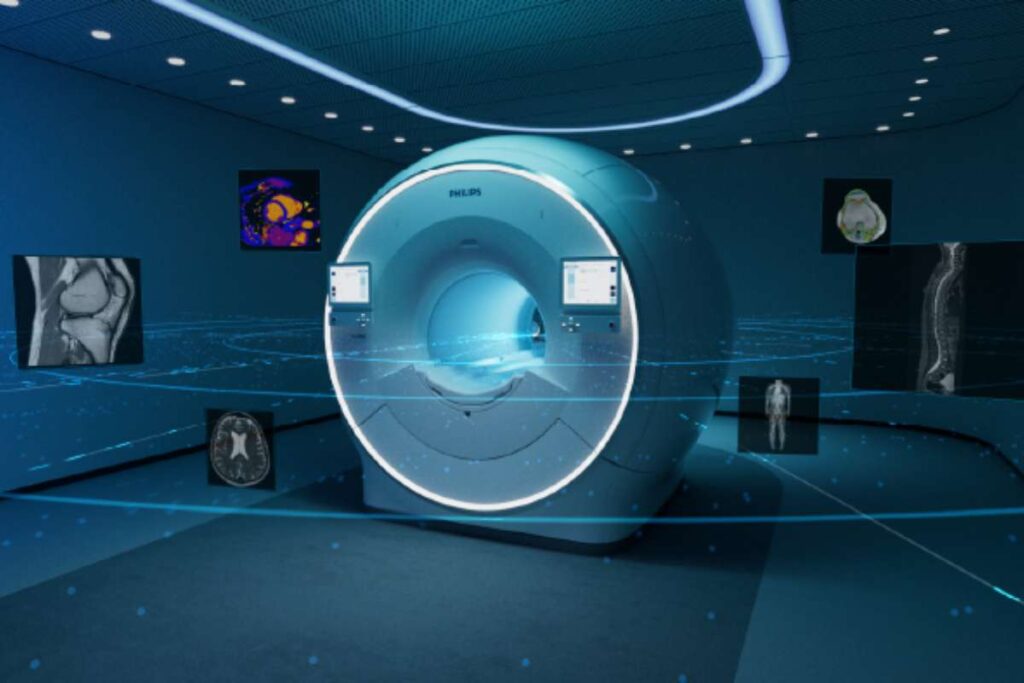
Yes, Philips remains a leader, but context matters.
Areas Where Philips Remains Strong
Philips dominates in hospital integration, AI readiness, and enterprise informatics with its ECG AI Marketplace and AI-enabled platform innovations. It’s the No. 1 MedTech company at the European Patent Office, reflecting leadership through AI-enabled innovations integrating hardware, software, and data. Philips leads multi-parameter monitoring and wireless ambulatory telemetry globally.
Areas Where Competitors Are Narrowing the Gap
Nihon Kohden rivals Philips in clinical monitoring precision with superior long-term ICU and epilepsy capabilities. Compumedics and research-grade vendors (EGI, ANT Neuro) outperform Philips in high-density EEG with 512 channels for research applications. Cadwell and mid-sized vendors offer better portability and user-friendly options for clinics.
What Buyers Should Prioritize in 2026
Focus on use case, not brand size:
- Large hospitals needing AI + integration: Choose Philips
- Neurology centers prioritizing clinical precision: Choose Nihon Kohden
- Research institutions needing high-density EEG: Choose Compumedics/ANT Neuro
- Ambulatory/portable programs: Choose Nihon Kohden Aireeg
- Budget-conscious clinics: Choose Cadwell
Philips leads for enterprise integration; competitors win for specialized needs.
Conclusion:
In 2026, selecting the right EEG vendor isn’t about brand size. It’s about aligning technology with your unique healthcare needs. Philips vs Other EEG Companies comparison. Philips is a leader in enterprise integration and artificial intelligence, whether you operate a large hospital network, a specialized neurology center, or an ambulatory program. Nihon Kohden, Compumedics, and Cadwell lead in clinical precision, research capabilities, and cost-effectiveness. Don’t allow marketing to disguise the function.
Ready to make the call? Start by defining your facility’s priorities, AI readiness, ambulatory monitoring, or research density. And select the vendor that fits your workflow, not just your budget.
FAQ:
Who makes EEG?
EEG manufacturers are broadly divided into Clinical/Hospital and Research/Consumer categories.
What was the downfall of Philips?
Philips’ downfall as a consumer electronics giant stems from over-diversification, a sluggish response to disruptive technologies like flat-panel displays and LED lighting, and costly R&D cuts.
What are the big 3 medical device companies?
The “Big 3” global medical device companies generally refer to Medtronic, Abbott Laboratories, and Johnson & Johnson MedTech.
Who is Medtronic’s biggest competitor?
Abbott Laboratories is Medtronic’s largest overall competitor, boasting over in annual revenue.
Who is Medline’s biggest competitor?
Medline’s biggest competitors are McKesson Corporation and Cardinal Health.