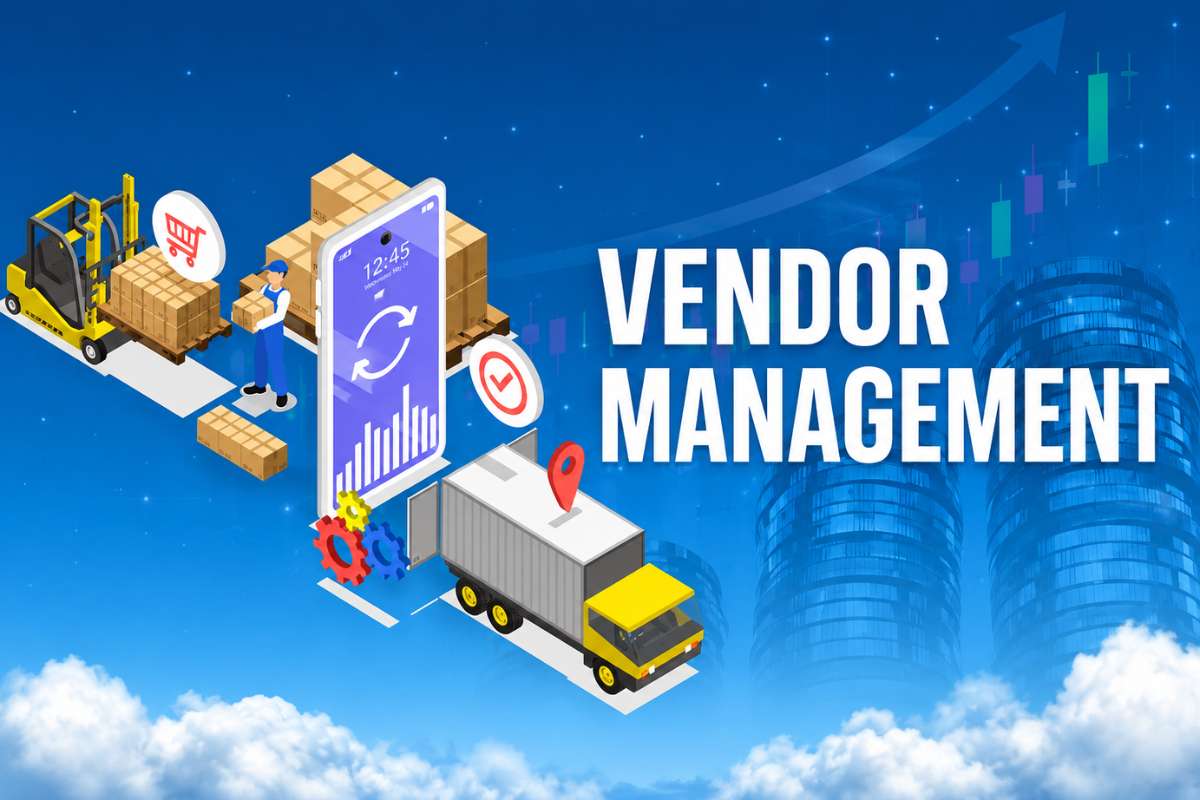
Vendor management is the process of overseeing third-party suppliers to ensure high value and low risk. Instead of just paying invoices, you build lasting partnerships that cut costs, protect against disruptions, and improve efficiency. This guide covers the essential lifecycle, key benefits, and best practices to help you transform your supplier network into a consistent profit driver for your business.
For most business owners, managing vendors usually means paying an invoice right before the deadline or frantically calling a supplier when a shipment goes missing.
It’s the business equivalent of trying to change a flat tire while driving 70 mph. But when you’re constantly fighting fires, you’re missing the chance to actually control your costs and grow.
Let’s figure out what vendor management really means and, more importantly, how it helps you stop losing money and start building value.
What is Vendor Management and How Does It Protect Your Margins?
It is the corporate function of handling your relationships with the third-party suppliers who keep your business running. It is much more than just processing invoices or renewing contracts. It is the practice of ensuring that the value you receive consistently matches the capital you invest.
Think of it as the strategic bridge between your operational needs and your financial goals. When you manage your vendors well, you create a safety net for your cash flow. If you have five software providers and three local service partners, effective management ensures they all perform at their peak, protecting your margins from the hidden costs of poor service or misaligned expectations.
It turns a scattered collection of agreements into a structured, profitable part of your business.
Why is Vendor Management Important for 2026?

The supply chain cooperation software market is set to climb from $12.93 billion in 2026 to over $30 billion by 2034. That massive jump tells us that companies are tired of flying blind. When you lack clear oversight, you’re leaving your front door wide open to risk.
Consider the Target data breach of 2013; hackers did not attack their main systems directly but instead gained entry through the compromised credentials of a third-party HVAC vendor. That single oversight cost the company over $290 million and millions of customer records, proving that you are only as secure as your weakest vendor.
Good management is your company’s personal shield. In today’s world, a vendor having a data breach or a sudden cash flow problem can easily become your problem. By keeping a close eye on these potential dangers, you stop small issues from turning into major fires.
And the best part? It isn’t just about playing defense. When you have a crystal-clear view of who you are working with, you gain the upper hand to negotiate better rates and lock in deals that actually make sense for your bottom line. Now that we know why this matters, let’s look at the actual steps a supplier takes when they join your business world.
What is the Vendor Management Lifecycle?
The vendor lifecycle is the path a supplier takes, starting with the first meeting and ending when the relationship ends. Each stage requires different actions to keep your business safe and profitable.
Here is how a vendor moves through your business:
- Sourcing: You identify exactly what you need and find partners who fit the bill. It is about matching your goals with their capabilities.
- Qualification: This is your background check. You verify their financial health, their reputation, and their ability to follow laws.
- Onboarding: Think of this as the formal handshake. You get them into your system, sign the legal contracts, and set up your payment terms.
- Purchasing: This is the day-to-day work. It involves placing orders and getting the goods or services you need to keep your business running.
- Monitoring: This is the pulse check. You track their performance to see if they are hitting targets on time and keeping costs where they should be.
- Offboarding: Sometimes partnerships end. You need to close their access, secure your sensitive data, and move on professionally.
Here is a quick snapshot of how these stages flow:
| Stage | Action |
| Sourcing | Finding the right vendor for your specific needs. |
| Qualification | Checking financial health and compliance. |
| Onboarding | Setting up accounts and signing contracts. |
| Purchasing | Placing orders and managing daily spend. |
| Monitoring | Tracking performance against agreed goals. |
| Offboarding | Ending the contract and securing your data. |
What are the Benefits and Steps of an Effective Strategy?

Building a solid strategy pays off, but you need to know why you’re doing it first. When you move beyond simple purchasing and start actively managing your vendor relationships, you unlock three major wins for your business:
- Cost Control: You stop overpaying for services and start negotiating better deals based on long-term volume, not just one-off transactions.
- Risk Mitigation: You spot signs of trouble like poor financial health or security gaps long before they disrupt your business.
- True Partnership: Because your vendors understand your goals, they are more likely to offer innovation and priority support, moving from supplier to true partner. This approach mirrors the strategy used by companies like Toyota, which treats its suppliers as vital extensions of the business. Rather than squeezing them for the lowest price, Toyota actively invests in its partners, sharing knowledge to solve quality issues together. This creates a resilient, high-quality network that competitors struggle to replicate, proving that a long-term focus protects your bottom line better than short-term gains.
Many leaders confuse vendor management with standard procurement. While procurement is about the act of buying, supplier partnership is about the ongoing health of the relationship. The following table shows why this distinction matters for your profit margins.
| Feature | Procurement | Vendor Management |
| Core Focus | Getting the lowest price | Getting the best long-term value |
| Timeframe | Transactional (The ‘Now’) | Relational (The ‘Future’) |
| Success Metric | Cost of goods sold | Supplier performance/Risk levels |
| Primary Task | Placing orders/Invoicing | Evaluating contracts/Performance |
Launching Your Strategy: Steps and Best Practices
To bring order to your vendor network, follow these steps.
- Centralize Your Data with Modern Tools: Build a single source of truth for your vendors. Include who they are, what they provide, and their contract terms. Move away from manual spreadsheets, which are prone to errors and missed deadlines. Use a dedicated system to track risks and contract dates in real time, saving your team hours of work each week.
- Define and Track Performance Goals: For each key partner, clearly state what success looks like. Are you prioritizing speed, quality, or communication? Use data to track how often your vendors hit these targets.
- Schedule Reviews and Maintain Open Dialogue: Meet with your most important vendors at least twice a year. Use this time to discuss their performance, upcoming needs, and any challenges that could block your success. By addressing issues the moment they appear, you prevent small misunderstandings from becoming major business disasters.
How do You Select the Right Vendor Management Software?

When you are ready to pick the right platform, focus on these three essential traits to ensure your choice actually serves your business needs.
- The tool must talk to your current accounting and email systems. If the software operates in a silo, your team will quickly abandon it because it adds more work rather than saving time.
- In 2026, security is non-negotiable. Choose a platform that automatically flags whether a vendor meets your required legal and security standards, saving you from manual audits.
- Pick a system that fits your current volume. If you work with 20 vendors, do not pay for an enterprise suite built for 20,000. Start with a system that matches your current size and allows you to add features as your business grows.
Conclusion:
Vendor management is building a foundation for sustainable growth. By moving from a reactive mindset to a proactive, strategic approach, you turn your supply chain from a potential risk into a genuine competitive edge.
Start small, stay consistent, and remember that your suppliers are vital partners in your long-term success.
Frequently Asked Questions
Q: How can small businesses implement these strategies without a large budget?
A: Start by centralizing your vendor data in a simple, shared spreadsheet. Define what you expect from each vendor, then schedule quarterly reviews. You do not need expensive software to start managing your relationships with care.
Q: What is the biggest risk of poor vendor management?
A: The biggest risk is supply chain disruption. If a key vendor fails due to financial or legal trouble, your own operations might stop. You also risk hidden costs from bad contracts or missed performance goals.
Q: How often should we review our vendor contracts and performance?
A: Review performance every quarter for your most critical vendors. Review contracts at least 90 days before they expire. This gives you time to renegotiate or find a new partner if the current one is not the right fit.