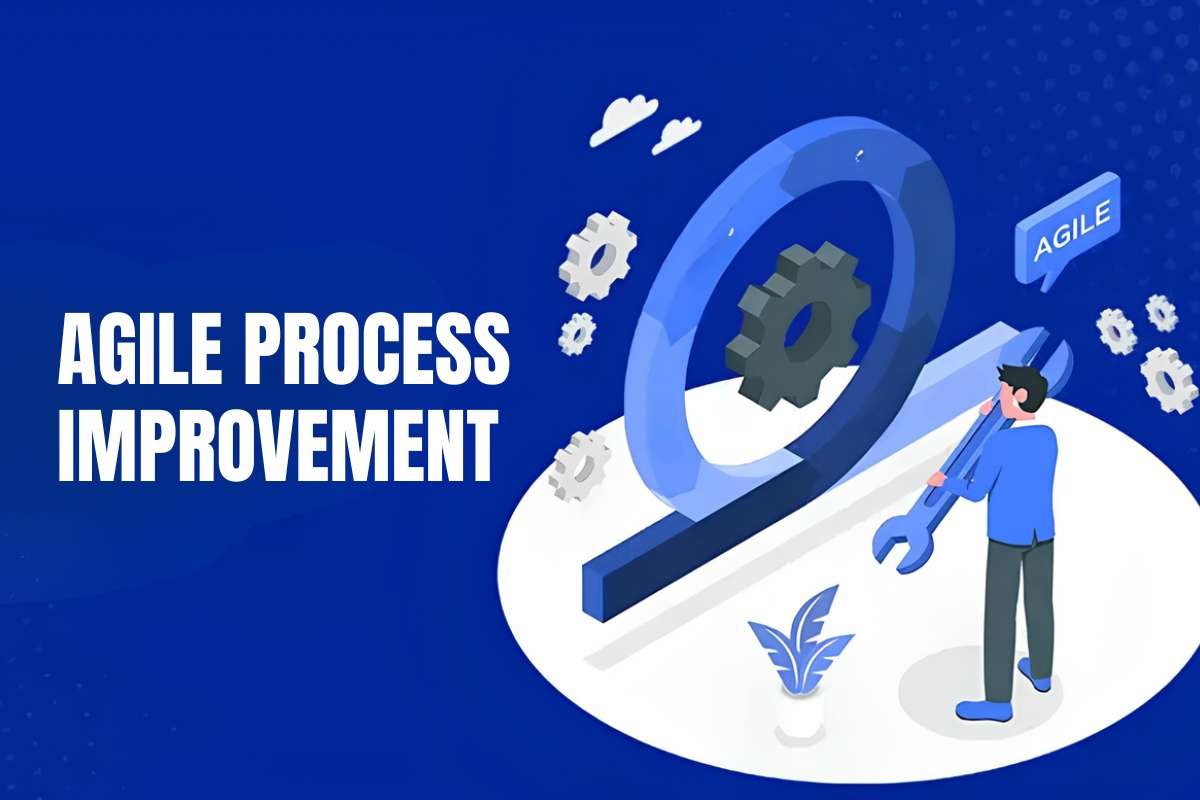
Agile process improvement helps companies stop delivery delays by using real operational data. By mapping steps, setting strict task limits, and tracking core performance metrics, teams cut daily waste and boost overall profits. This method removes hidden blockers and speeds up project success. Read more below to learn how to build a better delivery framework today.
Every organization has processes that waste time. Teams may face long approval cycles, repeated tasks, unclear responsibilities, or delays that make simple work harder than it needs to be. Many companies bring in experts to help teams work more efficiently, but the real problems can remain hidden in their day-to-day workflows.
Agile process improvement helps solve this by making work easier to measure and improve.
In 2026, improving how work gets done is essential for organizations across industries. Let’s look at what agile process improvement means today and why outdated processes continue to slow teams down.
What is Agile Process Improvement in 2026?
Agile process improvement is the practice of regularly examining how work moves through an organization, finding delays or bottlenecks, and making small changes to improve the process.
Instead of waiting for a major annual review, teams look at workflow data and discuss problems during regular work cycles. This helps them spot issues earlier, test practical changes, and see whether those changes actually improve results.
Here are the key concepts that make this framework work:
1. Daily Standups (Quick Morning Updates):
Brief 15-minute meetings where team members share what they finished yesterday, what they are working on today, and any immediate blockers in their way.
2. Team Retrospectives (Bi-Weekly Progress Reviews):
Meetings held at the end of every two-week work cycle (or sprint) where the team reviews what went well, what slowed them down, and how to fix those specific operational problems in the next round.
3. Live Telemetry (Real-Time Work Tracking):
Automated tools and visual dashboards that measure how tasks move through a workflow in real time, showing exactly where items get stuck without relying on manual reporting.
4. Sprints (Short Work Cycles):
Fixed two-week periods where teams focus on finishing a small set of defined tasks rather than trying to build a massive project all at once.
For example, if a finance department takes three weeks to approve a routine expense request, the team can use workflow data to identify where the request is waiting. During its next review, the team can change the approval process and measure whether the request moves faster.
How Agile Process Improvement Differs From Traditional Methods?

Agile is a way of organizing work into short cycles, while traditional process improvement often focuses on making larger, planned changes to a process. Agile process improvement combines the two ideas: teams improve the way work moves through the organization in short, measurable cycles.
The difference is the focus. Instead of waiting for a yearly process review or simply asking whether a project was completed, teams track where work slows down, measure the delay, test a change, and check the results in the next cycle.
Agile Process Improvement vs. Other Approaches
| Approach | Main Focus | How Improvement Happens |
| Traditional Process Improvement | Standardizing and optimizing processes | Often through planned reviews and larger process changes |
| Agile | Organizing and delivering work in short cycles | Teams plan, execute, review, and adapt their work |
| Agile Process Improvement | Improving how work flows through the organization | Teams measure bottlenecks, test changes, and track results in short cycles |
| Kaizen / Continuous Improvement | Making steady improvements over time | Teams identify and address opportunities for incremental improvement |
The key difference is that agile process improvement makes the process itself the object of continuous improvement. Teams do not simply use Agile practices to complete work; they examine how work moves, identify friction, and change the workflow when the data shows an opportunity to improve.
This makes improvement part of everyday work rather than a one-time project.
What Are the Principles and Lifecycle Stages in Agile Process Improvement?
Agile process improvement is all about putting people and practical steps ahead of heavy paperwork and endless planning.
Data from the Project Management Institute shows that teams using agile methods hit a 64% success rate, beating older ways of working by catching mistakes early. To reach these goals, high-performing groups follow five clear stages that apply across different business projects:
Concept Definition and Discovery:
Teams map out the core user problem using simple outlines instead of writing a 100-page manual.
For example, a product team building a banking app might sketch a quick deposit page and test user demand right away, saving weeks of wasted time.
Team Inception and Alignment:
Different team members, like developers, marketers, and managers, match their goals and set clear rules before starting. A good rule is making sure work items clear review queues within 24 hours to stop delays.
Iterative Building and Execution:
Instead of building everything in one giant multi-month push, teams release work in short, two-week cycles. A digital team might build and test a basic login screen before adding payment tools, securing fast feedback.
Quality Control and Validation:
Automated tests and close checks scan work for bugs right before launch. Whether running security checks on code or proofreading financial reports, this step spots errors and keeps broken updates off live systems.
Retrospective and Ongoing Optimization:
Teams hold a quick review at the end of each cycle to see what slowed them down and fix it for the next round. If manual file setups caused a delay, the team writes an automated fix that same week so the problem never repeats.
Also Read: Why Agile Leadership Outperforms Traditional Management Every Time
Why Do Traditional Agile Workflows Stagnate Without Data?
Many organizations assume that introducing a new workflow or improvement framework will automatically solve delivery problems. However, teams can still struggle with inconsistent processes, unclear responsibilities, communication gaps, and limited visibility into where work is actually slowing down.
Without useful workflow metrics, teams may mistake activity for progress. A department may appear busy because employees are handling many tasks, while important work continues to sit in approval queues or wait for information from another team.
For example, a customer service team may have dozens of open requests but no clear view of how long each request spends waiting for approval. A manufacturing team may meet production targets while losing hours to repeated handoffs between departments.
To fix this workflow trap, teams can rely on two practical rules:
- Enforce WIP Limits: Cap the amount of active work so teams can finish existing tasks before taking on more.
- Track Lead Time: Measure how long work takes from start to finish, including the time it spends waiting between steps.
This approach shifts attention from how busy people appear to how effectively work moves through the system. The goal is to identify the process problem rather than blame individuals for delays.
How to Build an Agile Process Improvement Framework from Scratch?
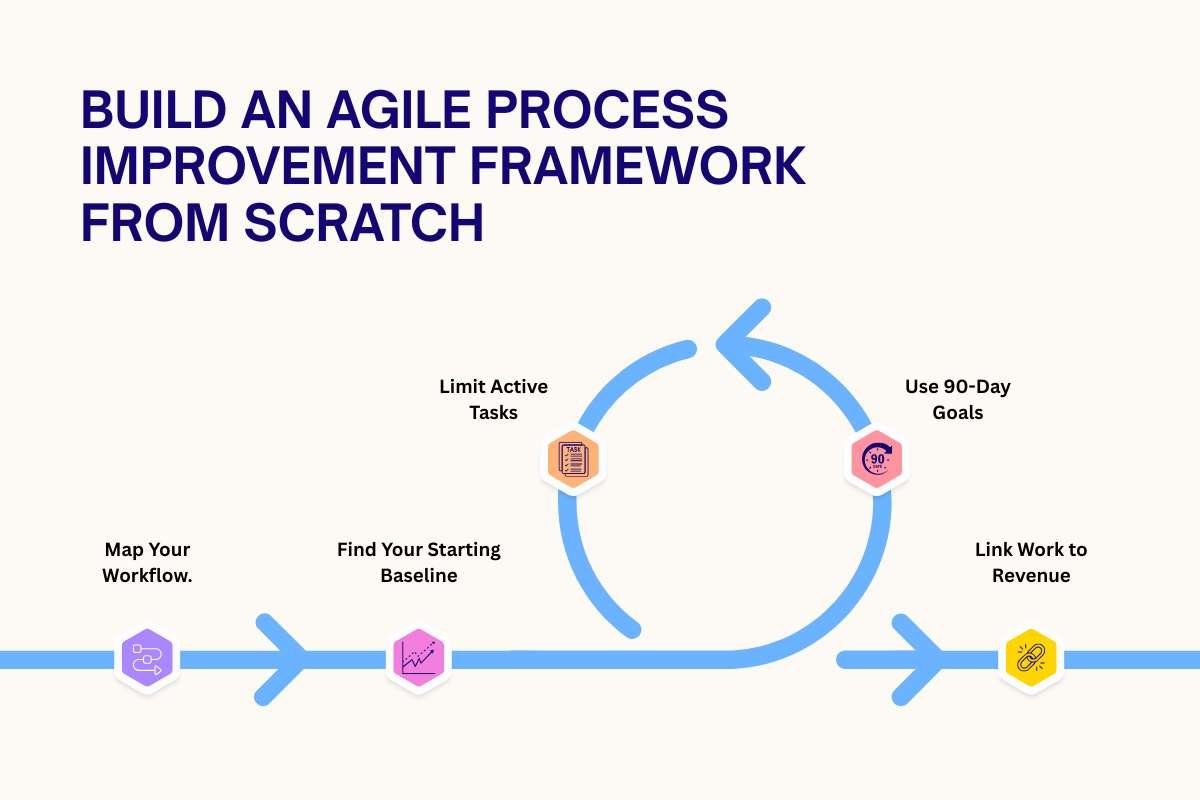
Building a clear agile workflow framework does not have to be hard. High-performing groups across any industry, from marketing and finance to manufacturing and operations, follow five simple steps:
Step 1: Map Your Workflow.
Look at how your team actually works. See where tasks get stuck and where communication slows down.
An operations team finds customer requests sit untouched for days simply because staff juggle too many projects at once.
Step 2: Find Your Starting Baseline
Measure how long it takes to finish tasks from start to finish using basic tracking tools.
If a standard service update takes 14 days to go live, use that 14-day mark as your baseline to check if future tweaks actually speed things up.
Step 3: Limit Active Tasks
Stop multitasking. Force teams to finish current work before starting new items to clear review queues and cut wait times.
Give every team member a maximum limit of two active projects at a time so tasks actually finish instead of piling up half-done.
Step 4: Use 90-Day Goals
Review your progress every three months instead of waiting a full year. This lets you shift resources to winning projects fast.
A business team reviews project results quarterly. If an initiative misses its speed targets, they shift staff to fix the bottleneck right away.
Step 5: Link Work to Revenue
Make sure teams and finance track meaningful business results together rather than focusing only on activity.
Depending on the organization, this could mean tracking revenue, cost savings, customer retention, processing time, service quality, or another measurable business outcome.
Also Read: What is Process Improvement and How To Use It In Your Business?
Which Metrics Actually Predict Enterprise ROI?
Output volume does not equal profit. Leaders across any industry must track hard flow metrics to understand actual delivery speed and financial return.
The table below contrasts outdated metrics with modern performance indicators:
| Metric Category | Traditional Focus | Modern Focus | Business Impact |
| Velocity | Task output volume and hours worked | Flow efficiency and cycle time | Predictable time-to-market |
| Quality | Post-launch error counts | Defect escape rate and automated validation | Lower long-term maintenance costs |
| Value | Project volume and features shipped | Revenue or savings realized per project | Direct alignment with company profit goals |
How Can Leaders Overcome Middle-Management Resistance?
Even the best workflows fail if middle managers push back against new routines. Project Management Institute (PMI) data shows that a lack of active leadership support remains a top barrier to transformation. Mid-level managers often fear that transparent metrics will feel like employee surveillance or expose team failures.
To eliminate pushback and secure buy-in, executive leaders must implement four actionable tactics:
1. Shift from Individual Surveillance to System Health:
Do not use metrics to track individual employee speed. Instead, track aggregate team measures such as average cycle time, backlog age, or process waiting time.
2. Run 30-Day Protected Pilot Programs:
Test new tracking methods with one volunteer team first. Share the results with managers so they can see whether the changes reduce daily problems rather than add paperwork.
3. Reward Problem-Solving:
Recognize managers who identify and remove workflow bottlenecks instead of rewarding teams simply for handling more work.
4. Apply a No-Punishment Data Policy:
Make it clear that process metrics are used to improve workflows, not automatically for performance reviews, disciplinary actions, or budget cuts.
How Does Agile Process Improvement Work Across Industries?

Agile process improvement is not limited to software or product development. The same principles can be applied wherever work moves through a series of steps, approvals, handoffs, or decisions.
Here is how it can help different industries:
- Finance: Reduce invoice-processing and approval delays.
- Marketing: Shorten campaign production and review cycles.
- Human Resources: Improve hiring, onboarding, and employee-request workflows.
- Manufacturing: Identify production bottlenecks and reduce waiting between stages.
- Healthcare: Improve administrative workflows, scheduling, and information handoffs.
- Customer Service: Reduce response and resolution times.
- Software: Track development, testing, review, and release bottlenecks.
The tools and metrics may change by industry, but the underlying approach remains the same: map the workflow, measure where time is lost, make a focused change, and check whether the process improves.
Conclusion:
To succeed, teams must stop relying on basic daily meetings. By tracking real numbers and using smart agile process improvement, you can clear roadblocks and cut wasted time. Start measuring your workflows today to boost your delivery speed and business results.
FAQs
1. How does agile process improvement differ from traditional continuous improvement like Kaizen?
Traditional Kaizen focuses on slow, steady manufacturing changes. Agile process improvement happens in rapid two-week cycles, using live digital data and software telemetry to fix team bottlenecks instantly.
2. Can agile process improvement work for remote or non-technical teams?
Yes. While it started in software, any remote team, such as marketing, HR, or finance, can use these steps by tracking task lead times, setting work limits, and running quick reviews.
3. How do you track team burnout during process updates?
Watch for rising cycle times and overflowing task queues. If staff is forced to juggle multiple active projects at once, stress spikes and delivery speed drops.
4. What signs show a team is ready for automated workflow telemetry?
If tasks sit in review queues for more than 48 hours and team members argue over missed deadlines without hard data to back it up, it is time to use automated tracking tools.