The benefits of process improvement include lower costs, higher productivity, better quality, faster delivery, improved customer satisfaction, and stronger business growth. By removing waste and fixing inefficient workflows, organizations can achieve measurable ROI while helping employees work more effectively and consistently.
A business can have great products, talented employees, and strong demand, yet still struggle with delays, rising costs, and frustrated customers. In many cases, the problem is not what the business does. It is how the work gets done.
Slow approvals, duplicate tasks, communication gaps, and outdated workflows can quietly drain time and money every day. While each issue may seem small, its combined impact can be significant.
This is why the benefits of process improvement have become a major focus for modern businesses. Improving processes helps organizations reduce waste, increase efficiency, improve service quality, and generate stronger returns from existing resources. This guide explores the advantages of process improvement, how to measure its ROI, and why continuous improvement remains a competitive advantage.
Quick Snapshot: Process Improvement’s Benefits
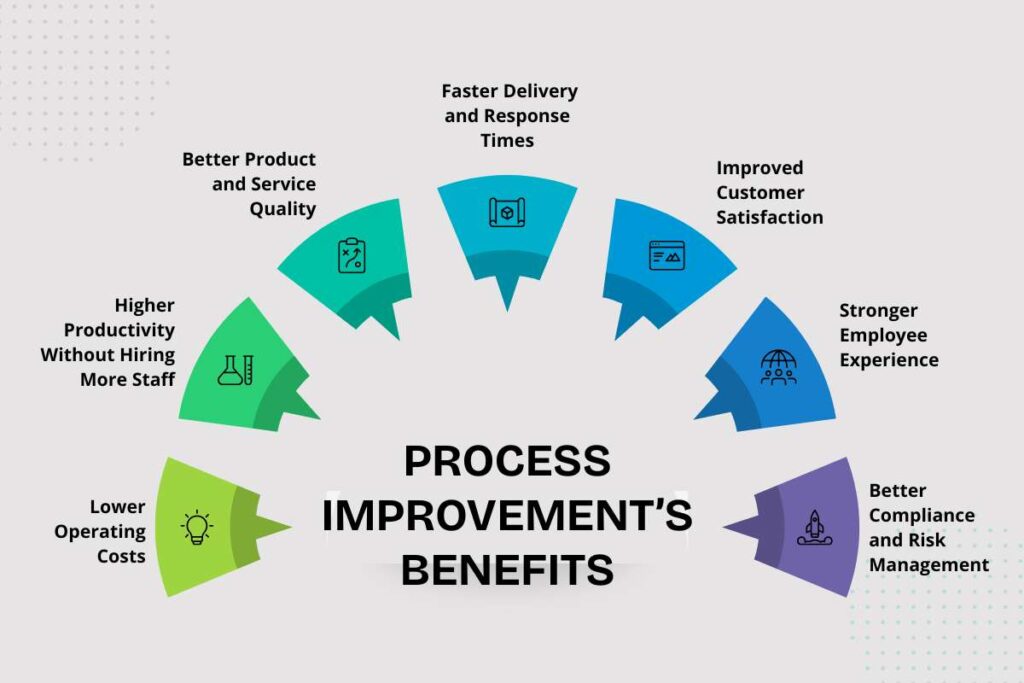
Before looking at each advantage in detail, it helps to see the bigger picture. The benefits go beyond saving time or cutting costs. They can affect nearly every part of a business, from daily operations to long-term growth.
| Sr. No. | Benefit | Business Impact |
| 1 | Lower costs | Cuts waste and reduces daily operating expenses |
| 2 | Higher productivity | Helps teams complete more work with the same resources |
| 3 | Better quality | Reduces errors, defects, and rework |
| 4 | Faster delivery | Speeds up tasks, projects, and customer service |
| 5 | Improved customer satisfaction | Creates more reliable and consistent experiences |
| 6 | Stronger employee engagement | Makes work easier and reduces frustration |
| 7 | Better compliance | Helps teams follow rules and procedures correctly |
| 8 | Higher ROI | Increases savings, efficiency, and business growth |
These outcomes rarely happen on their own. Businesses achieve the benefits of process improvement by finding weak points, removing unnecessary steps, and creating smoother ways of working.
Benefit #1: Lower Operating Costs
Reducing costs is often the first goal when businesses start improving their processes. Many companies spend more than they realize because of small inefficiencies that happen every day. These can include:
- Duplicate work
- Manual data entry
- Unnecessary approval steps
- Excess inventory
- Rework caused by mistakes
Each issue may seem minor on its own, but together they can create high costs over time. Process improvement helps identify and remove these wasteful activities without reducing the quality of work.
For example, a company that cuts a five-step approval process down to three steps can save employee time, speed up decisions, and reduce labor costs. In many cases, the benefits of process improvement become clear through lower operating expenses and better use of existing resources.
Benefit #2: Higher Productivity Without Hiring More Staff
Growing a business does not always mean hiring more people. In many cases, companies can increase output by helping employees work more efficiently.
When processes are clear and organized, employees spend less time dealing with delays and more time completing important tasks. Common improvements include:
- Faster approvals
- Better visibility into work progress
- Less waiting between tasks
- Clear ownership of responsibilities
- Quicker access to information
As teams become more efficient, they can complete more work without increasing headcount. This is one of the most valuable benefits for businesses looking to grow while controlling costs.
Benefit #3: Better Product and Service Quality
Customers notice quality problems quickly. A missed deadline, incorrect order, or billing error can hurt trust and send customers elsewhere.
Process improvement creates a more consistent way of working. When teams follow clear steps, there is less room for mistakes and fewer issues that require rework later. The result is better products, more reliable service, and a smoother customer experience.
Many businesses find that some of the most valuable advantages come from higher quality because it supports both customer retention and profitability.
Benefit #4: Faster Delivery and Response Times
Customers do not like waiting. The longer a task takes, the greater the chance of delays, complaints, or lost business.
Common causes of slow processes:
- Bottlenecks
- Too many reviews
- Manual handoffs
- Poor communication
Remove these barriers, and work moves faster.
For example, reducing order processing from three days to one day can improve customer satisfaction and give a business an edge over competitors. Some of the most visible benefits of process improvement appear when customers receive faster service.
Benefit #5: Improved Customer Satisfaction
Customers do not care how a business operates behind the scenes. They care about getting the right product or service on time and without problems.
When processes are clear and consistent, customers experience fewer delays, errors, and frustrations. This leads to better service and stronger trust over time.
According to PwC, 29% of consumers say they stopped using or buying from a brand due to poor customer experience, either online or in-person. This shows how much customer satisfaction can influence business success.
Benefits like these often extend far beyond efficiency because better experiences help businesses retain customers and build loyalty.
Benefit #6: Stronger Employee Experience
Employees do their best work when processes support them instead of slowing them down. Poor systems can create daily frustration, waste time, and make simple tasks harder than they need to be.
| Common Challenge | How Process Improvement Helps |
| Repeated manual work | Automates or removes unnecessary tasks |
| Unclear responsibilities | Defines ownership and accountability |
| Poor communication | Creates clearer workflows and handoffs |
| Slow approvals | Streamlines decision-making |
| Frequent process breakdowns | Standardizes work and reduces errors |
When these obstacles are removed, employees can focus more on meaningful work and less on fixing problems. Among the often-overlooked benefits of process improvement are higher morale, better engagement, and a smoother day-to-day work experience.
Benefit #7: Better Compliance and Risk Management
Many compliance and risk issues can be traced back to weak or inconsistent processes.
Process improvement helps reduce:
- Missing documentation
- Compliance violations
- Security gaps
- Audit findings
- Financial errors
Clear procedures make it easier to follow rules, maintain records, and catch problems early. In highly regulated industries, these benefits often include lower risk and stronger compliance performance.
Why ROI Matters in Process Improvement?
Improving a process is only part of the goal. Businesses also need to measure the financial value that those improvements create. Tracking ROI helps show whether a change is actually delivering results.
| ROI Metric | What It Measures |
| Cost Savings | Money saved by reducing waste and unnecessary expenses |
| Time Savings | Hours recovered from manual or inefficient tasks |
| Productivity Gains | More output without adding staff or resources |
| Error Reduction | Savings from fewer mistakes, complaints, and rework |
| Customer Retention | Revenue protected through better customer experiences |
| Revenue Growth | New income created by faster and more scalable operations |
The strongest benefits become clear when businesses connect operational gains to measurable financial outcomes.
How to Calculate Process Improvement ROI?

ROI shows whether the money gained from a process improvement project is greater than the money spent to make it happen.
Use this formula:
ROI (%) = (Financial Benefits − Improvement Costs) ÷ Improvement Costs × 100
Financial benefits can include:
- Lower labor costs
- Reduced waste
- Fewer errors and rework
- Time savings
- Increased revenue
Example
A company improves its invoice approval process.
| Metric | Value |
| Annual labor savings | $60,000 |
| Reduced error costs | $25,000 |
| Faster payment collection | $15,000 |
| Total annual benefits | $100,000 |
| Project cost | $25,000 |
| ROI | 300% |
In this case, the company gained $100,000 in annual value after spending $25,000 on the improvement project. After costs are recovered, the business keeps the remaining savings as financial gain.
Calculating ROI helps leaders move beyond assumptions and identify which initiatives deliver the greatest benefits of process improvement.
Common Areas Where Businesses See the Fastest Returns
Not every process delivers the same value. Businesses often see the fastest returns when they improve processes tied directly to costs, revenue, or customer experience.
- Customer Service: Faster response times help resolve issues quickly and improve customer satisfaction.
- Finance: Streamlined invoice approvals and payment workflows reduce delays and administrative costs.
- Procurement: More efficient purchasing processes help teams secure goods and services faster.
- Human Resources: Better onboarding processes help new hires become productive sooner.
- Manufacturing: Improved workflows reduce waste, downtime, and production bottlenecks.
- Sales: Stronger lead management helps sales teams spend more time on high-value opportunities.
- IT: Faster issue resolution keeps systems running smoothly and reduces disruptions.
Today, businesses face higher customer expectations, tighter budgets, and stronger competition than ever before. Companies can no longer afford slow or inefficient ways of working. According to McKinsey’s 2025 Global Survey on AI and Operational Transformation, organizations that improve operational efficiency are more likely to achieve measurable business value from their transformation efforts.
Organizations usually achieve the greatest benefits when they focus first on processes that have the biggest impact on daily operations and business results.
Mistakes That Reduce ROI
Even well-planned improvement projects can fall short if businesses focus on the wrong things. Avoiding a few common mistakes can significantly increase the value of your efforts.
| Mistake | Why It Hurts ROI? |
| Improving the Wrong Process | Low-impact processes deliver limited business value. |
| Ignoring Employee Feedback | Frontline employees often know where the biggest problems exist. |
| Measuring Too Few Metrics | Important gains or losses may go unnoticed. |
| Making Changes Too Quickly | Untested changes can create new problems. |
| Failing to Monitor Results | Improvements may fade over time without tracking. |
Avoiding these mistakes helps businesses capture more of the benefits of process improvement and sustain results long after implementation.
The Long-Term Value of Process Improvement

The true value of process improvement is not a single cost-saving project or a short-term productivity gain. Its biggest impact comes from helping businesses build a habit of continuously finding better ways to work.
Organizations that regularly review and improve their processes are often better prepared for change. They can adapt faster to customer needs, respond more effectively to market shifts, and recover more quickly from operational challenges. Over time, this leads to stronger performance, healthier profit margins, and more loyal customers.
The benefits of process improvement also build on each other. Lower costs free up resources for growth. Better quality strengthens customer trust. Faster workflows improve both employee and customer experiences.
Businesses that make process improvement part of their culture are often the ones that achieve sustainable growth. Rather than reacting to problems, they create systems that help prevent them, giving them a long-term advantage over competitors.
Frequently Asked Questions
What is an example of process improvement?
Automating invoice approvals to reduce delays, manual work, and processing costs.
How long does a process improvement project take?
Small projects take weeks. Larger initiatives may take several months.
Which process should a business improve first?
Prioritize processes with high costs, frequent delays, errors, or customer impact.
What are the signs that a process needs improvement?
Missed deadlines, bottlenecks, customer complaints, duplicate work, and frequent mistakes.
Can small businesses benefit from process improvement?
Yes. Small improvements can save time, reduce costs, and support growth.
What is the difference between process improvement and process automation?
Process improvement fixes workflows. Automation uses technology to execute tasks automatically.