Presence Leadership is a leadership approach where you stay calm, engaged, and authentic with your team so people feel heard and trust you more. This article explains what it looks like at work, why it matters in hybrid and AI-driven workplaces, and five practical strategies to build it, from self-awareness to clearer communication. Read on to learn habits that boost trust, engagement, and retention, so your team stays motivated even when work gets hard.
Walk into a room, and you can usually tell who the leader is before anyone speaks. It’s not the loudest voice or the fanciest title. It’s a calm, focused energy that makes people lean in and pay attention.
That quality has a name: presence leadership. A Gallup study found that only 20% of employees worldwide feel engaged at work, and managers are the biggest reason people stay in a job or quit. Building this kind of presence is one of the clearest ways a leader can shift that number for their own team.
This guide breaks down what the concept means, why it matters more in hybrid and AI-driven workplaces than it did five years ago, and how to build it step by step. You’ll also find common mistakes to avoid and a comparison against traditional leadership.
Understanding presence leadership
At its core, this style of leading is the ability to be fully engaged, calm, and authentic with others in the moment. It helps people feel heard, safe, and motivated to act. It’s less about giving orders and more about how a leader shows up: attentive, honest, and steady under pressure.
Leaders who lead this way tend to share a few habits:
- They listen without checking their phone or rehearsing a reply.
- They stay composed when plans fall apart.
- They speak plainly instead of hiding behind jargon.
- They follow through on what they say they’ll do.
- They notice when someone on the team is struggling before it becomes a bigger problem.
None of this requires a big personality. Quiet, introverted leaders can build just as much impact this way as extroverted ones, because the skill depends on attention and consistency.
5 Strategies to build presence leadership skill
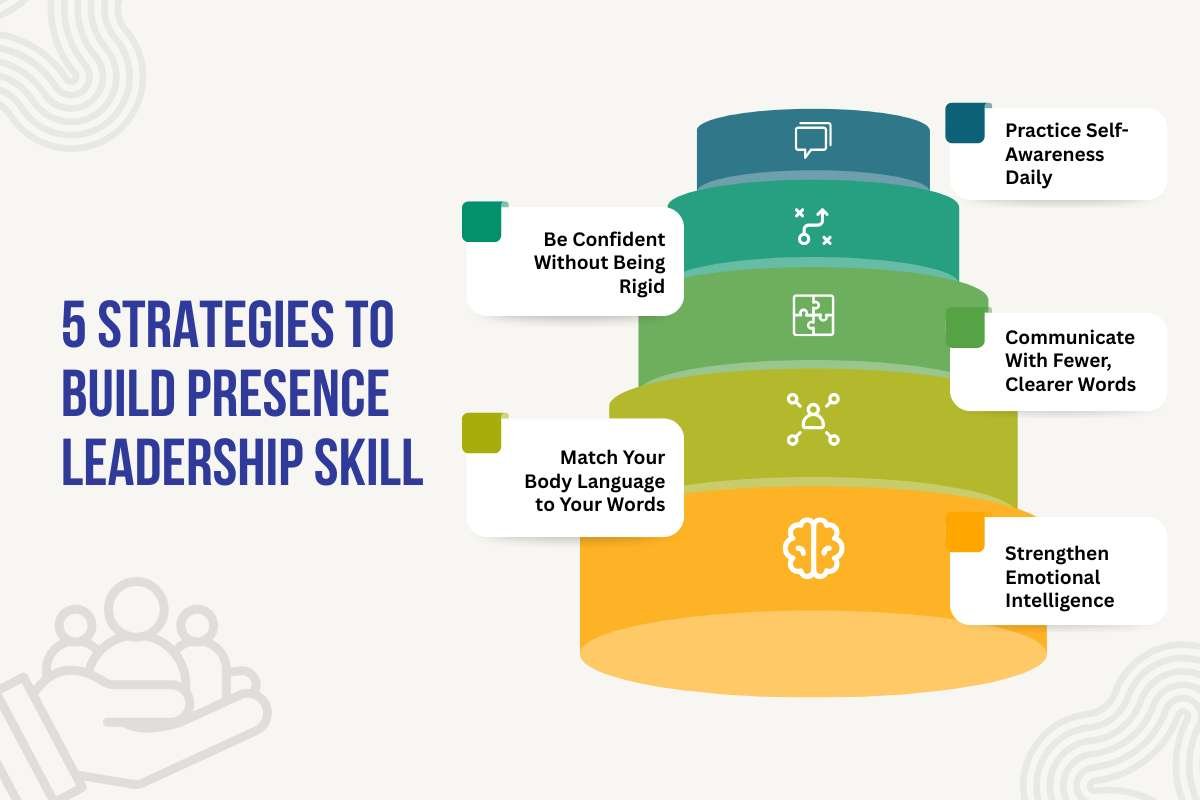
You can strengthen it with deliberate practice. These five strategies are a practical starting point for any manager, at any level.
1. Practice self-awareness daily
It starts with knowing your own patterns. Spend five minutes after a tough meeting asking what triggered your reaction and how it may have landed on others. A short journaling habit or brief mindfulness practice can sharpen this awareness over a matter of weeks.
2. Be confident without being rigid
Confidence isn’t about having every answer ready. It’s about owning your values and admitting when you’re wrong. Leaders who say “I don’t know, let’s find out together” often earn more trust than those who bluff their way through.
3. Communicate with fewer, clearer words
Long, vague updates lose people quickly. Say the main point first, then add context only if it’s needed. In meetings, ask one good question and actually wait for the answer instead of filling the silence yourself.
4. Match your body language to your words
Nonverbal signals carry real weight, especially on video calls where only your face and voice come through. Face the camera, keep your tone steady, and avoid crossing your arms or multitasking while someone is talking to you.
5. Strengthen emotional intelligence
Notice your own stress before it leaks into a conversation. Name what a team member might be feeling before jumping straight to solutions (“that sounds frustrating,” for example). This one habit alone defuses a surprising number of workplace conflicts.
How does presence leadership show up in the workplace?
This isn’t a personality trait you either have or don’t. It’s a set of behaviors that ripple through a team in visible ways.
Trust Builds Faster: When a leader is consistently attentive and honest, employees stop guessing what the leader “really” means and start speaking up with ideas and concerns instead of staying quiet.
Ownership Increases: Present leaders coach instead of micromanaging. They give people room to make decisions, which pushes employees to take responsibility for outcomes rather than just following instructions.
Feedback Becomes a Habit: Leaders with strong presence give feedback in the moment, so small issues get corrected before they grow into bigger ones.
Retention Improves: Employees rarely leave a job they enjoy with a manager they trust, and this kind of everyday attentiveness is a fast way to build that trust.
Meetings Become More Useful: People contribute more freely when they believe the person leading the discussion is actually listening, not just waiting for their turn to talk.
Why presence leadership matters more right now?
Hybrid work has changed how often leaders and their teams see each other. A 2023 McKinsey survey found that 90% of organizations were blending in-office and remote work, which means fewer hallway conversations and natural chances for a leader’s presence to come through. Every meeting, message, and video call now carries more weight than it used to.
At the same time, AI tools are automating routine tasks like scheduling, status updates, and note-taking. This is why leaders having skills AI can’t replace are more valuable. Their real value lies in reading a room, defusing tension, and making people feel supported. Engaged leaders fill this gap.
Research backs this up too. It links low manager engagement directly to higher turnover and weaker team performance. Highly engaged teams, on the other hand, report better profitability and lower absenteeism. Being present is a big part of what separates a manager people want to work with.
Common mistakes that undermine presence
Even well-intentioned leaders can sabotage their own progress without realizing it. Watch for these patterns:
- Multitasking During Conversations: Glancing at a screen while someone talks sends a clear signal that they aren’t the priority, even if that’s not the intent.
- Over-explaining Decisions: Long justifications can come across as insecurity rather than transparency. A short, honest reason is usually enough.
- Reacting Instead of Responding: Snapping at bad news teaches people to hide problems from you instead of raising them early.
- Treating It as a Performance: Faking calm in a crisis while quietly panicking tends to leak out anyway, and it erodes trust faster than admitting uncertainty would.
- Skipping the Follow-up: Being warm and attentive in the moment means little if commitments made in that conversation are forgotten a week later.
Fixing even one of these habits can noticeably shift how a team experiences their leader within a few weeks.
Presence leadership vs. Traditional leadership: How do they compare?

It helps to see the two styles side by side. Traditional leadership tends to lean on authority and structure, while this approach leans on trust and everyday connection. Neither is wrong, but they produce very different team dynamics over time.
| Traditional Leadership | Presence Leadership |
| Leads through authority and title | Leads through trust and connection |
| Gives instructions, expects compliance | Coaches, invites input |
| Feedback saved for annual reviews | Feedback given in real time |
| Focuses mainly on output | Focuses on people and output together |
| Can work short-term under pressure | Builds long-term engagement and loyalty |
Conclusion
Presence leadership is a practical response to a workplace where trust is harder to build and easier to lose than it used to be. Leaders who show up fully, listen closely, and communicate clearly create teams that stay engaged even when the work gets hard.
You don’t need a new title or a personality change to build this skill. One distraction-free conversation, one honest piece of feedback, or one meeting where you ask more can help you get started. This kind of leadership grows through repetition, and the compounding effect on trust and performance is well worth the effort.
FAQs
1. Is presence leadership the same as charisma?
No. Charisma is about personality, while this approach is about consistent attention, honesty, and follow-through.
2. Can it be learned?
Yes. Through self-awareness, active listening, and regular feedback practice, most leaders can noticeably strengthen their presence within a few months.
3. How does it affect employee retention?
Employees are less likely to leave managers who listen consistently and follow through on commitments, so building stronger presence often leads to lower turnover.
4. Does it work in remote or hybrid teams?
Yes, though it takes more intention. Leaders need to show up through clear communication, steady video-call habits, and timely feedback since casual in-person moments are rarer.