Leadership has changed fast. In the last five years, the way companies are run looks very different from before. What worked for leaders 20 years ago does not always work now.
The old model was simple. CEOs focused on control. Decisions moved slowly. Teams followed strict levels of hierarchy. This worked when change was slower, and markets were more stable.
Today, things move quickly. Leaders need to act fast, build trust, and adjust when things shift. Teams are more open, and ideas can come from anywhere. People expect clear direction, but also freedom to do their best work.
This is where modern CEO traits come in. These are not just skills. They are ways of thinking and acting that help leaders handle change and guide their teams.
In this guide, we will look at what actually works today. No theory. Just clear, useful insights you can understand and apply.
Why CEO traits matter more in 2026 than ever
Business today moves faster than ever. New tools like AI are changing how companies work. In fact, about 92% of companies plan to increase AI investment, but only 1% feel fully ready to use it well. This gap shows one clear thing. Technology is moving fast, but leadership is struggling to keep up.
Uncertainty is also rising. Only 30% of CEOs feel confident about revenue growth in the near future, and many say change is constant, not a one-time event. Leaders now deal with shifting markets, global risks, and new ways of working all at once.
Work itself has changed. Around 73% of executives expect hybrid work to stay, and 85% say it makes managing teams harder. Leading people is no longer about being in the same office. It takes more trust and better communication.
People expect more from leaders, too. Employees are more likely to stay and perform better when companies invest in leadership development.
At the same time, mistakes spread faster. A poor decision can affect teams, customers, and reputation almost instantly.
This is why modern CEO traits matter more than ever. Leaders today must think clearly, act fast, and guide people through constant change.
A good strategy is useless without the right leadership traits.
Modern CEO traits that drive real impact
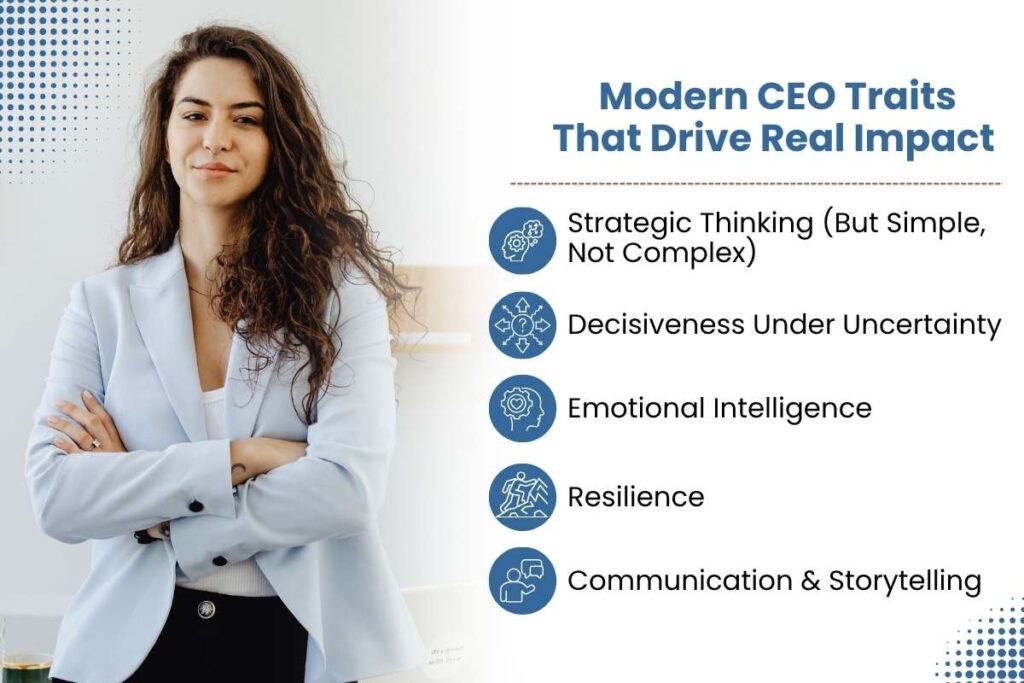
1. Strategic thinking (but simple, not complex)
Great CEOs do not chase every idea. They focus on what matters most and remove distractions early. Strategic thinking today is about clarity, not complex plans that slow teams down. It means spotting patterns, understanding change, and choosing a clear direction.
Strong leaders simplify choices so teams can act faster and stay aligned. They know that doing fewer things well often beats doing many things poorly in fast-changing business environments across industries today.
- Over 40% of CEOs believe their company may not be viable in 10 years without change.
- 70% of transformations fail, often due to a lack of focus and execution
2. Decisiveness under uncertainty
Modern leaders cannot wait for perfect data before taking action in changing environments. They make informed decisions with limited information and adjust as new facts appear. Decisiveness builds trust and keeps teams moving without confusion or delay, which is a key part of modern CEO traits.
Strong CEOs take responsibility for outcomes and stay accountable when results are not ideal. They understand that slow decisions can create bigger problems than wrong ones. Speed with awareness helps companies stay competitive and respond to challenges in real time today.
- Only 20% of organizations make decisions quickly and effectively.
- Faster decision-making companies are more likely to outperform their peers financially.
3. Emotional intelligence
Leadership today is not only about results. It is about understanding people and how they work together daily. CEOs with emotional intelligence read situations well and respond with calm and clarity.
They manage stress, resolve conflict, and create trust across teams. Listening plays a bigger role than speaking in strong leadership. When people feel heard, they perform better and stay engaged. This trait helps leaders build stronger cultures where teams feel valued, supported, and ready to contribute consistently.
- Employees who feel heard are 4.6 times more likely to perform their best work.
- 79% of employees quit due to a lack of appreciation.
4. Resilience
Every leader faces setbacks, pressure, and unexpected challenges during business growth and change. Resilient CEOs stay steady and focused even when situations become difficult or uncertain. They recover quickly from failure and do not let mistakes slow future progress.
Instead of reacting emotionally, they stay practical and move forward with lessons learned. This approach keeps teams calm and confident during tough times. Strong resilience helps leaders maintain direction, protect morale, and continue building progress even under constant pressure today, which is a key part of modern CEO traits.
- 93% of executives say agility and resilience are critical to success.
- Organizations with resilient cultures are more likely to outperform during disruption.
5. Communication & storytelling
Clear communication helps leaders turn ideas into action across teams and departments. CEOs must explain goals in simple words so everyone understands what needs to be done. Storytelling helps people connect with the vision and remember it over time.
Strong communication reduces confusion and builds trust across the organization. It also ensures teams stay aligned and focused on shared goals. Leaders who communicate well make complex ideas easy, helping teams move faster and work together with better clarity and purpose daily.
- Teams with effective communication are 25% more productive.
- 86% of employees cite poor communication as a key cause of failure.
These CEO traits work together to help leaders guide teams, make better decisions, and drive consistent business results.
The shift from old CEOs to modern CEOs
Leadership has changed in clear ways. The role of a CEO today is not just about control or authority. It is about guiding people, making faster decisions, and adapting to constant change, which is why modern CEO traits have become so important. The table below shows how leadership has shifted over time.
| Old CEO Style | Modern CEO Style |
| Control-focused | Trust-focused |
| Slow decisions | Fast decisions |
| Top-down leadership | Collaborative leadership |
| Risk-averse | Calculated risk-taking |
| Data-heavy | Insight + intuition |
In simple terms, leaders today do less controlling and more guiding. They trust their teams and give them space to work. Decisions are made faster, even when not all the answers are clear. Teams are more involved in idea generation and problem-solving. Risk is not avoided, but managed carefully. Data still matters, but leaders also rely on judgment and experience. This shift explains why CEO traits are important in today’s fast-moving business world.
Modern CEO traits in action (case studies)
Example 1: Satya Nadella
When Satya Nadella became CEO of Microsoft in 2014, the company was seen as slow and rigid. He shifted the culture by focusing on empathy, learning, and teamwork across teams. He moved the company toward cloud computing with Azure, which became a major growth driver. Under his leadership, Microsoft regained relevance and grew in value and influence.
- Adaptable Leadership Traits: Understanding people and making clear strategic bets without aggressive or loud leadership.
- Company: CEO of Microsoft
- Recognition: Named among Time’s 100 Most Influential People and widely credited for Microsoft’s turnaround
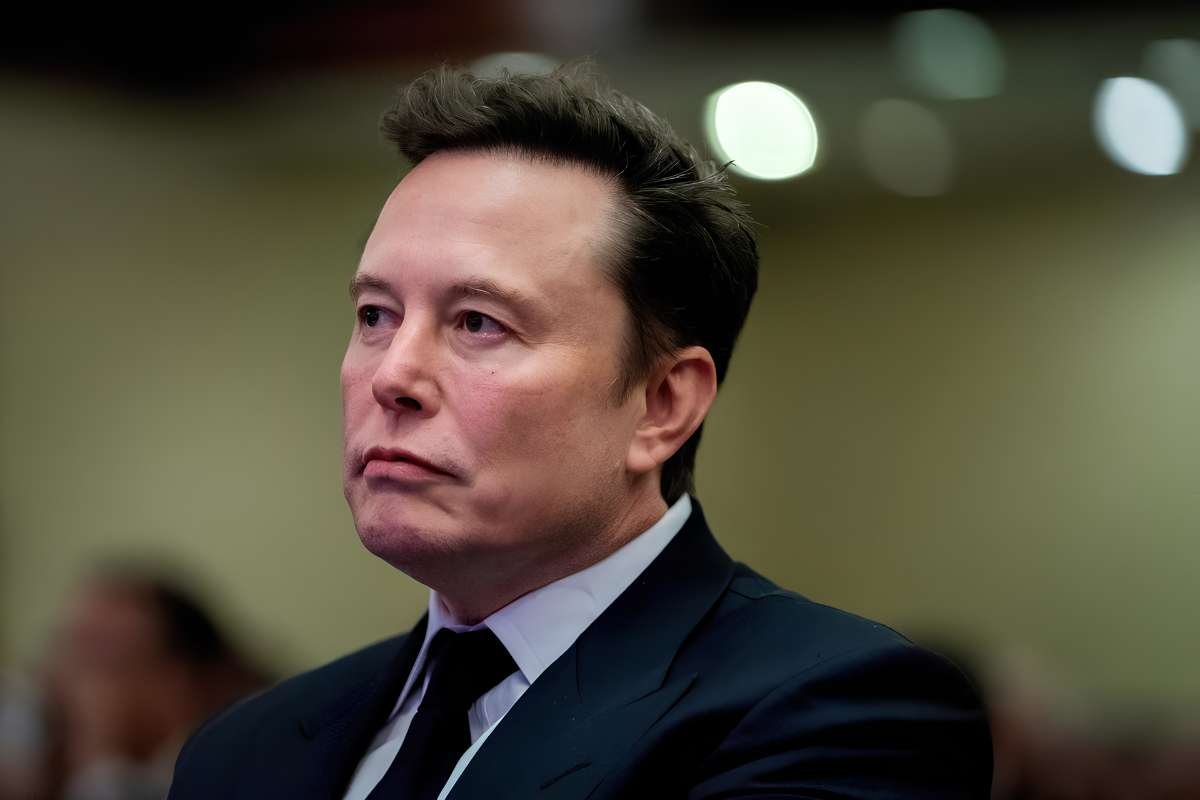
Example 2: Elon Musk
Elon Musk is known for bold decisions and high-risk-taking across his companies. At Tesla and SpaceX, he pushed teams to move fast and solve complex problems under tight timelines. His decisiveness helped both companies achieve breakthroughs in electric vehicles and space technology. However, his leadership style is intense and often demanding, which creates pressure on teams.
- Adaptable Leadership Traits: Using speed and risk-taking to drive innovation while balancing the impact on team experience.
- Company: CEO of Tesla and SpaceX
- Recognition: Ranked among the richest people in the world and known for leading major innovations in EVs and space
Example 3: Sundar Pichai
Sundar Pichai leads Google with a calm and steady approach. He focuses on long-term growth, careful decisions, and building products that scale globally. Under his leadership, Google has expanded its core services and invested in areas like AI and cloud computing. His style shows that strong leadership does not always need speed or pressure. Instead, clarity, patience, and consistent direction can also deliver results.
- Adaptable Leadership Traits: Balancing innovation with stability to keep teams focused on complex global products over time.
- Company: CEO of Google
- Recognition: Featured in Time 100 and recognized for leading one of the world’s most influential tech companies
Trait → impact framework

Strong leadership is not just about having traits. It is about how those traits show up in daily actions and what results they create. The table below connects each trait to real behavior and clear business impact.
| Trait | Behavior | Business Impact |
| Strategic Thinking | Focus on a few priorities | Faster execution |
| Decisiveness | Quick, clear decisions | Less delay, more growth |
| Emotional Intelligence | Strong team understanding | Higher retention |
| Resilience | Bounce back from setbacks | Stability in tough times |
| Communication | Clear messaging | Better alignment |
This framework shows how CEO traits are not abstract ideas. Each one leads to visible outcomes that affect performance, culture, and growth.
How to build modern CEO traits?
Building strong leadership traits is not about talent. It comes from daily practice and small changes over time. These simple actions can help you improve step by step.
- Start with self-awareness
Ask for honest feedback and reflect on your decisions. This helps you see what is working and what needs to improve. - Practice decision-making with limited data.
Do not wait for perfect answers. Take action with what you know and adjust as new information comes in. - Improve communication with simple language.
Avoid complex words. Clear and simple communication helps teams understand faster and act with confidence. - Build habits, not motivation.
Small actions done every day create lasting change. Consistency matters more than short bursts of effort. - Learn from real leaders.
Observe how experienced leaders think, decide, and handle pressure. Real examples teach more than theory.
Future of CEO leadership
Leadership is changing, and the next few years will shape how CEOs work. Technology will play a bigger role, but it will not replace leadership. AI will support decisions by giving better data and faster insights. The final call will still depend on human judgment and experience.
Teams will become more distributed. CEOs will lead people across cities, countries, and time zones. This makes trust, communication, and clarity even more important. Leaders must keep teams aligned without being physically present.
Human skills will matter more, not less. Understanding people, managing pressure, and building strong cultures will define effective leadership. Technical tools can support work, but they cannot replace how leaders guide and motivate teams.
Speed and clarity will separate strong leaders from average ones. CEOs who make clear decisions and move quickly will stay ahead in fast-changing markets.
Leaders who adapt fast will outperform smarter but slower competitors, which is a key part of strong modern CEO traits.
Common mistakes to avoid

Even strong leaders can fall into simple traps. These mistakes slow growth and create confusion across teams. Avoiding them can make a big difference.
- Overcomplicating strategy
Simple plans work better. When the strategy is too complex, teams struggle to understand and execute it. - Avoiding tough decisions
Delays create bigger problems. Clear and timely decisions help teams move forward with confidence. - Ignoring team dynamics
Results come from people. If teams feel unheard or disconnected, performance drops over time. - Focusing only on short-term results
Quick wins matter, but long-term thinking builds lasting success and stability. - Copying leadership styles blindly
What works for one leader may not work for another. Strong leaders adapt their style to fit their team and situation.
Avoiding these mistakes is just as important as building strong modern CEO traits.
Final thoughts
Leadership today is about clarity, speed, and people. The way companies grow and compete has changed, and leaders must change with it. Clear thinking, quick decisions, and strong people skills now matter more than ever.
The best CEOs are not perfect. They learn, adjust, and improve over time. They stay open to feedback and are willing to change when needed. This ability to adapt is what keeps them effective in a fast-moving environment.
Small improvements in how leaders think, decide, and communicate can lead to real business results. Over time, these changes build stronger teams, better execution, and steady growth. That is the real value of developing strong modern CEO traits.
People also ask
1. What are CEO traits?
CEO traits that are the key skills and behaviors leaders need today. These include clear thinking, fast decision-making, strong communication, and the ability to adapt to change.
2. Why are modern CEO traits important now?
Business is moving faster than ever. Leaders must handle change, guide teams, and make quick decisions. The right traits help CEOs stay effective in uncertain environments.
3. Which CEO trait matters the most?
There is no single most important trait. Strong leaders combine multiple traits like decisiveness, communication, and emotional understanding to get better results.
4. How do CEOs improve decision-making skills?
They practice making decisions with limited data, learn from outcomes, and adjust quickly. Over time, this builds speed and confidence.
5. Can modern CEO traits be learned?
Yes. Most leadership traits are built over time. With practice, feedback, and real experience, anyone can improve how they lead and make decisions.
Sources:
https://www.pwc.com/gx/en/issues/c-suite-insights/ceo-survey.html
https://www.mckinsey.com/capabilities/people-and-organizational-performance/our-insights