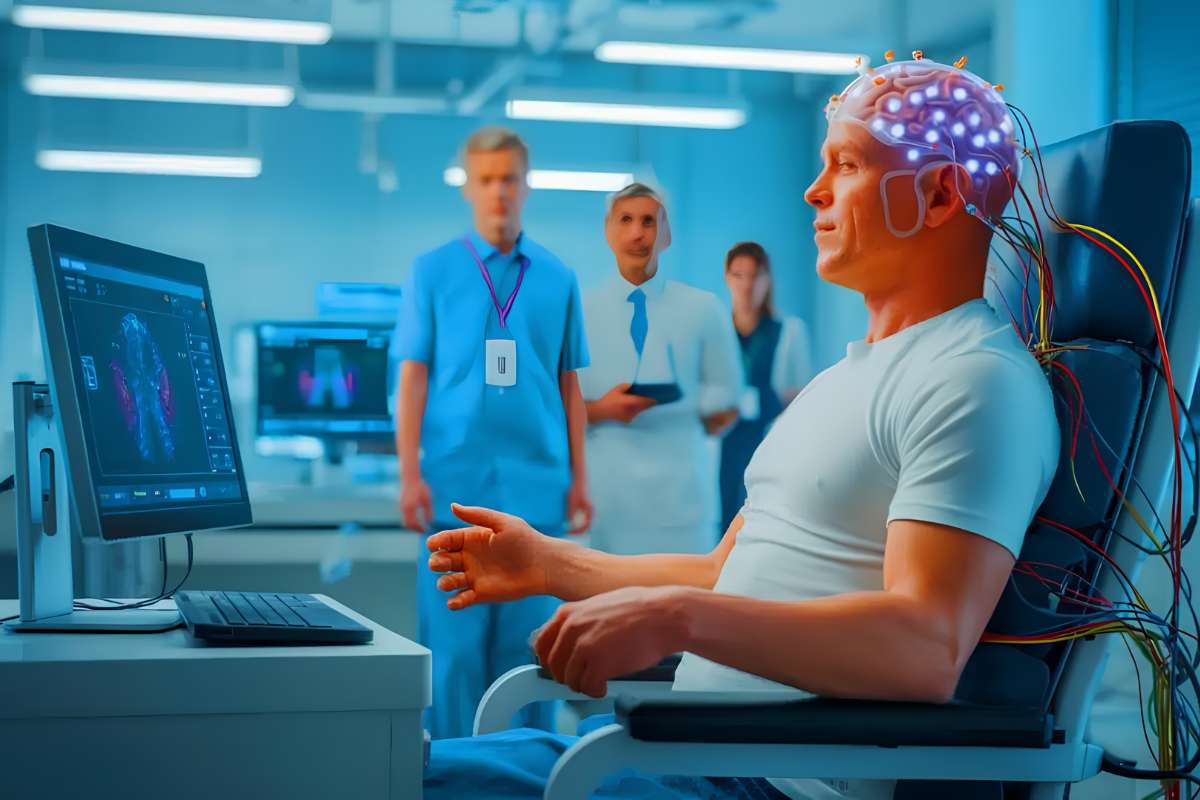
Brain-computer interfaces are transforming healthcare by enabling people to move, communicate, and recover after illness or injury. This article explains how it works, where they are used today, and the challenges they face. It also looks at the future of BCI in healthcare, including smarter systems, personalized therapies, and new ways to support people with neurological conditions.
A brain-computer interface (BCI) is a technology that allows the brain to communicate directly with a computer or external device. It works by detecting brain signals and turning them into actions, such as moving a cursor, controlling a wheelchair, or generating speech.
Interest in BCIs is growing in healthcare as advances in neuroscience, sensors, artificial intelligence, and computing improve their performance. Researchers are exploring how these systems could help people with paralysis, speech loss, stroke, and other neurological conditions regain important abilities.
While many BCIs are still in development, their potential is attracting attention worldwide. The future of BCI in healthcare may bring new treatment options, greater independence for patients, and important questions about safety, access, and regulation.
How Brain-Computer Interfaces Turn Thoughts Into Action?
BCIs turn brain activity into digital commands through a series of steps. First, sensors collect brain signals. These signals can come from devices placed on the scalp or from implants inside the brain.
The next step is signal decoding. Rather than reading thoughts directly, the system identifies patterns linked to a specific intention, such as moving a hand or selecting a letter. Those patterns are then converted into commands a computer can understand.
This process is a key part of the Future of BCI in Healthcare because better decoding can improve speed and accuracy. The final command is sent to a device, which performs the intended action.
What the Future of BCI in Healthcare Applications Could Look Like?

It is likely to be shaped by gradual improvements rather than sudden breakthroughs. Researchers are focused on making these systems easier to use, more reliable, and more accessible for patients.
| Timeline | Expected Developments |
| 1–5 Years | More clinical trials, improved wearable BCIs, and greater use in rehabilitation programs. |
| 5–10 Years | Better implant longevity, more personalized neurotherapy, and wider adoption in specialized healthcare centers. |
| 10+ Years | More advanced home-based recovery systems and broader use in everyday medical care. |
One major area of growth could be rehabilitation. BCIs may become more closely integrated with physical therapy, helping patients recover movement and communication skills through personalized treatment programs.
Researchers are also working to improve implant durability and reduce the need for replacement procedures. At the same time, wearable BCIs are becoming more practical, which could expand access to patients who do not require surgery.
While widespread adoption will depend on continued research and regulatory approval, the direction is clear. Continued advances in hardware, software, and clinical research are expected to support the Future of BCI in Healthcare for years to come.
Why Healthcare is Leading BCI Adoption?
Healthcare is becoming the largest market for BCI technology because it solves real medical problems. Unlike gaming or entertainment, BCIs can help people regain important abilities affected by injury or disease.
Several factors are driving growth:
- Rising rates of neurological disorders
- Greater demand for rehabilitation tools
- Aging populations worldwide
- Increased investment in neurotechnology research
The need is substantial. According to the World Health Organization, neurological conditions affect more than 3 billion people globally, making them the leading cause of illness and disability worldwide.
Healthcare adoption may also happen faster than consumer technology because the benefits are easier to measure. Improvements in communication, movement, or recovery can be tracked in clinical settings and directly improve patient outcomes.
These factors continue to strengthen the case for the Future of BCI in Healthcare.
How Artificial Intelligence Could Make BCIs More Accurate?
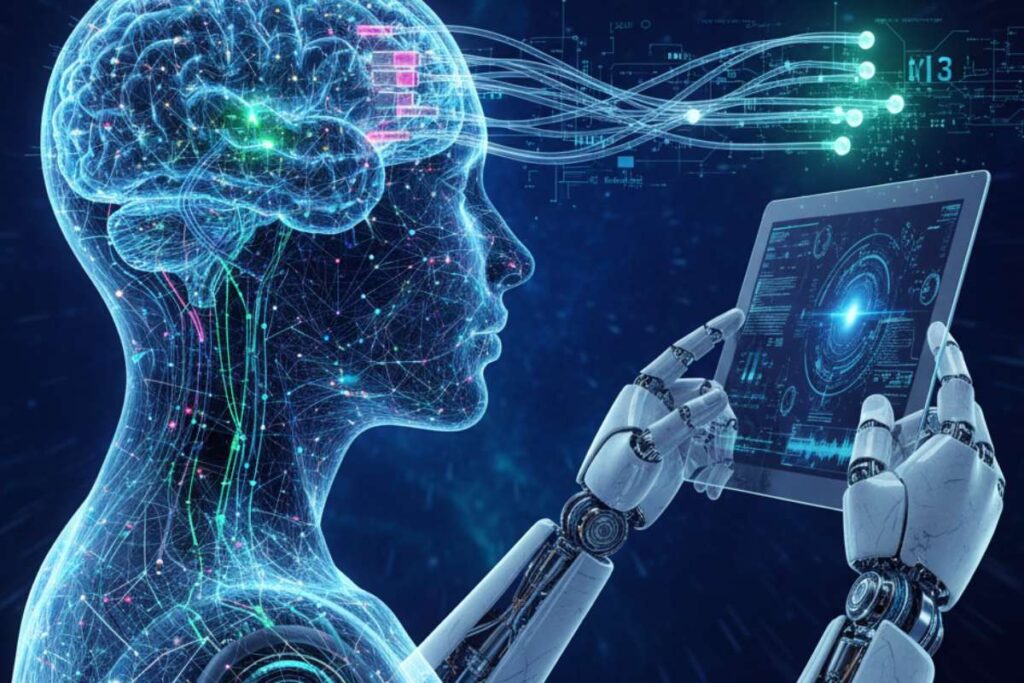
Artificial intelligence is becoming an important part of modern BCI systems. As researchers work to improve speed, accuracy, and reliability, AI is helping BCIs better understand complex brain signals.
Improving Signal Interpretation
Brain signals are often noisy and difficult to decode. AI can identify patterns within these signals and translate them into commands more quickly and accurately. This helps improve communication between the user and the device.
Why Personalized Models Matter?
Researchers are increasingly developing AI models trained on an individual’s brain activity. Because brain signals vary from person to person, personalized systems may perform better than general models. They can also adapt to changes caused by fatigue, medication, or recovery.
As BCIs move beyond research labs, consistent performance will become essential. Personalized AI could help make these systems more practical and reliable, supporting the Future of BCI in Healthcare.
Restoring Movement for People With Paralysis
One of the most promising areas in the Future of BCI in Healthcare is helping people with paralysis regain control over daily activities. BCIs can detect movement intentions in the brain, even when the body cannot carry out the action.
These signals can be used to control:
- Robotic arms
- Wheelchairs
- Computer cursors
- Communication devices
It is important to understand the difference between movement restoration and movement replacement. Movement restoration aims to help the body move again by reconnecting brain signals to muscles or nerves. Movement replacement uses external devices, such as robotic limbs, to perform the intended action instead.
BCIs can also support communication. In a 2023 study published in Nature, researchers from Stanford University and UC San Francisco reported a speech-decoding brain implant that enabled a participant to communicate at about 62 words per minute, one of the fastest rates recorded for a BCI system.
These advances could improve independence and quality of life for many patients.
Helping Stroke Patients Recover Faster
Stroke recovery can be a long process because the brain must rebuild damaged pathways. BCIs may support this process by detecting brain activity during rehabilitation exercises and providing real-time feedback.
In the Future of BCI in Healthcare, these systems could help make therapy more targeted and effective. When combined with robotic devices or physical therapy, BCIs may encourage the brain to strengthen connections linked to movement.
BCIs can also provide valuable brain activity data. Therapists may use this information to see how a patient is responding to treatment and adjust recovery plans when needed.
Potential benefits include:
- More personalized rehabilitation
- Better tracking of recovery progress
- Increased patient engagement during therapy
- Improved long-term movement outcomes
While research is ongoing, BCIs could become an important tool in future stroke rehabilitation programs.
Giving a Voice to People Who Cannot Speak
Many conditions can affect a person’s ability to speak, including:
- ALS
- Stroke
- Traumatic brain injuries
- Other neurodegenerative diseases
For these patients, BCIs may offer new ways to communicate. Brain-to-text systems can convert brain signals into written words on a screen. Brain-to-speech technology goes a step further by turning those signals into spoken language.
Researchers are also working on personalized synthetic voices. Instead of using a generic computer voice, these systems aim to create speech that sounds more like the user.
An emerging area of research is voice preservation. People at risk of losing their speech may be able to record samples of their natural voice early in the disease process. Those recordings can then be used to build a personalized digital voice for future communication.
This ability to restore communication could become one of the most meaningful advances in the Future of BCI in Healthcare.
Managing Neurological Disorders Through Closed-Loop BCIs
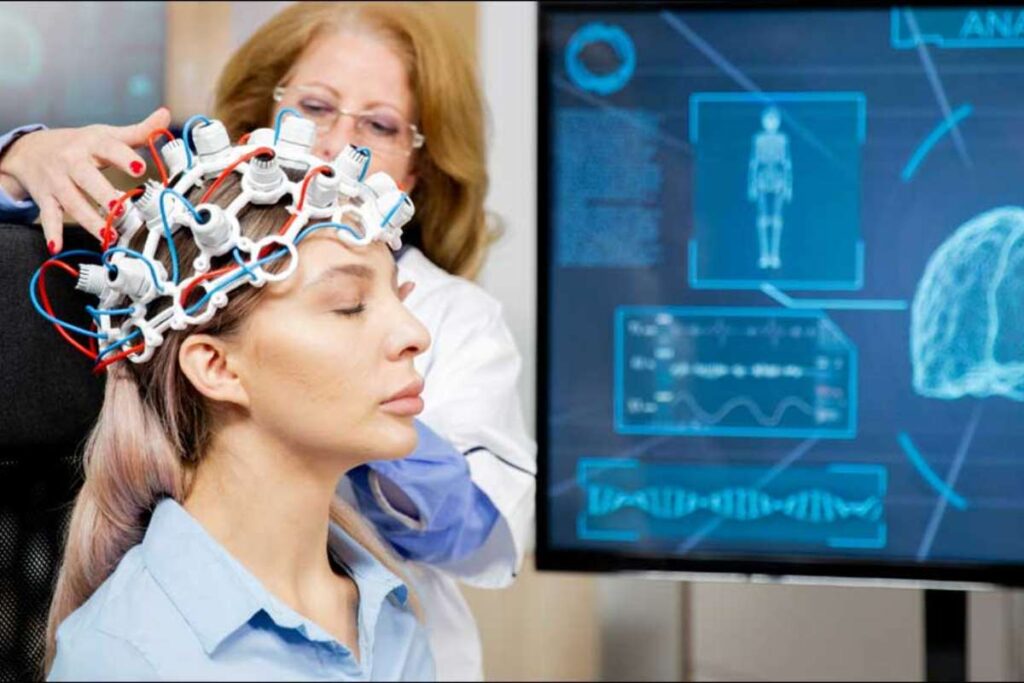
The Future of BCI in Healthcare may include systems that do more than respond to commands. Closed-loop BCIs continuously monitor brain activity and react when they detect abnormal patterns.
These systems can:
- Detect unusual brain signals
- Deliver automatic therapeutic responses
- Monitor changes in real time
Potential applications include:
- Epilepsy
- Parkinson’s disease
- Essential tremor
- Chronic pain
According to the World Health Organization, nearly 50 million people worldwide live with epilepsy, highlighting the need for better monitoring and treatment technologies.
Future systems may also shift from reactive treatment to predictive treatment. Instead of responding after symptoms appear, BCIs could identify warning signs before a seizure, tremor, or pain episode begins. This could allow earlier intervention and help improve symptom management for patients with neurological disorders.
The Biggest Challenges Slowing Wider Adoption
While BCI technology continues to advance, several barriers could slow its adoption in healthcare settings.
| Challenge | Impact |
| Cost and Accessibility | High costs limit access for many patients and healthcare providers. |
| Safety Concerns | Implant procedures carry risks, and long-term durability remains under study. |
| Data Privacy | Brain data requires strong security and privacy protections. |
| Neural Data Ownership | Questions remain about who owns and controls neural data. |
| Regulation | Clinical testing and approvals can take years to complete. |
Addressing these challenges will be essential for broader adoption. Success will depend on making BCI systems safe, affordable, secure, and accessible. How these issues are handled will help shape the Future of BCI in Healthcare.
Conclusion
Brain-computer interfaces are opening new possibilities across healthcare. Research has shown their potential to help people with paralysis control devices, support stroke rehabilitation, restore communication for those who cannot speak, and assist in managing neurological disorders such as epilepsy and Parkinson’s disease.
These advances could improve independence, recovery, and quality of life for many patients. At the same time, important challenges remain. Cost, safety, data privacy, accessibility, and regulatory approval will all influence how quickly these technologies reach everyday healthcare settings.
As research continues and clinical evidence grows, BCIs may become a valuable part of patient care. The Future of BCI in Healthcare will depend on balancing innovation with safety while ensuring these technologies remain accessible to those who need them most.
FAQs
What is the main goal of a brain-computer interface in healthcare?
To connect the brain with technology and help improve independence, communication, and treatment outcomes.
Are brain-computer interfaces currently available for patients?
Yes. Some medical BCIs are available, though many advanced systems remain in clinical trials.
Can BCIs help people with paralysis communicate?
Yes. Brain-to-text and brain-to-speech systems can convert brain signals into words or speech.
What is the biggest challenge facing BCI adoption?
Cost, safety, accessibility, regulation, and data privacy remain major barriers.
Will BCIs become common in healthcare?
Continued research and clinical success could expand the Future of BCI in Healthcare over time.
Thank you for Reading!
See more
EEG vs BCI Systems: What Happens When Your Brain Talks to Computers?